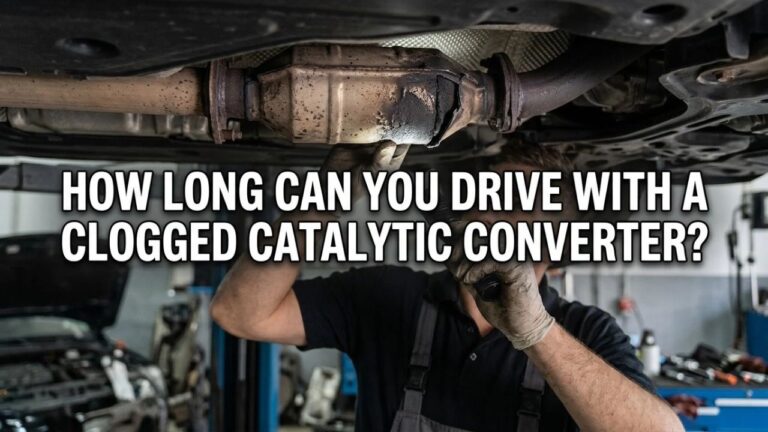
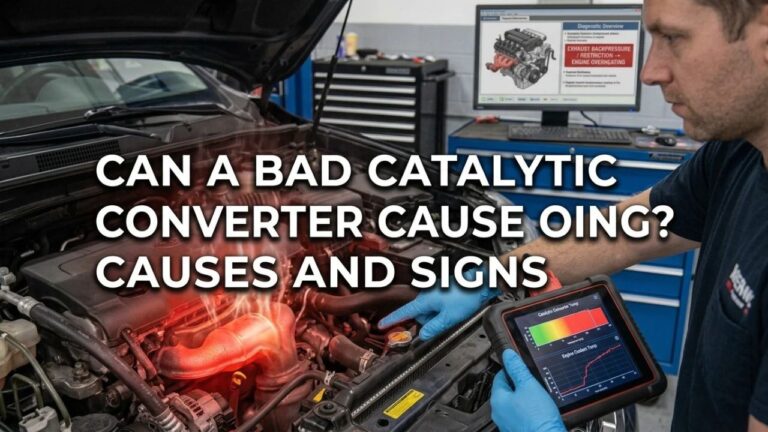
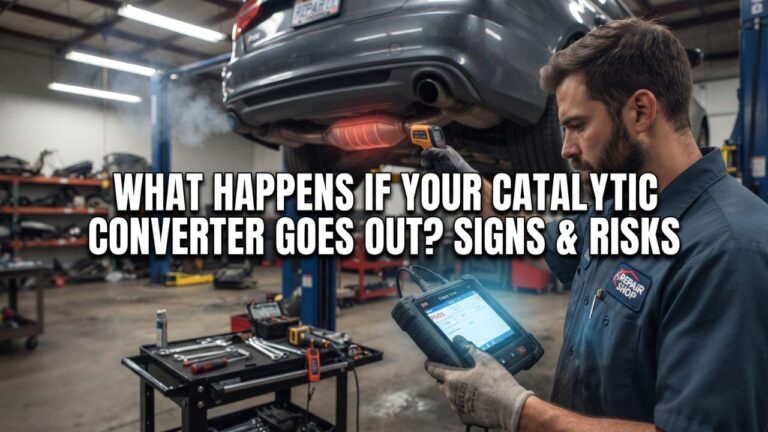
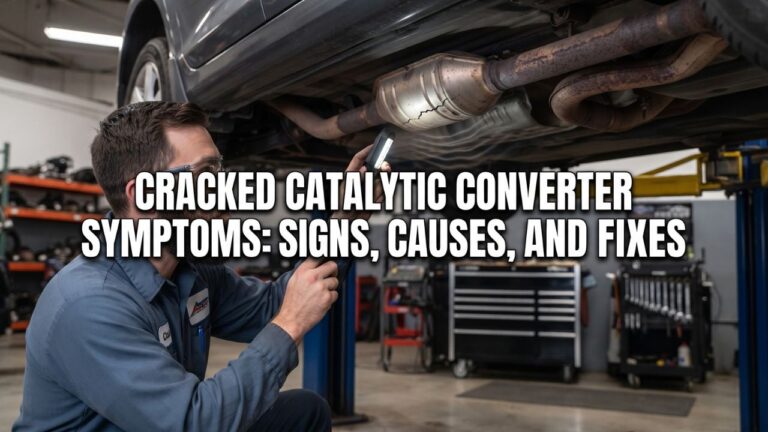
When to Change a Catalytic Converter: Signs You Shouldn’t Ignore
Replace a catalytic converter when testing confirms that it is clogged, melted, broken internally, contaminated beyond recovery, physically damaged, or no longer meeting emissions standards after other engine and exhaust faults have been ruled out. A check-engine light by itself is not enough reason to replace one.
A catalytic converter does not have a routine replacement interval like spark plugs, engine oil, or a timing belt. A healthy unit can remain in service for well over 100,000 miles, while another can fail much earlier if an engine misfire, rich fuel mixture, oil burning, or coolant leak damages it.
Symptoms also depend on the type of failure. A converter that has lost catalyst efficiency may cause little more than a check-engine light. A melted or clogged converter can cause weak acceleration, limited RPM, hard starting, stalling, excessive exhaust heat, and poor fuel economy.
For drivers asking when to change catalytic converter, replacement makes sense after diagnosis shows that the converter itself has permanently failed. Codes such as P0420 and P0430 should start a diagnostic process rather than serve as automatic replacement instructions.
Before paying for a new unit, check warranty coverage. On qualifying U.S. light-duty vehicles, the original catalytic converter is one of the major emissions components generally covered by the federal emissions defect warranty for 8 years or 80,000 miles, whichever comes first.
The sections below cover the clearest replacement signs, mileage expectations, catalyst codes, clogging, heat damage, rattling, emissions-test failure, testing, and problems that should be repaired before a new converter goes on the vehicle.
8 Signs It May Be Time to Change the Catalytic Converter
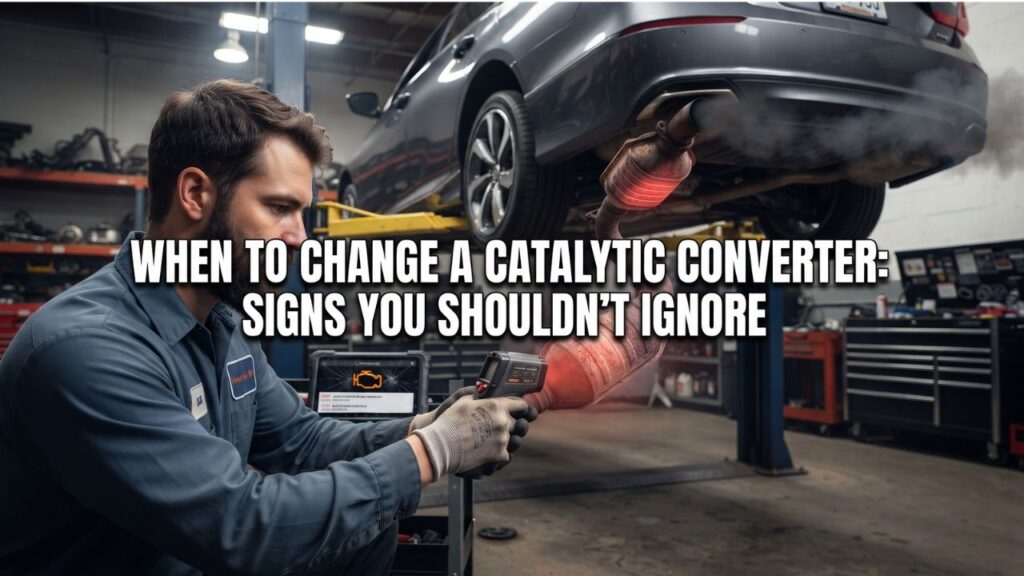
A failing converter can produce very different symptoms depending on its internal condition.
Some signs point toward physical restriction, while others indicate poor catalyst efficiency.
1. Severe Loss of Power During Acceleration
A clogged converter restricts the flow of exhaust leaving the engine.
As engine speed rises, the engine creates more exhaust gas. If that gas cannot pass through the converter fast enough, pressure builds upstream.
The vehicle may:
- Accelerate slowly
- Struggle on hills
- Feel weak at highway speeds
- Lose passing power
- Stop pulling normally at higher RPM
A converter that creates enough backpressure to cause major drivability problems usually needs replacement if the restriction is inside the catalyst substrate.
Fuel-pressure problems, ignition faults, transmission issues, and airflow sensor faults can create similar symptoms, so test before buying a converter.
2. Confirmed Excessive Exhaust Backpressure
Backpressure testing is one of the stronger ways to confirm physical blockage.
A technician can measure exhaust pressure through an oxygen-sensor port or another suitable test point.
As a general reference, many technicians expect pressure to remain below roughly:
- 1.5 psi at idle
- 3 psi around 2,000 RPM
Vehicle-specific service information should take priority over generic figures.
If pressure is high before the converter but normal farther downstream, the converter itself becomes a strong suspect.
A melted or collapsed substrate cannot be restored to its original shape with a cleaner.
3. Rattling From Inside the Converter
A metallic or ceramic rattle can mean the internal substrate has broken loose.
The sound may occur:
- At startup
- During idle
- When revving
- When driving over bumps
- As the engine is shut off
Loose pieces can move around inside the housing and eventually block exhaust passages.
A heat shield can also rattle, so make sure the noise truly comes from inside the converter before replacing it.
If the catalyst brick is broken apart, replacement is normally the proper repair.
4. The Converter Has Melted or Collapsed Internally
Extreme exhaust temperatures can melt the ceramic honeycomb.
Misfires are a common cause because unburned fuel and oxygen enter the exhaust and burn inside the converter.
Normal converter temperatures often sit around 500–800°F, with much higher temperatures possible under heavy load. Temperatures above roughly 1,600°F can damage catalyst material, and extreme heat can melt or collapse the substrate.
Signs of heat damage can include:
- Blue or bronze discoloration
- Glowing converter
- Severe power loss
- High backpressure
- Melted passages visible during inspection
Once the substrate has melted, replacement is needed.
5. Catalyst Efficiency Remains Below Threshold After Other Repairs
P0420 and P0430 are common catalyst-related diagnostic codes.
They indicate that the engine computer believes catalyst efficiency has fallen below the expected threshold.
These codes do not prove the converter is clogged.
Before replacing the converter, check for:
- Exhaust leaks
- Misfires
- Rich or lean fuel mixture
- Oxygen-sensor faults
- Sensor wiring problems
- Oil burning
- Coolant entering the exhaust
- Fuel-delivery faults
If those problems are corrected, sensor data is normal, and the catalyst code keeps returning after the required drive cycles, the converter may have lost too much catalyst activity to remain in service.
6. The Vehicle Repeatedly Fails an Emissions Test
A converter that can no longer reduce pollutants enough may cause an emissions-test failure.
High levels of hydrocarbons, carbon monoxide, or oxides of nitrogen can point toward poor combustion, fuel-control faults, or catalyst failure.
Do not assume the converter is responsible from tailpipe numbers alone.
The engine must be running correctly for the catalyst to do its job.
If engine operation, fuel control, sensors, and exhaust integrity check out but catalyst performance remains below the required level, replacement may be due.
7. Physical Damage Has Compromised the Converter
Converters mounted beneath the vehicle can be damaged by:
- Road debris
- Rocks
- Curbs
- Off-road impacts
- Severe corrosion
- Crushed exhaust tubing
A dent in the shell does not always mean the catalyst needs replacement.
Replacement becomes more likely when the impact has cracked the housing, broken the substrate, restricted exhaust flow, or created a leak that cannot be repaired properly.
8. Severe Contamination Has Ruined the Catalyst
Oil and coolant can coat the catalyst surface and interfere with exhaust treatment.
Oil contamination may come from:
- Worn piston rings
- Valve-seal problems
- Turbocharger faults
- Excessive crankcase oil consumption
Coolant contamination may come from:
- Head-gasket failure
- Cracked cylinder head
- Internal cooling-system leaks
If the substrate has become heavily contaminated, restoring the engine fault alone may not bring catalyst efficiency back.
Repair the source of contamination before installing the new converter.
Key Takeaway: Replace the converter after confirming physical blockage, broken or melted substrate, serious contamination, structural damage, or persistent catalyst-efficiency failure after related engine and exhaust faults have been repaired.
Does a Catalytic Converter Have a Replacement Interval?
No standard mileage or time interval applies to every catalytic converter.
Manufacturers generally do not list converter replacement as routine scheduled maintenance.
How Long Can a Catalytic Converter Last?
A properly operating original converter can often remain functional for 100,000 miles or considerably longer.
Some last for most of the vehicle’s usable life.
Converter life depends heavily on engine condition.
A car with clean combustion, correct fuel control, low oil consumption, and no coolant contamination places much less stress on its catalyst than an engine with repeated misfires or rich operation.
Can a Converter Fail Before 80,000 Miles?
Yes.
Early failure can occur after:
- Severe misfires
- Rich fuel operation
- Oil contamination
- Coolant contamination
- Road impact
- Thermal shock
- Physical damage
If an original converter on a qualifying U.S. light-duty vehicle develops a covered defect before 8 years or 80,000 miles, check federal emissions warranty coverage before authorizing paid replacement.
Should You Replace a Converter at 100,000 Miles as Preventive Maintenance?
No.
High mileage by itself is not a reason to replace a working catalytic converter.
If the car:
- Has no catalyst codes
- Passes emissions testing
- Accelerates normally
- Has no exhaust restriction
- Has no internal rattling
- Has no physical converter damage
there is no reason to replace the converter just because the odometer passed a certain number.
Key Takeaway: Catalytic converters do not have a fixed service interval. Replace one because diagnosis confirms failure, not because the vehicle reached 80,000, 100,000, or 150,000 miles.
Does P0420 or P0430 Mean the Converter Needs Replacement?
Not automatically.
These codes report catalyst efficiency below the expected level for a monitored exhaust bank.
P0420 and P0430 Can Have Other Causes
Possible causes include:
- Exhaust leaks
- Failed oxygen sensors
- Sensor wiring faults
- Cylinder misfires
- High fuel pressure
- Leaking injectors
- Oil contamination
- Incorrect air-fuel mixture
If one of those faults changes exhaust oxygen content or sensor behavior, the computer can interpret the data as weak catalyst performance.
A Bad Converter May Cause No Driving Symptoms
A converter can lose emissions-cleaning ability without restricting exhaust flow.
The driver may notice nothing other than:
- Check-engine light
- Failed inspection
- Stored catalyst code
This is different from a clogged converter, which commonly affects acceleration and high-RPM operation.
Diagnosis Should Come Before Replacement
Before approving a converter from a P0420 or P0430 code, inspect:
- Other stored trouble codes
- Fuel trims
- Misfire data
- Oxygen-sensor operation
- Exhaust leaks
- Oil and coolant consumption
- Converter temperature behavior
- Exhaust backpressure if restriction is suspected
A new converter may develop the same code again if the original engine problem remains.
Key Takeaway: P0420 or P0430 is a reason to test the catalyst system, not an automatic order to replace the converter.
When a Clogged Catalytic Converter Needs Immediate Attention
A mildly inefficient catalyst may not affect drivability.
A severely clogged converter can make the vehicle unsafe or impractical to drive.
The Vehicle Can Barely Accelerate
If the engine loses enough power that entering traffic, climbing hills, or maintaining road speed becomes difficult, do not delay diagnosis.
A severe restriction can continue getting worse as damaged substrate shifts or melts further.
The Engine Stalls or Will Not Stay Running
A nearly blocked exhaust can prevent the engine from expelling enough gas to continue running.
Symptoms may include:
- Starts and stalls
- Hard starting
- Rough idle
- Limited RPM
- Stalling after several minutes
A severely blocked converter can create these symptoms, but fuel and ignition faults should still be ruled out.
The Converter Is Glowing Red
A glowing converter is not a normal replacement reminder.
It is a warning of extreme exhaust heat.
Possible causes include:
- Active misfire
- Rich mixture
- Raw fuel entering the exhaust
- Severe catalyst overheating
Shut the vehicle down safely and diagnose the engine fault.
A glowing converter may already have suffered internal damage, but the cause of the heat needs repair before a replacement is installed.
Key Takeaway: Major power loss, stalling, limited RPM, or a glowing converter calls for prompt diagnosis. Continuing to drive can worsen catalyst damage and increase exhaust-system heat.
Problems to Fix Before Installing a New Catalytic Converter
Replacing the catalyst without repairing the failure that damaged it can shorten the new converter’s life dramatically.
Repair Engine Misfires
Misfires are among the most destructive conditions for a converter.
Check:
- Spark plugs
- Ignition coils
- Plug wires on applicable engines
- Fuel injectors
- Compression
- Valve condition
A flashing check-engine light commonly accompanies a severe catalyst-damaging misfire.
Correct Rich Fuel Operation
Excess fuel reaching the converter can burn inside it.
Inspect fuel control for problems such as:
- Leaking injectors
- Incorrect fuel pressure
- Faulty sensor readings
- Ignition faults
- Airflow-measurement errors
Do not install another catalyst until the engine’s mixture is under control.
Repair Oil Burning
Oil coating the catalyst can reduce its ability to process exhaust gases.
Heavy oil consumption needs diagnosis before a new converter goes on the vehicle.
Repair Internal Coolant Leaks
Coolant entering the combustion chamber can contaminate the converter.
If coolant loss, white exhaust smoke, overheating, or cooling-system pressure points toward an internal leak, correct that problem first.
Fix Exhaust Leaks
Leaks near oxygen sensors can alter their readings.
A new converter may not solve the code if outside air continues entering the exhaust.
Key Takeaway: Misfires, rich operation, oil burning, coolant leaks, and exhaust leaks should be repaired before a new converter is installed.
Can You Clean the Converter Instead of Changing It?
Sometimes light contamination can improve, but cleaning has strict limits.
Mild Deposits May Improve
If the converter is intact and only lightly fouled, correcting the engine fault may allow normal hot operation to reduce some deposits.
A converter-cleaning fuel additive may also be tried according to its label in a mild case.
Do not expect an additive to repair structural damage.
Melted Ceramic Cannot Be Cleaned
A cleaner cannot:
- Rebuild melted passages
- Reconnect cracked substrate
- Replace missing catalyst material
- Fix impact damage
- Repair a broken housing
- Open a solid mass of collapsed ceramic
Once the internal structure is permanently damaged, replacement is the realistic repair.
Do Not Drill or Gut the Converter
Removing catalyst material, drilling through the substrate, or replacing the converter with a straight pipe is not a proper repair.
It can create:
- Emissions-law violations
- Check-engine lights
- Inspection failure
- Exhaust noise
- Poor exhaust behavior
Use a correctly approved replacement when the existing converter can no longer perform its job.
Key Takeaway: Light fouling may improve after the root engine problem is corrected, but cleaners cannot reverse melted, broken, collapsed, or physically damaged catalyst material.
Check Warranty Coverage Before Changing the Converter
Catalytic converters are expensive enough that warranty status deserves attention before paid repair begins.
Federal Emissions Warranty
For qualifying U.S. light-duty vehicles, the catalytic converter is one of the specified major emissions components generally covered for:
8 years or 80,000 miles, whichever occurs first.
Coverage begins from the original in-service date.
Coverage Is Not Unlimited
A manufacturer may deny a claim when converter damage came from misuse, improper maintenance, modifications, or another condition excluded by the warranty.
Read the vehicle’s warranty booklet and contact an authorized dealer with the VIN for exact coverage.
Check for Extended Coverage
Some manufacturers issue longer coverage for specific emissions components after recalls, service campaigns, settlements, or model-specific problems.
A VIN check can reveal coverage that may not be obvious from the standard warranty period.
Key Takeaway: Before paying for an original converter on a newer vehicle, check the federal 8-year/80,000-mile emissions warranty and any VIN-specific extended coverage.
How to Confirm the Converter Really Needs Changing
Several diagnostic methods can be combined before an expensive replacement.
Scan Tool Diagnosis
Read all stored and pending trouble codes.
Then inspect live data for:
- Misfires
- Fuel trims
- Oxygen sensors
- Airflow
- Coolant temperature
- Fuel-control behavior
The goal is to identify problems that could damage the converter or create misleading catalyst data.
Exhaust Backpressure Test
Use backpressure testing when power loss suggests blockage.
High pressure upstream of the converter supports restriction inside the catalyst.
This is far more convincing than replacing the converter based only on poor acceleration.
Physical Inspection
Inspect for:
- Impact damage
- Heavy corrosion
- Discoloration
- Broken shell
- Rattling substrate
- Melted passages where visible
Internal melting can occur in the middle of the substrate even when the ends look normal.
Emissions and Catalyst-Monitor Testing
If the converter flows normally but keeps setting efficiency codes, the issue may be chemical catalyst deterioration rather than clogging.
Once engine operation, sensor function, and exhaust integrity have been verified, repeated catalyst-monitor failure becomes stronger evidence for replacement.
Key Takeaway: Combine scan data, backpressure testing, physical inspection, and catalyst-monitor results before replacing an expensive converter.
Conclusion
The best answer to when to change catalytic converter is after testing confirms that the converter itself has permanently failed, not simply because the car has high mileage or a check-engine light.
Replacement is usually due when the substrate is melted, broken, badly contaminated, physically damaged, severely restricted, or no longer able to meet catalyst-efficiency requirements after other faults have been corrected.
Do not ignore major acceleration loss, stalling, excessive backpressure, internal rattling, or extreme converter heat. Those symptoms can point toward structural damage or blockage that cleaning will not repair.
Before installing the new converter, correct misfires, rich fuel control, oil consumption, coolant leaks, and exhaust leaks. Also check warranty coverage if the original converter is still within the applicable age and mileage limits.
FAQs About When to Change a Catalytic Converter
How Many Miles Does a Catalytic Converter Usually Last?
There is no fixed lifespan, but many original converters last beyond 100,000 miles when the engine remains in good condition.
Repeated misfires, rich running, oil consumption, coolant leaks, and physical damage can cause much earlier failure.
Should I Replace My Catalytic Converter at 100,000 Miles?
No, not simply because it reached 100,000 miles.
If the converter flows normally, passes emissions requirements, produces no catalyst codes, and shows no physical damage, mileage alone is not a reason to replace it.
Does P0420 Mean I Need a New Catalytic Converter?
Not always.
P0420 indicates catalyst efficiency below the expected threshold. Exhaust leaks, oxygen-sensor faults, misfires, fuel-control problems, and contamination can contribute to the code.
Test those areas before replacing the converter.
How Do I Know if My Catalytic Converter Is Clogged?
Common clues include severe power loss, poor high-RPM performance, hard starting, stalling, high exhaust heat, and increased backpressure.
A backpressure test can provide stronger evidence of a blockage.
Can I Keep Driving With a Bad Catalytic Converter?
A vehicle with only a catalyst-efficiency code may still drive normally, but a severely clogged, glowing, rattling, or overheating converter deserves prompt attention.
Stop driving if the vehicle loses enough power to become unsafe, stalls repeatedly, or develops extreme exhaust heat.
Can a Catalytic Converter Be Cleaned Instead of Replaced?
Light deposits may improve after the engine problem causing them is repaired.
A melted, collapsed, cracked, broken, or chemically worn-out converter cannot be restored with cleaner and normally requires replacement.
Does a Rattling Catalytic Converter Need to Be Replaced?
If testing confirms that the noise is broken catalyst substrate inside the converter, replacement is usually due.
A loose heat shield can create a similar rattle, so identify the source before buying the part.
Is a Catalytic Converter Covered Under Warranty?
On qualifying U.S. light-duty vehicles, the original catalytic converter is generally covered by the federal emissions defect warranty for 8 years or 80,000 miles, whichever comes first.
Check the warranty booklet and VIN-specific manufacturer coverage before paying for replacement.