How to Test a Throttle Body: 7 Safe Checks Before Replacing It
To test a throttle body, start by checking for engine trouble codes, inspecting the throttle plate for carbon buildup, and examining the electrical connections. On electronic throttle bodies, use an OBD-II scan tool to compare commanded and actual throttle positions. These checks help identify sticking parts, sensor faults, and motor problems.
A throttle body controls how much air enters a gasoline engine. When it becomes dirty or stops working properly, your car may idle roughly, hesitate during acceleration, stall, or enter reduced-power mode. Those symptoms can feel serious, but they don’t always mean you need a new throttle body.
The challenge is knowing which test applies to your vehicle. Older cars often use a mechanical throttle cable, while most modern vehicles have electronic throttle control. Testing methods differ because electronic systems contain sensors, a motor, and computer-controlled circuits.
If you’re troubleshooting poor acceleration or an unstable idle, a few careful checks can save unnecessary repairs. This guide explains seven practical throttle body tests, how to interpret scan tool readings, when a multimeter helps, and how to decide between cleaning and replacement.
How Does a Throttle Body Work, and What Can Go Wrong?
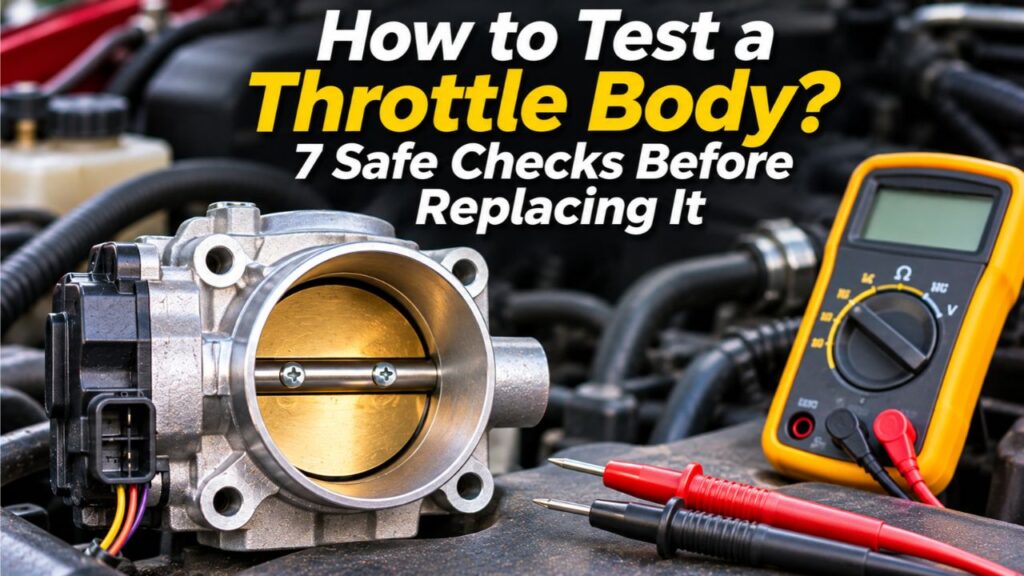
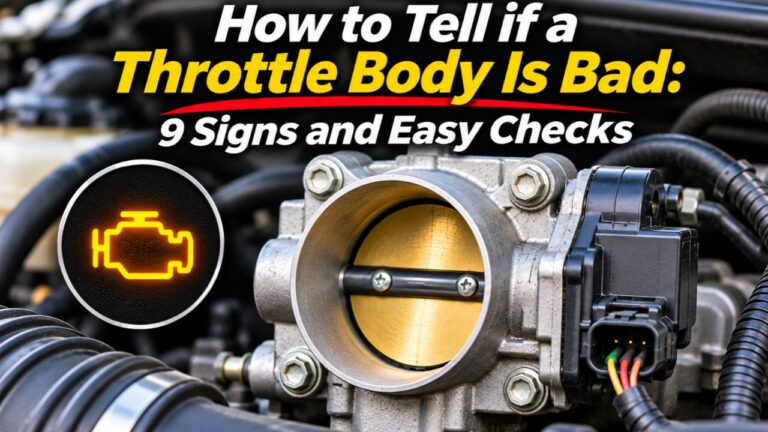
A throttle body controls airflow entering a gasoline engine through a movable throttle plate. Opening the plate allows more air to pass into the intake manifold, while closing it restricts airflow. Problems develop when carbon deposits, damaged sensors, faulty motors, or electrical connections interfere with its operation.
Mechanical vs. Electronic Throttle Bodies
There are two common throttle body designs.
| Feature | Mechanical Throttle Body | Electronic Throttle Body |
| Throttle operation | Accelerator cable | Electric motor |
| Pedal connection | Mechanical cable | Electronic sensor signals |
| Throttle position sensor | Often separate | Usually integrated |
| Common faults | Sticking cable, carbon buildup, sensor wear | Motor faults, sensor faults, carbon buildup |
| Main testing method | Mechanical inspection and sensor testing | Scan tool and electrical diagnosis |
A mechanical throttle body uses a cable connected to the accelerator pedal. Pressing the pedal pulls the cable and opens the throttle plate.
An electronic throttle body uses electronic throttle control (ETC), also called drive-by-wire.
The accelerator pedal sends signals to the engine control module (ECM), which commands an electric motor to move the plate.
For example, if an electronic throttle motor fails, pressing the accelerator may produce little engine response even though the pedal itself moves normally.
Knowing which design you have is the first step toward choosing the right test.
How to Test a Throttle Body Step by Step
Testing a throttle body involves checking engine symptoms, retrieving fault codes, inspecting the intake system, and examining throttle position data. Electronic systems may also require an actuator test with a compatible scan tool. Complete these checks in order so you don’t mistake a wiring or airflow problem for a failed assembly.
Tools You’ll Need
Gather the following equipment before starting:
- OBD-II scan tool with live-data capability
- Flashlight
- Basic screwdriver and socket set
- Digital multimeter for specified electrical tests
- Vehicle-specific repair information
- Safety glasses and work gloves
- Approved throttle body cleaner, if cleaning is required
A basic code reader can identify some faults, but a scan tool with live data provides more useful information.
Step 1: Check the Engine Symptoms
Start by identifying exactly when the problem occurs.
A faulty throttle body may cause rough idling, hesitation, stalling, or reduced acceleration. Some faults trigger a check engine light or electronic throttle warning.
Pay attention to these conditions:
- Engine idles roughly after starting.
- RPM rises and falls without pedal input.
- Engine stalls when approaching a stop.
- Accelerator response feels delayed.
- Vehicle enters reduced-power mode.
- Check engine light stays illuminated.
For example, if your car struggles to idle but accelerates normally, carbon deposits or an air leak may be involved.
If acceleration barely responds to pedal movement, an electronic throttle control problem becomes a stronger possibility.
These symptoms provide clues, not a final diagnosis.
Step 2: Scan for Trouble Codes
Connect an OBD-II scanner to the diagnostic port, usually located beneath the dashboard.
Follow the scanner’s instructions to read stored and pending diagnostic trouble codes.
A diagnostic trouble code (DTC) is a fault record stored when the engine computer detects a problem.
Write down the codes before clearing anything.
Throttle-related faults may involve the position sensor, actuator motor, wiring, or agreement between sensor signals.
For example, code P2119 indicates a throttle actuator control range or performance problem.
That code doesn’t automatically mean the throttle body needs replacement. Mechanical sticking, wiring faults, or other problems may produce it.
Step 3: Inspect the Throttle Body and Air Intake
Turn off the ignition and allow the engine to cool.
Locate the throttle body between the air intake duct and the engine’s intake manifold.
Inspect the surrounding components before removing anything.
Look for:
- Loose air intake clamps
- Cracked intake hoses
- Damaged electrical connectors
- Corroded terminals
- Loose mounting hardware
- Oil or dirt contamination
- Disconnected vacuum hoses
For example, a cracked intake hose may allow unmetered air into the engine.
That can cause rough idling or hesitation even when the throttle body works correctly.
If you need to remove the intake duct, follow the manufacturer’s instructions.
Safety Note: Electronic throttle plates can move unexpectedly when the vehicle’s control system is active. Keep your fingers and tools outside the throttle opening whenever electrical power is connected.
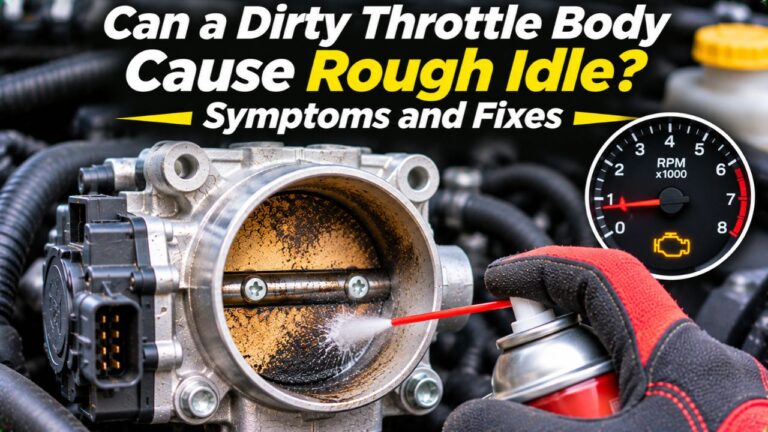
Step 4: Check the Throttle Plate for Carbon Buildup
Carbon deposits can accumulate around the throttle plate and inner housing.
Over time, these deposits may restrict airflow or interfere with smooth plate movement.
With the engine off and the intake duct removed according to the service procedure, inspect the visible throttle opening using a flashlight.
Look for dark deposits around the plate’s edges.
A light coating doesn’t automatically mean the throttle body is defective.
Heavy buildup around the closing edge is more concerning, especially when the engine has idle problems.
For example, an engine that stalls while coming to a stop may have a plate that cannot regulate small amounts of airflow accurately because of deposits.
Don’t force an electronic throttle plate open by hand. Some designs can be damaged by manual movement. Use the specified inspection or cleaning procedure.
Step 5: Check Throttle Position With a Scan Tool
A scan tool with live-data capability can display information from the throttle position sensors.
The throttle position sensor (TPS) reports the position of the throttle plate to the engine computer.
On electronic systems, the ECM also receives information from the accelerator pedal position sensor (APP).
Look for available data parameters such as:
| Scan Tool Parameter | What It Tells You |
| Accelerator Pedal Position | Driver’s requested pedal input |
| Commanded Throttle Position | Position requested by the control module |
| Actual Throttle Position | Position reported by the throttle sensors |
| Throttle Position Sensor 1 | First throttle position feedback signal |
| Throttle Position Sensor 2 | Additional position feedback signal |
With the engine off and ignition on, some vehicles allow a supported pedal movement test.
If your service procedure permits it, slowly press and release the accelerator while monitoring the data.
Look for smooth changes rather than sudden jumps, dropouts, or unexplained inconsistencies.
Commanded and actual throttle values should behave according to the manufacturer’s specifications.
Don’t expect pedal percentage and throttle percentage to match exactly. The engine computer controls throttle opening based on several operating conditions.
Also, some scan tools display scaled percentages that don’t correspond directly to the physical plate angle.
The throttle position sensor testing guidance explains how position signals help identify sensor and electrical faults.
Step 6: Perform an Electronic Throttle Actuator Test
An actuator test checks whether the electric throttle motor responds to commands from the engine computer.
This test requires a compatible bidirectional scan tool.
A bidirectional scan tool can send supported commands to vehicle components rather than simply reading data.
On vehicles that support the function, a technician can command the throttle plate through specified positions and monitor the response.
The test helps identify:
- Throttle motor movement problems
- Sticking throttle plates
- Incorrect position feedback
- Electrical control faults
- Differences between commanded and actual movement
For example, if the computer commands the plate to move but position feedback remains unchanged, further testing may reveal a sticking plate, failed motor, sensor problem, or wiring fault.
Not every vehicle supports this test.
Follow the exact procedure for your engine, and keep hands, tools, and loose clothing away from the throttle opening.
Step 7: Check Idle Operation and Confirm the Results
After completing the supported inspections and tests, evaluate engine operation.
If the intake system has been reassembled properly and it’s safe to start the engine, check idle stability under the conditions specified by the manufacturer.
Notice whether:
- Engine speed remains reasonably steady.
- The engine stalls or hesitates.
- The accelerator responds normally.
- Electronic throttle warnings return.
- Diagnostic trouble codes reappear.
For example, if the throttle position data behaves normally but the engine still idles roughly, an intake air leak, ignition problem, or another engine fault may be responsible.
If the engine enters reduced-power mode or responds unpredictably, don’t road-test it until the fault has been diagnosed.
How Do You Test a Throttle Body With a Multimeter?
A multimeter can help test certain throttle position sensors, power supplies, grounds, and wiring circuits. The exact method depends on the throttle body design. Older potentiometer-type sensors may support resistance testing, while modern electronic throttle assemblies often require voltage measurements, scan data, and manufacturer-specific procedures.
Testing a Conventional Throttle Position Sensor
Older throttle bodies may use a variable-resistance sensor called a potentiometer.
Its electrical output changes as the throttle plate rotates.
With the sensor disconnected and the correct terminals identified, some designs allow resistance testing.
A typical manufacturer-approved procedure involves:
- Locating the TPS wiring diagram.
- Identifying the specified measurement terminals.
- Disconnecting the sensor with the ignition off.
- Selecting the appropriate resistance range.
- Measuring resistance at the specified positions.
- Checking for smooth changes while operating the mechanical linkage as directed.
Abrupt interruptions or readings outside specification may indicate sensor damage.
Don’t use this test on an unknown electronic throttle body.
Testing an Electronic Throttle Body
Modern throttle bodies often use multiple position sensors, an actuator motor, and electronic circuits.
Some sensors use non-contact technology rather than a conventional sliding resistance track.
A multimeter may help a technician verify power supply, ground, or specified signal voltages.
However, there is no universal throttle body resistance or voltage value that applies to every car.
Testing the wrong pins can produce misleading results or damage sensitive electronics.
Never connect battery power directly to an unknown throttle motor or resistance-test an energized circuit.
For modern systems, live scan data is generally the better starting point.
What Trouble Codes Indicate a Bad Throttle Body?
Several diagnostic trouble codes can point toward throttle position or actuator problems. These codes identify abnormal electrical signals, performance conditions, or disagreements between sensors. They don’t automatically confirm that the throttle body assembly has failed, because damaged wiring and other control components can produce similar results.
Common Throttle Body Trouble Codes
| Code | General Meaning | What to Investigate |
| P0121 | Throttle/Pedal Position Sensor A range or performance | Sensor signal and wiring |
| P2101 | Throttle Actuator Control Motor circuit range or performance | Motor, wiring, and plate movement |
| P2111 | Throttle actuator stuck open | Mechanical sticking or control fault |
| P2112 | Throttle actuator stuck closed | Mechanical sticking or actuator fault |
| P2119 | Throttle actuator control throttle body range or performance | Throttle movement and feedback |
| P2135 | Throttle/Pedal Position Sensor A/B voltage correlation | Sensor agreement and electrical circuits |
For example, P2135 means the computer detected an unexpected relationship between designated position sensor signals.
It doesn’t prove that both sensors have failed.
A damaged connector or wiring problem may cause the disagreement.
Common Mistake: Replacing the throttle body immediately after reading one trouble code can leave you back to square one.
Always follow the diagnostic procedure associated with the exact code and vehicle.
Should You Clean or Replace a Throttle Body?
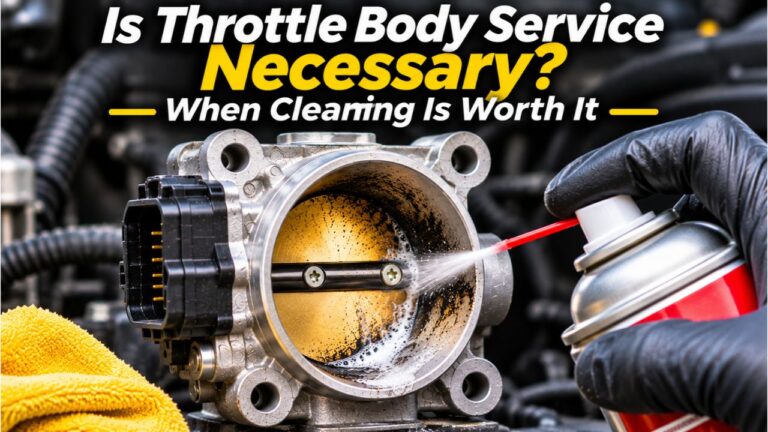
Clean a throttle body when deposits are interfering with airflow or plate movement and the manufacturer allows cleaning. Replace it when testing confirms a failed motor, damaged internal sensor, or mechanical defect that cannot be repaired separately. Cleaning won’t fix broken electronics or badly worn components.
Cleaning vs. Replacement
| Problem | Likely Action |
| Carbon deposits around throttle plate | Clean if approved |
| Dirty bore causing idle problems | Inspect and clean |
| Broken electrical connector | Repair connector or wiring |
| Confirmed internal motor failure | Replace or repair as specified |
| Failed integrated position sensor | Replace serviceable sensor or assembly |
| Damaged throttle plate or shaft | Follow manufacturer’s replacement procedure |
| Air leak near throttle body gasket | Repair leak and replace gasket if needed |
When Cleaning Makes Sense
A dirty throttle body may restrict airflow near the closed position.
Cleaning can help when inspection confirms deposits and no separate electrical fault exists.
Use only a cleaner approved for your throttle body design.
Follow the manufacturer’s instructions for accessing and cleaning the plate. Avoid flooding the motor housing, damaging protective coatings, or forcing an electronic plate open.
For example, if rough idle begins gradually and inspection reveals heavy carbon around the plate, cleaning may be a reasonable first repair.
When Replacement Is Necessary
Replacement may be needed when diagnostic testing confirms a failed actuator motor or integrated position sensor.
A damaged throttle shaft or internal gear mechanism may also require replacement.
Before installing a new assembly, inspect the connector and wiring.
The throttle body operation and calibration guidance explains why faults should be confirmed and why electronic throttle systems may require calibration after installation.
Does the Throttle Body Need a Relearn?
Many electronically controlled throttle bodies require an idle or throttle adaptation procedure after cleaning, disconnection, or replacement.
This process allows the engine computer to learn the correct operating positions or airflow settings.
The procedure varies by manufacturer.
Some vehicles complete it automatically under specified conditions. Others require a capable diagnostic scan tool.
Don’t assume disconnecting the battery performs a proper relearn on every car.
What Other Problems Can Mimic a Bad Throttle Body?
A throttle body can appear faulty when the actual cause is an intake air leak, accelerator pedal sensor problem, dirty airflow sensor, ignition misfire, or fuel delivery fault. These problems may produce the same rough idle, hesitation, and reduced-power symptoms, so testing the complete engine control system matters.
| Similar Problem | Common Clue | Recommended Check |
| Vacuum leak | Rough or unusually high idle | Intake hoses and gaskets |
| Faulty accelerator pedal sensor | Poor response to pedal input | APP live data |
| Dirty or faulty airflow sensor | Incorrect airflow readings | Sensor and intake system |
| Ignition misfire | Engine shaking and hesitation | Spark plugs, coils, and codes |
| Fuel delivery problem | Loss of power or stalling | Fuel system diagnosis |
| Low battery voltage | Multiple electrical complaints | Battery and charging system |
For example, if the pedal position signal stops changing while throttle position feedback remains normal, the accelerator pedal circuit may need inspection.
Likewise, an intake hose leak can cause idle problems even when the throttle plate is clean and its motor works correctly.
The sensor and actuator diagnostic process explains why checking input signals, output commands, wiring, and mechanical operation helps separate these faults.
Common Mistakes When Testing a Throttle Body
Throttle body testing goes wrong when drivers rely on one symptom, force the electronic throttle plate, or use electrical measurements without confirming connector pin assignments. Another common mistake is treating scan tool percentages as universal pass-or-fail values. The correct procedure depends on the vehicle and its electronic control design.
Avoid these errors:
- Forcing an electronic throttle plate open or closed.
- Applying battery voltage directly to throttle motor terminals.
- Testing sensor resistance while the circuit is powered.
- Assuming every throttle body has the same pin arrangement.
- Replacing the throttle body without checking intake leaks.
- Clearing trouble codes before recording diagnostic information.
- Skipping the required throttle relearn after repair.
A useful rule of thumb is to begin with visual checks and scan data before attempting electrical measurements.
That approach reduces unnecessary repairs and helps protect expensive electronic components.
Frequently Asked Questions
Throttle body testing often raises questions about scan tools, multimeters, symptoms, cleaning, and replacement. The answers depend on the vehicle’s control system and the fault involved. A reliable diagnosis separates mechanical sticking from electrical or sensor problems before deciding whether the throttle body needs service.
Can You Test a Throttle Body Without Removing It?
Yes. Many throttle body checks can be performed while the assembly remains installed. A scan tool can monitor position sensor data, commanded throttle operation, and trouble codes. You can also inspect accessible wiring and intake components. Some mechanical inspections or repairs require removing the intake duct or throttle body.
How Do You Know if a Throttle Body Is Bad?
Common symptoms include rough idling, stalling, hesitation, poor accelerator response, and reduced-power warnings. These symptoms don’t prove the throttle body has failed. Confirm the problem through diagnostic codes, position feedback, wiring checks, and the manufacturer’s testing procedure before deciding that replacement is necessary.
Can You Test a Throttle Body With a Multimeter?
Yes, but the testing method depends on the design. Some older throttle position sensors support resistance measurements. Modern electronic throttle bodies may require specific voltage tests and scan-tool analysis. Never assume connector pin locations or universal resistance values, and don’t apply an ohmmeter to a powered circuit.
Should the Throttle Plate Move When You Press the Gas Pedal?
On a cable-operated throttle body, pressing the accelerator mechanically opens the plate. Electronic throttle bodies respond to commands from the engine computer, and pedal movement may not produce matching plate movement in every operating condition. Follow the vehicle’s specified test procedure instead of judging the system by appearance alone.
Can a Dirty Throttle Body Cause Rough Idle?
Yes. Carbon deposits around the throttle plate can interfere with airflow control, especially near its closed position. This may cause unstable idle speed or stalling. Cleaning can help when deposits are responsible, but vacuum leaks, ignition problems, and faulty sensors can create similar symptoms.
Will Disconnecting the Battery Reset the Throttle Body?
Battery disconnection may affect learned idle settings on some vehicles, but it isn’t a universal throttle body reset procedure. Certain systems require an automatic learning cycle or a scan-tool calibration. Follow the manufacturer’s instructions because an incorrect or incomplete relearn can leave the engine idling poorly.
Test the Throttle Body Before Buying a Replacement
Testing a throttle body is about confirming how it controls airflow, not simply checking whether the engine responds to the accelerator.
Start by reading trouble codes, inspecting the intake system, and checking for carbon deposits or damaged connections. On electronic systems, compare commanded and actual throttle position using a compatible scan tool.
A multimeter can help with certain sensor and wiring tests, but the correct procedure depends on the design. Avoid forcing an electronic throttle plate or applying power to unknown terminals.
Remember that vacuum leaks, accelerator pedal sensors, ignition faults, and fuel delivery problems can produce similar symptoms. Cleaning may solve a carbon-related problem, while confirmed internal electrical or mechanical failures may require replacement.
Your next step: Identify whether your vehicle uses a mechanical or electronic throttle body. Then retrieve its diagnostic trouble codes and compare the results with the service instructions for your exact engine before replacing any parts.