Does Glass Cleaner Clean Car Seats: Clear Answers and Key Facts
Glass cleaner can clean some hard, nonporous car-seat surfaces, but it is not a safe all-purpose cleaner for every car seat. Avoid using it on fabric upholstery, genuine leather, suede-like materials, or child-safety-seat harnesses unless the product and seat manufacturer specifically allow it. The article explains why the answer changes by material, which ingredients create problems, and what to use instead.
You notice the problem when a child spills juice across the back seat, greasy fingerprints cloud a leather seat, or a dusty booster seat needs attention before the next trip. A bottle of glass cleaner is usually nearby, so the shortcut seems reasonable: spray, wipe, and move on. The limitation is that “car seat” can mean several different surfaces, and each reacts differently to solvents, detergents, moisture, and friction.
That distinction matters more than the cleaner’s ability to leave glass streak-free. This guide separates vehicle upholstery from removable child car seats, explains when a small amount of cleaner may be acceptable on hard plastic or vinyl, identifies signs of material damage, and lays out a safer cleaning process. By the end, you can decide whether the surface needs mild soap, a material-specific product, or professional treatment instead.
Why Glass Cleaner Is Not a Universal Car-Seat
Glass cleaners are formulated for smooth, sealed surfaces such as windows and mirrors. They often contain water, surfactants, solvents, fragrances, and pH-adjusting ingredients that help dissolve fingerprints, oils, and airborne film without leaving visible streaks on glass.
Car-seat materials are more varied. A vehicle may have woven polyester, nylon, vinyl, coated leather, uncoated leather, synthetic leather, Alcantara-like fabric, foam padding, plastic trim, or a combination of several materials. A child restraint can add molded plastic, removable fabric covers, webbing, buckles, labels, and energy-absorbing foam.
A product that performs well on glass may therefore be too wet, too strong, or poorly matched to the seat. The immediate result may look clean while the longer-term result is discoloration, stiffening, fading, sticky residue, or weakened fibers.
Spraying directly onto a seat creates another risk. Liquid can travel into seams, perforations, stitching, foam, electrical components, or the gap between upholstery and padding. Even if the surface itself tolerates the formula, trapped moisture can produce odor or slow drying.
What Happens on Different Car-Seat Materials
Cloth and fabric upholstery
Glass cleaner is generally a poor choice for cloth seats. Fabric can absorb the liquid unevenly, allowing water and solvents to spread below the visible surface. This may leave a ring-shaped stain, a darker wet patch, or a stiff area after drying.
Some glass cleaners also contain dyes, fragrances, or alcohol-based solvents. These ingredients may not permanently damage every fabric, but they can affect color, leave a noticeable smell, or loosen grime and redistribute it rather than removing it. Repeated wet cleaning can also contribute to mildew-like odors when the padding does not dry fully.
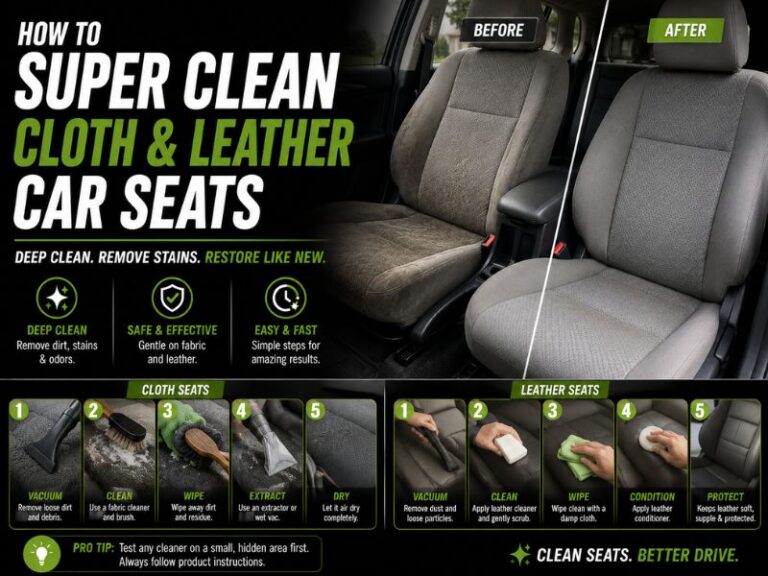
For ordinary fabric upholstery, use a small amount of mild upholstery cleaner or diluted soap solution approved for the material. Apply it to a microfiber cloth or soft brush rather than soaking the seat, then remove remaining cleaner with a separate damp cloth and dry the area thoroughly.
Leather and synthetic leather
Leather seats need more caution than sealed plastic. Automotive leather commonly has a protective coating, but the coating is not a guarantee that any household cleaner is suitable. Solvents and high-alcohol formulas may dull the finish, dry the surface, or make it feel unusually slick or tacky.
Genuine leather can also contain natural oils and finishes that contribute to its flexibility. A strong cleaner may strip some surface protection, especially when used repeatedly or scrubbed aggressively. Cracked, worn, or uncoated leather is more vulnerable because the cleaner can reach the material beneath the finish.
Synthetic leather, often called vinyl or leatherette, may tolerate mild wiping better than genuine leather, but it still varies by manufacturer and finish. A glass cleaner might remove a fresh fingerprint from a small, sealed vinyl panel without an obvious problem, yet that does not make it the preferred routine product.
Use a cleaner labeled for automotive leather or the specific synthetic material. Put it on a cloth, test a hidden section, and follow with the recommended protectant only if the material’s care instructions call for one.
Plastic, vinyl, and hard child-seat surfaces
Hard, smooth plastic or vinyl is the main situation in which glass cleaner may be acceptable as a limited spot cleaner. A light application to a cloth can remove fingerprints or a thin film from a nonporous trim area, provided the manufacturer does not prohibit it.
Even here, direct spraying is unnecessary. Glass cleaner can run into buckle mechanisms, seat-adjustment hardware, warning labels, seams, or textured areas that are harder to rinse. Some formulas may also leave a slippery residue that attracts dust or affects how a person grips the surface.
For most hard plastic surfaces, a damp microfiber cloth is the safer first step. If that does not remove the soil, use mild soap diluted in water, wipe with a clean damp cloth, and dry completely. This approach usually handles everyday dirt without introducing unnecessary solvents.
Child car-seat fabric and harnesses
A child car seat requires a separate safety standard from ordinary vehicle upholstery. Do not treat the harness straps, buckle, chest clip, or webbing with glass cleaner. Solvents and unapproved chemicals can affect the fibers, coatings, friction, or components that help the restraint work as designed.
The cover may be removable and washable, but its care label and the restraint manual control the process. Some covers can be machine-washed; others require hand washing or air drying. Do not assume that bleach, disinfectant, stain remover, steam, or glass cleaner is acceptable simply because the cover looks like ordinary fabric.
Never saturate the child seat shell or pour cleaner into the buckle. If crumbs or liquid enter a buckle, use the cleaning method specified in the manual. A buckle that remains sticky, fails to latch, or does not release normally should be evaluated according to the manufacturer’s instructions rather than “fixed” with household chemicals.
Ingredients That Can Cause Trouble
The label matters more than the product category alone. Two glass cleaners can have very different formulas, and a product marketed as gentle may still be unsuitable for leather, fabric, or child-restraint components.
- Ammonia can be harsh on some finishes and is particularly undesirable for leather and sensitive coated surfaces.
- Alcohol and other solvents may dissolve oils, affect color, or make vinyl and leather feel dry or sticky.
- Fragrance and dyes can leave residue or create an odor in absorbent upholstery.
- Strong detergents may produce foaming residue that is difficult to remove from textured or porous materials.
- Water, even without harsh additives, can cause rings or moisture retention when a seat is over-wet.
“Ammonia-free” does not automatically mean “safe for car seats.” The cleaner may use another solvent, and the surface may still be too absorbent or delicate for the application. The safest choice is a product intended for the exact material, used in the smallest effective amount.
How to Check Whether a Cleaner Is Suitable
Start by identifying the surface rather than relying on its color or appearance. Check the vehicle owner’s manual, seat-care label, child-seat manual, or manufacturer’s cleaning instructions. If the material is unclear, treat it as sensitive until confirmed.
Look for warnings about solvents, alcohol, ammonia, bleach, abrasives, silicone, or excessive water. For a child restraint, follow the manual even if a cleaner’s label claims to work on plastic, fabric, or automotive interiors.
Perform a hidden-area test whenever the instructions permit use of the product. Dampen a white microfiber cloth, apply a tiny amount to an inconspicuous edge, and wait until the spot is fully dry. Check for color transfer, fading, a changed sheen, stiffness, stickiness, swelling, or a lingering odor.
A test is useful but not absolute. A small patch may not reveal how the product behaves after repeated use, and it cannot confirm that a chemical is safe for a harness or buckle. Manufacturer approval remains more important than a test that happens to look successful.
A Safer Cleaning Process for Vehicle Seats
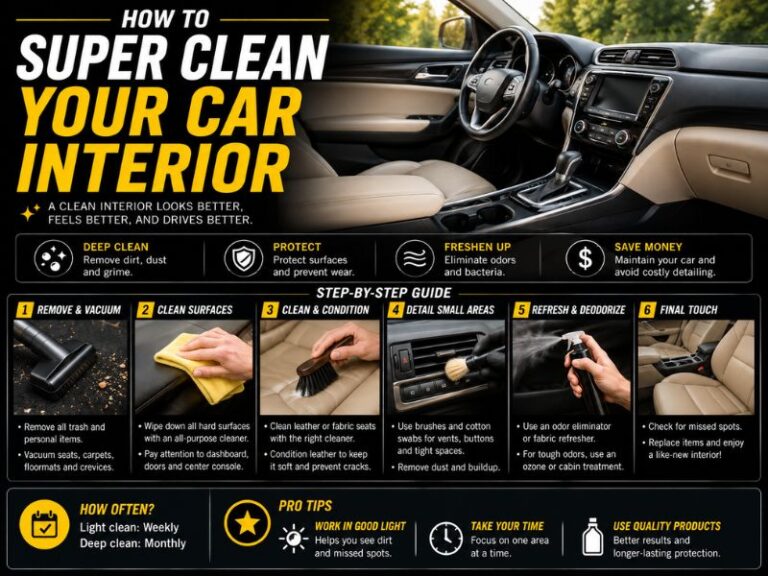
Remove loose crumbs and grit first. Use a vacuum with a soft attachment, keeping the nozzle from scraping leather, stitching, or delicate perforations. Dirt left on the surface can act like an abrasive when rubbed with a wet cloth.
- Read the material instructions. Confirm whether the surface is cloth, coated leather, vinyl, or another finish, and check any restrictions.
- Choose the mildest suitable cleaner. Begin with a dry microfiber cloth or water-dampened cloth before escalating to a labeled upholstery or leather product.
- Apply cleaner to the cloth. Do not spray directly onto the seat, especially near seams, controls, airbags, buckles, or perforations.
- Work in a small section. Use gentle strokes and avoid aggressive scrubbing that can spread soil or damage fibers.
- Remove residue. Follow with a clean, lightly damp cloth when the product instructions require rinsing or wiping.
- Dry the seat completely. Leave doors or windows open when practical and avoid sitting on a damp surface.
For fabric, avoid creating a large wet boundary around a small stain. Clean from the outside toward the center, use limited moisture, and allow the padding to dry before judging the final appearance.
For leather, wipe rather than scrub. If the surface has deep cracks, peeling finish, dye transfer, or embedded staining, a specialist may prevent further damage better than repeated household cleaning.
When Glass Cleaner May Be Reasonable
A small amount of glass cleaner may be reasonable on a hard, sealed, nonporous plastic or vinyl section when the manufacturer permits it and the product contains no ingredients known to harm that finish. Apply it to a cloth, use minimal liquid, and wipe the area dry.
This limited exception does not extend automatically to the entire seat. A hard side panel may tolerate a brief wipe while the adjacent fabric, leather, stitched seam, or harness does not. Treat each material separately.
Glass cleaner can also be useful for nearby interior glass, where it was designed to work. Keep it away from the seat while spraying, because airborne mist can settle on upholstery or travel into gaps. Spray onto the glass-cleaning cloth instead when working near a car seat.
Signs the Cleaner Has Damaged the Surface
Stop using the product if the seat develops a new texture, color, or odor. Early signs can be subtle, especially on dark upholstery or textured vinyl.
- A pale, cloudy, or unusually shiny patch appears.
- Leather feels dry, rough, sticky, or squeaky after wiping.
- Vinyl becomes tacky and collects dust more quickly.
- Fabric shows a water ring, tide mark, stiff patch, or color change.
- The cleaner’s smell remains after the area should be dry.
- Labels, printed markings, stitching, or coatings begin to fade or lift.
If residue remains, use the material-approved removal method rather than adding another chemical. A clean, lightly damp cloth may remove surface residue from a compatible hard material, but do not repeatedly wet leather, fabric, or a child restraint in an attempt to correct the first application.
For a child safety seat, damage to webbing, a buckle, or a structural component is a safety concern, not merely a cosmetic one. Stop using a questionable restraint and contact the manufacturer if a component becomes discolored, stiff, frayed, sticky, or difficult to operate.
What to Use Instead
For cloth vehicle upholstery, choose a mild upholstery cleaner intended for automotive fabric, or use a carefully diluted mild soap solution when the care instructions allow it. A microfiber cloth and soft brush are usually more appropriate than a household glass-cleaning pad or rough sponge.
For leather, use an automotive leather cleaner that matches the finish. Avoid assuming that a product for shoes, furniture, or household leather has the same formula or instructions as one designed for vehicle seats.
For vinyl and hard plastic, start with water and a microfiber cloth. If needed, move to mild soap or a dedicated interior cleaner that does not leave a slippery coating. This is especially important on surfaces touched by hands or used for support.
For child car seats, use only the cleaning methods approved in the manual. A removable cover may have one method, the plastic shell another, and the harness or buckle a very limited procedure. Keeping those parts separate prevents an upholstery shortcut from becoming a safety problem.
When Professional Cleaning Makes Sense
Professional help is worthwhile when a spill has soaked into padding, a stain covers a large area, mold-like odor is present, or leather has begun peeling or cracking. It is also sensible when the material is expensive, vintage, custom-dyed, or not clearly identified.
Ask the cleaner what products and extraction methods will be used before work begins. For child restraints, consult the seat manufacturer first; an automotive detailer may be experienced with upholstery but not authorized to determine whether a restraint remains safe after chemical exposure or saturation.
Seek prompt advice after gasoline, battery fluid, harsh disinfectant, bleach, or another strong chemical contacts a seat. These substances can create risks that ordinary wiping will not solve, and mixing cleaners can produce additional hazards.
Conclusion: Use Glass Cleaner Only on Confirmed Hard Surfaces
Glass cleaner can remove light grime from some sealed plastic or vinyl areas, but it is not a general solution for car seats. The major limitation is material compatibility: fabric, leather, seams, and child-seat harnesses can react poorly to solvents, residue, or excess moisture.
Check the care instructions, test an inconspicuous spot when appropriate, apply any approved cleaner to a cloth rather than the seat, and dry the surface fully. For a safer next step, identify the material first and choose a cleaner made for that specific surface instead of reaching automatically for glass cleaner.