Using Bug Spray to Clean Headlights: Why It Can Be Risky
Bug spray can sometimes make cloudy headlights look temporarily clearer, but it is not a proper headlight-restoration product and may damage the plastic lens or its protective coating, especially if the formula contains DEET or other strong solvents.
The reason this hack looks convincing is simple: some insect repellents can change the appearance of an oxidized plastic surface almost immediately. The lens may look darker, glossier, or clearer for a short time. That visual improvement can make it seem as though the oxidation has been removed.
In reality, temporary clarity is not the same as a proper restoration. Modern headlight lenses are typically plastic and depend on a protective surface coating. Using a chemical that was never designed for automotive plastics can create more problems than it solves.
Does Bug Spray Really Clean Headlights?

It can make some cloudy headlights appear cleaner or clearer, but that does not necessarily mean it has safely removed the oxidation.
Bug spray may:
- Change how light reflects from the lens
- Wet the oxidized surface
- Leave an oily or glossy film
- Soften or alter part of the degraded surface
- Temporarily reduce the visible haze
That immediate improvement is why the trick became popular.
However, a headlight that looks clearer right after treatment may become cloudy again after the residue dries, washes away, or the surface continues to degrade.
A proper restoration should address the damaged surface itself and restore protection, not simply make the lens look better for a short time.
Why Does Bug Spray Make Headlights Look Clearer?
Cloudy headlights often have microscopic surface damage caused by oxidation and deterioration of the protective coating.
That rough surface scatters light and gives the lens a hazy or yellow appearance.
When certain liquids or solvents contact that surface, they can temporarily change its optical appearance. For example, a liquid film may fill tiny irregularities and make the lens look smoother.
Some ingredients may also chemically interact with the plastic or coating.
That can create an immediate visual change.
The problem is that chemically altering the surface is not the same as repairing it.
A proper headlight restoration usually involves controlled removal of damaged material, polishing, and renewed UV protection.
What Are Headlight Lenses Made Of?
Many modern automotive headlights use polycarbonate plastic rather than glass.
Polycarbonate is useful because it is:
- Lightweight
- Impact resistant
- Easy to shape
- Durable in normal automotive use
However, bare polycarbonate can degrade from ultraviolet exposure.
For that reason, headlight lenses commonly rely on a protective coating that helps shield the plastic from:
- UV radiation
- Weather
- Oxidation
- Surface wear
Over time, that coating can deteriorate.
The lens may then become:
- Yellow
- Cloudy
- Dull
- Chalky
Using an aggressive chemical on that already weakened surface can make the problem worse.
Why Can Bug Spray Damage Headlights?
Bug spray is designed to repel insects from skin or clothing, not to restore automotive plastics.
Depending on the formulation, it may contain:
- DEET
- Alcohol
- Solvents
- Fragrances
- Oils
- Other carriers or additives
Some of those ingredients may interact poorly with plastic or clear coatings.
Possible effects include:
- Haze
- Streaking
- Softening
- Uneven gloss
- Dulling
- Coating deterioration
- Surface discoloration
Not every insect repellent will damage every headlight immediately.
The problem is unpredictability.
Headlight plastics, coating condition, bug-spray formula, contact time, and temperature can all affect what happens.
That makes bug spray a poor choice for routine headlight care.
Is DEET Bad for Headlight Plastic?
DEET is one of the main reasons this hack deserves caution.
DEET can interact with some plastics, finishes, and synthetic materials.
A headlight lens is not simply an unprotected piece of plastic. It may also have a factory-applied coating that has already been weakened by years of sunlight and weather.
Putting a DEET-containing product on that surface can create unwanted chemical interaction.
Even if the lens looks clearer immediately afterward, the treatment may have:
- Softened part of the surface
- Disturbed the coating
- Changed the finish
- Accelerated future degradation
A product being approved for use on skin does not mean it is compatible with automotive plastics.
Can Bug Spray Remove Headlight Oxidation?
It may alter the appearance of oxidation, but that is not the same as removing it properly.
Actual headlight restoration may involve:
- Cleaning contamination
- Removing degraded surface material
- Leveling oxidation
- Polishing the lens
- Restoring UV protection
Bug spray does not reliably perform those steps.
In many cases, it only changes the way the damaged surface looks.
That is why a headlight may appear impressive right after the treatment and then become cloudy again.
Why Do Headlights Get Cloudy Again After Bug Spray?
There are several possible reasons.
The Oxidation Was Never Fully Removed
If the damaged surface remains, the haze can quickly return.
Residue Wore Away
Oils or other ingredients may temporarily make the lens look darker and clearer. Once the film disappears, the original haze becomes visible again.
The Protective Coating Was Already Damaged
A cloudy lens often means the original protective layer is failing.
Changing the surface appearance does not restore that coating.
The Bug Spray May Have Altered the Surface
If the chemical affected the plastic or coating, the lens may develop new haze or unevenness after the initial effect disappears.
This is why short-term appearance is a poor way to judge whether a headlight treatment is safe.
Can Bug Spray Permanently Damage Headlights?
Potentially, yes.
Damage can range from minor cosmetic changes to a surface that requires additional polishing or restoration.
Possible long-term problems include:
- Permanent haze
- Etching
- Uneven dull spots
- Coating damage
- Softened plastic
- Increased cloudiness
The severity depends on variables such as:
- Bug-spray ingredients
- How much was applied
- How long it remained
- Lens age
- Existing oxidation
- Surface temperature
- Repeated use
Repeated applications can be especially problematic because each treatment may further affect an already weakened surface.
What Happens If Bug Spray Gets on Car Paint or Trim?
Headlights are not the only concern.
Bug spray can also contact nearby:
- Paint
- Clear coat
- Plastic trim
- Rubber seals
- Painted bumper surfaces
Different materials react differently to chemicals.
Some products may leave:
- Spots
- Residue
- Streaks
- Discoloration
- Surface dulling
Avoid deliberately spraying insect repellent around painted or plastic automotive surfaces unless the product is specifically intended for that use.
If accidental contact occurs, remove the residue using an appropriate automotive-safe cleaning method rather than adding additional strong chemicals.
Is DEET-Free Bug Spray Safe for Headlights?
Not automatically.
A DEET-free product can still contain:
- Alcohol
- Fragrance carriers
- Oils
- Solvents
- Other active ingredients
Those ingredients may not have been tested for compatibility with polycarbonate headlight lenses or automotive coatings.
“DEET-free” only tells you something about one ingredient.
It does not mean the entire formula is safe for headlights.
If a product is not designed or labeled for automotive plastic, there is little reason to risk the lens when purpose-made alternatives exist.
Can You Use Bug Spray Once in an Emergency?
It is still not a recommended method.
Cloudy headlights are usually not an emergency cleaning problem. If the lens is dirty, basic automotive washing can remove surface grime.
If it is oxidized, a proper restoration method is more appropriate.
Using bug spray because it is available may produce an immediate cosmetic effect, but it also introduces unnecessary risk to the lens and surrounding surfaces.
The potential short-term benefit is usually not worth the uncertainty.
What Should You Use Instead of Bug Spray?
The correct method depends on whether the headlight is dirty or oxidized.
For Surface Dirt
Use:
- Automotive wash soap
- Water
- Soft microfiber towel
This removes:
- Road film
- Bugs
- Dust
- Surface grime
For Mild Haze
A plastic-safe polish or headlight-specific cleaner may help.
For Moderate Oxidation
A headlight restoration system designed for automotive lenses is more appropriate.
For Severe Deterioration
More extensive restoration or professional service may be needed.
The important point is to use a product intended for the material you are treating.
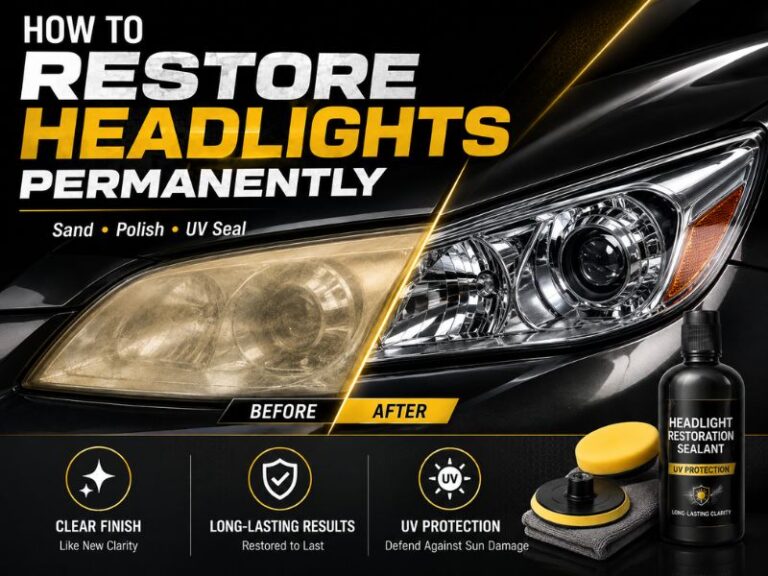
How Proper Headlight Restoration Works
A complete restoration is different from simply making the lens shiny.
Step 1: Clean the Lens
Dirt and road contamination should be removed first.
Step 2: Remove or Level the Damaged Surface
Some restoration systems use controlled abrasion to remove oxidation and degraded coating.
Step 3: Polish the Lens
Polishing restores optical clarity after surface correction.
Step 4: Restore UV Protection
This is one of the most important steps.
Once degraded material has been removed, the lens needs renewed protection against ultraviolet exposure.
A lens that is polished clear but left unprotected may begin deteriorating again.
Bug Spray vs. Headlight Restoration Kit
| Method | Immediate Appearance | Risk to Lens | Long-Term Result |
| Bug spray | May look clearer quickly | Potential coating/plastic damage | Often temporary |
| Soap and water | Removes dirt only | Low when appropriate | Does not fix oxidation |
| Plastic-safe polish | Can improve mild haze | Lower when properly used | Better for mild oxidation |
| Headlight restoration kit | Designed for oxidation | Lower when instructions are followed | Better long-term potential |
The biggest difference is that restoration products are designed specifically for the job.
Bug spray is not.
What About Toothpaste and Other Headlight Hacks?
Bug spray is not the only popular DIY shortcut.
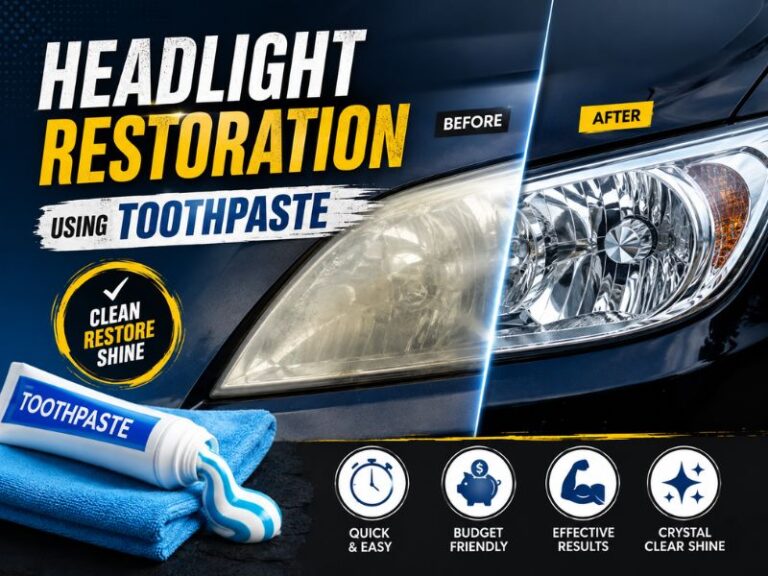
Toothpaste
Some toothpaste has mild abrasive properties, so it may improve light surface haze.
However, it is not a complete headlight restoration system and does not restore proper UV protection.
Oily Sprays
Certain oily products can make a cloudy lens look temporarily darker and clearer.
This is often a masking effect rather than oxidation removal.
Strong Household Solvents
These can create an even greater risk of plastic or coating damage.
The recurring mistake is judging success only by how the lens looks immediately afterward.
How to Tell Whether Your Headlights Need Cleaning or Restoration
Not every cloudy-looking headlight needs restoration.
It May Only Need Cleaning If You See:
- Dirt
- Road grime
- Insect residue
- Surface film
Wash the lens first and reassess.
It Probably Needs Restoration If You See:
- Persistent yellowing
- Chalky haze
- Dullness that remains after washing
- Fine oxidation
- Uneven cloudy patches
If washing does not restore clarity, the problem is likely within the surface layer rather than on top of it.
What If You Already Used Bug Spray on Your Headlights?
Do not keep repeating the treatment.
Instead:
- Stop applying the insect repellent.
- Remove remaining residue with an appropriate automotive-safe cleaner.
- Inspect the lens in good light.
- Look for haze, streaks, dull patches, or softening.
- Consider a proper headlight restoration method if cloudiness remains.
Avoid immediately experimenting with additional chemicals.
Combining multiple products can make it harder to determine what has affected the surface.
If the lens appears seriously damaged, professional evaluation may be the safer option.
Signs the Headlight Surface May Be Damaged
Watch for:
- Milky haze
- Streaks
- Sticky areas
- Uneven gloss
- Dull patches
- Cloudiness that worsens after cleaning
- Surface distortion
If the plastic feels unusually soft or sticky, stop applying chemicals.
That may indicate the surface has been affected.
Safety Precautions With Bug Spray Around a Vehicle
Even when using insect repellent for its intended purpose, follow the product label.
Basic precautions include:
- Avoid breathing concentrated spray mist
- Keep it away from eyes
- Wash hands after handling
- Avoid spraying near children or pets
- Avoid hot automotive surfaces
- Keep it off paint and trim when compatibility is uncertain
- Do not mix it with other automotive chemicals
When working around vehicles, remember that a product can be safe for one intended use while being unsuitable for another material.
Common Mistakes
Avoid these mistakes:
- Assuming a viral hack is automatically surface-safe
- Treating temporary clarity as proof of restoration
- Spraying bug repellent directly onto the lens
- Repeating the treatment regularly
- Letting strong chemicals sit on the plastic
- Allowing overspray onto paint or trim
- Mixing several DIY chemicals
- Using harsh solvents on polycarbonate
- Polishing oxidation but skipping UV protection
Frequently Asked Questions
Does Bug Spray Really Clean Headlights?
It may make cloudy lenses look clearer temporarily, but that does not mean it safely cleans or restores the surface.
Why Does Bug Spray Make Headlights Look Clearer?
It may alter the oxidized surface or leave a film that changes how light reflects from the lens.
Is DEET Safe on Headlight Plastic?
DEET can interact with some plastics and finishes, so it is not a recommended product for headlight lenses.
Can Bug Spray Damage Polycarbonate Headlights?
Yes, some formulas may damage the plastic or protective coating.
Does Bug Spray Remove Oxidation Permanently?
Usually not. Any improvement may be temporary if the oxidation and damaged protective layer are not properly restored.
Can DEET-Free Bug Spray Be Used on Headlights?
DEET-free does not automatically mean safe. Other ingredients may still affect automotive plastics or coatings.
What Happens If Bug Spray Gets on Car Paint?
It may leave residue, spotting, or other surface effects depending on the product and paint condition. Remove it with an appropriate automotive-safe cleaner.
Why Do Headlights Get Cloudy Again After Using Bug Spray?
The oxidation may remain, the temporary residue may wear away, or the surface may have been chemically altered.
What Should I Use Instead of Bug Spray?
Use automotive soap for dirt and a headlight-safe polish or restoration system for oxidation.
Can Toothpaste Restore Headlights?
It may improve mild haze because of its abrasive properties, but it is not a complete restoration method and does not replace UV protection.
Do Headlight Restoration Kits Work Better Than Bug Spray?
A proper restoration kit is designed specifically to address headlight oxidation and is generally a more appropriate choice.
What Should I Do If I Already Sprayed Bug Repellent on My Headlights?
Stop using it, clean off the residue with a suitable automotive-safe product, inspect the surface, and use a proper restoration method if needed.
Conclusion
Using bug spray to clean headlights may create a quick visual improvement, but that does not make it a safe or effective restoration method. Some insect repellents contain ingredients that can affect polycarbonate plastic or the protective coating on the lens.
The viral hack works largely because certain liquids and solvents can temporarily change the appearance of an oxidized surface. That can make the lens look dramatically clearer for a short time while doing little to address the underlying damage.
DEET is a particular concern because of its ability to interact with some plastics and finishes, but even DEET-free sprays are not automatically safe. Other solvents, alcohols, oils, and additives may also be unsuitable for automotive lenses.
If a headlight is simply dirty, wash it with an automotive-safe cleaner. If it is oxidized, use a headlight-specific restoration method that removes the damaged surface and restores protection.
Skip the bug-spray headlight hack. A temporary change in appearance is not worth the risk of damaging the lens or its protective coating when proper headlight-cleaning and restoration methods are available.