Can You Use Pledge to Clean Car Interior: Overview and Key Facts
Yes, you can use some Pledge products on limited hard, finished surfaces inside a car, but it is not a universal car-interior cleaner. Use it sparingly on compatible plastic, vinyl, or sealed trim only after checking the label and testing an inconspicuous area. Avoid applying it to seats, steering wheels, pedals, touchscreens, glass, or other surfaces where residue could create a safety or appearance problem.
The practical distinction many people miss is that Pledge is generally a furniture polish, not a purpose-made automotive interior product. Its oils, waxes, silicones, and fragrances may make a dashboard look glossy and temporarily hide light dust, yet that same residue can attract more dust, create glare, or leave a slippery film when used in the wrong place. A rushed spray can also travel farther than expected, especially inside a confined cabin.
This article explains which interior materials may tolerate a small amount of Pledge, where it should not be used, how to apply it more safely, and what to do if too much has already been sprayed. By the end, you can decide whether the product is suitable for a specific hard surface or whether a low-sheen automotive interior cleaner is the better choice.
What Pledge Does Inside a Car
Pledge products are designed to clean, shine, and protect certain household surfaces, especially finished wood and other hard materials. Depending on the formula, they may contain cleaning agents, waxes, oils, silicones, solvents, or water-based ingredients that leave a polished appearance.
That effect can be acceptable on some sealed interior plastics or vinyl trim. However, a car interior contains many different materials with different finishes, textures, and safety requirements. A product that looks fine on a smooth dashboard may be a poor choice for a textured steering wheel, a fabric door panel, or a soft-touch coating.
Pledge also does not remove every type of automotive contamination. It may lift light dust and fingerprints, but it is not the best option for greasy residue, food spills, body oils, embedded dirt, stains, or bacteria-related concerns. A dedicated interior cleaner is usually formulated to clean without leaving the same furniture-polish shine.
Where Pledge May Be Acceptable
A small amount may be usable on a smooth, hard, finished surface such as certain dashboard panels, door trim, center-console plastics, or vinyl surfaces. The surface should be nonporous, intact, and free from a peeling, rubberized, or soft-touch coating.
Always check the exact Pledge label first. Product formulas differ, and a spray intended for wood may not have the same directions or finish as a multi-surface version. The label cannot guarantee automotive compatibility, but it can identify warnings, prohibited materials, and ventilation instructions.
Even on a potentially compatible panel, the result may not be desirable. Some interiors are designed to have a matte or satin appearance, while furniture polish can leave a noticeably glossy finish. Gloss may make an older surface look refreshed temporarily, but it can also emphasize scratches, streaks, and uneven wear.
Hard plastic and vinyl trim
These are the most likely surfaces to tolerate a very limited application, provided they are sealed and not coated with a delicate finish. Spray the product onto a microfiber cloth rather than directly onto the panel, then wipe lightly and evenly.
Afterward, use a separate clean cloth to remove excess residue. The surface should feel clean and dry, not oily or slippery. If the cloth leaves a greasy streak or the panel develops an unusually bright sheen, remove the product instead of adding more.
Finished decorative trim
Glossy decorative trim may react differently from ordinary plastic. Wood-look, painted, coated, or metallic-effect panels can be damaged or visually altered by cleaners that contain solvents or polishing agents.
Test a hidden edge first and wait long enough to check for dulling, discoloration, tackiness, or a change in texture. Never assume that real wood, imitation wood, or a clear-coated panel will respond the same way.
Where You Should Not Use Pledge
Several interior areas deserve a firm no because residue can affect control, visibility, comfort, or the material itself. Keeping polish away from these surfaces is more important than achieving a quick shine.
- Steering wheel: A waxy or oily film can reduce grip and make precise steering more difficult.
- Pedals and foot controls: Any slippery residue creates an avoidable control hazard.
- Gear selector and handbrake: These are frequently handled and should remain clean and non-slippery.
- Seats: Polish can stain fabric, alter leather appearance, or leave vinyl slick.
- Touchscreens and instrument displays: Oils may cause streaks, glare, touch-response problems, or coating damage.
- Windows and mirrors: Residue can create haze and dangerous nighttime glare.
- Seat belts: Coating the webbing may affect its feel and cleanliness; use only the vehicle maker’s approved cleaning method.
- Airbag covers and seams: Avoid spraying around these areas, particularly on the steering wheel, dashboard, and pillars.
- Soft-touch coatings: These rubberized finishes can become sticky, cloudy, or damaged.
Do not spray into vents, switches, buttons, speakers, USB ports, or other openings. Liquid or aerosol mist can travel behind trim and create electrical or mechanical problems that are difficult to diagnose.
Why Furniture Polish Can Be a Poor Automotive Choice
The biggest issue is residue buildup. A polished surface can look clean immediately, but oils and waxes may hold dust and airborne particles. Over time, repeated applications can create a dull, uneven layer that requires more aggressive cleaning to remove.
Another concern is glare. A glossy dashboard can reflect sunlight onto the windshield, especially when the vehicle is traveling toward a low sun. Even a thin film on the inside of the glass can make reflections worse and reduce visual clarity.
Silicone-containing products may also complicate later detailing or refinishing. Silicone is not automatically harmful to every interior surface, but it can make some repair, dyeing, repainting, or bonding work more difficult because contaminants must be thoroughly removed first.
Fragrance is a further consideration. A vehicle cabin is small and poorly ventilated when the doors and windows are closed, so a strong scent may become unpleasant or trigger headaches, asthma symptoms, or sensitivity in some passengers. Ventilate the car after any use and stop if irritation occurs.
How to Test Pledge on a Car Interior
A hidden-area test reduces the chance of turning a small cleaning task into a visible repair problem. Choose an underside, rear edge, or other concealed section made from the same material as the surface you intend to clean.
- Read the Pledge label and the vehicle owner’s manual for material-specific warnings.
- Remove loose dust with a dry microfiber cloth or a vacuum with a soft attachment.
- Place a small amount of product on the cloth, never directly on the vehicle surface.
- Wipe a small test patch with gentle pressure.
- Check immediately for streaking, color transfer, stickiness, cloudiness, or unusual gloss.
- Allow the area to dry, then inspect it again in daylight and under the vehicle’s interior lighting.
- Buff away any remaining film with a clean, dry microfiber towel.
If the finish changes, feels slippery, or attracts visible dust, do not continue. A successful test only shows that the particular product and material did not show an immediate reaction; it does not mean the product is suitable for every part of the cabin.
How to Apply It With Less Risk
Work in a shaded, well-ventilated location with the vehicle turned off. Open the doors or windows as appropriate, keep the product away from children and pets, and avoid using an aerosol near heat, flames, or electrical equipment.
Use a clean, lint-free microfiber cloth. One light application is enough; saturating the cloth or panel increases the chance of streaks, overspray, and residue in seams. Wipe in one direction on broad panels, then use a dry side of the cloth to level the finish.
Never chase a deeper shine by applying multiple coats. In a car, a low-sheen, non-slip finish is generally more practical than a highly glossy one. The goal should be removing soil without changing the surface’s traction or creating reflections.
Before driving, run a clean hand over the treated area. If it feels slick, oily, tacky, or unusually smooth, clean it again with a suitable interior cleaner or a lightly damp microfiber cloth, following the material manufacturer’s guidance. Pay particular attention to anything near the driver’s hands or feet.
Better Options for Different Interior Materials
A dedicated automotive interior cleaner is usually the safer general choice because it is made for common vehicle plastics, vinyl, and trim. Choose a product labeled for the exact material and, when possible, select a matte or natural-finish formula rather than a high-gloss dressing.
For routine dust, a dry microfiber cloth or a slightly damp cloth may be all that is needed. This approach avoids adding fragrance, silicone, or wax when the surface is not actually dirty.
Leather
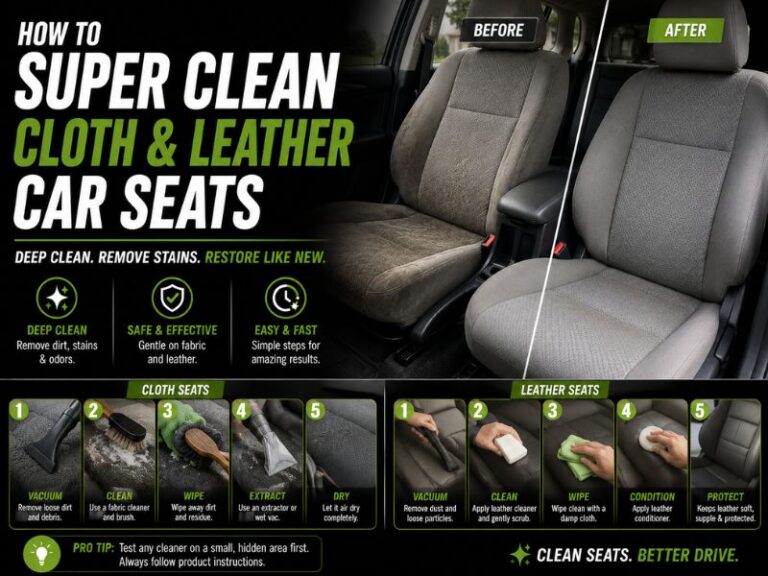
Do not treat automotive leather with ordinary furniture polish unless the vehicle or product manufacturer specifically permits it. Modern seats may include protective coatings, perforations, contrast dyes, or synthetic materials that require a leather-safe cleaner.
Use a product labeled for automotive leather, apply it to a cloth, and avoid filling perforated seat panels with liquid. Heavy oils can leave the seat slick and may transfer onto clothing.
Fabric and carpet
Pledge is not an appropriate carpet or upholstery cleaner. Fabric can absorb the product, leaving an oily spot, darkened patch, or lingering fragrance that is difficult to remove.
For fabric, vacuum first and use an upholstery cleaner designed for vehicle interiors. Blot spills rather than aggressively rubbing them, and avoid soaking seat foam or carpet padding.
Infotainment screens
Use the screen manufacturer’s instructions or the vehicle manual. In many cases, a clean, dry microfiber cloth is the safest first step, followed by a minimally damp cloth if permitted.
Do not spray any cleaner directly on a screen. Household polish can leave a film that increases fingerprints and glare, and some displays have coatings that can be permanently affected by unsuitable chemicals.
What to Do If You Used Too Much
If Pledge has already been sprayed on the dashboard or trim, do not panic. Remove the excess promptly with a clean, dry microfiber cloth, turning the cloth frequently so the residue is lifted instead of redistributed.
For a remaining film on compatible hard plastic or vinyl, use a small amount of water on a separate cloth and wipe gently. If the surface remains greasy, use a properly labeled automotive interior cleaner, following its directions and testing first.
If the product reached the steering wheel, pedals, shifter, windshield, touchscreen, or seat belt, prioritize those areas. Clean until no slippery or hazy residue remains, and do not drive until the controls and visibility are normal.
Stop cleaning and seek professional detailing or manufacturer guidance if the coating has become sticky, cloudy, discolored, swollen, or visibly damaged. Aggressive scrubbing, strong solvents, or household degreasers can make the damage worse.
When Professional Help Makes Sense
Professional help is worthwhile when a soft-touch dashboard has turned tacky, a screen has developed a persistent film, or polish has stained fabric or leather. A detailer may be able to identify the material and remove residue without stripping its factory finish.
Professional advice is also appropriate when a product has entered vents, switches, seat-belt mechanisms, or airbag-related trim. Mechanical controls and safety equipment should not be flooded with cleaner, and a visible residue near those components should not be ignored.
For an ordinary light application on a compatible hard panel, careful wiping is usually sufficient. The key is to avoid repeated polishing and to recognize that a clean factory finish is often preferable to a freshly shined one.
Conclusion: Use Pledge Only on Limited Hard Surfaces
You can use Pledge cautiously on some smooth, sealed plastic or vinyl trim, but it is not a whole-car interior cleaner. Keep it away from steering wheels, pedals, seats, screens, windows, seat belts, soft-touch coatings, and airbag areas because slick residue, glare, staining, or material damage can create real problems.
Test first, apply it to a microfiber cloth rather than spraying the cabin, use very little, and remove every slippery or glossy film before driving. For regular maintenance, a material-safe automotive interior cleaner or a damp microfiber cloth is usually the better next step.