How Often Should You Clean a Throttle Body? Signs and Timing
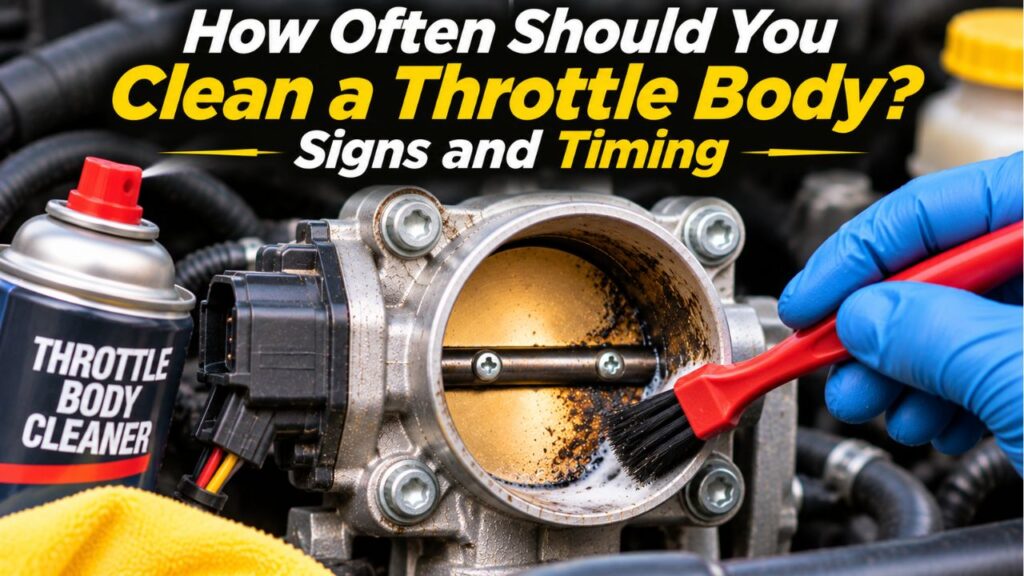
You should generally clean a throttle body when carbon buildup affects airflow or causes engine problems, not simply because your car reaches a certain mileage. A common preventive guideline is to inspect it around every 30,000–50,000 miles, but many vehicles don’t have a manufacturer-required cleaning interval.
The throttle body controls how much air enters your gasoline engine. Over time, oil vapor, carbon deposits, and other contaminants can collect around its internal plate. Heavy buildup may cause rough idling, hesitation, or stalling, especially when the engine is running at low speeds.
Still, not every throttle body needs frequent cleaning. Some remain relatively clean beyond 100,000 miles, while others develop deposits much sooner. Engine condition, driving habits, and maintenance all influence the amount of buildup.
Cleaning too often isn’t necessarily helpful, either. Modern electronic throttle bodies contain delicate components that can suffer damage from improper cleaning.
This guide explains realistic cleaning intervals, warning signs, inspection methods, and when professional service makes more sense than routine cleaning.
How Often Should You Clean a Throttle Body?
Most vehicles don’t require throttle body cleaning at a universal mileage interval. Inspecting it around 30,000–50,000 miles can be a reasonable preventive checkpoint, but cleaning should depend on visible deposits, engine symptoms, and manufacturer instructions. A clean, properly operating throttle body may not need service for many more miles.
Throttle Body Cleaning Mileage Guide
| Vehicle mileage or condition | Suggested action |
| Under 30,000 miles | Usually no cleaning needed without symptoms or a manufacturer requirement |
| 30,000–50,000 miles | Optional inspection for carbon buildup |
| 50,000–75,000 miles | Check condition if symptoms develop or intake work is being done |
| 75,000–100,000 miles | Consider inspection if it hasn’t been checked |
| Over 100,000 miles | Inspect based on condition and performance |
| Any mileage with rough idle or stalling | Diagnose the cause and inspect for deposits |
These are practical inspection checkpoints, not factory cleaning intervals.
For example, a car with 65,000 miles that starts easily and idles smoothly may not benefit from cleaning. Another vehicle with 35,000 miles and heavy carbon around the throttle plate may need attention sooner.
Follow Your Owner’s Manual First
Manufacturers establish maintenance schedules according to engine design and expected operating conditions.
Some provide specific throttle body service instructions, while others don’t list routine cleaning.
The vehicle maintenance schedule guidance recommends following the owner’s manual rather than applying generic service intervals to every vehicle.
If your manual doesn’t specify throttle body cleaning, don’t automatically treat it as required maintenance.
The rule of thumb is simple: inspect when appropriate, clean when necessary.
Why Do Some Throttle Bodies Get Dirty Faster Than Others?
Throttle body contamination develops at different rates because engines vary in design, ventilation systems, operating conditions, and maintenance history. Oil vapor and airborne contaminants can collect around the throttle plate, forming sticky deposits. Vehicles with excessive oil vapor, intake leaks, or frequent short trips may develop buildup sooner.
Oil Vapor From the PCV System
The positive crankcase ventilation (PCV) system routes gases from inside the engine back into the intake.
These gases can contain small amounts of oil vapor.
When the vapor contacts intake surfaces, it may leave a thin oily film.
Over time, that film can collect dirt and develop into thicker deposits.
For example, a worn engine that carries excessive oil vapor through its ventilation system may develop grime faster than a healthy engine with similar mileage.
Short Trips and Frequent Idling
Driving habits can influence how deposits develop.
Frequent short trips and long periods of idling may contribute to conditions that allow contaminants to accumulate.
For example, a car used mainly for short neighborhood errands may have a different deposit pattern from one driven regularly on longer highway trips.
That doesn’t mean short trips always cause a dirty throttle body.
The engine’s ventilation design and condition also matter.
Dirty Air Filters and Intake Leaks
The engine air filter helps keep airborne particles out of the intake system.
A damaged filter or loose intake connection can allow additional contamination to enter.
Dusty roads can increase exposure when filtration or intake sealing is poor.
Check the air filter and intake duct before assuming the throttle body itself needs repeated cleaning.
Engine Age and Condition
Higher-mileage engines may develop more oil vapor contamination because of wear or ventilation system problems.
But mileage alone isn’t a reliable measure.
A well-maintained engine with 120,000 miles might have less throttle body buildup than a neglected engine with 50,000 miles.
That’s why inspecting the actual component makes more sense than relying entirely on the odometer.
What Are the Signs That Your Throttle Body Needs Cleaning?
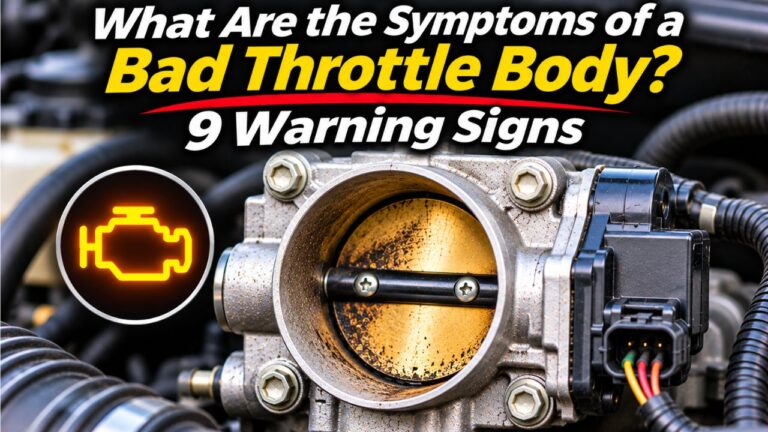
A dirty throttle body may cause rough idle, hesitation, engine stalling, fluctuating RPM, or reduced throttle response when deposits interfere with airflow. The most useful signs occur during starting, idling, or low-speed operation. These symptoms aren’t unique to throttle contamination, so diagnosis should come before cleaning.
Rough or Unstable Idle
One common symptom is an engine that shakes or struggles to maintain a steady idle.
Carbon buildup around the throttle plate can restrict the small amount of air needed while the engine is idling.
For example, your car may run smoothly on the highway but vibrate when stopped at a traffic light.
A vacuum leak, worn spark plug, or fuel problem can cause similar behavior.
Stalling When Coming to a Stop
Heavy deposits can affect airflow when the throttle plate moves toward its nearly closed position.
The engine may struggle to maintain enough airflow to continue running.
You might notice the engine stalling after releasing the accelerator or stopping at an intersection.
A manufacturer’s service bulletin on carbon buildup and idle problems identifies idle surging, hesitation, and reduced engine power as possible symptoms on certain high-mileage vehicles.
Hesitation During Acceleration
A dirty or sticking throttle plate may affect how smoothly the engine responds.
You press the gas pedal, but acceleration feels delayed or uneven.
Still, hesitation can come from ignition coils, fuel injectors, electronic sensors, or other engine problems.
Don’t assume cleaning will fix every acceleration issue.
Other Warning Signs
| Symptom | Could throttle body cleaning help? |
| Rough idle | Yes, if deposits restrict airflow |
| Stalling at low speeds | Possibly, after proper diagnosis |
| Slow throttle response | Sometimes, if buildup affects plate movement |
| Fluctuating engine RPM | Possibly |
| Poor fuel economy | Only if buildup contributes to the problem |
| Check engine light | Depends on the stored trouble code |
| Engine won’t crank | No, usually a starting-system problem |
A dirty throttle body is one possible cause, not a confirmed diagnosis.
How Can You Check if Your Throttle Body Needs Cleaning?
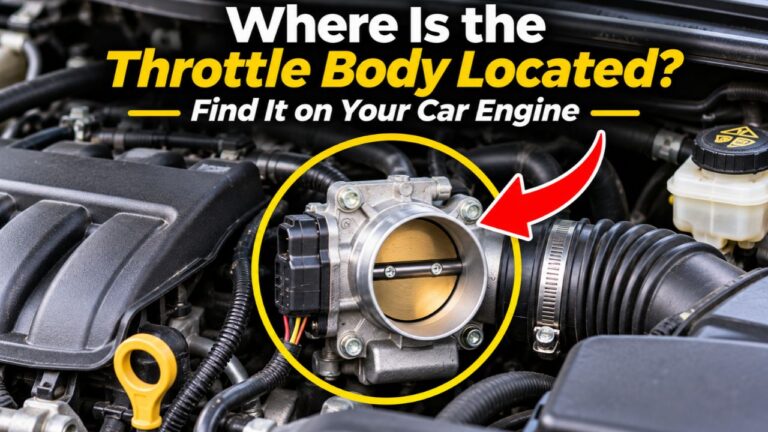
You can inspect many throttle bodies by turning off the engine, removing the air intake duct, and checking the throttle plate and inner housing with a flashlight. Thick black carbon, sticky brown residue, or heavy deposits around the plate edges may justify cleaning, especially when matching engine symptoms are present.
Step 1: Locate the Throttle Body
Open the hood with the engine off and cool.
Find the air filter housing and follow the large intake tube toward the engine.
The throttle body normally sits where that tube meets the intake manifold.
Step 2: Remove the Intake Tube
Loosen the clamp securing the intake tube to the throttle body.
Carefully move the tube aside.
Some vehicles have additional hoses or electrical connections attached to the duct.
Follow the service procedure rather than pulling everything loose.
Step 3: Inspect the Throttle Plate
Use a flashlight to examine the round plate inside the throttle body.
Look for:
- Thick black carbon around the plate edges
- Sticky brown or oily deposits
- Crusty buildup along the inner bore
- Heavy contamination behind the plate, if safely visible
- Deposits that may interfere with plate movement
A thin layer of discoloration is usually less concerning than thick, uneven deposits.
Step 4: Decide Whether Cleaning Is Necessary
| What you find | Recommended action |
| Smooth surfaces with minimal staining | Usually leave it alone |
| Light carbon ring and no symptoms | Monitor condition |
| Thick carbon around the plate | Consider approved cleaning |
| Sticky deposits and rough idle | Diagnose and clean if appropriate |
| Pooling engine oil | Check PCV system and oil contamination source |
| Damaged throttle plate or housing | Inspect for mechanical damage |
For example, a dark ring around the throttle plate isn’t automatically a problem. A thick layer that affects airflow deserves closer attention.
Safety Note: Never put your fingers inside an electronic throttle body while the actuator may receive electrical power. The plate can move unexpectedly.
Can You Clean a Throttle Body Too Often?
Yes, unnecessary or aggressive throttle body cleaning can create problems, particularly on modern electronic assemblies. Repeated exposure to unsuitable chemicals, excessive scrubbing, or forced movement of the throttle plate can damage protective coatings, seals, and electronic components. Cleaning should address deposits rather than become an automatic service at every oil change.
Why More Cleaning Isn’t Always Better
A throttle body doesn’t need to look polished to work correctly.
Some units have factory coatings that appear slightly dark.
Scrubbing those surfaces too aggressively may remove material that was never intended to be cleaned away.
There is also a risk of introducing solvent into sensitive areas around the throttle shaft.
Should You Clean It at Every Oil Change?
Usually not.
Oil changes are performed far more frequently than most throttle bodies need cleaning.
Removing the intake duct at every oil change can create unnecessary work and increase the chance of disturbing hoses or connectors.
A simple visual inspection during appropriate intake maintenance is usually enough.
Will Frequent Cleaning Improve Gas Mileage?
Not necessarily.
Cleaning a badly contaminated throttle body may improve idle quality and restore normal airflow.
But removing a light film from an already functioning throttle body won’t automatically increase horsepower or fuel economy.
If your vehicle runs like clockwork and shows no signs of restricted airflow, routine cleaning may provide little benefit.
How Should You Clean a Throttle Body Safely?
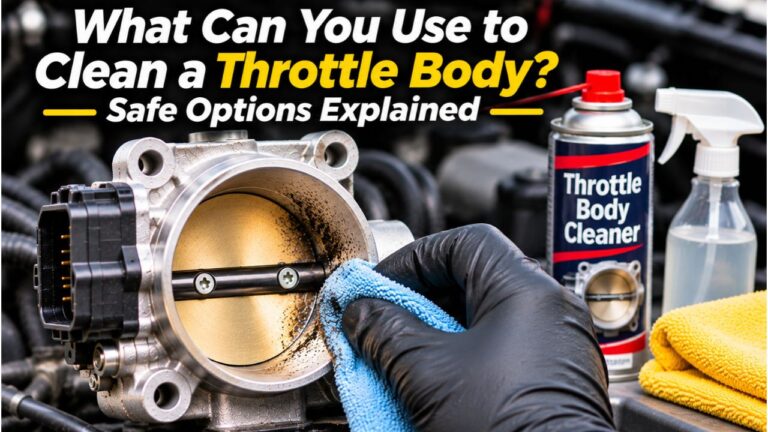
Safe throttle body cleaning involves following the vehicle’s service instructions, using an approved cleaner, and gently removing deposits from the throttle plate and bore. Electronic throttle bodies need special care because the internal motor, gears, sensors, and factory coatings may be damaged by forcing the plate or applying chemicals incorrectly.
Basic Cleaning Process
The exact procedure depends on the vehicle, but a typical approved method may involve:
- Turn off the engine and allow it to cool.
- Follow the manufacturer’s electrical safety instructions.
- Remove the air intake duct.
- Inspect the throttle plate and bore.
- Apply approved throttle body cleaner to a clean, lint-free cloth.
- Gently wipe accessible deposits using the specified method.
- Reinstall the intake duct and reconnect anything removed.
- Perform an idle relearn if the manufacturer requires one.
For example, a factory cleaning instruction for electronic throttle bodies advises applying cleaner to a cloth instead of spraying it directly into the housing. That instruction applies to the vehicles covered by the procedure.
What Should You Avoid?
Never force a throttle plate open unless the manufacturer specifically permits that method.
Avoid metal scrapers, abrasive brushes, and harsh solvents.
Don’t spray flammable cleaner into a running engine as a general DIY cleaning method.
Also, don’t remove factory throttle stop screws or open sealed electronic actuator housings.
Pro Tip: If the throttle plate is difficult to access safely, removing the assembly according to the service manual may be better than forcing tools into a narrow opening.
Does a Throttle Body Need a Relearn After Cleaning?
Some electronic throttle bodies require an idle relearn after cleaning because the engine computer has adapted to airflow restrictions caused by carbon buildup. Once the deposits are removed, the same throttle settings may allow more air into the engine. The relearn helps the computer adjust to the cleaned assembly.
Why Idle Speed May Change
Modern electronic throttle systems adjust throttle opening to maintain idle speed.
As deposits accumulate, the computer may gradually compensate by opening the throttle plate farther.
After cleaning, that compensation may no longer match the airflow through the clean opening.
For example, a car that idled normally before cleaning might temporarily idle too high afterward.
That doesn’t automatically mean the new cleaning work damaged the throttle body.
Different Relearn Methods
| Vehicle system | Possible relearn method |
| Self-adapting electronic throttle | Automatic adjustment during specified operation |
| Electronic throttle with manual procedure | Manufacturer-specific ignition or idle sequence |
| Scan-tool-controlled system | Diagnostic scanner commands calibration |
| Older cable-operated throttle | Depends on its idle control design |
There is no universal throttle body relearn procedure.
Some systems require a compatible scan tool, while others adapt automatically.
Don’t assume disconnecting the battery will reset every throttle body correctly.
If idle speed stays unusually high, the check engine light comes on, or the vehicle stalls after cleaning, check the service instructions and have the problem diagnosed.
Should You Clean or Replace a Dirty Throttle Body?
Cleaning is usually the better first option when the throttle body has carbon deposits but its motor, sensors, and mechanical parts work correctly. Replacement becomes more appropriate when testing confirms damaged electronics, worn internal gears, a defective actuator, or other nonserviceable faults. Dirt alone doesn’t mean the assembly has failed.
When Cleaning Is Enough
Cleaning may resolve problems caused by deposits around the throttle plate.
For example, a vehicle with rough idle and visible carbon buildup may improve once the restricted airflow area is cleaned properly.
The condition of the throttle body matters more than its age.
When Replacement Makes More Sense
Consider replacement when diagnosis confirms:
- Failed electronic throttle actuator
- Damaged throttle position sensor that can’t be replaced separately
- Broken internal gears
- Cracked housing or damaged sealing surface
- Mechanical throttle plate damage
Don’t replace a throttle body based solely on one trouble code.
A damaged connector, loose intake duct, or incomplete relearn can cause symptoms that resemble throttle body failure.
Common Mistakes With Throttle Body Cleaning Frequency
The most common mistake is treating throttle body cleaning as a mandatory service at a fixed mileage. Generic intervals don’t account for engine design, actual contamination, or manufacturer recommendations. Cleaning without a reason can waste money, while ignoring heavy deposits and rough idle can allow a correctable problem to continue.
Avoid these mistakes:
- Cleaning at every oil change: Most vehicles don’t need that frequency.
- Waiting for a specific mileage despite symptoms: Problems deserve diagnosis when they appear.
- Assuming every black mark needs removal: Light discoloration may be normal.
- Ignoring an underlying oil leak or PCV problem: Deposits may return quickly.
- Using the wrong cleaner: Harsh chemicals may damage seals or coatings.
- Skipping a required relearn: Idle problems may continue after cleaning.
If deposits return unusually quickly, get to the bottom of the contamination source rather than repeatedly cleaning the same component.
That approach can save unnecessary work and keep you from ending up back at square one.
Frequently Asked Questions
Throttle body cleaning intervals vary because every engine accumulates deposits differently. These questions address mileage recommendations, cleaning without symptoms, high-mileage vehicles, and whether certain maintenance services actually clean the throttle body. Manufacturer instructions should always take priority over general advice.
Is Cleaning the Throttle Body Every 30,000 Miles Necessary?
No. Cleaning every 30,000 miles is a general preventive recommendation, not a universal manufacturer requirement. Some throttle bodies remain clean for much longer. If your engine idles normally and inspection shows little buildup, cleaning may be unnecessary. Follow the maintenance schedule and actual condition of your vehicle.
Can You Go 100,000 Miles Without Cleaning a Throttle Body?
Yes. Some vehicles can reach 100,000 miles or more without needing throttle body cleaning. The amount of buildup depends on engine condition, ventilation design, maintenance, and driving habits. High mileage alone doesn’t prove cleaning is required. Inspect the throttle body if symptoms appear or during appropriate intake service.
Should You Clean a Throttle Body if the Car Runs Fine?
Usually not unless the manufacturer recommends it or inspection reveals a reason for service. Minor discoloration doesn’t necessarily affect performance. Cleaning a properly functioning electronic throttle body can introduce unnecessary risks. Monitor the engine’s idle and throttle response, and address deposits if they become excessive.
Does Fuel Injector Cleaner Clean the Throttle Body?
Fuel injector cleaner added to the gas tank generally won’t clean the throttle body’s air passage. In a typical port-injected gasoline engine, fuel enters downstream of the throttle body. In a direct-injected engine, fuel enters the cylinders. Cleaning deposits around the throttle plate usually requires an approved throttle body cleaning procedure.
Why Does My Throttle Body Get Dirty Again So Quickly?
Fast recurring buildup may result from excessive oil vapor, PCV system problems, poor intake filtration, or engine wear. Some deposits are normal, but heavy contamination soon after cleaning deserves investigation. Inspect the ventilation system and intake connections rather than repeatedly cleaning the throttle body without identifying the cause.
Can a Dirty Throttle Body Damage the Engine?
Heavy deposits can interfere with airflow and contribute to stalling, rough idle, or poor throttle response. They don’t automatically cause permanent engine damage. Still, unexpected stalling or abnormal acceleration can create driving hazards. If the problem affects vehicle control, stop driving safely and have the underlying fault checked.
Keep Your Throttle Body Clean Without Unnecessary Service
Throttle body cleaning doesn’t need to follow one fixed mileage schedule. An inspection around 30,000–50,000 miles can be a reasonable checkpoint, but actual cleaning depends on deposits, engine performance, and manufacturer instructions.
A healthy throttle body may work well for 100,000 miles or longer without cleaning. Another vehicle may need attention sooner because of oil vapor, intake contamination, or engine condition.
Watch for rough idle, stalling, hesitation, and thick carbon buildup around the throttle plate. These signs justify inspection, although they don’t automatically confirm a dirty throttle body.
Don’t clean more often than necessary, use harsh chemicals, or force electronic throttle components. Some vehicles also need an idle relearn after cleaning.
Your next step is to check your owner’s manual for any specified throttle body maintenance, then inspect the throttle plate if symptoms or service history justify it. If you’re unsure whether cleaning is needed, have a qualified automotive technician check the intake system before approving the service.