What Is an EGR Valve? Meaning, Operation, and Common Problems
An EGR valve is an engine emissions component that controls how much exhaust gas flows back into the engine’s intake system. EGR stands for Exhaust Gas Recirculation. By returning a controlled amount of exhaust gas to the cylinders, the valve helps lower combustion temperatures and reduce harmful nitrogen oxide emissions.
You’ll find EGR systems on many gasoline and diesel engines. The valve works automatically based on engine temperature, speed, and load. Drivers normally don’t need to operate or adjust it, but they may notice problems when carbon deposits prevent the valve from opening or closing correctly.
A faulty EGR valve can cause rough idling, hesitation, poor acceleration, stalling, or a check-engine light. Unfortunately, these symptoms can also come from other engine problems, making proper diagnosis important before replacing parts.
This guide explains what an EGR valve does, how it works, and where it’s located. You’ll also learn the differences between gasoline and diesel EGR systems, common failure symptoms, and when cleaning or replacement makes sense.
What Does EGR Valve Stand For?
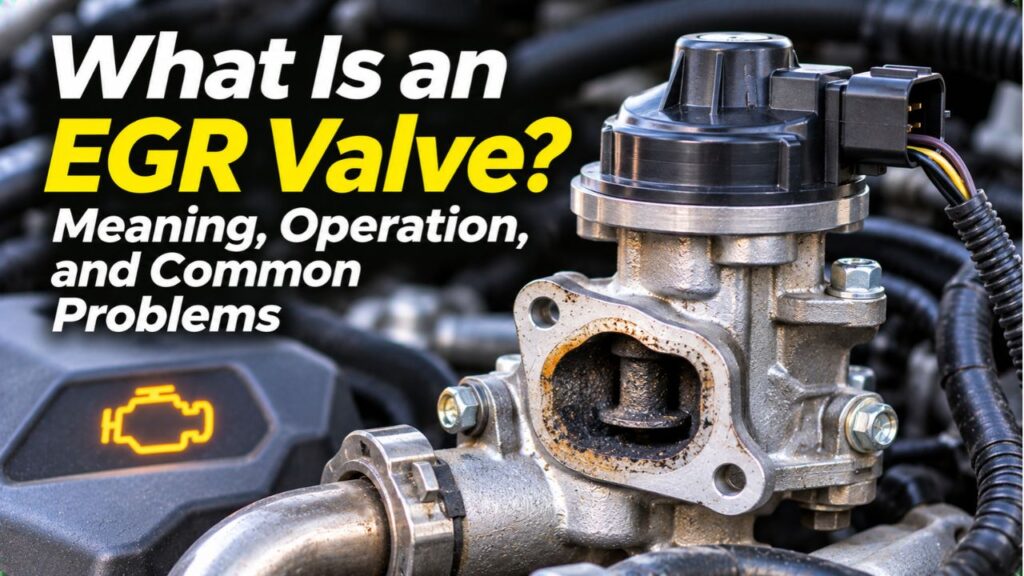
EGR stands for Exhaust Gas Recirculation, which describes the process of redirecting some exhaust gas back into an engine’s intake system. The EGR valve regulates that flow. It forms part of the engine’s emissions control equipment and helps reduce nitrogen oxides produced during combustion.
Each word describes part of the process:
- Exhaust: Gas produced after fuel burns inside the engine.
- Gas: The mixture of gases leaving the combustion chambers.
- Recirculation: Routing some of that gas back into the engine rather than sending all of it directly through the exhaust system.
The complete EGR system may include passages, tubes, sensors, vacuum controls, electrical connections, and an EGR cooler.
The valve is simply the component that controls the amount of returning exhaust gas.
Why Is It Called Recirculation?
Most exhaust gas leaves the engine through the exhaust system.
An EGR-equipped engine redirects a controlled portion of that gas toward the intake, where it mixes with incoming air before entering the cylinders.
Think of it like a controlled return route. Instead of allowing all the exhaust to leave immediately, the engine sends some back to influence the next combustion event.
This doesn’t mean the exhaust contains enough unused fuel to power the engine again.
The returned gas mainly changes the conditions under which fresh fuel burns.
That’s the key difference between EGR and normal fuel delivery.
What Does an EGR Valve Do?
An EGR valve controls the amount of exhaust gas returning to the engine’s intake system. Its main purpose is to lower peak combustion temperatures and reduce nitrogen oxide emissions, commonly called NOx. The valve opens or closes as needed to match the engine’s operating conditions.
Reduces Harmful Nitrogen Oxide Emissions
When fuel burns inside an engine, combustion produces high temperatures.
At sufficiently high temperatures, nitrogen and oxygen in the air can react and form nitrogen oxides.
These pollutants contribute to air quality problems, including ground-level ozone and smog.
The EGR system helps reduce their formation.
It introduces exhaust gas that contains less oxygen than fresh air and absorbs heat during combustion.
This lowers peak combustion temperatures, reducing the conditions that favor NOx formation.
The technical explanation of exhaust gas recirculation describes how controlled exhaust flow changes combustion conditions and reduces nitrogen oxide production.
Helps Control Combustion Conditions
An EGR valve also helps the engine operate within its designed combustion limits.
For example, a gasoline engine operating under light or moderate load may use EGR to reduce combustion temperatures and improve certain operating characteristics.
Some gasoline engines can benefit from reduced pumping losses or improved resistance to engine knock.
Engine knock occurs when part of the fuel mixture burns abnormally, creating sharp pressure changes inside the cylinder.
EGR can help manage combustion conditions, although its effect depends on engine design.
Can Affect Fuel Economy
A properly functioning EGR system may improve fuel efficiency under certain conditions.
This benefit is especially relevant to some gasoline-engine designs operating at partial load.
But EGR doesn’t automatically improve fuel economy in every vehicle or operating condition.
Diesel engines, in particular, balance NOx reduction against soot formation, combustion efficiency, and exhaust aftertreatment requirements.
The system’s main job remains emissions control.
How Does an EGR Valve Work?
An EGR valve works by opening a controlled passage between the exhaust and intake systems. When engine conditions call for recirculation, exhaust gas flows back toward the cylinders and mixes with fresh intake air. The reduced oxygen concentration and heat-absorbing gas lower peak combustion temperatures.
Step 1: The Engine Produces Exhaust Gas
During normal combustion, the engine burns fuel using oxygen from incoming air.
The process creates pressure that moves the pistons and produces exhaust gases.
Most of these gases eventually leave through the exhaust system.
In an engine with external EGR, part of the exhaust stream can travel through a separate return passage.
Step 2: The Engine Computer Determines EGR Demand
The engine control module (ECM) is the computer that manages fuel delivery, ignition or injection timing, and many other engine functions.
It determines the desired EGR flow using information such as engine speed, load, temperature, and other sensor readings.
For example, the engine may request more EGR under certain warmed-up, moderate-load conditions.
During other conditions, it may reduce or stop recirculation.
There’s no single EGR opening schedule that applies to every engine.
Step 3: The EGR Valve Opens
When EGR flow is required, the control system opens the valve.
Older designs may use engine vacuum and a flexible diaphragm to move the valve.
Many newer designs use an electric motor or solenoid.
A solenoid is an electromagnetic device that produces movement when electrical current passes through it.
The valve may open fully, close completely, or remain partly open, depending on its design.
Step 4: Exhaust Gas Returns to the Intake
The open valve allows exhaust gas to travel through a passage or tube toward the intake.
Some systems route the gas through an EGR cooler first.
An EGR cooler uses engine coolant or another heat exchange arrangement to lower exhaust gas temperature before recirculation.
The returning gas then mixes with incoming air.
Step 5: Combustion Temperature Drops
The returned exhaust gas replaces some of the fresh intake air.
Because much of the recirculated gas doesn’t participate in combustion the way oxygen does, it helps absorb heat and changes the burning process.
The result is a lower peak combustion temperature under the intended conditions.
That reduces NOx formation.
Here’s the process at a glance.
| Stage | What Happens | Purpose |
| Exhaust production | Engine burns fuel | Produces power and exhaust |
| EGR command | Control system requests flow | Matches engine conditions |
| Valve opening | EGR passage opens | Allows controlled exhaust return |
| Gas recirculation | Exhaust mixes with intake air | Changes intake gas composition |
| Combustion | Peak temperature decreases | Helps reduce NOx emissions |
A useful rule of thumb is that EGR controls combustion conditions, not engine speed directly.
What Are the Different Types of EGR Valves?
EGR valves come in vacuum-operated and electronically controlled designs, with different arrangements for gasoline and diesel engines. Some systems use cooled exhaust gas, while others return it without a separate cooler. The correct design depends on engine technology, emissions requirements, and manufacturer specifications.
Vacuum-Operated EGR Valves
Older EGR systems often use vacuum to move a diaphragm.
The diaphragm opens or closes a valve that controls exhaust flow.
Some designs use an electrically controlled vacuum solenoid to regulate that movement.
You might find this arrangement on an older gasoline-powered car or truck.
A damaged vacuum hose or failed diaphragm can prevent normal operation.
Electronic EGR Valves
Electronic EGR valves use an electrical actuator to control valve position.
Many include position feedback so the engine computer can monitor actual valve movement.
These systems allow more precise control than basic vacuum-operated designs.
But they can still fail due to carbon deposits, damaged wiring, internal wear, or actuator problems.
Cooled EGR Systems
Many diesel engines use an EGR cooler to reduce the temperature of returning exhaust gas.
Cooler recirculated gas can provide greater control over combustion temperature.
The description of cooled EGR in diesel engines explains how the technology reduces NOx emissions while creating tradeoffs involving particulate matter.
A leaking EGR cooler may cause coolant loss or other problems that require professional diagnosis.
Where Is the EGR Valve Located?
The EGR valve is usually located near the intake manifold, exhaust manifold, or a connecting exhaust passage. Its exact position depends on the engine and the type of recirculation system. Some valves are easy to reach, while others sit behind engine components or near the turbocharger.
How to Identify an EGR Valve
An EGR valve may have:
- A metal body with a flange
- An electrical connector or vacuum connection
- A passage leading toward the intake
- A connection to an exhaust pipe
- Mounting bolts and a heat-resistant gasket
On older engines, the valve may look like a round metal component with a vacuum diaphragm.
On newer engines, it may resemble a compact metal housing with an electrical actuator.
For example, a diesel engine might have an EGR valve positioned beside an EGR cooler, with metal tubes connecting the assembly to the intake and exhaust systems.
Don’t confuse the EGR valve with the throttle body. They control different functions.
Check the vehicle’s service diagram before removing anything. Exhaust-related components can remain dangerously hot after the engine stops.
Does Every Car Have an EGR Valve?
No. Many gasoline and diesel engines use EGR valves, but not every car has a separate external EGR valve. Some gasoline engines use variable valve timing to retain or recirculate exhaust internally. Battery-electric cars don’t need EGR systems because they have no combustion engine.
| Vehicle Type | EGR Valve Arrangement |
| Older gasoline engine | May use a separate vacuum-operated EGR valve |
| Modern gasoline engine | May use electronic EGR or internal exhaust recirculation |
| Diesel engine | Commonly uses an external EGR system |
| Gasoline hybrid | Depends on its combustion-engine design |
| Battery-electric vehicle | No combustion-engine EGR valve |
Gasoline vs. Diesel EGR Systems
Gasoline and diesel engines use the same basic recirculation principle, but their operating conditions differ.
Diesel engines generally operate with excess air and may use significant EGR flow to control nitrogen oxide formation.
Gasoline engines use EGR according to their specific combustion and load requirements.
Some newer gasoline designs achieve internal EGR through valve timing rather than a separate external valve.
That means you shouldn’t assume your car has a replaceable EGR valve just because it burns gasoline.
What Happens When an EGR Valve Goes Bad?
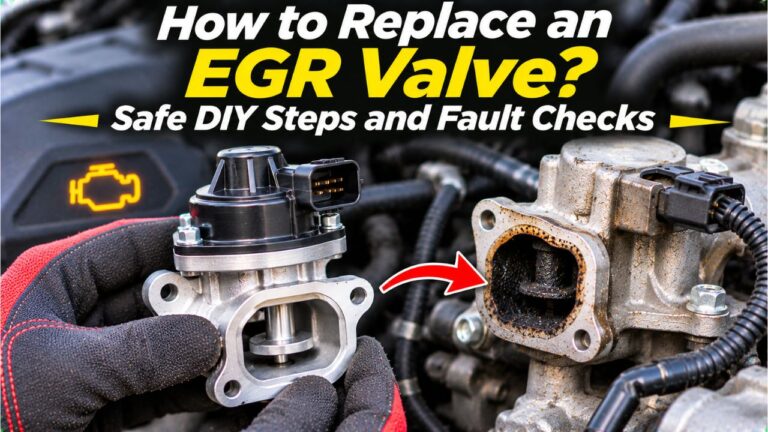
A faulty EGR valve can cause rough idling, hesitation, reduced power, stalling, or a check-engine light. The symptoms depend on whether the valve sticks open, stays closed, or cannot control exhaust flow correctly. Carbon buildup is a common problem, but electrical and vacuum faults can also cause failures.
EGR Valve Stuck Open
A valve stuck open may allow too much exhaust gas into the intake at the wrong time.
That can dilute the incoming mixture enough to disturb combustion.
Common symptoms include rough idle, stalling, hesitation, and difficult starting.
For example, a gasoline engine may shake badly at a stoplight because the valve allows exhaust to enter when little or no EGR flow is intended.
EGR Valve Stuck Closed
A valve that stays closed prevents the requested exhaust recirculation.
This can increase NOx emissions and trigger an emissions-related fault code.
The engine may still run relatively smoothly.
That’s why a bad EGR valve doesn’t always cause obvious drivability problems.
EGR Valve Clogged With Carbon
Exhaust contains soot and other particles that can accumulate inside EGR passages.
Oil vapor mixing with soot may form sticky deposits.
Over time, the buildup can restrict flow or prevent the valve from moving correctly.
The technical EGR fault diagnosis guidance identifies carbon deposits, sticking valves, and control problems as common failure causes.
Here are the main differences.
| Problem | Possible Symptom | Likely Cause |
| Stuck open | Rough idle, stalling | Carbon or mechanical damage |
| Stuck closed | Emissions fault, sometimes little drivability change | Deposits or actuator problem |
| Restricted passages | Insufficient EGR flow | Heavy carbon buildup |
| Electrical failure | Warning light, incorrect valve movement | Wiring, motor, or sensor problem |
| Vacuum control failure | Incorrect EGR operation | Hose, diaphragm, or solenoid fault |
How Do You Know if Your EGR Valve Is Bad?
A bad EGR valve is usually diagnosed through trouble codes, visual inspection, live engine data, and manufacturer-approved functional tests. Symptoms alone aren’t enough because intake leaks, fuel delivery problems, and other engine faults can behave similarly. The correct test depends on the valve’s design.
Check for Trouble Codes
An OBD-II scanner can identify EGR-related fault information.
Common codes include:
- P0400: Exhaust gas recirculation flow malfunction
- P0401: Insufficient EGR flow detected
- P0402: Excessive EGR flow detected
- P0403: EGR control circuit malfunction
- P0404: EGR control circuit range/performance
A P0401 code doesn’t automatically mean the EGR valve must be replaced.
The cause might be clogged passages, faulty control equipment, or inaccurate sensor readings.
Inspect the System Safely
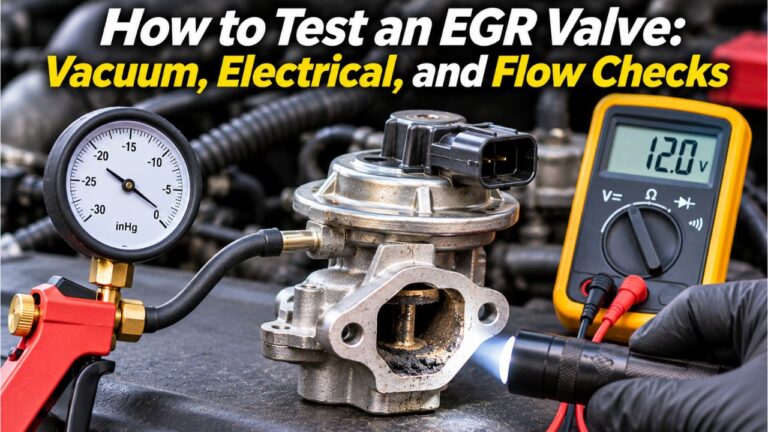
With the engine off and completely cool, inspect accessible parts for damaged hoses, loose connectors, and signs of leaks.
Don’t remove hot exhaust components or disconnect coolant connections without the correct service procedure.
Some electronic EGR valves require a diagnostic scanner to command movement and compare requested position with actual response.
That testing can put a technician on the right track without replacing parts blindly.
Can You Clean an EGR Valve Instead of Replacing It?
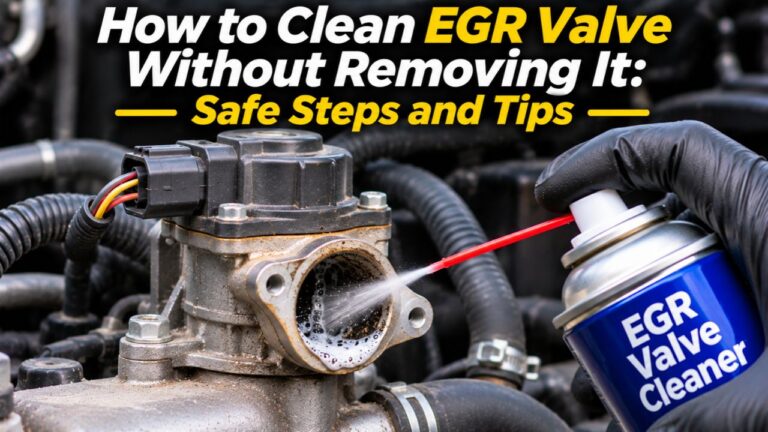
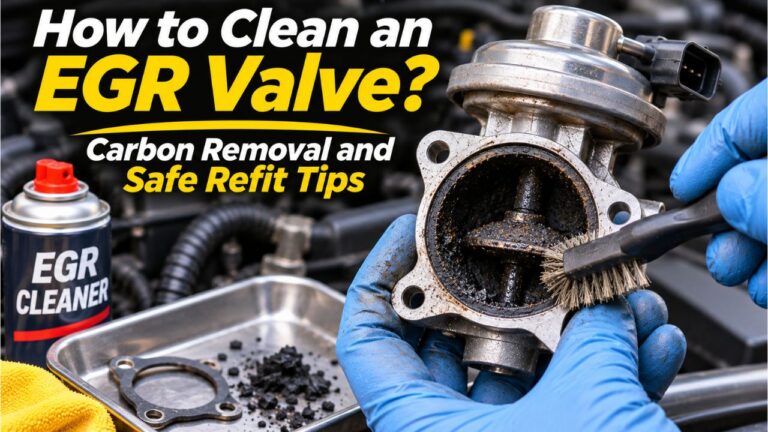
An EGR valve may be cleaned when carbon deposits are restricting movement or flow and the internal components remain functional. Cleaning cannot repair a failed electric motor, damaged position sensor, cracked housing, or worn mechanical parts. The manufacturer’s service procedure determines whether cleaning is appropriate.
For example, a valve that sticks because of carbon may operate normally after approved cleaning.
But an electronic actuator that no longer responds to commands won’t be repaired by removing soot.
Some systems also require cleaning the connecting EGR passages, not just the valve.
Don’t pour cleaner into electrical housings or force the valve mechanism to move.
Avoid blocking or permanently disabling the EGR system. Doing so can increase emissions, affect engine operation, and violate applicable emissions requirements.
A qualified technician can determine whether cleaning, wiring repair, or replacement is the correct solution.
Frequently Asked Questions
EGR systems often raise questions because they route exhaust back into an engine that already produces plenty of it. The following answers address the most common concerns about fuel economy, cleaning, engine operation, and how EGR differs from other emissions components.
Does an EGR Valve Affect Fuel Economy?
Yes, an EGR system can affect fuel economy, but its impact depends on engine design and operating conditions. Some gasoline engines benefit from reduced pumping losses during partial-load operation. A faulty EGR valve may also contribute to poor efficiency through rough running or improper combustion control.
Can a Car Run Without an EGR Valve?
Some engines are designed without a separate external EGR valve. But removing or disabling one from an engine designed to use it can change combustion conditions, increase emissions, and trigger fault codes. It may also violate emissions rules. Repair the system rather than bypassing it.
Is the EGR Valve the Same as the Throttle Body?
No. The throttle body controls incoming airflow, while the EGR valve regulates exhaust gas returning to the intake. Both can influence engine operation, but they perform different jobs. Some diesel systems use intake throttles to help manage EGR flow, which can make the components easy to confuse.
How Long Does an EGR Valve Last?
There is no universal replacement mileage for an EGR valve. Its life depends on engine design, operating conditions, exhaust contamination, and component quality. Many valves operate for years without replacement. Diagnose faults before replacing the assembly based on age or mileage alone.
Does an EGR Valve Work at Idle?
It depends on the engine. Many gasoline EGR systems limit or stop recirculation during idle to maintain stable combustion. Some diesel engines may command EGR flow at idle under certain conditions. The valve position is controlled according to the manufacturer’s engine calibration, not one universal rule.
Can a Bad EGR Valve Cause a Check-Engine Light?
Yes. A sticking EGR valve, restricted passage, failed actuator, or faulty control circuit can trigger a check-engine light. Common codes include P0401 for insufficient flow and P0402 for excessive flow. Read the exact code and test the system before deciding whether cleaning or replacement is necessary.
Know What Your EGR Valve Does Before Replacing It
An EGR valve controls how much exhaust gas returns to the engine’s intake system. EGR stands for Exhaust Gas Recirculation, and its main purpose is to lower peak combustion temperatures and reduce nitrogen oxide emissions.
The valve works automatically, opening or closing according to engine conditions. Gasoline and diesel engines use different EGR arrangements, and some vehicles don’t have a separate external valve at all.
Carbon buildup, damaged actuators, and electrical faults can prevent normal operation. A sticking valve may cause rough idling or stalling, while restricted EGR flow may produce a warning light without obvious running problems.
Don’t assume every EGR trouble code means the valve has failed. Passages, sensors, wiring, and related control components also need checking.
Your next step is to identify the EGR system fitted to your engine and read any stored diagnostic codes. If a fault is present, confirm its cause before choosing cleaning or replacement.