Are Aftermarket Led Headlights Worth It: Complete Guide and Facts
Yes, aftermarket LED headlights can be worth it, but only when the bulbs or complete assemblies match the vehicle’s optics, electrical system, and legal requirements. A brighter-looking bulb is not automatically a safer headlight.
The counterintuitive detail is that many LED conversions produce more glare without putting more useful light on the road. Headlight performance depends on beam focus, housing design, color temperature, heat control, and installation quality—not simply on advertised lumens or a white appearance. This is why a plug-in upgrade can be excellent in one vehicle and disappointing in another.
This guide explains when an LED upgrade makes sense, why some conversions fail, and how to compare bulb replacements with complete LED headlight assemblies. It also covers compatibility, beam-pattern checks, electrical problems, weather resistance, road safety, legal considerations, installation limits, and the situations where halogen or factory equipment remains the better choice. By the end, you can judge whether a specific conversion is likely to improve visibility or merely create a brighter-looking but poorly controlled beam.
When aftermarket LED headlights are worth the money
Aftermarket LEDs are usually worthwhile when they provide a controlled beam, fit the original housing correctly, manage heat effectively, and come from a manufacturer that supplies accurate compatibility information. A good conversion can offer a whiter appearance, lower power consumption, longer service life, and improved nighttime visibility compared with worn or low-quality halogen bulbs.
The strongest case is often a vehicle with aging halogen bulbs, cloudy lenses, weak wiring, or a factory headlight design that accepts a well-engineered LED replacement. Replacing both bulbs at the same time can restore balanced illumination and eliminate the uneven color that appears when one bulb is older than the other.
Complete aftermarket headlight assemblies can be more successful than LED bulbs installed in halogen housings. An assembly designed around LED emitters can place the light source, reflector, projector, shield, and lens in the correct relationship, giving engineers more control over the beam pattern and cutoff.
However, a complete assembly may cost substantially more and can require bumper removal, wiring changes, mounting adjustments, or programming. The installation is less likely to be a simple do-it-yourself bulb swap, especially on newer vehicles with adaptive lighting or automatic leveling.
Why LED headlights do not automatically improve visibility
A headlight housing is designed around the location and shape of its light source. A halogen filament has a precise position, while an LED replacement uses one or more small emitters mounted on a circuit board. If those emitters do not sit where the original filament was located, the reflector can send light in the wrong directions.
The result may look bright from the driver’s seat while producing scattered light, dark areas, or excessive glare for approaching traffic. More light above the intended cutoff is not a safety improvement; it can reduce contrast and make it harder to see beyond the glare.
Advertised lumen ratings also require caution. A laboratory measurement of raw LED output does not show how much light reaches the road through a particular housing. Useful performance depends on the entire optical system, including the reflector or projector, lens condition, aiming, and the road surface.
Color temperature is another common source of confusion. A cool white or bluish lamp may appear more modern, but it does not necessarily illuminate farther. Very blue light can create more discomfort in rain, fog, or snow and may be less pleasant for other drivers.
LED bulbs versus complete LED headlight assemblies
LED replacement bulbs
LED bulbs are designed to replace existing halogen bulbs while using the original headlight housing. They are appealing because installation can be quick and relatively inexpensive, but their success depends heavily on the specific housing and the bulb’s emitter placement.
A quality bulb should match the original bulb’s base, electrical connection, light-source position, and physical clearance. It also needs a suitable heat sink or fan, weather protection, and a driver that does not interfere with the vehicle’s electronics.
Even a technically compatible bulb may not produce a good beam. The only reliable evaluation is to inspect the installed cutoff and road pattern after aiming the headlights correctly. If the beam is wide, fuzzy, uneven, or visibly projects light into oncoming lanes, the conversion is not a suitable upgrade for that housing.
Complete LED assemblies
Complete assemblies replace the factory headlight housing with a unit designed to use LED light sources. They can include projectors, daytime running lights, sequential turn signals, integrated drivers, and other features, depending on the vehicle and product.
Because the optics are developed as a system, these assemblies often have a better chance of producing a clean cutoff and consistent distribution. They can also solve problems caused by a worn reflector or damaged factory lens that a bulb replacement cannot fix.
The tradeoff is complexity. Mounting points, connectors, dust caps, seals, turn-signal functions, leveling motors, and vehicle communication systems all need to work correctly. A low-cost assembly with poor sealing or inaccurate mounting can create new problems even if it looks impressive when turned on.
Compatibility checks before buying
Do not rely only on a bulb-size chart. The listed size confirms the base and general application, but it does not prove that the bulb will fit behind the dust cover, clear the housing, or create an acceptable beam.
Check the vehicle’s year, make, model, trim, original bulb number, headlight type, and whether the low and high beams use separate bulbs. Some vehicles use a single dual-function bulb, while others use separate projector and reflector systems.
Physical clearance matters because LED bulbs often have larger heat sinks, fans, or external drivers than halogen bulbs. A dust cap that no longer seals can allow moisture and dirt into the housing, shortening the life of the lamp and damaging internal components.
Electrical compatibility is equally important. Vehicles with a CAN bus or bulb-monitoring system may report a burned-out bulb because an LED draws less current than the original halogen. Symptoms can include flickering, warning messages, rapid turn-signal flashing, or bulbs that shut off intermittently.
Some products use resistors or decoders to imitate the original electrical load. These components can solve certain warning issues, but they also produce heat and should never be placed against plastic, wiring insulation, or other heat-sensitive material. A decoder that hides a warning does not correct an optical or mechanical problem.
Beam pattern, aiming, and glare
The most important quality check is the beam pattern. Park on level ground facing a wall or garage door, use the manufacturer’s aiming procedure, and compare the left and right cutoffs. The pattern should be controlled, symmetrical for the vehicle type, and directed low enough to avoid blinding other road users.
After installation, inspect the lamps from the front and from the driver’s position. A sharp horizontal cutoff is common in projector systems, while reflector systems may use a different pattern. The key issue is whether the light remains where the housing is designed to place it.
- Look for a clean cutoff rather than a large glowing haze above it.
- Check for dark gaps, bright spots, or strong light scattered to the sides.
- Confirm that both headlights have similar height, color, and intensity.
- Recheck the aim after driving over rough roads or removing and reinstalling the housing.
- Replace a bulb conversion if it creates obvious glare for oncoming drivers.
Headlight aiming is not optional after a conversion. Small changes in bulb seating or housing position can alter the beam significantly. If the vehicle has automatic leveling, adaptive lighting, or a damaged mounting bracket, professional adjustment may be necessary.
Heat management and expected service life
LEDs use less electrical energy than halogen bulbs, but they are not heat-free. The light-producing semiconductor works best when heat is transferred away from it through a heat sink, fan, housing, or other thermal system.
A bulb with a small fan may be effective, but the fan adds a moving part that can collect dust or fail. A passive heat sink is quieter and simpler, yet it requires enough airflow and clearance to work properly. Sealing the rear of the housing too tightly around a large heat sink can prevent the heat from escaping.
High operating temperatures can cause gradual dimming, color changes, driver failure, or intermittent operation. A product’s claimed lifespan is therefore not a guarantee for every vehicle. Engine-bay temperature, vibration, moisture, duty cycle, and installation quality all influence durability.
Check the rear of the headlight after installation for hot spots, melted plastic, damaged wiring, or a fan that is rubbing. Never remove a required dust cap merely to make an LED bulb fit unless a properly sealed replacement system is designed for that application.
Weather, wiring, and installation risks
Headlights operate in rain, snow, road spray, temperature changes, and engine-bay vibration. A conversion should have secure connectors and appropriate sealing at every point where wiring enters the housing.
Condensation inside a headlight can result from a temperature change, but repeated moisture, standing water, or fog that does not clear indicates a ventilation or sealing problem. Moisture can corrode connectors and damage LED drivers, especially when an added adapter leaves the dust cover open.
Before installing, switch off the vehicle and allow the original bulbs to cool. Avoid touching halogen glass with bare fingers if halogen bulbs are being retained or reinstalled, and route wiring away from belts, fans, exhaust components, and sharp edges.
Some vehicles require removal of the bumper or grille to access the headlight. If the assembly is disturbed, verify that all mounting points are tight and that the lamp is not under stress. A cracked bracket can let vibration change the beam aim while driving.
Professional help is sensible when the vehicle has sealed headlamps, adaptive systems, automatic leveling, complex wiring, difficult access, or repeated electrical faults. It is also the safer choice when a beam-pattern check shows that the conversion cannot be aimed correctly.
Legal and road-use considerations
Lighting rules vary by location and by the type of product being installed. A bulb that physically fits may not be approved for use in a particular headlight housing or on public roads. Product packaging, certification markings, and local requirements should be checked rather than assumed.
Approval status can depend on the complete lamp assembly, not just the LED chip or replacement bulb. A component marketed as “road legal” may have conditions, limited applications, or regional restrictions that do not apply to every vehicle.
Excessive glare can create a safety problem even when no warning light appears on the dashboard. If other drivers frequently flash their high beams at a newly converted vehicle, treat that as a reason to inspect the aim and beam pattern—not as proof that the new headlights are powerful.
When halogen bulbs may be the better choice
Keeping high-quality halogen bulbs is often the better decision when the original housing produces a clean beam and the vehicle has no practical LED replacement designed for it. Halogen bulbs are inexpensive, widely available, easy to replace, and already matched to the reflector or projector.
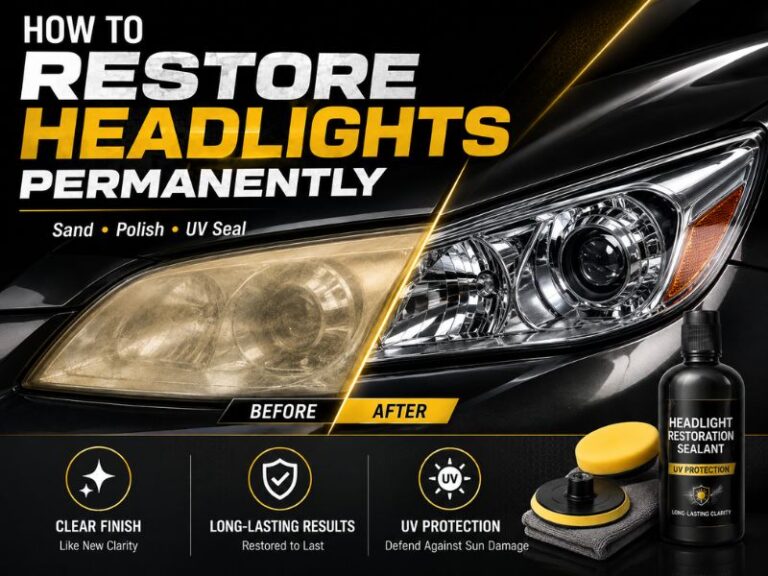
A dim headlight may not need a new technology at all. Cloudy plastic lenses, poor ground connections, voltage loss, a failing charging system, corroded sockets, or incorrect aiming can reduce output. Restoring the lens and fixing the underlying fault may improve visibility more reliably than installing a stronger bulb.
Factory LED headlights are also difficult to improve with a bulb swap because many use integrated modules rather than replaceable bulbs. If a factory LED system fails, diagnosis may involve the control module, wiring, cooling system, or complete headlight assembly.
A practical buying and installation checklist
Use the following checks before spending money on an aftermarket conversion:
- Confirm the exact original bulb number and headlight type.
- Measure rear clearance for the heat sink, fan, driver, and connector.
- Look for a clear return policy and vehicle-specific fit information.
- Prefer accurate optical design over extreme lumen claims.
- Verify that the dust cap and weather seal can remain properly installed.
- Check whether the vehicle needs a CAN-bus adapter or error-canceling module.
- Install matching bulbs as a pair for consistent color and output.
- Aim the headlights immediately after installation.
- Test low beam, high beam, turn signals, daytime running lights, and warning indicators.
- Inspect for flicker, glare, moisture, heat damage, or loose wiring after the first drive.
Save the original bulbs until the conversion has been tested thoroughly. If the LEDs fail, create glare, trigger persistent electrical faults, or cannot be aimed correctly, returning to the original equipment is safer than continuing to use a poor upgrade.
Are aftermarket LED headlights worth it?
Aftermarket LED headlights are worth it when the product is genuinely compatible, thermally sound, properly sealed, legally suitable, and capable of producing a controlled beam in the specific vehicle. They are not automatically worthwhile simply because they are brighter, whiter, or advertised with a high lumen number.
The major limitation is the original headlight housing: a light source that does not match its optical design can increase glare while reducing useful visibility. Confirm fitment, inspect the beam pattern, aim the lamps, and choose professional installation when the vehicle’s electronics or headlight system is complex.