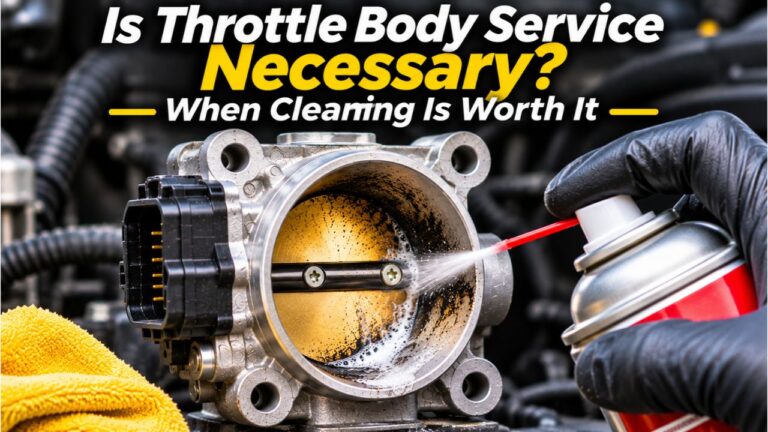
Can You Use Carb Cleaner on a Throttle Body? Risks and Safe Tips
Yes, you can use certain carburetor cleaners on a throttle body, but only when the vehicle manufacturer approves that cleaning method and the product is compatible with the components. Some carb cleaners contain strong solvents that may damage protective coatings, rubber seals, or electronic parts. A dedicated throttle body cleaner is usually the safer choice.
Carburetor cleaner, commonly called carb cleaner, is designed to remove stubborn fuel deposits, grease, and varnish. While it can dissolve carbon buildup around a throttle plate, not every throttle body is built to withstand the same cleaning chemicals.
The biggest concern involves modern electronic throttle bodies. These assemblies contain sensitive motors, sensors, and seals that can be damaged by aggressive chemicals or improper spraying. Older cable-operated throttle bodies may tolerate certain carb cleaners, but compatibility still matters.
Using the wrong cleaner can turn a simple maintenance job into an expensive repair. This guide explains when carb cleaner is acceptable, how it compares with throttle body cleaner, what damage it can cause, and how to clean a throttle body safely without creating new engine problems.
Can You Use Carb Cleaner on a Throttle Body Safely?
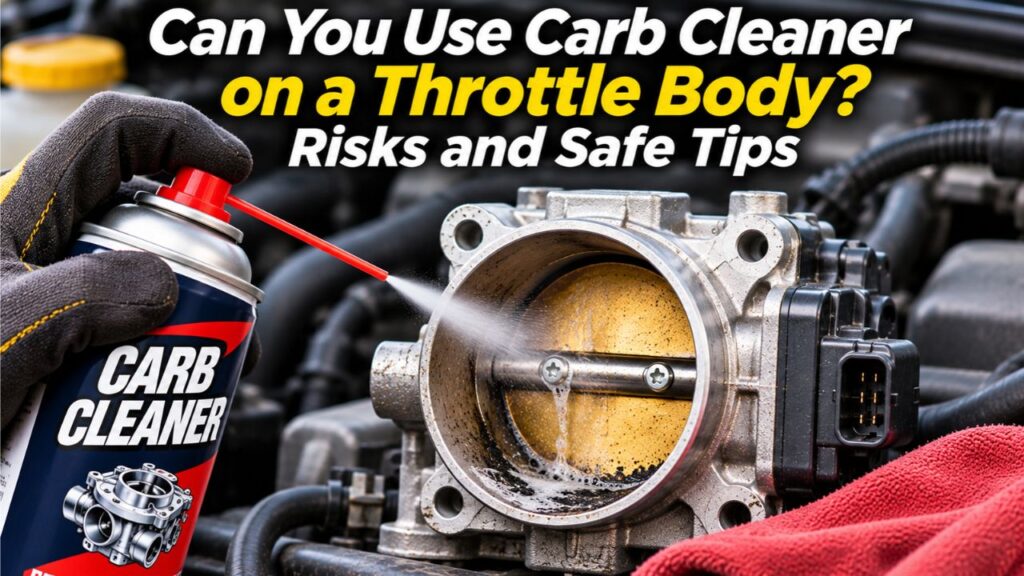
Carb cleaner can be safe for a throttle body when the manufacturer specifically permits a compatible product and cleaning method. Some vehicle service procedures approve certain carburetor cleaners, while others call for dedicated throttle plate cleaners. The chemical formula and throttle body design determine whether the cleaner is suitable.
The confusion comes from the fact that carburetors and throttle bodies have similar-looking openings.
Both contain a throttle plate that controls airflow into the engine.
However, their construction and surrounding components may be quite different.
A traditional carburetor mixes fuel with air and contains mechanical passages, valves, and jets.
A modern electronic throttle body primarily controls airflow and usually contains an electric motor and position sensors.
For example, a cleaner that works well on exposed metal carburetor parts may be unsuitable for a coated throttle bore or an electronic actuator housing.
Why Manufacturer Instructions Matter
Some manufacturers permit carburetor cleaner for specific throttle body cleaning procedures.
For example, an approved electronic throttle cleaning procedure for certain vehicles allows a specified non-chlorinated carburetor cleaner applied to a cloth.
The procedure also warns against spraying cleaner directly into the electronic throttle chamber.
Other manufacturers recommend dedicated throttle plate cleaners instead.
That difference explains why a blanket statement that carb cleaner is always safe or always harmful isn’t accurate.
Rule of thumb: If your vehicle’s service manual doesn’t approve carb cleaner, don’t substitute it for the specified throttle body cleaning product.
What’s the Difference Between Carb Cleaner and Throttle Body Cleaner?
Carb cleaner and throttle body cleaner both remove oily deposits, varnish, and carbon buildup, but their formulations and intended applications can differ. Carb cleaners may contain stronger solvents designed for carburetor components, while throttle body cleaners are formulated for specific air-intake surfaces and may offer better compatibility with coated throttle bores.
The important distinction is chemical compatibility, not simply cleaning strength.
| Feature | Carburetor Cleaner | Throttle Body Cleaner |
| Main purpose | Removes deposits from carburetor components | Removes deposits from throttle plates and bores |
| Cleaning strength | Often uses strong solvent blends | Formulated for throttle body deposits |
| Protective coatings | Compatibility varies by product | Some formulas are approved for coated surfaces |
| Rubber and plastic parts | Certain products may cause damage | Compatibility still depends on the label |
| Electronic throttle bodies | Use only when specifically approved | Use only when approved for the vehicle |
| Common application | Carburetor parts and passages | Throttle plate and surrounding bore |
| Best choice | Approved carburetor cleaning applications | Most approved throttle body cleaning jobs |
Why Carb Cleaner Can Be More Aggressive
Some carb cleaners contain solvents designed to break down hardened fuel varnish and deposits.
Those chemicals may affect certain plastics, rubber materials, and surface coatings.
For example, a strong solvent might remove carbon from the throttle bore while also damaging a protective coating.
Not every carburetor cleaner has the same formula.
A product’s label and technical information should identify its approved applications and material restrictions.
Why Throttle Body Cleaner Is Usually Preferred
A suitable throttle body cleaner is designed for the deposits commonly found around throttle plates.
It can remove oily residue and carbon without relying on a product intended primarily for carburetor passages.
Still, don’t assume every cleaner labeled for throttle bodies is compatible with every engine.
Some throttle bodies have special bore coatings or cleaning restrictions.
The guidance for cleaning throttle body deposits explains why the cleaning product and method matter for coated surfaces and electronic components.
The real deal is finding a product that matches the vehicle, not choosing whichever aerosol can seems strongest.
Can Carb Cleaner Damage an Electronic Throttle Body?
Yes. An incompatible carb cleaner can damage certain electronic throttle body coatings, seals, plastics, or electrical components. Spraying solvent directly into the assembly can also carry contaminants toward the throttle shaft and motor housing. Damage isn’t guaranteed, but the risk increases when the cleaner or application method isn’t approved.
Damage to Protective Coatings
Some throttle bodies have special coatings inside the bore.
These coatings help maintain the intended surface characteristics around the throttle plate.
Aggressive solvents or abrasive cleaning can damage them.
For example, scrubbing a coated throttle bore with a harsh cleaner and stiff brush may remove more than the unwanted deposits.
The resulting surface damage may affect throttle operation.
Damage to Electronic Components
Modern electronic throttle bodies contain an electric actuator motor and throttle position sensors.
The motor controls throttle plate movement, while the sensors report its position to the engine computer.
If cleaning fluid enters areas that aren’t designed for solvent exposure, it may damage electrical parts or carry contamination into the mechanism.
A manufacturer’s throttle cleaning warning specifically instructs technicians to apply throttle plate cleaner to a cloth rather than spray it directly into the assembly.
Damage to Rubber Seals
Certain strong solvents can affect rubber seals and other nonmetallic materials.
The amount of damage depends on the cleaner’s formula and the material exposed.
A damaged seal may allow contamination to enter areas that should remain protected.
Can Carb Cleaner Make the Throttle Plate Stick?
Improper cleaning can contribute to sticking if it damages coatings, leaves loosened deposits behind, or affects the throttle mechanism.
However, a sticking plate after cleaning doesn’t automatically mean the solvent caused damage.
A mechanical fault, incorrect reassembly, or remaining deposits may also be responsible.
Heads Up: Never force an electronic throttle plate open to clean it. The actuator mechanism can be damaged, and unexpected movement can injure your fingers.
When Is It Acceptable to Use Carb Cleaner on a Throttle Body?
Carb cleaner may be acceptable when the vehicle manufacturer specifies it, the product meets the required chemical specifications, and the cleaning procedure protects sensitive components. Compatibility must be confirmed before application. An older cable-operated throttle body isn’t automatically safe for every carburetor cleaning solvent.
Older Cable-Operated Throttle Bodies
Older gasoline engines often use a mechanical throttle cable connected to the throttle plate.
These systems may have fewer electronic components built directly into the throttle body.
That can make certain approved cleaning procedures less complicated.
For example, an older metal throttle body with external sensors may permit cleaning of exposed metal surfaces using a specified solvent.
But the assembly may still contain rubber seals, protective coatings, and sensitive parts.
Don’t assume age alone makes a cleaner safe.
Manufacturer-Approved Electronic Throttle Cleaning
Some electronic throttle cleaning procedures permit a particular non-chlorinated carburetor cleaner.
The cleaning method may require removing the assembly and applying the product to a cloth.
This keeps excess liquid away from sensitive areas.
For example, certain factory instructions call for wiping deposits from the throttle plate edges and the area where the plate meets the bore.
Directly flooding the assembly isn’t part of that procedure.
What to Check Before Using Carb Cleaner
Before applying the product, confirm:
- The service manual permits the type of cleaner.
- The product label lists a compatible application.
- Any required chemical specifications are met.
- The throttle bore doesn’t have a coating that prohibits the product.
- The cleaning method protects electrical components and seals.
If you cannot verify these conditions, use the manufacturer’s specified alternative.
How Do You Clean a Throttle Body Without Damaging It?
The safest cleaning method is the one specified for your exact vehicle. Many procedures involve turning off the ignition, removing the intake duct, applying approved cleaner to a cloth, and gently wiping accessible deposits. Electronic throttle plate movement, disassembly, and idle relearning must follow manufacturer instructions.
Step 1: Turn Off the Engine and Let It Cool
Park the car on a level surface and apply the parking brake.
Switch off the engine and remove the key.
Allow the engine to cool before working near the intake system.
Wear safety glasses and chemical-resistant gloves.
Keep cleaning products away from sparks, flames, cigarettes, and hot surfaces because many aerosol cleaners are highly flammable.
Step 2: Locate the Throttle Body
Follow the large air intake duct from the air filter housing toward the engine.
The throttle body usually sits between the air intake duct and the intake manifold.
On a modern engine, it typically has an electrical connector attached to its housing.
For example, a four-cylinder gasoline engine may have a throttle body mounted near the upper part of the intake manifold.
Step 3: Remove the Air Intake Duct
Use the appropriate screwdriver or socket to loosen the intake hose clamp.
Carefully remove the duct as directed by the service manual.
Watch for attached breather hoses and nearby sensor wiring.
Don’t pull on electrical connectors or damage the intake duct.
Inspect the exposed opening for deposits around the throttle plate.
Step 4: Inspect the Throttle Plate
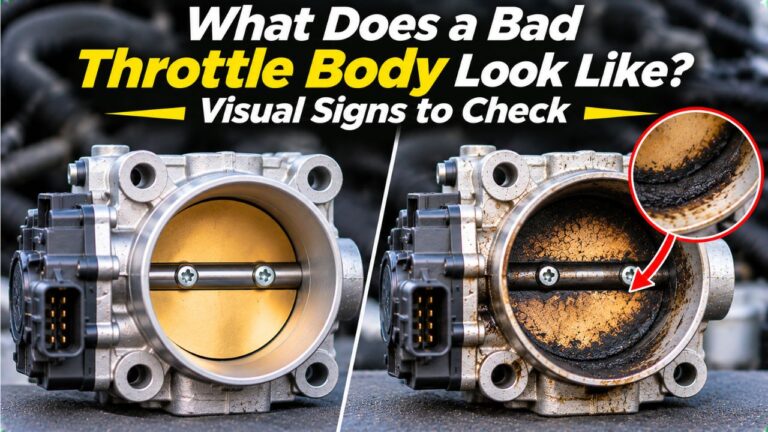
Look for dark carbon deposits or oily residue around the plate edges.
A small amount of discoloration doesn’t always require cleaning.
Heavy deposits that affect idle airflow are a more useful reason for service.
Avoid moving an electronic throttle plate manually unless the manufacturer explicitly permits it.
Some vehicles require a specific procedure for accessing the area behind the plate.
Step 5: Apply the Approved Cleaner to a Cloth
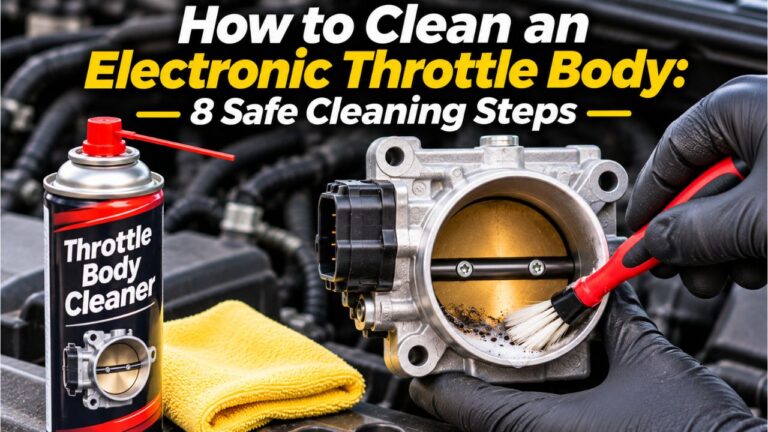
When the manufacturer’s procedure permits it, spray a small amount of approved cleaner onto a clean, lint-free cloth.
Gently wipe the accessible throttle bore and plate surfaces.
Focus on removing deposits around the edges where the plate meets the housing.
Don’t soak the assembly or pour cleaner into its opening.
Avoid wire brushes, metal scrapers, and abrasive pads.
For example, a thin carbon ring may come off with gentle wiping. Scrubbing harder than necessary can damage the surface beneath it.
Step 6: Allow the Cleaner to Evaporate
Use a clean cloth to remove remaining residue according to the product instructions.
Allow the cleaned surfaces to dry as directed.
Don’t leave pooled liquid inside the intake.
If too much cleaner entered the intake manifold, stop and follow the manufacturer’s procedure before attempting to start the engine.
Step 7: Reassemble the Intake System
Reinstall the intake duct and secure its clamps.
Reconnect any hoses or electrical components that were removed.
Make sure no cloth, tool, or loose material remains near the throttle opening.
If the throttle body itself was removed, follow the correct gasket replacement and mounting torque instructions.
Step 8: Check Idle Operation
Start the engine only after the assembly is correctly installed and the cleaner has evaporated.
Check for unusual idle speed, stalling, or warning lights.
Some vehicles need a throttle relearn procedure after cleaning.
This allows the engine computer to adjust its learned throttle settings.
Don’t disconnect the battery or attempt a generic relearn sequence unless the vehicle’s procedure requires it.
What Should You Do if You Already Used Carb Cleaner?
If you’ve already applied carb cleaner to a throttle body, don’t assume the assembly is damaged. The outcome depends on the cleaner’s formula, where it was applied, and how much entered the assembly. Stop using the product until you confirm compatibility and inspect for problems.
If You Used a Small Amount
If you applied a small amount to a cloth and wiped exposed metal surfaces, damage may not have occurred.
Check the cleaner’s label and the vehicle’s cleaning instructions.
Make sure the product has evaporated and no liquid remains before reassembly.
If You Sprayed Directly Into an Electronic Throttle Body
Avoid adding more cleaner.
If the product entered the electronic housing or pooled around the shaft, have the assembly inspected before operating it.
For example, solvent that travels toward the actuator housing may affect components that aren’t designed for direct chemical exposure.
Don’t try to flush the area with water or another solvent.
If the Engine Runs Roughly After Cleaning
Rough idling after throttle cleaning can have several causes.
| Symptom After Cleaning | Possible Explanation |
| High idle | Throttle adaptation or intake air leak |
| Rough idle | Remaining deposits, excess cleaner, or another engine problem |
| Check engine light | Disconnected sensor or throttle control fault |
| Stalling | Airflow control problem or improper reassembly |
| Poor throttle response | Electronic control or mechanical fault |
| Unusual throttle plate movement | Possible actuator or control problem |
Start by checking the intake duct and electrical connectors.
If everything is connected properly, a throttle relearn or further diagnosis may be needed.
Don’t repeatedly operate the engine if the throttle response is unpredictable.
What Mistakes Should You Avoid When Cleaning a Throttle Body?
Common cleaning mistakes include using an unapproved solvent, spraying directly into electronic components, forcing the throttle plate, and scrubbing protective coatings. Leaving intake hoses loose or ignoring relearn requirements can also create new problems. Following the correct procedure is more valuable than using extra cleaning chemicals.
Using the Wrong Cleaning Product
Avoid using brake cleaner, harsh degreasers, or an unknown carb cleaner as a substitute for the specified product.
Some formulations may damage seals or coatings.
Use only products confirmed compatible with the vehicle.
Spraying While the Engine Is Running
Don’t spray carb cleaner into a running engine as a general throttle body cleaning method.
Flammable solvent, moving engine parts, and sensitive electronics create unnecessary risks.
Some specialized intake cleaning products have their own running-engine procedures, but those instructions don’t apply to ordinary carb cleaner.
Forcing the Throttle Plate Open
Electronic throttle bodies use motors and gears to control plate movement.
Forcing the plate can damage the mechanism.
Follow the service procedure instead of trying to hold the plate open with a screwdriver.
Cleaning When No Service Is Needed
A throttle body doesn’t need cleaning every time you open the hood.
Some engines operate for many miles without throttle deposits causing problems.
If the plate is reasonably clean and the engine runs normally, unnecessary chemical cleaning may do more harm than good.
Frequently Asked Questions
Is Carb Cleaner the Same as Throttle Body Cleaner?
No. Carb cleaner and throttle body cleaner are formulated for different primary applications, although certain products may overlap. Carb cleaners often use strong solvents for fuel deposits and varnish. Throttle body cleaners are intended for intake and throttle components. Always check compatibility with coatings, seals, and electronic parts.
Can I Spray Carb Cleaner Directly Into the Throttle Body?
Not unless the vehicle manufacturer and cleaner instructions specifically permit that application. Many electronic throttle body procedures require applying cleaner to a cloth instead. Direct spraying can carry contamination into the throttle shaft or electronic housing. An engine-off, cloth-based method is generally a safer approach when approved.
Will Carb Cleaner Damage a Throttle Position Sensor?
It can, depending on the solvent and how it reaches the sensor. Some strong cleaners may affect electrical components, seals, or protective materials. The throttle position sensor is often integrated into modern electronic throttle bodies. Avoid spraying cleaner near its housing and follow the vehicle’s approved cleaning procedure.
Can I Use Carb Cleaner on an Old Throttle Body?
Sometimes. Certain older cable-operated throttle bodies may permit approved carb cleaner on exposed metal surfaces. However, older assemblies can still have rubber seals, coatings, and electrical sensors. The vehicle’s age doesn’t guarantee chemical compatibility. Check the service manual and product label before applying the cleaner.
Can Carb Cleaner Fix a Sticking Throttle Body?
A compatible cleaner may remove carbon deposits that contribute to sticking, but it cannot repair broken actuator gears, worn shafts, or failed electronic components. If a throttle plate sticks because of a mechanical or electrical fault, cleaning won’t solve the cause. Unpredictable throttle movement requires professional inspection.
Do I Need to Reset My Throttle Body After Cleaning?
Some vehicles require a throttle relearn after cleaning, while others adjust automatically. Removing heavy deposits can change the airflow at idle, causing temporary high or unstable engine speed. Follow the manufacturer’s procedure rather than guessing. A relearn cannot repair physical damage caused by an incompatible cleaner or faulty throttle components.
Choose the Right Cleaner Before Touching the Throttle Plate
You can use certain carb cleaners on a throttle body, but only when the vehicle manufacturer approves the specific cleaning product and method.
The biggest risk comes from using an incompatible solvent on coatings, rubber seals, or sensitive electronic throttle components.
A dedicated throttle body cleaner is generally the better starting point, provided it meets your vehicle’s requirements.
When cleaning is appropriate, gentle wiping with an approved product is often preferable to spraying the assembly directly. Avoid forcing the plate, using abrasive tools, or leaving excess solvent inside the intake.
If you’ve already used carb cleaner, check for damage and abnormal throttle operation before applying more chemicals.
Your next step: Look up your vehicle’s throttle body cleaning instructions and confirm which cleaner is approved. That simple check can prevent a routine cleaning job from becoming an unnecessary repair.