Is Carb Cleaner the Same as Throttle Body Cleaner? What to Use
No, carb cleaner isn’t exactly the same as throttle body cleaner. Both products remove carbon, gum, oil, and varnish deposits, but their formulas and approved applications can differ. Carburetor cleaner is generally designed for carburetor components, while throttle body cleaner is intended for throttle valves and air intake passages.
The difference matters most on modern vehicles with electronic throttle control. These systems may contain protective coatings, rubber seals, electrical sensors, and motor assemblies that can be damaged by unsuitable solvents. Some carburetor cleaners are too aggressive for certain throttle bodies, although specific products are approved for both applications.
For example, cleaning an older metal carburetor is a different job from wiping deposits around the electronic throttle plate on a newer Toyota Camry or Honda Civic. A cleaner that works well on one assembly isn’t automatically suitable for the other.
Choosing the correct product can prevent damaged coatings, rough idling, and unnecessary repairs. This guide compares both cleaners, explains when substitution is acceptable, and covers the safest way to remove throttle body deposits without damaging sensitive components.
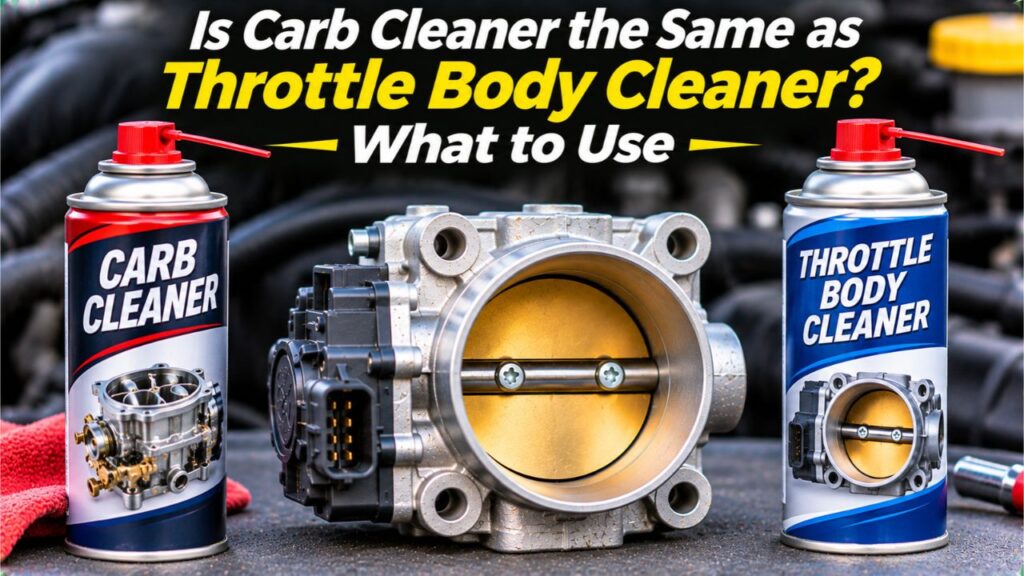
What Is the Difference Between Carb Cleaner and Throttle Body Cleaner?
Carb cleaner and throttle body cleaner both dissolve deposits, but they target different fuel and air control components. Carburetor cleaners commonly use solvents suited to fuel varnish and stubborn deposits, while dedicated throttle body cleaners are formulated for the materials and surfaces found in compatible throttle assemblies.
| Feature | Carburetor cleaner | Throttle body cleaner |
| Main application | Carburetors and approved related parts | Throttle bodies and approved intake components |
| Common deposits | Fuel varnish, gum, carbon, oil | Carbon, oil residue, gum, dirt |
| Solvent strength | Often more aggressive, varies by formula | Designed for specified throttle surfaces |
| Protective coatings | Compatibility varies | Some products are approved for coated throttle bodies |
| Electronic components | Not generally intended for direct application | Direct electronic contact may still be unsafe |
| Rubber and plastic | Compatibility varies | Depends on the exact product |
| Older carbureted engines | Common application | Some formulas are also suitable |
| Modern electronic throttle bodies | Only if specifically approved | Usually the better starting choice |
What Does Carburetor Cleaner Do?
Carburetor cleaner removes deposits that interfere with carburetor operation.
A carburetor mixes gasoline and air before the mixture enters an engine. Its small passages, jets, and moving components can collect fuel varnish and gum.
Carb cleaner helps dissolve those deposits.
For example, an older lawn mower or classic car that has been sitting with stale gasoline may develop sticky residue inside its carburetor.
The appropriate cleaner can help remove that buildup.
Some carburetor cleaners contain strong solvent blends that may affect certain plastics, rubber materials, or protective coatings.
The exact chemical formula varies between products.
What Does Throttle Body Cleaner Do?
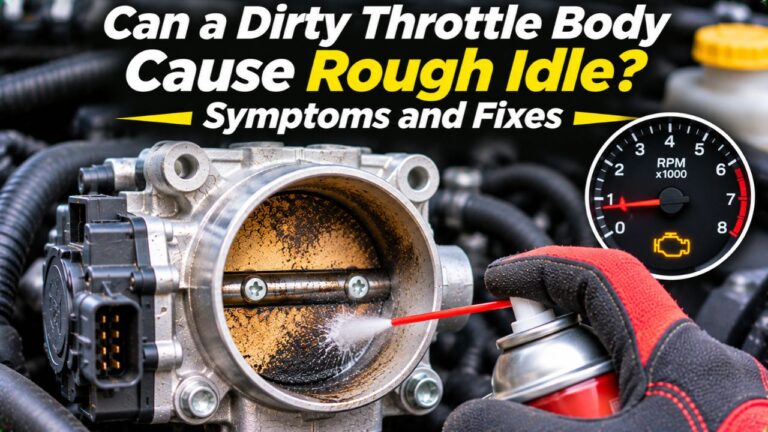
Throttle body cleaner removes oily carbon deposits and gum from the throttle plate and surrounding housing.
The throttle body regulates airflow entering a fuel-injected gasoline engine.
Over time, crankcase oil vapors and airborne contaminants may leave a dark ring around the throttle plate.
That buildup can interfere with airflow at idle.
A suitable throttle body cleaner helps remove the deposits without unnecessarily disturbing compatible factory coatings.
Still, don’t assume every throttle body cleaner is safe for direct contact with plastic or electrical parts. Check the product label.
Can You Use Carb Cleaner on a Throttle Body?
Yes, certain carburetor cleaners can be used on throttle bodies when the vehicle manufacturer or cleaner manufacturer specifically approves them. But using any random carb cleaner isn’t a good idea, especially on electronic throttle bodies. The exact solvent formula, surface materials, and application method determine whether substitution is safe.
When Carb Cleaner May Be Acceptable
Some vehicle manufacturers approve particular carburetor cleaners for throttle body service.
For example, an official electronic throttle cleaning service bulletin covering certain Infiniti vehicles specifies a low-VOC, non-chlorinated carburetor cleaner.
The procedure requires applying the cleaner to a cloth rather than spraying the electronic throttle assembly directly.
That exception matters.
It shows that carburetor cleaner isn’t universally prohibited for throttle bodies. But approval for one cleaner and vehicle doesn’t extend to every carb cleaner on the shelf.
When You Should Avoid Carb Cleaner
Don’t substitute carb cleaner when the vehicle requires a specific throttle body cleaning product or prohibits other solvents.
Be particularly careful with:
- Electronic throttle bodies containing integrated motors and sensors
- Throttle bodies with sensitive factory-applied coatings
- Assemblies with exposed rubber or plastic components
- Cleaners without a clear compatibility statement
- Vehicles requiring a specific factory cleaning procedure
Rule of thumb: If you can’t confirm that your carb cleaner is approved for your throttle body, choose a suitable dedicated throttle body cleaner instead.
That small precaution can save a much larger repair.
Which Cleaner Should You Use for Different Engine Parts?
The correct cleaner depends on the component you’re servicing and the product’s approved applications. Carburetors, throttle bodies, and mass airflow sensors perform different jobs and contain different materials. A solvent intended for one part may damage another, even when the containers have similar labels.
| Engine component | Recommended cleaner | Important consideration |
| Traditional carburetor | Approved carburetor cleaner | Protect sensitive seals and coatings |
| Modern throttle body | Approved throttle body cleaner | Check coating and electronic compatibility |
| Electronic throttle motor | No general solvent application | Follow factory service instructions |
| Mass airflow (MAF) sensor | Dedicated MAF sensor cleaner | Avoid physical contact with sensing elements |
| Fuel injectors | Application-specific injector cleaning method | Throttle cleaner won’t clean internal injector passages |
| Intake components | Cleaner approved for the specific material | Check plastic, rubber, and coating compatibility |
| Brake components | Approved brake cleaner | Not a substitute for throttle cleaner |
Can Throttle Body Cleaner Clean a Carburetor?
Sometimes.
Certain throttle body cleaners are also approved for carburetor components.
But a product formulated for cleaning throttle valves may not be the best option for stubborn fuel varnish inside narrow carburetor passages.
For example, cleaning deposits from the outside of a carburetor throttle plate is different from clearing an internally restricted fuel jet.
Choose the cleaner based on the job rather than assuming every solvent works equally well.
What About MAF Sensor Cleaner?
A mass airflow sensor measures the air entering an engine.
Its sensing elements can be delicate.
Neither ordinary carb cleaner nor throttle body cleaner should be sprayed onto a MAF sensor unless the product and sensor manufacturer explicitly approve that application.
Use an appropriate MAF sensor cleaner instead.
This is one area where cutting corners can become expensive.
Can Carb Cleaner Damage an Electronic Throttle Body?
Yes, an incompatible carburetor cleaner can damage certain throttle body coatings, seals, plastics, or electrical components. The risk depends on its ingredients and where the cleaner contacts the assembly. Direct spraying can be particularly troublesome because solvent may enter areas that aren’t designed to be exposed to liquid.
Damage to Protective Coatings
Some throttle bodies have factory-applied coatings that help control airflow or reduce deposits.
Strong or unsuitable cleaners may remove or damage these coatings.
Aggressive scrubbing can also scratch the throttle plate or housing.
For example, a driver might repeatedly spray a strong solvent into the throttle opening and scrub until every surface looks like bare metal.
That isn’t necessarily a proper cleaning job.
The goal is removing harmful deposits, not stripping away factory-applied materials.
Damage to Rubber Seals and Plastic Parts
Different solvents react differently with rubber and plastic.
Some cause swelling, hardening, or deterioration.
This can affect seals, gaskets, and nearby components.
A cleaner labeled for throttle bodies isn’t automatically safe on every surrounding material either.
Some products are specifically approved for coated throttle bores but still carry restrictions against direct contact with certain plastics.
The manufacturer’s throttle body cleaner specifications show why checking the individual product’s approved applications and material compatibility matters.
Damage to Electrical Components
Modern electronic throttle bodies use an electric motor and position sensors to control airflow.
Liquid entering the actuator housing or electrical connector may cause problems.
Spraying cleaner heavily into an installed throttle body can also allow excess solvent to collect in unwanted areas.
Heads Up: Never assume that a cleaner approved for the metal throttle bore is also approved for the electronic motor or sensor assembly.
Keep cleaning fluid away from electrical connections unless the factory procedure specifically directs otherwise.
How Do You Choose the Right Carb or Throttle Body Cleaner?
Choose a cleaner by checking its stated application, material compatibility, and instructions rather than relying on the product name alone. A can labeled for carburetors may also be approved for throttle bodies, while some dedicated intake cleaners have material restrictions that make direct spraying or broad use unsuitable.
Read the Label Before Buying
Look for these details:
- Approved applications: Does the product specifically mention throttle bodies or carburetors?
- Coating compatibility: Is it approved for the throttle body’s protective coating, if present?
- Plastic and rubber compatibility: Are nearby materials protected, or does the label warn against contact?
- Electronic component restrictions: Does the cleaner need to stay away from motors, sensors, and connectors?
- Application method: Should it be sprayed directly or applied to a cloth?
- Drying and safety instructions: How should you handle ventilation, flammability, and reassembly?
If the label doesn’t clearly support your intended use, don’t guess.
Is a More Powerful Cleaner Better?
Not necessarily.
A stronger solvent may dissolve stubborn deposits faster, but cleaning speed isn’t the only consideration.
Compatibility matters more than aggression.
For example, a mild layer of carbon around a throttle plate doesn’t call for the strongest solvent available.
An approved cleaner and a soft cloth may remove it without exposing the assembly to unnecessary risk.
In a pinch, an approved dual-use product can be practical. An unverified substitute isn’t worth the gamble.
How to Clean a Throttle Body With the Correct Cleaner
Throttle body cleaning generally involves removing the air intake duct, inspecting the throttle opening, and wiping accessible deposits with an approved cleaner. The engine must be off, and electronic throttle systems may require specific precautions or complete removal. Follow the vehicle’s service procedure before moving the throttle plate.
Step 1: Park Safely and Switch Off the Engine
Park on a level surface and engage the parking brake.
Turn off the ignition and allow the engine to cool.
Keep the key or key fob away from the vehicle if the manufacturer’s procedure requires it.
Wear chemical-resistant gloves and safety glasses.
Throttle body and carburetor cleaners commonly contain flammable solvents. Work in a ventilated area away from sparks, cigarettes, and open flames.
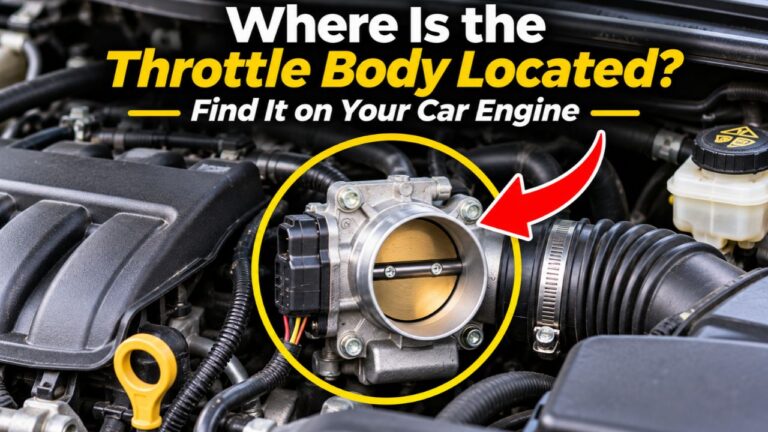
Step 2: Locate the Throttle Body
Open the hood and follow the air intake hose from the engine air filter housing.
The hose usually connects to the throttle body near the intake manifold.
A circular metal plate sits inside its opening.
On modern vehicles, you’ll typically find an electrical connector attached to the throttle body.
Step 3: Remove the Air Intake Duct
Loosen the intake hose clamp using the appropriate screwdriver or socket.
Carefully move the duct away from the throttle body.
Watch for attached breather hoses or wiring.
For example, pulling the intake hose too hard may disconnect a smaller hose, causing an air leak after reassembly.
Step 4: Inspect the Deposits
Use a flashlight to inspect the plate and inner housing.
Look for dark, sticky carbon around the plate’s edges.
A light stain doesn’t always need cleaning.
Heavy buildup near the closed position may interfere with idle airflow.
Don’t scrape deposits using a screwdriver or another metal tool.
Step 5: Apply Cleaner to a Soft Cloth
For procedures that specify cloth application, spray the approved cleaner onto a clean, lint-free cloth.
Gently wipe accessible deposits from the throttle plate and housing.
Focus on the area where the plate meets the bore.
The recommended throttle body cleaning process covers removal, cleaning supplies, and reassembly considerations.
Safety Note: Never force an electronic throttle plate open. Some factory procedures permit controlled movement under specific conditions, while others require removing the assembly. Keep your fingers clear whenever the actuator could move.
Step 6: Reassemble and Check Engine Operation
After cleaning, follow the product’s drying instructions.
Reinstall the intake duct, tighten its clamp, and reconnect any hoses or fittings removed.
Check that nothing remains inside the intake opening.
Start the engine only after completing the required reassembly and electrical safety steps.
Some vehicles need an idle or throttle relearn after cleaning.
If the engine develops a high or unstable idle, follow the manufacturer’s diagnostic and relearn procedure rather than repeatedly spraying cleaner.
What Should You Do if You Already Used Carb Cleaner on a Throttle Body?
If you’ve already used carb cleaner on a throttle body, stop applying more product and check what the cleaner was approved for. One brief application doesn’t automatically damage the assembly. The next steps depend on the solvent, how it was applied, and whether the engine develops any unusual symptoms.
If the Engine Hasn’t Been Started
Leave the ignition off.
Check the cleaner’s label and safety instructions.
Allow the solvent to evaporate according to the manufacturer’s directions before reassembly or operation.
If excessive cleaner entered the intake, electrical connector, or actuator housing, avoid starting the engine until the possible contamination is assessed.
Don’t try to wash solvent away with water or neutralize it using another chemical.
If the Engine Runs Normally
If the cleaning method was permitted and the vehicle operates normally, there may be no damage.
Check for warning lights, unusual idle behavior, and hesitation.
Don’t continue cleaning simply because the surface has some discoloration.
The important result is correct throttle operation.
If the Engine Runs Worse
A high idle, rough idle, or check-engine light after cleaning can have several causes.
Possible explanations include:
- An intake hose left loose
- A disconnected electrical connector
- A required idle relearn
- Damage to a throttle component
- An unrelated engine fault
For example, a car may idle higher after heavy deposits are removed because its computer still uses learned settings from the dirty throttle body.
That doesn’t automatically mean the carb cleaner damaged the motor.
If throttle movement or acceleration becomes unpredictable, stop driving and have the vehicle diagnosed.
Does a Dirty Throttle Body Always Need Cleaning?
No. A throttle body doesn’t need cleaning simply because its interior looks dark. Cleaning becomes useful when deposits interfere with airflow or the manufacturer recommends service. Rough idle, stalling, and hesitation may suggest contamination, but those symptoms can also come from ignition, fuel delivery, or intake problems.
Signs Cleaning May Help
A dirty throttle body may contribute to:
- Rough or unstable idle
- Engine speed dropping when stopping
- Occasional stalling
- Hesitation near idle
- Visible heavy carbon deposits
For example, a gasoline engine with a thick deposit ring and low idle speed may improve after proper cleaning.
But a worn spark plug or vacuum leak can produce similar symptoms.
When Cleaning Won’t Fix the Problem
Cleaning won’t repair a failed throttle motor, damaged position sensor, or broken electrical connection.
It also won’t correct fuel injector problems or engine misfires caused by ignition faults.
Rule of thumb: Identify the reason for poor engine operation before buying cleaning products or replacing the throttle body.
A simple inspection and diagnostic scan can save unnecessary work.
Frequently Asked Questions
Carburetor cleaner and throttle body cleaner overlap in their ability to remove deposits, but the correct choice depends on materials and manufacturer approval. These questions address common substitutions, electronic throttle safety, and cleaning results.
Can I Use Carb Cleaner Instead of Throttle Body Cleaner?
Yes, but only if the specific carb cleaner is approved for the throttle body and cleaning method. Some factory service procedures permit certain carburetor cleaners. Others require a different product. For an unknown modern throttle body, an approved dedicated throttle body cleaner is the safer starting choice.
Is Throttle Body Cleaner Safer Than Carb Cleaner?
A throttle body cleaner approved for the particular assembly is generally a better choice than an unverified carburetor cleaner. But compatibility depends on the exact formula. Some throttle body cleaners aren’t suitable for exposed plastics or electronics. Read the product instructions and vehicle service information before applying either cleaner.
Can Carb Cleaner Damage the Throttle Position Sensor?
Yes, an unsuitable solvent entering a throttle position sensor or its electrical connections could cause damage. The sensor reports throttle plate position to the engine computer. Most cleaning procedures don’t require applying solvent to it. Keep cleaner away from sensor housings and connectors unless the manufacturer specifically permits contact.
Can You Use Brake Cleaner Instead of Throttle Body Cleaner?
Brake cleaner isn’t a recommended general substitute. Its formula targets brake components and may not be compatible with throttle body coatings, seals, or electrical parts. Some solvents are particularly aggressive toward plastics. Choose an approved throttle body cleaner rather than assuming all automotive cleaning sprays are interchangeable.
Do You Need to Reset the Throttle Body After Cleaning?
Some vehicles require an idle or throttle relearn after cleaning, while others adjust automatically. Removing deposits changes airflow around the throttle plate, which may make the engine’s previous learned idle settings inaccurate. If idle speed stays unusually high or unstable, check the manufacturer’s procedure for your exact vehicle.
Which Cleaner Should You Use for Your Car?
Carb cleaner and throttle body cleaner remove many of the same deposits, but they aren’t automatically interchangeable.
Carburetor cleaners are generally intended for carburetor components, while dedicated throttle body cleaners target deposits around throttle valves and intake passages. Their chemical formulas and material compatibility can differ.
For a modern electronic throttle body, choose a cleaner specifically approved for that application. Avoid spraying solvent into electrical components or forcing the throttle plate open.
Some manufacturers approve particular carburetor cleaners, so using carb cleaner isn’t always wrong. The mistake is assuming that approval applies to every vehicle and every product.
Check the cleaner’s label, follow the factory service procedure, and use a soft cloth when instructed. If your engine runs poorly after cleaning, investigate loose hoses, required relearn procedures, and possible component damage.
Your next step is to confirm the approved cleaner for your vehicle before opening the air intake. That choice helps protect the throttle body while removing unwanted deposits.