Do Diesel Engines Have Throttle Bodies? What They Actually Do
Yes, some diesel engines have throttle bodies, but not all of them do. Unlike gasoline engines, diesels generally control engine power by adjusting the amount of fuel injected rather than restricting intake air. Modern diesel engines may use a throttle body to support emissions control, regulate exhaust gas recirculation, and provide smoother engine shutdown.
Traditional diesel engines often operate without a conventional throttle plate. They draw air into the cylinders and adjust fuel delivery according to engine load. That’s one reason diesel engines behave differently from gasoline engines when you press the accelerator.
Modern diesel technology adds another layer to the story. Many diesel trucks, SUVs, and passenger vehicles use electronic intake throttle valves, sometimes called air control valves or anti-shudder valves. These parts perform jobs that have little to do with directly controlling engine horsepower.
Knowing the difference matters when diagnosing rough running, reduced power, or diesel emissions system problems. This guide explains which diesel engines use throttle bodies, how these components work, what happens when they fail, and how to identify one on your vehicle.
Do All Diesel Engines Have Throttle Bodies?

Not all diesel engines have throttle bodies. Traditional diesel engines generally operate without a conventional intake throttle because engine power is controlled through fuel injection. Many modern diesels include an intake throttle valve to manage exhaust gas recirculation, reduce shutdown vibration, or support diesel particulate filter regeneration.
Older Diesel Engines Usually Don’t Need Them
In a traditional diesel engine, air enters the cylinders without passing through a throttle plate that regulates engine power.
The engine’s fuel injection system controls how much diesel fuel enters each cylinder.
For example, pressing the accelerator in an older mechanically injected diesel truck changes fuel delivery through the injection pump.
It doesn’t necessarily open a butterfly valve in the air intake.
This allows the engine to operate with excess air under many conditions.
Some older diesels have separate intake shutoff devices or other air-control components, but those aren’t necessarily conventional throttle bodies.
Many Modern Diesel Engines Use Intake Throttle Valves
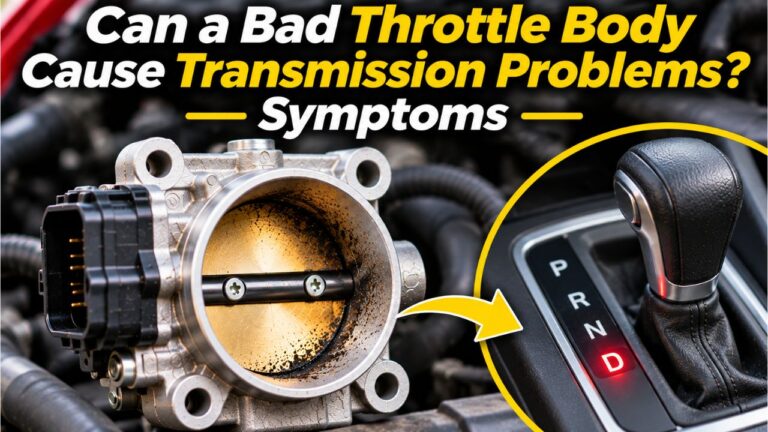
Electronic diesel engines may include an intake valve that looks similar to a gasoline throttle body.
It contains a movable plate that changes the amount of air passing through the intake.
But its purpose is different.
The engine computer typically uses it for specific emissions and operating conditions rather than primary power control.
A technical comparison of gasoline throttle valves and diesel regulating throttles explains why the two designs have different jobs.
A diesel engine can have a throttle body without using it as its main power-control device.
What Does a Throttle Body Do on a Diesel Engine?
A diesel throttle body regulates intake airflow for specific engine functions rather than serving as the main accelerator-controlled power valve. Depending on the engine, it helps control exhaust gas recirculation, supports diesel particulate filter cleaning, and reduces vibration during shutdown. Some engines use separate valves for these functions.
1. Helps Control Exhaust Gas Recirculation
Exhaust gas recirculation, or EGR, sends a controlled amount of exhaust gas back into the engine’s intake.
This reduces peak combustion temperatures and helps limit nitrogen oxide (NOx) emissions.
In some turbocharged diesel engines, the pressure difference between the exhaust and intake systems isn’t enough to move the desired amount of exhaust gas.
The intake throttle can partially close to reduce intake pressure.
This creates a greater pressure difference that helps exhaust gas flow through the EGR system.
For example, during certain light-load driving conditions, the engine computer may partially close the throttle valve while adjusting EGR flow.
That action isn’t intended to reduce engine power the way a gasoline throttle normally does.
A technical explanation of diesel EGR system arrangements describes how intake throttles can assist exhaust gas circulation.
2. Helps the Engine Shut Down Smoothly
Some diesel engines use an intake shutoff valve to reduce shaking when the engine stops.
This component is often called an anti-shudder valve.
When you switch off the engine, the valve briefly closes to restrict incoming air.
This reduces the air being compressed during the final engine rotations.
As a result, shutdown can feel smoother.
For example, a diesel engine with a faulty anti-shudder valve may shake noticeably when you turn off the ignition.
That doesn’t automatically mean the engine has a mechanical problem.
The valve may simply be sticking or failing to close correctly.
3. Supports Diesel Particulate Filter Regeneration
Many modern diesel vehicles have a diesel particulate filter (DPF).
This exhaust component captures soot particles that would otherwise leave the tailpipe.
The filter periodically needs to remove accumulated soot through a process called regeneration.
Depending on the engine design, the throttle valve helps control intake airflow and combustion conditions during regeneration.
This can help the exhaust system reach the temperatures needed to burn accumulated soot.
For example, a malfunctioning intake throttle on certain diesel engines may interfere with active DPF regeneration.
Over time, that can contribute to DPF warning lights or increased soot loading.
Not every diesel uses its intake throttle for regeneration. The exact strategy depends on the manufacturer.
How Does a Diesel Throttle Body Work?
A diesel throttle body uses a movable plate inside the intake passage to control airflow when commanded by the engine computer. Depending on the design, an electric motor or vacuum-operated actuator moves the plate. During normal driving, the valve often remains mostly open and adjusts only when a particular function requires it.
The operating process follows a basic sequence.
- The engine computer monitors operating conditions. It uses information such as engine speed, airflow, load, and emissions system requirements.
- The computer determines the required valve position. It may request a partial opening for EGR control or a different position during regeneration.
- An actuator moves the throttle plate. The actuator may be electric or vacuum-operated.
- The plate changes airflow through the intake. The amount of restriction depends on the commanded position.
- The valve returns to another position as conditions change. At shutdown, some designs close briefly to reduce engine vibration.
Electronic vs. Vacuum-Operated Diesel Throttles
Electronic throttle valves use an electric motor to position the plate.
Many have integrated position sensors that report valve movement to the engine computer.
Vacuum-operated versions use changes in pressure to move an actuator.
A solenoid valve, an electrically controlled switch for vacuum flow, often controls that movement.
For example, a vacuum-operated anti-shudder valve may close when the engine is switched off and reopen shortly afterward.
The exact behavior depends on the system.
How Is a Diesel Throttle Body Different From a Gasoline Throttle Body?
The biggest difference is how each engine controls power. A gasoline engine typically uses its throttle body to regulate intake air in response to accelerator demand. A conventional diesel controls power mainly through fuel delivery, while any intake throttle fitted to it usually handles emissions or other operating functions.
| Feature | Gasoline Throttle Body | Diesel Throttle Body |
| Main function | Controls intake air for engine power | Supports EGR, shutdown, or regeneration |
| Required on every engine? | Common on conventional gasoline engines | Not present on all diesels |
| Accelerator response | Usually changes plate position directly or electronically | Power mainly changes through fuel injection |
| Normal opening | Varies with engine demand | Often mostly open during normal operation |
| Emissions role | Supports engine airflow and emissions control | May directly assist EGR and DPF functions |
| Shutdown function | Usually not its primary purpose | May close to prevent shutdown shaking |
Why Diesel Engines Control Fuel Instead of Air
A gasoline engine generally operates with a controlled relationship between air and fuel.
The throttle body helps regulate air entering the engine, and the fuel injection system adjusts fuel delivery accordingly.
A diesel engine operates differently.
Air enters the cylinder and becomes hot under high compression. Diesel fuel is injected into that hot compressed air and ignites without a spark plug.
The amount and timing of injected fuel largely determine the engine’s power output.
Think of a gasoline throttle as a main airflow control, while the diesel intake throttle is often an assistant handling specialized jobs.
That’s the key difference.
Where Is the Throttle Body Located on a Diesel Engine?
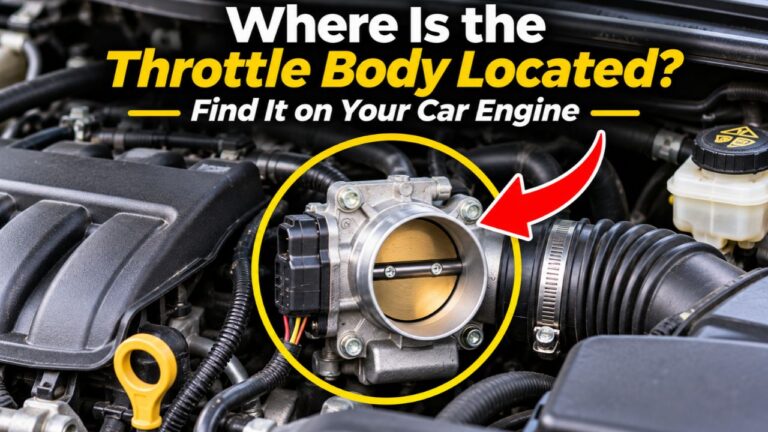
A diesel throttle body is generally installed somewhere in the engine’s intake air path, often near the intake manifold or EGR mixing assembly. Its exact position depends on the engine design. Some vehicles place the valve in a separate housing, while others integrate it with nearby air-control components.
How to Find the Intake Throttle
Start by locating the engine’s air intake system.
Air generally travels through the air filter, turbocharger compressor if fitted, charge air cooler, and intake piping toward the engine.
The throttle valve may sit along that route.
For example, on some diesel engines, an electronically controlled throttle assembly sits near the entrance to the intake manifold.
Look for a housing with a round air passage and an attached electrical actuator or vacuum control mechanism.
A vehicle-specific parts diagram is the most reliable way to identify the exact component.
Is the Diesel Throttle Body the Same as the EGR Valve?
No. Although the parts may sit close together, they perform different jobs.
The EGR valve controls exhaust gas entering the intake.
The diesel throttle valve controls fresh intake airflow or the pressure conditions that support EGR operation.
Some engines combine them into a shared housing.
Also, don’t confuse a main intake throttle with swirl flaps, which are smaller valves inside certain intake manifolds that help control air movement within the cylinders.
What Are the Symptoms of a Bad Diesel Throttle Body?
A faulty diesel throttle body can cause reduced engine power, rough running, harsh shutdown, warning lights, and emissions system problems. Symptoms depend on whether the valve sticks open, remains partly closed, or fails electronically. A severely restricted intake can also prevent normal engine operation or starting.
Here are common signs.
| Symptom | Possible Explanation |
| Reduced engine power | Throttle plate restricts too much intake air |
| Rough running | Airflow or EGR operation becomes inconsistent |
| Harsh engine shutdown | Anti-shudder function doesn’t operate correctly |
| Check engine light | Throttle actuator or position fault is detected |
| DPF warning | Throttle-related regeneration control may be affected |
| Hard starting or no start | Valve may remain closed or severely restrict airflow |
Throttle Plate Stuck Open
A diesel throttle valve stuck open may still allow the engine to run normally in some conditions.
But functions requiring partial or full closure may stop working.
For example, an engine may shut down with a noticeable shake because its anti-shudder valve remains open.
EGR control or DPF regeneration may also be affected, depending on the system.
Throttle Plate Stuck Closed
A throttle stuck closed can be much more serious.
If fresh air cannot reach the cylinders, the engine may struggle to run or fail to start.
For example, an intake shutoff valve that doesn’t reopen after engine shutdown may leave the engine cranking without firing normally.
A partly closed valve may cause reduced power and excessive intake restriction.
Electronic Actuator Problems
An electric motor, damaged wiring, or failed position sensor can prevent the throttle plate from following commands.
Some vehicles enter a reduced-power operating mode to protect the engine and emissions systems.
Diagnostic trouble codes may include throttle actuator faults such as P2102, although code meaning and testing requirements vary by vehicle.
A technical guide to diesel regulating throttle faults describes how electrical and mechanical faults can interfere with valve operation.
A throttle-related trouble code doesn’t automatically mean the throttle body needs replacement.
How Can You Tell if Your Diesel Engine Has a Throttle Body?
The most reliable way to determine whether your diesel has a throttle body is to check its engine-specific service information or intake system parts diagram. Different diesel engines use different air-control arrangements, and similar-looking intake components may serve different functions.
Follow these checks.
Step 1: Identify Your Exact Engine
Find the vehicle’s year, make, model, engine size, and engine code when available.
For example, two diesel trucks from the same manufacturer may have different intake throttle arrangements because they use different engines or emissions systems.
Don’t assume the components are identical.
Step 2: Check the Parts Diagram
Look for names such as:
- Diesel throttle body
- Intake throttle valve
- Air control valve
- Regulating throttle
- Intake shutoff valve
- Anti-shudder valve
Manufacturers don’t always use the same name.
Check the component description and location rather than relying only on the label.
Step 3: Inspect the Intake Assembly
With the engine off and cool, inspect the accessible intake piping.
A throttle assembly may have an electrical connector, actuator housing, or vacuum line.
Don’t remove intake parts just to check whether the valve exists.
If you can’t identify it safely, ask a qualified diesel technician or consult the service manual.
Should You Clean or Replace a Diesel Throttle Body?
A diesel throttle body may need cleaning when soot and oily deposits interfere with its movement, but mechanical or electrical failures may require repair or replacement. The correct decision depends on the condition of the plate, actuator, position sensor, and associated wiring. Cleaning won’t correct a failed motor or damaged electronics.
Why Diesel Throttle Bodies Get Dirty
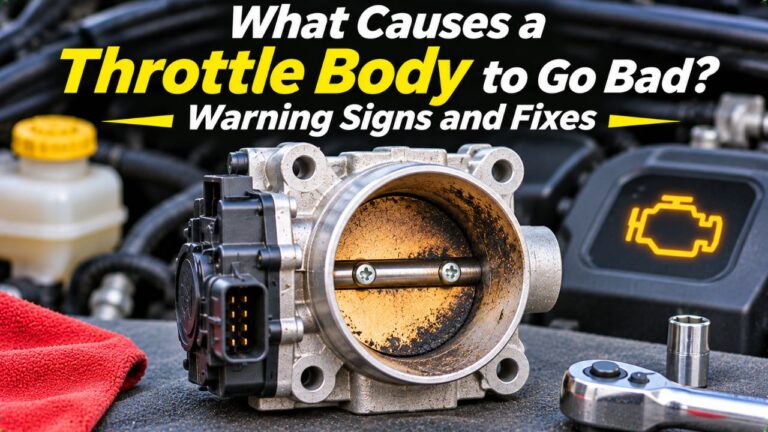
Diesel intake systems can accumulate soot, oil mist, and sticky residue.
EGR systems introduce some exhaust gas into the intake, while crankcase ventilation can contribute oily vapor.
Together, these materials may form deposits around the throttle plate and nearby passages.
For example, a valve that moves freely when clean may begin sticking after heavy contamination develops around its edges.
That doesn’t mean every dark deposit needs immediate cleaning.
Can You Clean It Without Removing It?
Some diesel throttle valves allow limited cleaning while installed.
Others require removal or a specific service procedure.
If cleaning is permitted, use the manufacturer-approved product and method.
Don’t force an electronic throttle plate, spray large amounts of solvent into the intake, or scrape delicate surfaces with metal tools.
A clean plate won’t solve a broken actuator, faulty position sensor, or damaged wiring connection.
When Replacement Makes Sense
Replacement may be necessary when testing confirms that the actuator, valve mechanism, or integrated sensor has failed.
For example, a throttle motor that cannot move the plate despite receiving correct electrical commands may need replacement.
Some vehicles also require an electronic adaptation or calibration procedure afterward.
Pro Tip: Before purchasing a new throttle assembly, have the stored codes and actuator operation checked. A wiring fault can look like a failed throttle body.
Can You Drive With a Bad Diesel Throttle Body?
Driving with a faulty diesel throttle body depends on the severity of the problem, but continuing with reduced power, stalling, or repeated emissions warnings isn’t recommended. A stuck valve may interfere with airflow or prevent proper emissions system operation. Severe faults should be diagnosed before the vehicle returns to regular use.
For example, a valve stuck partly closed may cause poor acceleration when merging into traffic.
That creates a safety concern.
A less severe fault affecting shutdown smoothness may not immediately prevent driving, but it still deserves inspection.
DPF-related problems can also become more expensive if regeneration repeatedly fails.
Don’t disconnect, bypass, or remove emissions-related throttle components as a workaround. Such changes may violate emissions requirements and create additional engine faults.
If the vehicle loses power unexpectedly, stalls, or struggles to accelerate safely, stop driving and arrange professional diagnosis.
Frequently Asked Questions
Do Older Diesel Engines Have Throttle Bodies?
Many older diesel engines don’t have conventional throttle bodies because they control engine power through fuel delivery. Some models still use intake shutoff valves or other air-control devices for specific purposes. The exact arrangement depends on engine design, so the absence of a gasoline-style throttle doesn’t mean there are no intake valves.
Do Turbo Diesel Engines Have Throttle Bodies?
Some turbo diesel engines have throttle bodies, while others don’t. Modern turbocharged diesels may use an intake regulating valve to help control EGR flow, DPF regeneration, or smooth shutdown. The turbocharger itself doesn’t automatically require a throttle body. Check the exact engine’s intake system diagram to confirm its arrangement.
Can a Diesel Engine Run Without a Throttle Body?
Yes. Diesel engines designed without an intake throttle can operate normally because fuel injection controls engine power. But an engine designed to use a throttle valve may develop control, emissions, or operating problems if that component is removed or disabled. Don’t bypass factory equipment to solve a throttle fault.
Can a Dirty Diesel Throttle Body Cause Rough Idle?
Yes. Heavy deposits can interfere with valve movement or airflow control and contribute to rough running on some diesel engines. Similar symptoms can result from injector problems, EGR faults, or intake leaks. Cleaning may help when deposits are responsible, but the problem should be diagnosed before replacing parts.
Is a Diesel Anti-Shudder Valve the Same as a Throttle Body?
Sometimes. Some diesel engines use the same intake valve assembly for airflow regulation and smooth shutdown. Other engines have a separate anti-shudder valve. The term describes the shutdown function rather than one universal part design. Check the vehicle’s service information to identify which arrangement it uses.
Does a Diesel Throttle Body Control Engine Speed?
Not in the same primary way as a gasoline throttle body. Diesel engine speed and power are generally controlled by the amount of fuel injected. An intake throttle may change airflow for emissions control or shutdown functions. Its position can affect engine operation, but it usually isn’t the main accelerator-controlled power device.
What Diesel Owners Should Know About Throttle Bodies
Diesel engines don’t all use throttle bodies, and the ones that do operate differently from conventional gasoline throttle systems.
Older diesels often control power entirely through fuel delivery without a main intake throttle. Many modern diesel engines use electronic or vacuum-operated intake valves to support EGR, DPF regeneration, and smoother shutdown.
These valves can develop carbon deposits, electrical faults, or mechanical problems. Depending on the failure, you may notice reduced power, rough running, harsh shutdown, or emissions warnings.
The important thing is identifying the exact component before cleaning or replacing it. An EGR valve, anti-shudder valve, and intake swirl flap may look related, but they don’t always perform the same job.
Your next step: Check your diesel engine’s service diagram for an intake throttle or air control valve. If you suspect a fault, record the diagnostic trouble codes and confirm the cause before purchasing replacement parts.