How to Tell if Throttle Body Sensor Is Bad: 7 Signs and Tests
A bad throttle body sensor can cause hesitation, rough idle, poor acceleration, unexpected surging, and a check engine light. The part is called the throttle position sensor (TPS). To confirm a problem, check the engine’s trouble codes, inspect the wiring, and examine the sensor’s readings with a diagnostic scanner.
The throttle position sensor tells the engine computer how far the throttle plate is open. When that information becomes incorrect or inconsistent, the computer may struggle to control engine performance. Some vehicles even limit acceleration to protect the driver and engine.
The tricky part is that these symptoms aren’t unique to a failed sensor. A dirty throttle body, damaged electrical connector, faulty accelerator pedal sensor, or intake air leak can create similar problems. Replacing the throttle body without testing may leave the original fault untouched.
This guide covers seven common warning signs, how to test the sensor, and what different trouble codes mean. You’ll also learn how to distinguish a bad sensor from other throttle problems and decide whether cleaning, repair, or replacement is necessary.
What Does a Throttle Body Sensor Do?
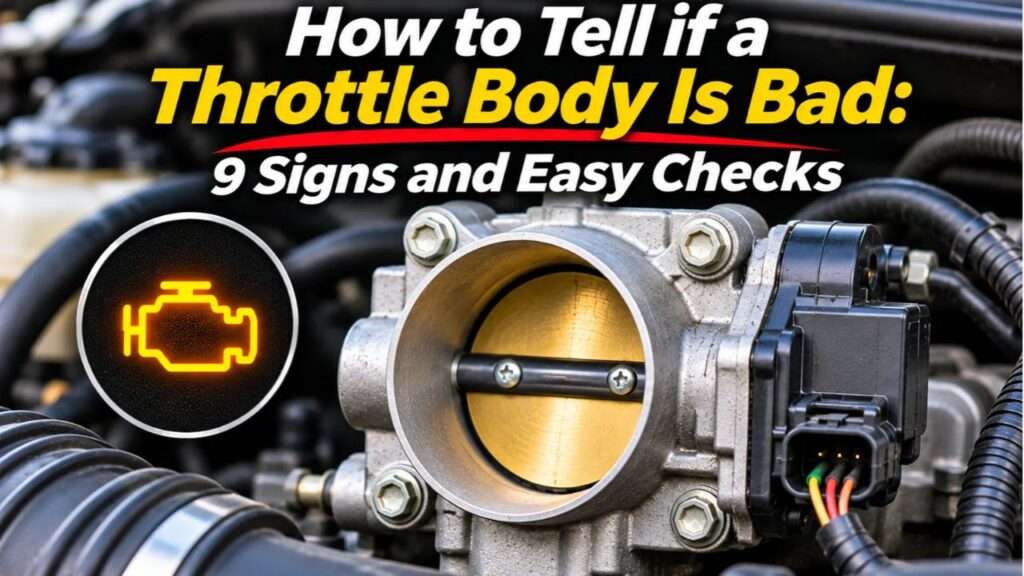
The throttle position sensor measures the opening angle of the throttle plate and sends that information to the engine computer. The computer uses the signal to help manage fuel delivery, engine response, and electronic throttle operation. Incorrect readings can affect how smoothly the engine accelerates and idles.
The throttle body controls how much air enters a gasoline engine.
Inside it is a round plate that opens and closes to regulate airflow.
The TPS reports the plate’s position through an electrical signal.
Older cable-operated throttle bodies often have a separate sensor attached to the throttle shaft. Modern electronic throttle bodies usually contain integrated position sensors.
Throttle Position Sensor vs. Accelerator Pedal Sensor
These two sensors perform different jobs.
| Sensor | What it measures | Typical location |
| Throttle position sensor (TPS) | Actual throttle plate position | On or inside the throttle body |
| Accelerator pedal position sensor (APP) | How far the driver presses the accelerator | Accelerator pedal assembly |
For example, pressing the gas pedal halfway doesn’t always mean an electronic throttle plate opens halfway.
The engine computer determines the appropriate opening based on operating conditions.
The technical explanation of electronic throttle control describes how these sensors work together.
What Are the 7 Signs of a Bad Throttle Body Sensor?
A failing throttle position sensor can cause hesitation, poor acceleration, rough idle, engine surging, stalling, reduced engine power, and a check engine light. These symptoms may appear individually or together. Their severity depends on the vehicle’s electronic controls and whether the sensor fails completely or intermittently.
1. Hesitation When Accelerating
One common symptom is a delay or stumble when you press the accelerator.
For example, your car may hesitate briefly while pulling away from a stoplight, then accelerate normally.
A damaged TPS may send an incorrect or unstable position signal, affecting the engine’s response.
Fuel delivery and ignition faults can cause the same symptom, so hesitation alone doesn’t confirm sensor failure.
2. Rough or Unstable Idle
A faulty throttle position signal can contribute to an unstable idle.
The engine might shake, fluctuate in speed, or feel close to stalling while stopped.
On certain vehicles, the computer may struggle to maintain the desired airflow if throttle position feedback is unreliable.
A dirty throttle plate or intake air leak can produce similar behavior.
3. Poor Acceleration
A sensor problem may prevent the engine from responding normally to accelerator input.
You press the pedal, but the car feels sluggish or refuses to accelerate as expected.
Some electronic throttle systems deliberately reduce engine power after detecting a sensor fault.
Reduced engine power is a protective operating mode, not proof that the sensor itself has failed.
4. Unexpected Engine Surging
Engine surging means the engine speed or power changes unexpectedly without a matching change in accelerator input.
For example, the car might briefly speed up or slow down while you hold the pedal steady.
An erratic position signal can contribute to this behavior.
Surging can also result from other airflow, fuel, or engine control problems.
If the vehicle accelerates unpredictably, stop driving and arrange an inspection.
5. Engine Stalling
A faulty throttle signal can contribute to stalling, particularly while slowing down or coming to a stop.
The engine computer may struggle to control idle airflow correctly.
For example, a vehicle could idle normally in Park but stall after you release the accelerator at an intersection.
Don’t assume the TPS is responsible without checking for other engine faults.
6. Check Engine or Electronic Throttle Warning Light
A failing TPS may trigger the check engine light or a dedicated electronic throttle warning.
Some vehicles display a lightning-bolt symbol or a message about reduced engine power.
The warning may appear together with rough running or limited acceleration.
Diagnostic trouble codes help identify which electrical circuit needs testing.
7. Poor Fuel Economy
An incorrect throttle position signal may contribute to inefficient engine operation and increased fuel consumption.
Still, poor gas mileage has many possible causes.
Low tire pressure, dragging brakes, worn spark plugs, and fuel system problems can also affect economy.
Treat fuel consumption as a supporting clue, not a reason to replace the sensor.
How to Tell if the Throttle Position Sensor Is Actually Bad
The most reliable way to identify a faulty TPS is to combine diagnostic trouble codes with live sensor data and electrical inspection. A bad sensor may produce a signal that jumps, drops out, or disagrees with another position sensor. Loose wiring or a faulty power supply can create similar readings.
Step 1: Read the Engine Trouble Codes
Connect an OBD-II scanner to the vehicle’s diagnostic port.
Turn the ignition on as directed by the scanner and vehicle instructions.
Read the stored and pending trouble codes.
Pay attention to codes related to throttle position, accelerator pedal position, and electronic throttle control.
Don’t erase the codes immediately.
Freeze-frame data, which records certain engine conditions when a fault occurred, may help identify an intermittent problem.
Step 2: Inspect the Throttle Body Connector
Turn off the ignition and follow the manufacturer’s electrical safety instructions.
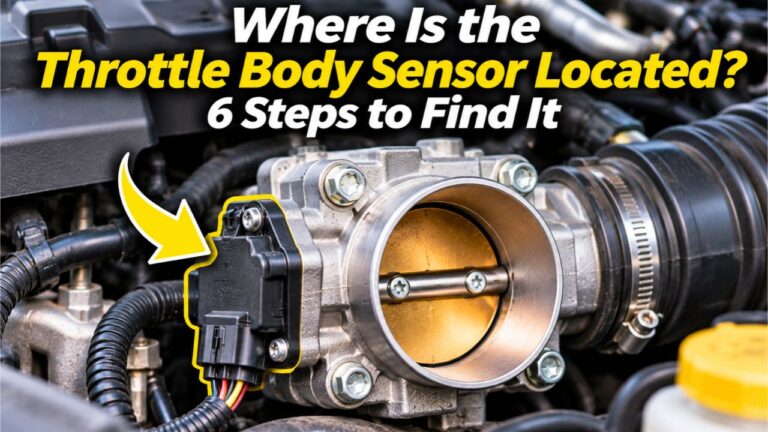
Locate the throttle body and inspect its electrical connector.
Look for:
- Loose or broken locking tabs
- Corroded electrical terminals
- Damaged wire insulation
- Moisture or oil contamination
- Wires rubbing against nearby components
For example, a loose connector may interrupt the position signal whenever engine vibration moves the wiring.
The sensor itself might still be functional.
Step 3: Check Live Throttle Position Data
A scanner with live data capability can display changing sensor readings.
Look for parameters labeled TPS, TP Sensor 1, TP Sensor 2, or actual throttle angle.
Follow the vehicle’s service procedure for testing these values.
On certain systems, the technician can command a throttle sweep using a compatible diagnostic scanner.
The sensor readings should change according to the manufacturer’s expected pattern.
Sudden signal dropouts or impossible readings are warning signs, especially when the fault can be reproduced.
Remember that accelerator pedal position and actual throttle angle aren’t identical values.
Step 4: Compare Both Throttle Position Sensors
Many electronic throttle bodies have two internal position sensors.
These provide separate signals that the engine computer compares for plausibility.
Some designs use signals that move in opposite directions. Others use different scaling.
If the signals disagree beyond the allowed limits, the computer may store a fault code.
This doesn’t automatically mean either sensor is defective. Wiring problems can also interrupt the signals.
Step 5: Test the Electrical Circuit
A qualified technician can use a digital multimeter to check sensor reference voltage, ground, and signal voltage.
Many throttle position sensors operate with a 5-volt reference supply, but testing points and expected values vary.
The technician should use the correct connector diagram and service procedure.
Don’t probe unknown terminals or apply battery voltage directly to a sensor circuit.
For older, removable potentiometer-style sensors, resistance testing may also be supported. Modern electronic sensors often need different testing methods.
The throttle position sensor testing procedure describes how wiring inspection and sensor measurements help identify faults.
Step 6: Confirm the Cause Before Replacing Parts
Compare the scan results, wiring checks, and symptoms.
A reliable diagnosis should identify whether the problem comes from the sensor, electrical connector, throttle actuator, or another component.
If the sensor signal is incorrect but its power and ground circuits are healthy, the sensor or integrated throttle body becomes a stronger suspect.
If the power supply is missing, replacing the sensor may not solve anything.
What Trouble Codes Point to a Bad Throttle Position Sensor?
Trouble codes in the P0120, P0220, and related groups can indicate throttle position sensor circuit problems. Code P2135 often points to disagreement between two throttle position signals. These codes help narrow the diagnosis but can also result from damaged wiring, connectors, or other electronic throttle components.
| Trouble code | General meaning | What to investigate |
| P0120 | Throttle/pedal position sensor A circuit malfunction | Sensor and electrical circuit |
| P0121 | Sensor A range or performance problem | Signal accuracy and consistency |
| P0122 | Sensor A circuit low input | Low voltage, wiring, or sensor |
| P0123 | Sensor A circuit high input | High voltage, wiring, or sensor |
| P0220 | Throttle/pedal position sensor B circuit malfunction | Second sensor circuit |
| P2135 | Throttle position sensor A/B correlation | Disagreement between sensor signals |
| P2111 | Throttle actuator control stuck open | Throttle motor, plate, and control system |
Code descriptions and diagnostic logic can vary by manufacturer.
For example, P2135 doesn’t automatically mean you need a new throttle body.
A damaged connector or poor electrical connection can cause the sensor signals to disagree.
The manufacturer’s diagnostic instructions for P2135 identify the sensor, wiring, and control module as possible fault areas.
Use the exact service information for your vehicle before choosing a repair.
Is It a Bad Sensor or Just a Dirty Throttle Body?
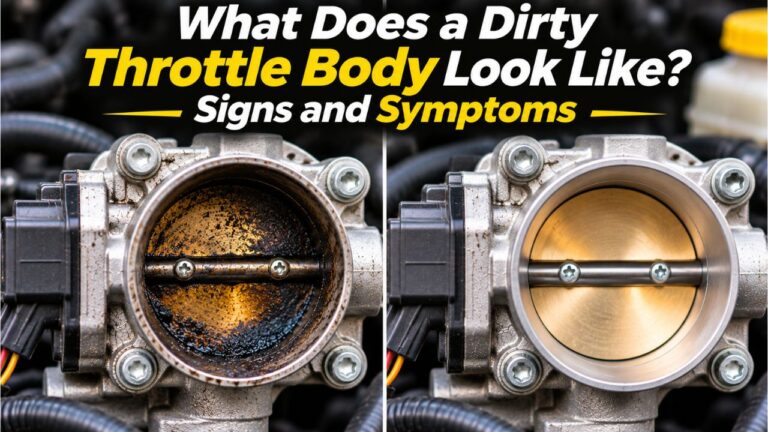
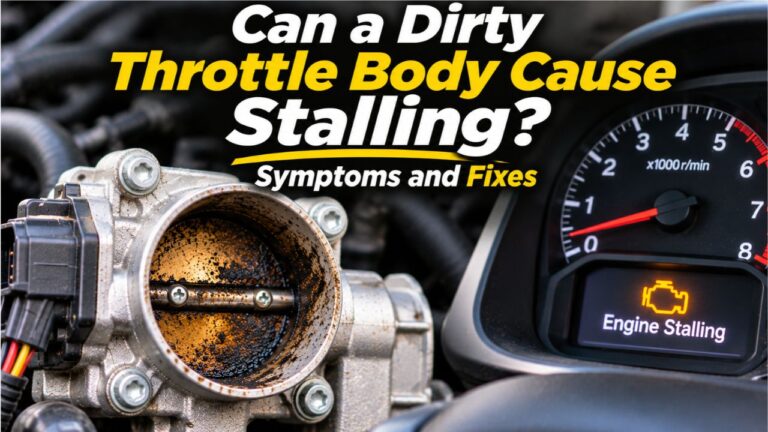
A dirty throttle body can cause rough idle, hesitation, and stalling without any electrical sensor failure. Carbon deposits around the throttle plate can interfere with normal airflow. A bad TPS, on the other hand, produces incorrect position information. Both conditions can cause similar driving problems.
Compare the Symptoms
| Symptom or finding | Dirty throttle body | Bad TPS |
| Rough idle | Common possibility | Possible |
| Hesitation | Possible | Possible |
| Carbon around throttle plate | Often present | Not proof of sensor failure |
| Erratic position signal | Not typical by itself | Stronger sensor fault clue |
| P2135 correlation code | Less direct explanation | Possible, including wiring faults |
| High idle after service | May need cleaning or relearn | Could involve sensor or calibration |
| Reduced power warning | Possible with throttle control faults | Possible |
When Cleaning May Help
If carbon deposits interfere with airflow, cleaning may restore normal operation.
Use the vehicle manufacturer’s approved cleaning method.
Some electronic throttle bodies have protective coatings or delicate internal components.
Don’t force the throttle plate open or spray cleaner into electrical connections.
Cleaning won’t repair a broken sensor circuit.
For example, a car that idles roughly because of carbon buildup may improve after correct cleaning. But a sensor producing intermittent electrical dropouts will still need diagnosis.
Don’t Confuse the Pedal Sensor With the TPS
A damaged accelerator pedal position sensor can cause poor throttle response.
The engine computer may limit power even though the throttle body sensors are working normally.
A scanner that separately displays pedal position and throttle position data can help distinguish these faults.
Can You Drive With a Bad Throttle Body Sensor?
A vehicle may continue running with a failing throttle position sensor, but driving isn’t recommended when acceleration becomes unpredictable, power is severely limited, or the engine stalls. Electronic throttle systems can enter a protective mode after detecting sensor faults, and the vehicle may not respond normally when you need acceleration.
For example, sudden power loss while merging onto a highway can create a dangerous situation.
If the car hesitates badly, stalls, or accelerates unexpectedly, pull over safely.
Turn off the engine and arrange assistance.
A mild symptom without a confirmed fault still deserves prompt diagnosis.
Don’t treat reduced engine power mode as permission to continue a long trip.
Should You Reset, Clean, or Replace a Bad Throttle Position Sensor?
A confirmed defective TPS normally needs replacement, but the repair depends on how the vehicle is built. Older throttle bodies may have a removable sensor, while modern electronic assemblies often contain integrated sensors that aren’t serviced separately. Cleaning or resetting the system won’t repair damaged internal sensor electronics.
When Sensor Replacement Is Enough
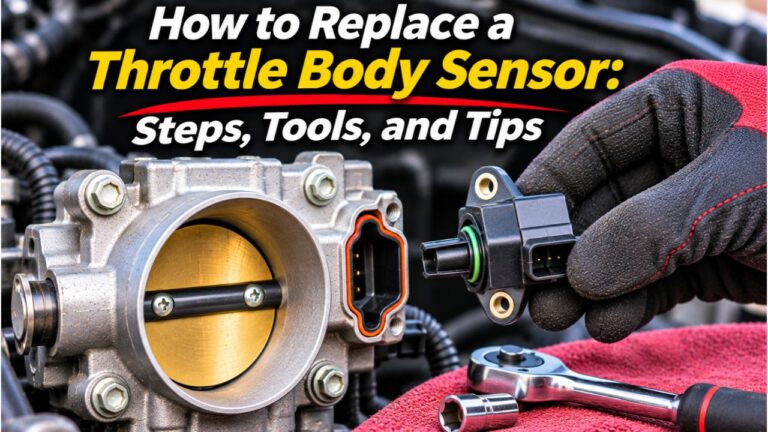
Some cable-operated throttle bodies use a separate TPS attached with screws.
On these designs, the sensor may be replaceable without changing the entire throttle body.
The replacement must match the original part and may require adjustment or calibration.
When the Whole Throttle Body Needs Replacement
Many electronic throttle bodies contain built-in position sensors.
If one of these sensors fails internally, the manufacturer may specify replacing the complete assembly.
Don’t try to open sealed electronic housings or modify factory throttle stop settings.
Does a New Sensor Need a Relearn?
Some vehicles require a throttle position calibration or idle relearn after replacement.
Others adapt automatically.
The correct method depends on the engine computer and replacement procedure.
Disconnecting the battery doesn’t guarantee that calibration will be completed.
Check the required relearn procedure before buying replacement parts, especially if specialized diagnostic equipment is needed.
Common Mistakes When Diagnosing a Throttle Body Sensor
The biggest diagnostic mistake is replacing the throttle body because the vehicle hesitates or idles poorly. Several engine faults can create those symptoms. A proper diagnosis checks sensor signals, wiring, throttle operation, and stored trouble codes before deciding which component needs replacement.
Avoid these common errors:
- Replacing the TPS based only on a check engine light.
- Assuming every hesitation problem comes from the throttle body.
- Ignoring loose connectors or damaged wiring.
- Confusing accelerator pedal sensor faults with throttle position faults.
- Forcing an electronic throttle plate open during inspection.
- Clearing trouble codes before recording diagnostic information.
- Skipping a required calibration after replacement.
Here’s a useful rule of thumb: confirm an electrical sensor fault before replacing an electrical sensor.
Otherwise, you may end up back at square one with the same problem and a new part you didn’t need.
Frequently Asked Questions
Throttle position sensor problems can resemble several other engine faults, which makes diagnosis confusing. The questions below cover starting problems, sensor testing, warning lights, replacement, and driving safety. The best repair always begins with identifying the actual cause rather than relying on one symptom.
Can a Bad Throttle Position Sensor Cause a Car Not to Start?
Yes, in some vehicles, a serious throttle position or electronic throttle control fault can contribute to a no-start condition. But a failed TPS more commonly causes rough running, hesitation, or limited power. Battery problems, missing ignition spark, fuel delivery faults, and other engine control issues should also be checked.
Can You Test a Throttle Body Sensor With a Multimeter?
Yes. Certain TPS designs allow voltage or resistance testing with a digital multimeter. The procedure depends on the sensor type and electrical circuit. Use the correct connector pinout and manufacturer specifications. Modern electronic throttle bodies may require scan data or an oscilloscope to identify intermittent faults reliably.
Will a Bad Throttle Body Sensor Trigger the Check Engine Light?
Often, but not always. The engine computer may store a trouble code when the throttle position signal becomes abnormal or disagrees with another sensor. An intermittent problem might appear before the warning light activates. Reading stored and pending codes can help identify faults that aren’t immediately obvious.
Can You Replace Only the Throttle Position Sensor?
Some older throttle bodies have a separate, replaceable position sensor. Many newer electronic throttle bodies contain integrated sensors that require replacement of the complete assembly when they fail. Check the manufacturer-approved repair procedure for your exact engine before purchasing a separate sensor.
Can a Bad TPS Cause High Idle?
Yes. Incorrect throttle position information can contribute to unstable or unusually high idle on certain vehicles. But air leaks, carbon buildup, throttle actuator faults, and incomplete idle relearn procedures can produce similar results. Check sensor data and the intake system before replacing the throttle body.
Does Disconnecting the Battery Fix a Bad Throttle Sensor?
No. Disconnecting the battery cannot repair damaged sensor electronics, worn internal contacts, or broken wiring. It may reset certain learned values on some vehicles, but the fault can return. Other vehicles require a specific relearn procedure. Diagnose the electrical problem instead of relying on battery disconnection.
Find the Real Throttle Sensor Problem Before Replacing Parts
A failing throttle body sensor can cause hesitation, rough idle, stalling, poor acceleration, and reduced engine power. These symptoms often overlap with dirty throttle bodies, faulty pedal sensors, and damaged wiring.
The best way to identify the problem is to combine trouble codes with live throttle position readings. A sensor that produces incorrect or unstable signals deserves further testing, especially when its electrical connections and power supply are functioning properly.
Don’t assume every throttle-related code means the entire throttle body is defective. Some vehicles have replaceable sensors, while others require a complete assembly.
If acceleration becomes unpredictable or the engine stalls, stop driving and arrange an inspection.
Your next step is to scan the vehicle for stored trouble codes and check the throttle position data. Compare the results with your vehicle’s service specifications. If the readings are abnormal, have a qualified automotive technician confirm the fault before installing replacement parts.