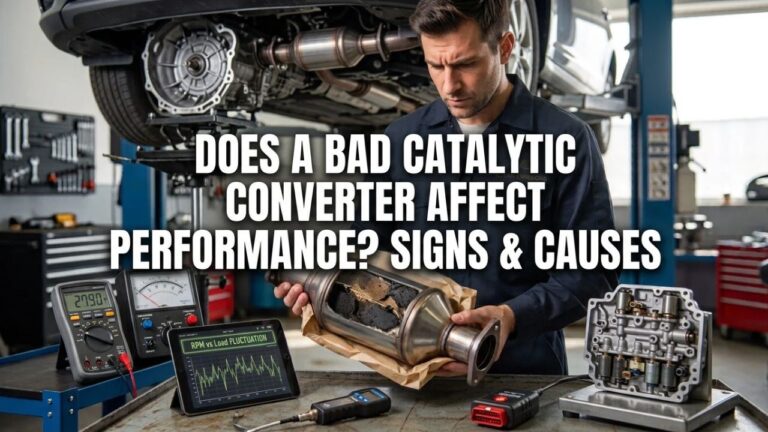
Can Catalytic Converter Be Repaired? Repair vs Replacement Guide
Some catalytic-converter problems can be fixed without replacing the converter, but damage to the internal catalyst core usually cannot. A leaking flange, loose heat shield, damaged sensor wiring, or nearby exhaust leak may be repairable. A melted, cracked, collapsed, poisoned, or badly clogged substrate normally calls for converter replacement after the engine fault that caused the damage is corrected.
The distinction matters because a converter is not a simple hollow muffler. Inside the shell is a ceramic or metallic substrate coated with catalyst material. Once that structure melts, breaks apart, or loses its chemical activity, ordinary shop work cannot restore it to its original condition.
A correct diagnosis can save money and prevent repeat failure. A P0420 or P0430 code can come from converter aging, an exhaust leak, sensor trouble, misfires, or fuel-control problems, so replacing the converter before checking those causes may leave the real fault untouched.
In the United States, the EPA lists the catalytic converter as a specified major emissions component covered for 8 years or 80,000 miles on qualifying light-duty vehicles under the federal emissions defect warranty. That makes warranty status worth checking before paying for a replacement.
For can catalytic converter be repaired, the most useful answer is that repairs are realistic when the problem is outside the catalyst core or involves light contamination with an intact substrate. Internal structural damage, severe restriction, and permanent catalyst degradation usually move the job into replacement territory.
I would also separate “repairing the converter” from repairing a fault around it. Replacing a bad oxygen sensor, sealing a flange leak, tightening a heat shield, or repairing damaged wiring may clear symptoms that looked like converter failure even though the catalyst itself was still usable.
The sections below explain which problems are repairable, when cleaning is worth considering, which failures require replacement, how to test the converter before spending money, and why the engine fault that damaged it must be fixed first.
Can Catalytic Converter Be Repaired or Must It Be Replaced?
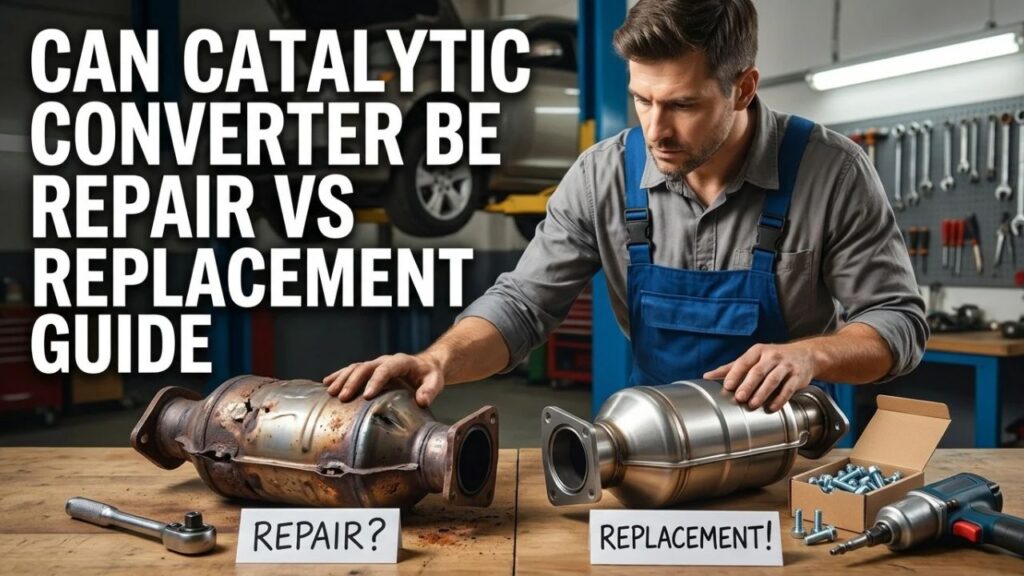
Sometimes it can be repaired, but only when the catalyst core itself is still intact and working.
A catalytic converter contains many small passages through which exhaust gas flows. Those passages are coated with catalyst materials that promote chemical reactions without being consumed during normal operation. Once the substrate is physically destroyed or the catalyst surface is permanently damaged, a normal repair shop does not rebuild that internal structure.
Problems That May Be Repairable
Repairs may make sense when the fault is limited to parts around the converter, such as:
- A leaking flange gasket
- Loose or broken heat-shield hardware
- Damaged oxygen-sensor wiring
- A failed oxygen sensor that is being mistaken for converter trouble
- A leak in adjoining exhaust pipe or weld
- A loose hanger or bracket
- Light deposit buildup with no melted or broken substrate
These repairs can restore normal exhaust operation without replacing the catalyst assembly if testing shows the converter is still functioning.
An exhaust leak near the converter is worth fixing before condemning the catalyst. Extra oxygen entering through a leak can disturb downstream sensor readings and contribute to catalyst-monitor codes.
Problems That Usually Require Replacement
Replacement is normally the sound repair when the converter has:
- A melted honeycomb
- Cracked or collapsed substrate
- Loose internal pieces
- Severe physical blockage
- Permanent oil or coolant fouling
- Catalyst poisoning
- Major shell corrosion that compromises the converter
- Lost emissions conversion after other causes have been ruled out
Walker groups common converter failures into overheated or broken units, contaminated substrates, and structural damage, and stresses correcting the root cause before installing another converter.
A rattling converter with broken internal material cannot be fixed by welding the outside shell. The damage is inside the catalyst bed.
Key Takeaway: External exhaust and sensor problems may be repairable, but melted, broken, collapsed, or chemically damaged catalyst material usually means replacement.
Which Catalytic Converter Problems Can Be Repaired?
Several problems around the converter can look serious while leaving the catalyst core untouched.
Exhaust Flange or Gasket Leaks
A leaking connection before or after the converter can create ticking, hissing, fumes, and abnormal oxygen-sensor readings.
If the flange surfaces remain sound, a new gasket, sealing ring, fastener, or approved exhaust repair may fix the leak.
Inspect the mating pipes and flanges carefully. Heavy rust can leave too little metal for a lasting seal, which may require replacement of the adjoining section.
Loose Heat Shields
A thin metallic rattle often comes from a heat shield rather than the converter core.
Heat shields protect the floor, wiring, fuel-system parts, and other nearby components. A loose shield may be secured with the correct hardware or replaced if corrosion has damaged it.
Do not remove a shield simply to stop a rattle. The converter operates at high temperature, and the shielding is there for thermal protection.
Oxygen Sensor and Wiring Faults
Modern gasoline vehicles commonly have an oxygen or air-fuel sensor ahead of the converter and another sensor downstream.
A sensor fault, damaged connector, burned wiring, or poor electrical connection can trigger a check-engine light and confuse catalyst diagnosis.
P0420 itself does not prove the converter is clogged or broken. AutoZone lists exhaust leaks, sensor checks, misfires, high fuel pressure, and leaking injectors among issues that should be examined during catalyst-code diagnosis.
Adjoining Pipe and Weld Damage
A crack in exhaust pipe near the converter can often be repaired if the converter housing and substrate remain sound and the repair does not alter required emissions equipment.
A shop may weld or replace the damaged pipe section, flange, or support based on access and corrosion.
If the converter shell itself has rusted through badly or cracked around the catalyst body, replacement is often more dependable than trying to patch a weakened assembly.
Key Takeaway: Gaskets, shields, sensors, wiring, brackets, and nearby pipe leaks are the most realistic repair targets when the internal catalyst remains sound.
Can a Clogged Catalytic Converter Be Cleaned?
Sometimes light deposits can be reduced, but cleaning is not a dependable fix for a badly clogged converter.
AutoZone notes that mild contamination may respond to some fuel-system cleaning products, while severe restriction or damaged catalyst material usually leads to replacement. It also warns that pressure-washing or aggressive physical cleaning is not broadly recommended.
When Cleaning May Be Worth Considering
A cleaning attempt is most reasonable when all of these conditions are true:
- The substrate is still structurally intact
- There is no internal rattle
- Backpressure is not severely high
- The converter has not melted
- The engine fault that created deposits has been fixed
- Contamination appears light rather than permanent
A mild soot or carbon coating is very different from a honeycomb that has fused from heat.
Before spending money on cleaner, scan the vehicle and correct misfires, rich operation, injector faults, and oil-burning problems. Deposits will return if the cause remains.
When Cleaning Will Not Repair the Converter
Cleaning cannot rebuild melted ceramic passages.
It also cannot put broken honeycomb pieces back together, restore a collapsed core, repair impact damage, or recreate catalyst surface that has been permanently degraded.
Oil ash, coolant contamination, lead, silicone, and severe thermal damage can poison or coat catalyst surfaces in ways that are not reversed by a bottle added to the fuel tank.
Be Careful With DIY Cleaning Claims
Internet methods sometimes recommend removing the converter and soaking it in household chemicals, flushing it with high-pressure water, or adding strong solvents to the fuel.
Those methods can damage the substrate, wash contamination into places it should not go, affect fuel-system parts, or leave the original engine problem unresolved.
I would treat chemical cleaning as a limited option for light deposit buildup, not as a way to revive a converter with confirmed structural damage.
Key Takeaway: Cleaning may have a chance with light deposits on an intact converter, but it cannot repair melted, broken, collapsed, or permanently poisoned catalyst material.
How to Tell if Your Converter Can Be Repaired
The repair-or-replace decision should come from diagnosis rather than one code or symptom.
Scan All Trouble Codes
Read stored, pending, and permanent OBD-II codes.
Look beyond P0420 and P0430. Misfire, fuel-trim, airflow, oxygen-sensor, and injector codes may explain why catalyst performance changed.
Fix active engine faults before deciding the converter itself is bad.
Check Exhaust Backpressure
If the vehicle has weak acceleration, poor high-RPM power, or stalling, test for exhaust restriction.
A low-pressure gauge installed at an approved test point can show if pressure ahead of the converter rises beyond the vehicle specification.
High backpressure supports a physical restriction. Normal backpressure with a catalyst-efficiency code points more toward chemical catalyst degradation, sensor trouble, or another monitor-related fault.
Inspect for Rattling and Physical Damage
With the exhaust fully cooled, inspect the converter for dents, heavy corrosion, cracks, heat discoloration, and loose shields.
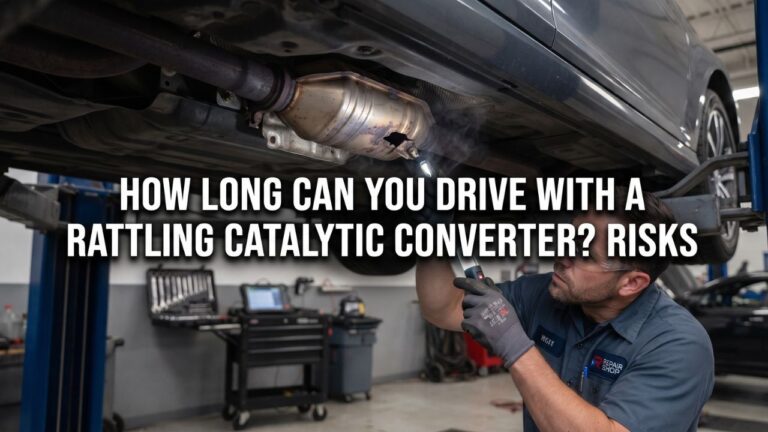
A rattle from inside the housing can indicate broken substrate pieces.
External rattling alone may come from a shield, hanger, or adjacent pipe, so locate the sound before ordering a converter.
Check Oxygen Sensor Data
On many gasoline vehicles, upstream and downstream sensor behavior gives information about catalyst activity.
A downstream signal that closely follows the upstream signal can support a catalyst-efficiency diagnosis, but sensor data must be read with fuel trims, exhaust leaks, and other codes.
Sensor graphs do not directly measure a physical clog.
Check Converter Temperature as Supporting Evidence
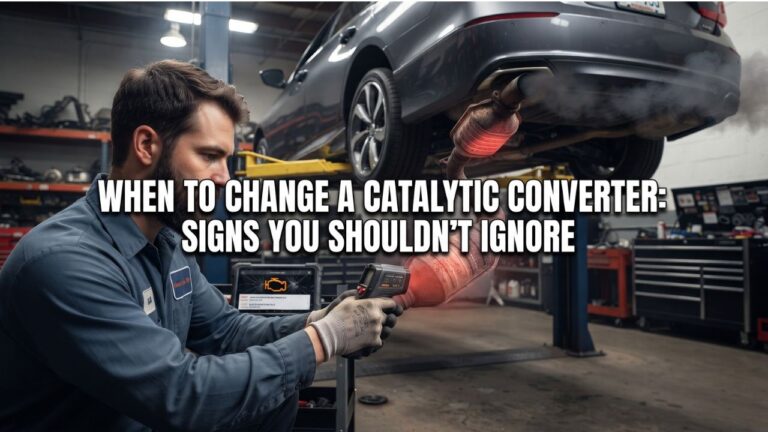
An infrared thermometer can show unusual heat or compare inlet and outlet behavior after the system reaches operating temperature.
A very hot converter may be processing excess unburned fuel from a misfire or rich mixture.
Temperature alone cannot separate every failed converter from an engine fault, so pair it with scan data and pressure testing.
Key Takeaway: Codes, backpressure, sensor data, physical inspection, and temperature clues together show if the converter is repairable, contaminated, restricted, or structurally damaged.
Why Catalytic Converter Repairs Fail Again
A catalytic converter often fails because another engine problem has been active for some time.
Fixing only the exhaust symptom can lead to another damaged converter.
Misfires and Rich Fuel Mixtures
A misfire can send unburned fuel and oxygen into the exhaust.
That fuel can burn inside the converter and raise temperature enough to damage the catalyst or melt the substrate. A rich mixture can create the same type of thermal stress.
Possible causes include bad spark plugs, ignition coils, injectors, fuel-pressure faults, air-metering errors, and low compression.
Walker states that temperatures above about 1,600°F can damage catalyst material even before obvious melting appears.
Oil and Coolant Contamination
Oil entering the combustion chamber can coat the catalyst with ash and deposits.
Coolant from a head-gasket, cylinder-head, or internal engine fault can also contaminate the substrate.
If oil or coolant consumption is not corrected, a replacement converter may become contaminated again.
Exhaust Leaks and Physical Damage
Leaks can alter sensor readings and affect catalyst-monitor operation.
Road impact can dent the shell, crack ceramic material, or shift internal pieces until they restrict flow.
Inspect the full exhaust path rather than focusing only on the catalyst body.
Key Takeaway: Misfires, rich operation, oil burning, coolant contamination, leaks, and impact damage must be corrected before a converter repair or replacement can last.
Repairing vs Replacing a Catalytic Converter
The condition of the internal substrate is the dividing line in most cases.
| Converter Problem | Repair May Be Possible? | Typical Direction |
| Loose heat shield | Yes | Secure or replace shield |
| Flange or gasket leak | Yes | Repair joint or replace seal |
| Damaged O2 sensor wiring | Yes | Repair wiring or connector |
| Failed O2 sensor | Yes | Replace sensor after testing |
| Nearby pipe crack | Often | Repair or replace pipe section |
| Light carbon deposits | Sometimes | Correct cause; cleaning may be attempted |
| Melted substrate | No | Replace converter |
| Broken internal honeycomb | No | Replace converter |
| Severe clog or collapse | Usually no | Replace converter |
| Permanent catalyst poisoning | No practical internal repair | Replace converter |
| Stolen converter | No | Install approved replacement |
A P0420 or P0430 code belongs in the diagnosis column, not automatically in the replacement column.
U.S. Warranty and Emissions Rules Matter
Catalytic-converter work has legal and warranty considerations beyond ordinary exhaust repair.
Check the Federal Emissions Warranty First
The EPA states that specified major emissions components, including catalytic converters, receive 8 years or 80,000 miles of federal emissions defect warranty coverage on qualifying light-duty vehicles. Coverage begins from the vehicle’s original sale date and can apply to later owners.
If the vehicle is inside that period, review the warranty booklet and contact the appropriate dealer before paying for a replacement.
Damage caused by outside factors may not receive the same treatment as a covered defect, so the exact cause still matters.
Do Not Hollow Out or Bypass the Converter
Removing the catalyst material, installing a straight pipe in place of a required converter, or otherwise defeating the emissions system is not a legal repair under federal Clean Air Act rules.
EPA guidance states that required emissions equipment cannot be removed or rendered inoperative, and current aftermarket parts must preserve emissions-control function.
If replacement is required, use a converter that meets the emissions requirements for the vehicle and the state where it is registered.
Key Takeaway: Check the 8-year/80,000-mile federal warranty before paying, and repair or replace the emissions system without bypassing required catalyst function.
When Replacement Is the Better Choice
Replacement is the sensible direction when diagnosis confirms permanent internal failure.
That includes a converter with a melted core, shattered substrate, severe restriction, large internal rattle, permanent contamination, or failed catalyst activity that remains after leaks and engine-control faults have been corrected.
A converter with major shell corrosion may also need replacement even if the catalyst has not yet set a code. Exhaust gases can escape through the damaged housing, and patching severely weakened metal may not last.
EPA aftermarket-converter guidance recognizes a plugged converter or unrepairable exhaust leak as examples of legitimate reasons for replacement once the need has been established.
Before installation, check the vehicle emissions label and part application. Some states use stricter aftermarket-converter rules than the federal baseline.
Conclusion
For can catalytic converter be repaired, the answer is sometimes, but only for a limited group of problems. Heat shields, gaskets, sensor faults, wiring, brackets, and nearby exhaust leaks may be repaired without replacing a healthy catalyst.
Internal damage is different. Melted, broken, collapsed, badly clogged, or permanently poisoned catalyst material is not normally rebuilt during automotive service. Once testing confirms that kind of failure, replacing the converter is the normal repair.
The most important step is finding the cause before fitting another unit. A misfire, rich mixture, oil burning, coolant leak, injector fault, or exhaust leak can damage the replacement just as it damaged the old converter.
I would diagnose the engine and exhaust first, check federal warranty coverage, and replace the converter only when the evidence points to permanent catalyst failure. That approach avoids paying for a converter when the real problem is a sensor, leak, or engine fault.
FAQs About Catalytic Converter Repair
Can a catalytic converter be fixed without replacing it?
Yes, if the actual problem is a loose heat shield, leaking flange, bad sensor, damaged wiring, or nearby exhaust leak. Light contamination may sometimes improve after the engine fault is corrected and deposits are reduced. Internal melting, cracking, collapse, or permanent catalyst degradation normally requires replacement.
Can a clogged catalytic converter be repaired?
A lightly fouled converter with an intact substrate may respond to cleaning after the cause is corrected. A heavily restricted converter with melted or collapsed passages cannot be reliably unclogged. Backpressure testing is a better way to confirm the restriction before deciding on replacement.
Can you repair a catalytic converter by welding it?
Welding may repair certain adjoining pipe or flange problems when the catalyst itself remains intact and the work does not defeat the emissions system. Welding the outer shell does not restore a broken or melted internal substrate. Severe shell corrosion or internal damage usually calls for replacement.
Do catalytic converter cleaners actually work?
They may reduce light deposits in some cases, but they are not a repair for structural or chemical catalyst damage. A cleaner cannot rebuild melted ceramic, reconnect broken honeycomb, or restore catalyst material that has been permanently poisoned or degraded.
Does P0420 always mean I need a new catalytic converter?
No. P0420 means catalyst performance on Bank 1 has fallen below the monitor threshold. Exhaust leaks, oxygen-sensor issues, misfires, rich operation, and other engine faults should be checked first. A converter replacement should follow diagnosis rather than the code alone.
Can a bad oxygen sensor make the converter seem bad?
Yes. Sensor faults or wiring problems can affect catalyst-monitor data and may contribute to a P0420 or P0430 diagnosis. An upstream sensor or fuel-control fault can also create an incorrect mixture that eventually damages the converter. Test the sensors and related engine data before replacing the catalyst.
Is it cheaper to repair or replace a catalytic converter?
Repairing a gasket, shield, sensor, wire, or nearby exhaust leak is usually less costly than replacing the full converter. Once the internal catalyst is melted, broken, or permanently contaminated, repair is generally not practical and replacement becomes the normal expense.
Can I drive with a catalytic converter that needs repair?
That depends on the fault. A loose heat shield may create noise without restricting exhaust, while a clogged or overheated converter can cause major power loss, stalling, or excessive heat. Stop driving and seek service if the converter glows, the check-engine light flashes, the engine misfires badly, or the vehicle cannot maintain safe road speed.