Can You Use Mr Clean on Car Exterior: Clear Answers and Key Facts
Yes, you can use some Mr. Clean products on a car exterior, but they are not automatically safe for every painted, coated, or plastic surface. A diluted, mild formula may work for limited cleaning, while concentrated cleaner or an abrasive Magic Eraser can dull clear coat, remove protection, or leave residue.
The difficult part is identifying whether the problem is ordinary road film, bonded contamination, a failing wax layer, or damage that cleaning cannot fix. The product name alone does not reveal how a specific formula, dilution, pad, or amount of scrubbing will affect automotive paint.
This article explains which Mr. Clean products present the most risk, how painted panels differ from glass, tires, trim, and wheels, and how to test a cleaner before using it across the vehicle. You will also learn a safer washing method, when a Magic Eraser should be avoided, what to do after an accidental application, and when professional detailing is the better choice.
Which Mr. Clean Products Are Appropriate
“Mr. Clean” refers to several different products, not one universal automotive cleaner. The safest choice depends on the product’s ingredients, concentration, surface instructions, and physical cleaning material.
A standard automotive car shampoo is formulated for vehicle surfaces and is generally the better option for routine exterior washing. A household Mr. Clean liquid cleaner may be usable for a narrowly defined task if the label permits the surface, but it should not replace car soap for regular maintenance.
Mr. Clean Magic Eraser is different because it is a melamine foam abrasive. It does not merely dissolve dirt; its fine abrasive structure can mechanically remove marks and alter the surface underneath.
That makes it especially risky on glossy automotive paint, clear coat, piano-black trim, soft plastic, and exterior finishes with a sheen.
Mr. Clean cleaning pads, sprays, disinfecting products, and concentrated liquids also vary in strength. Read the current product label before use, because instructions and formulas can change.
Never assume that a cleaner safe for a kitchen, bathtub, or household plastic is safe for automotive paint.
Why Household Cleaner Can Affect Automotive Paint
Modern car paint usually has a clear coat over the colored base coat. The clear coat provides gloss and some protection, but it is not an indestructible barrier. Strong chemicals, repeated scrubbing, heat, and abrasive tools can reduce its clarity or wear through its surface protection.
Many household cleaners are designed to cut grease, remove soap scum, or break down stubborn organic residue. Those abilities can also strip wax, sealant, or spray protection from a vehicle. A single diluted application may not visibly damage healthy paint, but repeated use can leave the surface less protected and more vulnerable to contamination and oxidation.
Concentration matters. A product that is tolerable when heavily diluted can be unnecessarily aggressive when applied directly from the bottle. Contact time matters as well: allowing cleaner to dry on warm paint gives the chemicals more opportunity to leave spots, streaks, or residue.
The tool used with the product may create more damage than the liquid itself. A rough sponge, household scrub pad, paper towel, or dirty microfiber can drag grit across the finish and create swirl marks and fine scratches.
Can You Use It on Painted Body Panels?
For occasional spot cleaning, a mild, properly diluted Mr. Clean product may be acceptable on some painted panels, but a pH-balanced car wash soap remains the safer standard. The goal should be to remove dirt with lubrication and gentle rinsing rather than rely on chemical strength or force.
Before using any household cleaner on paint, inspect the label for surface limitations and test it on a hidden area such as the lower edge of a bumper or an inconspicuous section near a panel gap. Use a soft, clean microfiber cloth, keep the contact time short, and rinse the area thoroughly.
After drying, look for changes in gloss, hazing, streaking, color, or tactile smoothness. Also check whether the product has removed water beading from a previously protected area. A change in beading does not necessarily mean the clear coat is damaged, but it can indicate that a wax or sealant has been stripped.
Do not use a household cleaner as a regular substitute for car shampoo if the vehicle has custom paint, matte paint, a ceramic coating, paint protection film, or a recently repaired panel. These finishes can have specific maintenance requirements, and a general cleaner may compromise their appearance or protection.
Why Magic Eraser Is a Special Risk
Magic Eraser should generally be kept off glossy automotive paint. The melamine foam can remove scuffs and transfer marks because it acts like a very fine abrasive. That same action can leave a dull patch, visible haze, or uneven gloss on clear coat.
It can also damage surfaces that appear tough but have a thin coating or textured finish. Common problem areas include black exterior trim, glossy pillars, painted door handles, instrument-like decorative trim, and plastic lenses. A mark may disappear while the surrounding finish becomes visibly different in direct sunlight.
A Magic Eraser is not a polish and does not restore paint. If it removes a mark by abrading the top layer, the result may be permanent without polishing, refinishing, or replacing the affected part. The risk increases when the foam is used dry, pressed firmly, or worked repeatedly over one spot.
For transfer marks or light scuffs, start with car wash soap and a soft microfiber towel. If the residue remains, use a product specifically labeled for automotive use, such as a suitable tar remover, bug remover, or adhesive remover, and follow its instructions.
What About Glass, Tires, Wheels, and Plastic Trim?
Different exterior materials respond differently, so a product that seems harmless on glass may be unsuitable for rubber or coated wheels. Treat each surface according to its finish rather than applying one cleaner everywhere.
Exterior glass
Household glass cleaner may be suitable for some exterior windows, but avoid products that contain ammonia if the vehicle has aftermarket window tint or if the product label warns against tinted surfaces. Use a dedicated automotive glass cleaner when possible, and keep overspray away from paint, rubber seals, and delicate trim.
Tires and rubber
A diluted household cleaner may remove heavy grime from a tire’s sidewall, but it can also dry rubber or leave an unattractive residue if used repeatedly. A tire cleaner designed for automotive rubber is more predictable. Rinse thoroughly and avoid allowing cleaner to dry on the tire.
Wheels
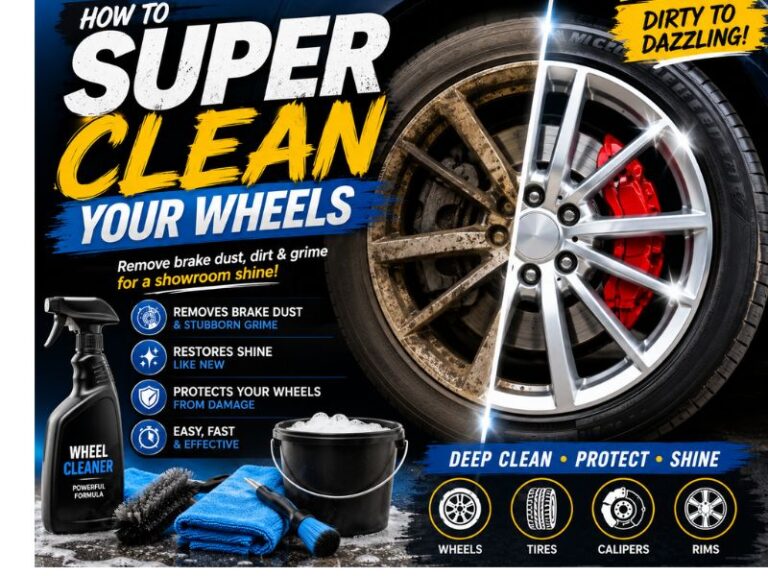
Wheel finishes vary widely, including clear-coated alloy, painted metal, chrome, polished aluminum, and specialty coatings. A household cleaner may stain or dull an unprotected or sensitive finish, particularly if the wheel is hot. Use a wheel cleaner compatible with the specific finish, and never mix cleaning chemicals.
Exterior plastic and trim
Unpainted textured plastic can hold residue in its grain, while glossy trim can scratch or haze easily. Avoid abrasive pads and test any liquid in a hidden area. If the aim is to restore faded trim, a compatible trim product is more appropriate than stronger household cleaner.
Safer Steps for Cleaning a Car Exterior
Routine washing should remove loose dirt before any stronger spot treatment is considered. This reduces the chance that grit will be rubbed into the paint.
- Park in the shade and let the surface cool. Avoid cleaning panels that are hot from direct sun or recent driving.
- Rinse the vehicle thoroughly from top to bottom to loosen dust, sand, and road salt.
- Use a bucket of clean water and a separate solution of pH-balanced car shampoo mixed according to its label.
- Wash from the roof downward with a clean microfiber wash mitt, rinsing the mitt frequently.
- Use a different mitt or brush for wheels and tires so abrasive brake dust does not reach painted panels.
- Rinse completely, then dry with a clean, soft microfiber drying towel rather than letting minerals air-dry.
If a small stain remains, identify it before reaching for Mr. Clean. Bug residue, tree sap, tar, hard-water spots, bird droppings, and paint transfer each respond to different methods.
A targeted automotive product usually creates less risk than a stronger all-purpose household cleaner.
Keep the cleaner wet only as long as the label directs, work on a small area, and rinse immediately if the surface becomes slippery, cloudy, sticky, or discolored. Use separate towels for chemical application and final drying, and discard or wash any towel that picks up gritty contamination.
How to Test Mr. Clean Before Applying It
A small-area test cannot guarantee that a product is safe everywhere, but it can reveal obvious incompatibility before the entire car is affected. Choose a concealed section with the same type of finish as the area you intend to clean.
- Read the label and confirm the product is not restricted to a different surface category.
- Dilute it exactly as directed; do not estimate the concentration with a strong mixture.
- Apply a small amount to a clean microfiber cloth, not directly over a large panel.
- Wipe gently without scrubbing, and do not allow the liquid to dry.
- Rinse with clean water and dry the area completely.
- Inspect it under bright, indirect light and then in direct sunlight if possible.
Stop immediately if you notice hazing, color transfer, tackiness, streaking, or gloss loss. If the area looks normal, the product may still remove surface protection, so reserve it for occasional use rather than adopting it as a routine wash chemical.
Signs the Cleaner Has Caused a Problem
Some effects are easy to see, while others appear only after the panel dries. A cloudy film may be residue that can be rinsed away, but persistent dullness can indicate abrasion or chemical damage.
Watch for these signs after cleaning:
- A patch that reflects light differently from the surrounding paint
- White streaks or a greasy film that returns after wiping
- Roughness, loss of smoothness, or unusual stickiness
- Faded or chalky black trim
- Cracking, swelling, or discoloration on rubber and plastic
- New fine scratches caused by scrubbing or trapped grit
- Rapid loss of water beading where wax or sealant had been present
Rinse the surface with plenty of clean water if cleaner has dried on it. Do not immediately add another chemical in an attempt to neutralize the first one, because incompatible products can create more residue or damage.
If the finish remains dull after washing, a professional detailer can determine whether the issue is residue, surface contamination, removed protection, clear-coat marring, or deeper paint failure. Polishing may correct light haze, but polishing cannot reliably repair peeling or severely damaged clear coat.
When You Should Avoid Mr. Clean Entirely
Skip household Mr. Clean products when the vehicle has a matte or satin finish. These surfaces are designed to diffuse light, and rubbing or spot polishing can create a permanently shinier patch that is difficult to blend.
Use caution with ceramic coatings, paint protection film, vinyl wraps, recently repainted panels, and delicate chrome or polished metal. The manufacturer or installer may specify a narrow range of safe cleaners and tools, and an all-purpose household formula may void protection or alter the finish.
Also avoid cleaning in extreme heat, freezing temperatures, or strong sunlight. These conditions make products dry too quickly, increase streaking, and reduce the time available to rinse before the chemical leaves a mark.
Never mix Mr. Clean with bleach, ammonia, acids, solvent-based products, or other cleaners. Wear the protective equipment stated on the label, provide ventilation, and keep chemicals away from children and pets.
Conclusion: Choose Car-Safe Cleaning Over Household Strength
Mr. Clean can be used cautiously for a limited, tested task, but it is not the best general cleaner for a car exterior. Avoid Magic Eraser on paint, use extra care around plastic and rubber, and remember that household formulas may strip wax or damage sensitive finishes.
For routine care, rinse first and wash with pH-balanced car shampoo and clean microfiber tools. If a spot remains, identify the contamination and choose a product made for that automotive surface; when gloss changes or damage is visible, stop scrubbing and have a detailer inspect it.