How Much to Fix Catalytic Converter? Repair and Replacement Cost
Fixing a catalytic converter can cost less than a few hundred dollars if the problem is an exhaust leak, loose heat shield, or related sensor. If the converter itself has failed, replacement is usually required, and the total bill can range from under $1,000 on some vehicles to $4,000 or more on expensive applications.
The catalytic element inside the converter normally is not repaired once its ceramic substrate has melted, broken, become restricted, or lost its emissions-processing ability. In those cases, the old converter is removed and a compatible replacement is installed.
Current U.S. pricing gives a useful starting point. A September 2026 national estimate places average catalytic converter replacement at about $2,280 to $2,480, including roughly 236–347 in labor and 2,044–2,133 in parts. Vehicle-specific prices can vary far beyond that average.
So, how much to fix catalytic converter problems depends first on what has actually failed. A P0420 code does not automatically mean you need a $2,000 converter. An exhaust leak, engine misfire, damaged wiring, or oxygen-sensor fault may create similar symptoms or contribute to catalyst codes.
The repair can also be much more expensive on vehicles using multiple converters, converter-and-manifold assemblies, or high-priced original equipment parts. California emissions requirements can narrow the aftermarket choices as well.
Before approving replacement, I would confirm the converter has actually failed, check emissions-warranty coverage, and find the engine problem that caused the damage. Those three steps can prevent an unnecessary repair or protect a new converter from failing again.
How Much Does It Cost to Fix a Catalytic Converter?
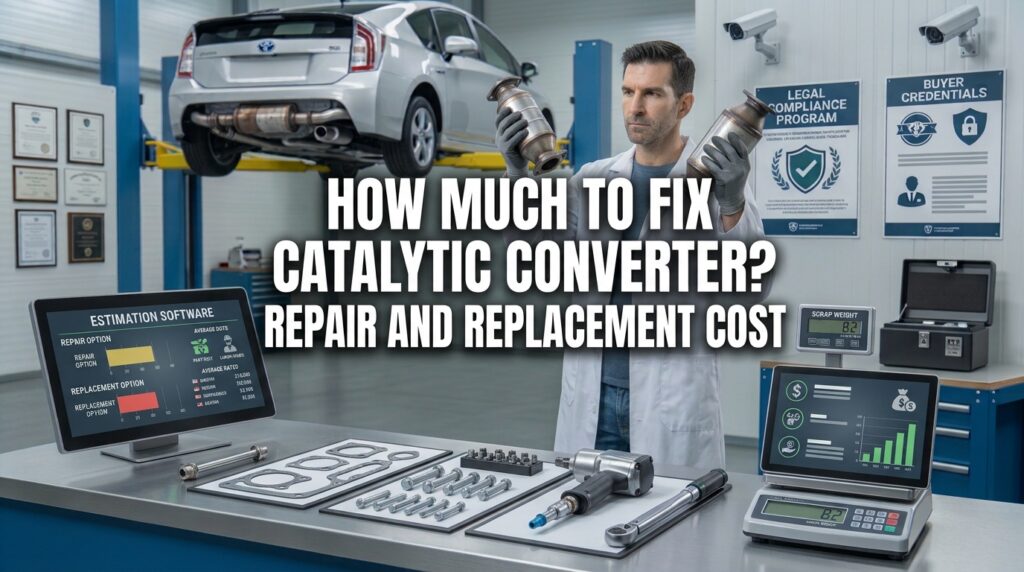
For most failed catalytic converters, “fixing” means replacing the converter.
A current U.S. average of approximately 2,280–2,480 is useful for budgeting, but actual quotes vary dramatically. Recent nationwide sample pricing has ranged from roughly $933 to $4,414 for different vehicles.
A basic cost outline looks like this:
| Repair | Typical U.S. Cost Range |
| Diagnostic inspection | 100–250 |
| Minor exhaust leak near converter | 100–400 |
| Loose or damaged heat shield repair | 100–350 |
| Oxygen sensor replacement | 200–500+ |
| Lower-cost aftermarket converter installation | 700–1,500+ |
| Typical converter replacement | 1,500–3,000 |
| OEM or expensive direct-fit converter | 2,000–4,500+ |
| Luxury, performance, or multi-converter system | 3,000–5,000+ |
These figures are planning ranges rather than fixed quotes. Vehicle design and local labor prices can move them substantially.
Parts Usually Make Up Most of the Bill
The converter itself is often far more expensive than the labor.
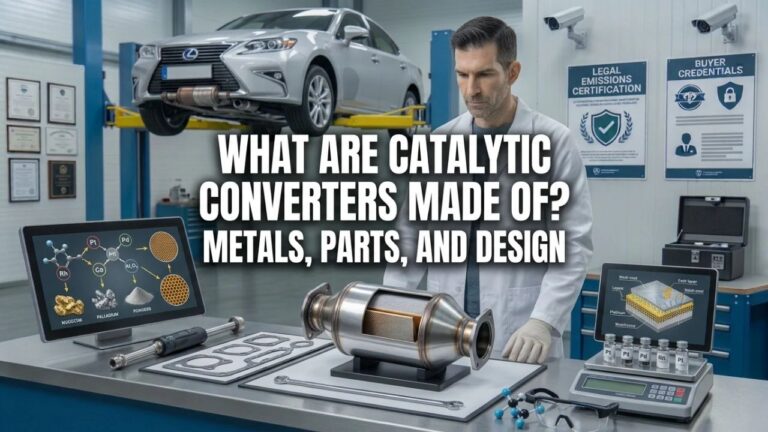
Catalytic converters contain catalyst materials such as:
- Platinum
- Palladium
- Rhodium
The amount of catalyst material and the converter’s emissions certification vary by vehicle.
A direct-fit converter for a common compact car may cost far less than an exhaust-manifold converter for a luxury SUV.
Current national estimates show parts accounting for more than $2,000 of an average 2,280–2,480 replacement, while labor is usually only a few hundred dollars.
Labor May Be Fairly Modest on a Simple Installation
A converter mounted in an accessible section of exhaust may be:
- Bolted in
- Clamped in
- Welded into the exhaust
A straightforward bolted replacement can require relatively little labor.
Costs rise if the mechanic has to deal with:
- Heavily rusted bolts
- Broken studs
- Damaged exhaust flanges
- Seized oxygen sensors
- Cut exhaust pipes
- Difficult engine-bay access
- Converter integrated with the exhaust manifold
Diagnosis Adds to the Initial Cost
A repair shop may charge separately for diagnosis before giving a final converter quote.
That expense can save money if testing reveals that the converter is not actually bad.
Proper diagnosis may include:
- OBD-II code scanning
- Live oxygen-sensor data
- Fuel-trim analysis
- Misfire checks
- Exhaust leak inspection
- Exhaust backpressure testing
- Wiring inspection
Key Takeaway: A complete converter replacement commonly costs 1,500–3,000, with a current U.S. average near 2,280–2,480. Parts usually account for most of that bill.
Can a Catalytic Converter Be Repaired Instead of Replaced?
Sometimes the components around the converter can be repaired.
The catalyst core itself generally cannot.
Exhaust Leaks Can Sometimes Be Repaired
A converter may appear to be the problem when exhaust is leaking from:
- A flange
- Pipe connection
- Weld
- Gasket
- Nearby exhaust pipe
Repairing the leak may cost far less than replacing the converter.
An exhaust leak close to an oxygen sensor can also interfere with sensor readings and contribute to catalyst-related trouble codes.
Heat Shields Can Be Repaired
A rattling noise does not always mean the ceramic core is broken.
Thin metal heat shields around the converter can loosen as fasteners or mounting points corrode.
A shop may be able to secure or replace the shield without replacing the entire converter.
Oxygen Sensors Can Fail
Most modern gasoline vehicles use oxygen or air-fuel sensors before the converter and another sensor after it.
A bad sensor or damaged sensor wiring can cause emissions-system faults.
Diagnosis should determine if the sensor is actually bad rather than replacing it solely because a catalyst code appeared.
A Melted or Broken Catalyst Core Requires Replacement
Replacement is usually needed if the internal substrate has:
- Melted
- Collapsed
- Cracked badly
- Broken into loose pieces
- Become severely restricted
- Lost enough catalyst activity to fail emissions monitoring
Chemical cleaners cannot rebuild melted ceramic or restore physically damaged catalyst material.
Key Takeaway: Exhaust leaks, heat shields, and sensor faults may be repairable, but a melted, broken, clogged, or chemically failed converter normally needs replacement.
What Makes Catalytic Converter Replacement So Expensive?
Two visually similar converters can have completely different prices.
Vehicle design is one of the biggest reasons.
OEM Parts Can Cost Much More
An original equipment manufacturer converter is designed specifically for the vehicle’s factory emissions system.
OEM parts can cost considerably more than aftermarket equivalents.
For some vehicles, OEM may be the preferred or required path because of:
- Emissions certification
- Fitment
- Warranty requirements
- Limited aftermarket availability
- Vehicle calibration
An inexpensive aftermarket converter may be legal and suitable for one car but not another.
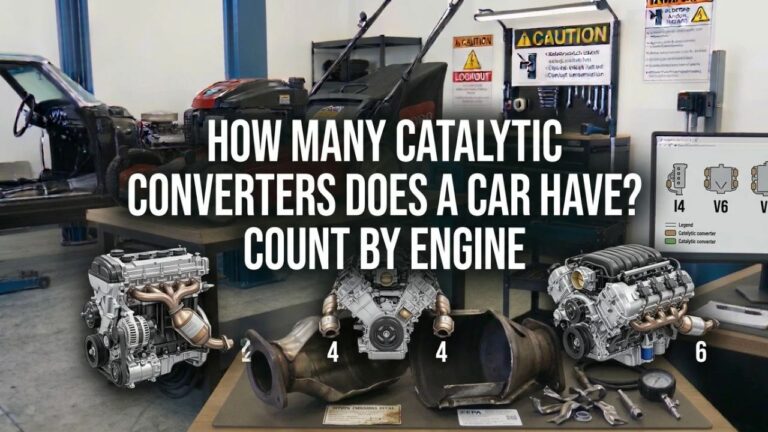
Some Vehicles Have Multiple Converters
A four-cylinder engine may use one primary converter.
A V6 or V8 may have:
- One converter for each cylinder bank
- Close-coupled converters
- Secondary underbody converters
- Several catalyst sections
If more than one unit needs replacement, the repair bill can climb quickly.
Manifold Converters Cost More
Some catalytic converters are built into or attached directly to the exhaust manifold.
Placing the catalyst close to the engine lets it heat quickly after startup.
The downside is higher replacement cost.
The entire assembly may include:
- Exhaust manifold
- Converter
- Flanges
- Heat shields
- Sensor mounting points
Access can also require more labor than an underbody converter.
Rust Can Increase Labor
Vehicles exposed to road salt and winter moisture can have heavily corroded exhaust hardware.
A technician may encounter:
- Rounded nuts
- Broken studs
- Rusted flanges
- Damaged pipes
- Seized oxygen sensors
What looks like a simple bolt-on job can turn into additional exhaust repair.
Emissions Rules Affect Parts Selection
California requires aftermarket catalytic converters sold and installed in the state to have the proper CARB exemption and be approved for the specific vehicle application. You cannot simply choose the cheapest converter that fits the pipe.
Approved converters may cost more than basic federal aftermarket versions.
Key Takeaway: OEM parts, multiple converters, manifold-integrated designs, corrosion, and stricter emissions certification can push a converter replacement well above the national average.
OEM vs. Aftermarket Catalytic Converter Cost
Choosing the replacement part can make a large difference in the final quote.
Aftermarket Converter
Aftermarket converters are produced by companies other than the original vehicle manufacturer.
They may offer lower prices and direct-fit installation.
Possible advantages include:
- Lower part cost
- Wide availability for common vehicles
- Direct-fit options
- Federal or CARB-certified choices for suitable applications
Price alone should not determine the purchase.
The converter must be legal for the vehicle and registration location.
OEM Converter
OEM converters generally cost more.
They may offer:
- Exact factory fit
- Original emissions configuration
- Factory-style mounting
- Original sensor locations
- Factory-spec catalyst loading
On some models, the price difference between OEM and aftermarket can be thousands of dollars.
Universal Converter
A universal converter may cost less than a direct-fit part.
Installation often requires cutting and welding.
The converter still has to meet the legal emissions requirements for the vehicle.
A physically similar universal unit is not automatically an acceptable replacement.
Can Catalytic Converter Repair Be Free Under Warranty?
Possibly.
Before paying for a replacement, check the vehicle’s age, mileage, warranty booklet, and original in-service date.
Federal Emissions Warranty
For qualifying U.S. light-duty vehicles, the EPA states that specified major emissions components receive federal warranty protection for 8 years or 80,000 miles, whichever occurs first.
The catalytic converter is specifically included among those major components.
That can turn a repair costing thousands of dollars into a covered warranty repair if the vehicle qualifies.
Manufacturer Coverage May Extend Further
Some vehicles carry emissions coverage beyond the minimum federal period.
Coverage may also vary with:
- Vehicle type
- State
- Emissions certification
- Manufacturer
- Special warranty extensions
Check the owner’s warranty information using the vehicle identification number.
Theft May Fall Under Comprehensive Insurance
A stolen catalytic converter is different from mechanical failure.
If the vehicle carries comprehensive insurance, theft may be covered subject to the policy deductible and terms.
Theft can also damage:
- Exhaust pipes
- Oxygen sensors
- Wiring
- Heat shields
That can make the total claim larger than the cost of the converter alone.
Key Takeaway: Federal emissions warranty protection can cover the catalytic converter for 8 years or 80,000 miles on qualifying vehicles, and comprehensive insurance may cover theft.
Why Should You Diagnose the Cause Before Replacing the Converter?
Converters often fail because another engine problem damaged them.
Replacing the converter without repairing that problem can ruin the new part.
Misfires Can Overheat a Converter
A misfiring cylinder may send unburned fuel into the exhaust.
That fuel can burn inside the hot converter.
The resulting temperature may melt or crack the ceramic substrate.
Possible misfire causes include:
- Worn spark plugs
- Weak ignition coils
- Injector problems
- Low compression
- Wiring faults
Rich Running Can Cause Excess Heat
Too much fuel entering the engine can overload the catalyst.
Possible causes include:
- Leaking fuel injector
- Excessive fuel pressure
- Incorrect sensor data
- Air-metering fault
- Ignition failure
A rich-running engine may damage a replacement converter as well.
Oil Burning Can Contaminate the Catalyst
Engine oil burned in the cylinders produces ash and deposits.
Heavy oil consumption can coat the catalyst surface and reduce its ability to process exhaust.
Possible sources include worn rings, valve seals, and other internal engine problems.
Coolant Can Contaminate the Converter
Coolant entering a combustion chamber can damage the catalyst.
A new converter is not a cure for an internal coolant leak.
Signs may include:
- Falling coolant level
- Persistent exhaust vapor
- Engine overheating
- Coolant contamination
- Cooling-system pressure problems
Key Takeaway: Misfires, rich running, oil burning, and coolant leaks can destroy a new converter, so the original engine fault should be repaired before replacement.
Does P0420 Mean You Need a New Catalytic Converter?
No.
P0420 generally means the engine computer has detected catalyst system efficiency below threshold on Bank 1.
P0430 is the similar code for Bank 2 on vehicles that monitor a second bank.
These codes make the converter a suspect, but other problems can influence the catalyst monitor.
Possible causes include:
- Exhaust leaks
- Engine misfires
- Fuel-mixture problems
- Oil contamination
- Sensor faults
- Damaged wiring
- Converter aging
A converter can also be physically clogged without immediately setting P0420.
Code reading is the beginning of diagnosis rather than proof that a new converter is needed.
How Do Mechanics Confirm a Bad Catalytic Converter?
The exact test changes with the symptoms.
Catalyst-Efficiency Diagnosis
If the only complaint is P0420 or P0430, a technician may check:
- Upstream sensor data
- Downstream sensor data
- Fuel trims
- Exhaust leaks
- Misfire history
- Engine operating temperature
- Related trouble codes
The goal is to determine if the catalyst truly has low conversion efficiency.
Exhaust Backpressure Testing
If the vehicle has major power loss, a restriction test may be performed.
A clogged converter can create excessive exhaust backpressure.
Symptoms often include:
- Poor acceleration
- Limited high-RPM power
- Stalling
- Rough idle
- Engine struggling under load
A backpressure test gives more direct evidence of physical exhaust restriction than a catalyst-efficiency code.
Physical Inspection
A damaged converter may show:
- Impact marks
- Rattling
- Broken internal material
- Severe heat discoloration
- Damaged flanges
- Cracked housing
The exhaust should be completely cool before handling or inspecting the converter closely.
Key Takeaway: A mechanic may use scan data, backpressure testing, leak inspection, and physical checks to confirm converter failure before recommending replacement.
Is It Worth Fixing a Catalytic Converter?
On an otherwise reliable vehicle, converter replacement can make sense.
The decision becomes harder when the car also needs major mechanical repairs.
Consider:
- Vehicle market value
- Overall condition
- Remaining loan balance
- Engine oil consumption
- Transmission condition
- Rust
- Other pending repairs
- Emissions inspection requirements
- Available warranty coverage
For example, spending $2,000 on a converter for a reliable vehicle worth $10,000 may be reasonable.
Spending $4,000 on a converter for a heavily rusted vehicle with engine and transmission problems may be harder to justify.
Do not judge the repair only against the vehicle’s resale value. Replacing a car also has costs, taxes, registration expenses, financing, and depreciation.
How to Lower the Cost of Catalytic Converter Repair
There are several legitimate ways to control the bill without removing required emissions equipment.
Get More Than One Written Estimate
Converter pricing varies greatly between:
- Dealerships
- Independent repair shops
- Exhaust specialists
Ask each shop to identify:
- Converter brand
- Part number
- OEM or aftermarket status
- Labor charge
- Additional hardware
- Sensor replacement
- Warranty
Two quotes are not directly comparable if one includes an OEM converter and the other uses a lower-cost aftermarket part.
Ask if an Approved Aftermarket Part Is Available
A direct-fit aftermarket converter can reduce parts cost on some vehicles.
Confirm that the unit is approved for:
- Your model year
- Make and model
- Engine
- Emissions family
- State requirements
California requires approved aftermarket converters for specific vehicle applications.
Check Warranty Before Paying
A vehicle still within applicable emissions warranty coverage should be checked with the manufacturer or dealer before an independent shop installs a converter.
Once an owner pays for an unnecessary out-of-pocket repair, recovering the cost can be more difficult.
Repair the Cause at the Same Time
Paying for the engine diagnosis may increase today’s bill but reduce the risk of buying another converter soon afterward.
A new catalyst behind an engine that is still misfiring or burning oil is an expensive gamble.
Key Takeaway: Compare itemized quotes, check for an approved aftermarket option, verify emissions-warranty coverage, and repair the engine fault that damaged the original converter.
Can You Drive Instead of Fixing the Catalytic Converter?
That depends on the type of failure.
A vehicle with a catalyst-efficiency code may still run normally.
A physically clogged or overheating converter can become a serious drivability problem.
Arrange prompt diagnosis if you notice:
- P0420 or P0430
- Rattling from the converter
- Failed emissions inspection
- Increasing exhaust odor
Stop driving or seek immediate repair when symptoms include:
- Severe power loss
- Flashing check engine light
- Repeated stalling
- Heavy misfire
- Smoke
- Strong burning odor
- Converter glowing red
- Inability to maintain safe traffic speed
Removing the converter rather than repairing the emissions system is not an appropriate cost-saving solution. Federal law prohibits tampering with required emissions controls.
Conclusion
For how much to fix catalytic converter problems, a current U.S. average replacement estimate is roughly 2,280–2,480, while individual vehicles can cost below $1,000 or climb beyond $4,000. The converter itself is normally the largest part of the bill.
Not every converter-related complaint requires replacement. A loose heat shield, exhaust leak, wiring problem, or sensor fault may cost far less to correct. Proper diagnosis should come before ordering a converter.
If the catalyst is melted, broken, restricted, or no longer processing emissions correctly, replacement is usually the repair. Check federal emissions warranty coverage before paying, especially if the vehicle is under 8 years old and has fewer than 80,000 miles.
I would also make sure the shop identifies the reason the old converter failed. Repairing a misfire, rich mixture, oil-burning problem, or coolant leak protects the replacement and makes the money spent on the repair far less likely to be wasted.
FAQs About Catalytic Converter Repair Cost
How much does it cost to replace a catalytic converter?
A current U.S. national estimate is roughly 2,280–2,480 for parts and labor. Actual pricing varies greatly by vehicle. A simpler aftermarket installation may cost far less, while some OEM, luxury, performance, or multi-converter applications can reach $4,000 or more.
Can you fix a catalytic converter without replacing it?
You can repair some problems around the converter, such as an exhaust leak or loose heat shield. A physically melted, broken, severely clogged, or chemically failed catalyst core normally cannot be restored through ordinary repair and requires replacement.
How much is labor to replace a catalytic converter?
Current national estimates put typical labor around 236–347, though difficult access, corrosion, welding, seized fasteners, and damaged exhaust pipes can raise the bill. The converter itself often costs much more than the labor required to install it.
Is an aftermarket catalytic converter cheaper than OEM?
Usually. Aftermarket converters can reduce the parts bill substantially. The part must still be approved for the specific vehicle and local emissions requirements. California has vehicle-specific rules for legal aftermarket catalytic converters.
Is catalytic converter replacement covered under warranty?
Qualifying U.S. light-duty vehicles receive federal coverage for specified major emissions components, including the catalytic converter, for 8 years or 80,000 miles. Some vehicles have longer manufacturer or state-related coverage, so check the warranty booklet and VIN before paying.
Does P0420 mean I need to spend money on a new catalytic converter?
Not automatically. P0420 indicates catalyst efficiency below the expected threshold for Bank 1. Exhaust leaks, misfires, fueling problems, sensor faults, and other conditions can influence the catalyst monitor. Proper diagnosis should confirm the converter before replacement.
Why is catalytic converter replacement so expensive?
The converter itself can be costly because it contains precious-metal catalyst materials and must meet emissions standards for the vehicle. OEM designs, manifold-integrated converters, multiple-converter exhaust systems, and stricter emissions certification can push the price higher.
Can I save money by removing the catalytic converter?
No. Removing or bypassing required emissions equipment can violate federal anti-tampering law and may cause emissions inspection failure. A failed converter should be replaced with a legal part that matches the vehicle’s emissions configuration.