Signs of Missing Catalytic Converter: How to Tell If It Is Gone
A missing catalytic converter usually makes itself obvious as soon as the engine starts. The exhaust may suddenly become extremely loud, you may hear a deep roaring or rasping sound under the vehicle, exhaust fumes may become stronger, and the Check Engine Light can appear after the oxygen-sensor system detects abnormal exhaust conditions.
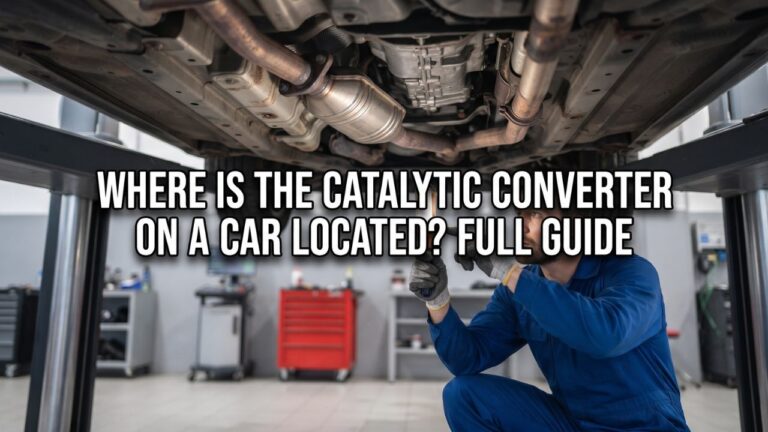
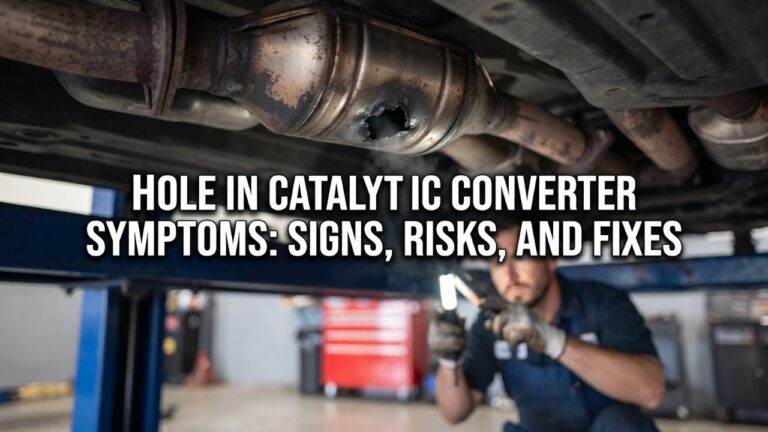
A catalytic converter sits in the exhaust system between the engine and the muffler. If someone removes it, they normally cut through the exhaust pipe on both sides of the converter, leaving a gap or replacement section underneath the vehicle.
The National Insurance Crime Bureau reported more than 64,000 catalytic converter theft insurance claims in the United States during 2022, showing how widespread converter theft became during the surge in this type of crime. NICB also noted that a converter can be removed in only a few minutes.
The most recognizable signs of missing catalytic converter are an abrupt increase in exhaust volume, a visible missing section beneath the vehicle, fresh cutting marks on the exhaust, a Check Engine Light, and exhaust fumes coming from farther forward than normal.
The engine may still start and drive because the converter is not required for the engine to physically turn over. That does not mean driving without it is a good idea. Exhaust gases may exit beneath the passenger compartment, emissions rise sharply, and damaged oxygen-sensor wiring or cut exhaust pipes can create additional problems.
EPA states that removing a catalytic converter without installing an approved replacement is considered emissions-system tampering and is prohibited under federal law.
The sections below explain the main symptoms, how to visually confirm that the converter is gone, what the vehicle may sound like, which warning lights may appear, and what to do after discovering a missing converter.
Signs of Missing Catalytic Converter You Should Check
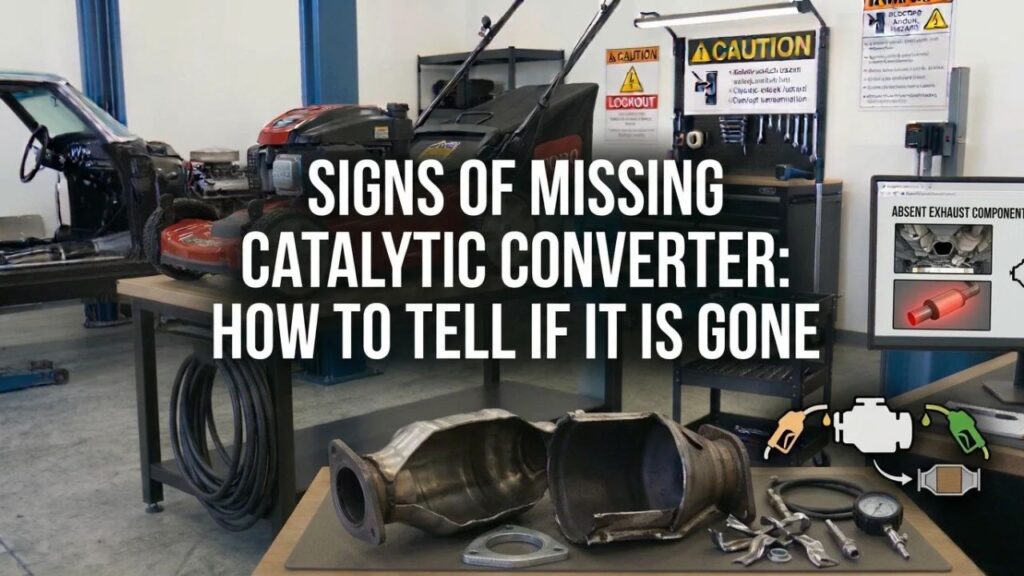
A stolen or deliberately removed converter normally creates several symptoms at once.
The exact combination depends on where the converter was located, how the exhaust was cut, and where the oxygen sensors are positioned.
1. Exhaust Suddenly Becomes Extremely Loud
This is often the first symptom an owner notices.
A normal exhaust system carries engine gases through the converter, resonator, and muffler before they leave the tailpipe.
If the converter is cut out, exhaust may escape through an open pipe near the front or middle of the vehicle.
The engine can suddenly sound:
- Much louder than before
- Deep and booming
- Harsh or raspy
- Similar to an open exhaust
- Especially loud during acceleration
The change is usually dramatic if the exhaust was normal the last time the vehicle was driven.
A converter that is merely worn internally does not normally cause this sudden open-exhaust sound. A large increase in noise points more toward a broken pipe, stolen converter, or disconnected exhaust section.
2. Roaring Sound When You Accelerate
Starting the engine may produce a loud rumble, but pressing the accelerator often makes the missing-converter sound even more obvious.
Exhaust volume increases with engine speed and load.
You may hear a strong roaring sound underneath the front seats or floor instead of behind the vehicle at the tailpipe.
If this begins overnight with no previous exhaust symptoms, inspect for theft or fresh exhaust damage.
3. Visible Gap in the Exhaust System
A visual inspection can provide the clearest answer.
The converter usually looks like an enlarged metal chamber built into the exhaust pipe.
If it has been removed, you may see:
- A large open space between exhaust sections
- Two cut pipe ends
- A section of exhaust hanging lower than normal
- Fresh shiny metal at the cut points
- Damaged exhaust hangers
- Cut or disconnected sensor wires
Some thieves cut the pipe very close to the converter with a reciprocating saw.
The result may look rough and obviously different from a factory exhaust joint.
4. Fresh Saw Marks on the Exhaust
Freshly cut steel usually looks brighter than the surrounding aged exhaust.
Look for clean or jagged cut marks on the pipes where the converter should be.
Older exhaust components usually have surface discoloration, road grime, or rust. Bright exposed metal next to an empty section can strongly suggest recent removal.
Do not crawl under a vehicle supported only by a jack. Use ramps, properly rated jack stands on solid ground, or have the vehicle inspected at a repair shop.
5. Check Engine Light Comes On
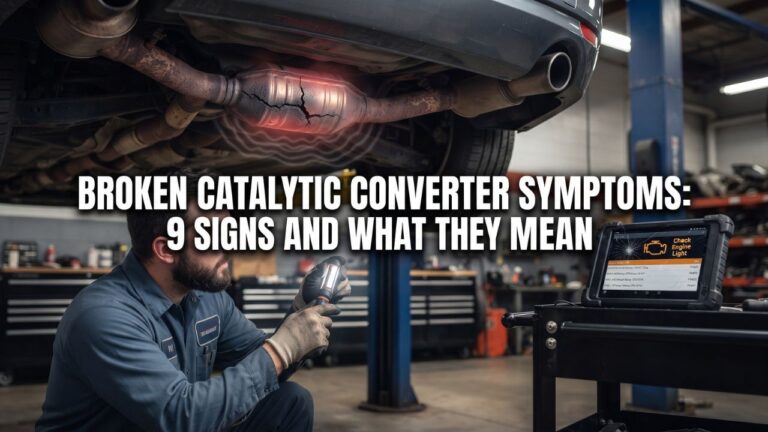
A missing converter can cause the Check Engine Light to illuminate.
Modern vehicles commonly use oxygen or air-fuel sensors before and after the converter.
The downstream sensor helps the engine computer monitor catalyst operation. Once the converter is gone, the expected relationship between upstream and downstream sensor signals disappears.
Possible codes can include:
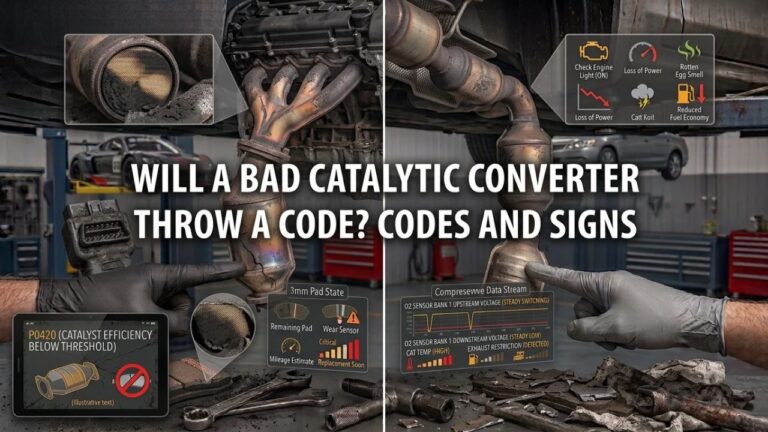
- P0420 — Catalyst System Efficiency Below Threshold, Bank 1
- P0430 — Catalyst System Efficiency Below Threshold, Bank 2
- Oxygen-sensor circuit codes
- Oxygen-sensor heater codes
If wiring was cut during theft, sensor-related electrical codes may appear immediately.
A Check Engine Light alone does not prove the converter is missing, but it supports the diagnosis when paired with sudden exhaust noise or visible pipe damage.
6. Stronger Exhaust Smell
A missing converter changes where exhaust gases leave the system.
Instead of traveling to the rear tailpipe, gases may escape beneath the vehicle.
You may notice a stronger raw-exhaust odor around the car.
This is more than an inconvenience. Exhaust contains carbon monoxide and other gases that should not collect around the passenger compartment.
If you smell exhaust inside the cabin, avoid prolonged driving and arrange repair promptly.
7. Exhaust Seems to Come From Under the Car
Walk around the vehicle while it is safely parked outdoors.
With the converter missing, you may hear or feel exhaust exiting from a point underneath the vehicle instead of primarily from the tailpipe.
Do not put your hands close to hot or moving exhaust components.
A repair shop can locate the open section safely on a lift.
8. Vehicle May Feel Different During Acceleration
Some vehicles continue driving with little noticeable performance change after converter removal.
Others may behave differently because:
- Oxygen sensors were damaged
- Sensor wiring was cut
- Fuel-control data is disrupted
- Exhaust geometry changed
- The PCM enters a fault strategy
Possible symptoms include roughness, unusual throttle response, poor fuel economy, or reduced power.
These changes are less reliable than the sound and visual clues because engine response varies greatly by vehicle.
9. Exhaust Components or Wiring May Be Hanging Down
Converter theft is rarely a neat repair procedure.
Cut pipes may be left unsupported.
Oxygen-sensor wires can also be stretched, cut, or left hanging.
Inspect from a safe position for anything dragging or sitting close to the road.
Do not drive if damaged exhaust parts could fall off, contact a tire, or strike the pavement.
Key Takeaway: The strongest clues are a sudden open-exhaust roar, visible cut pipes, an empty space where the converter should be, fresh metal cuts, abnormal exhaust smell, and catalyst or oxygen-sensor warning codes.
How to Tell If Catalytic Converter Is Missing
If you are unsure, confirm the converter physically rather than relying only on dashboard symptoms.
You do not need to disassemble the exhaust.
Locate the Exhaust Pipe
Start at the rear of the vehicle and follow the exhaust system visually toward the engine.
You will normally see:
- Tailpipe
- Muffler
- Possibly a resonator
- Exhaust piping
- Catalytic converter
- Exhaust manifold or front pipe
The converter is usually closer to the engine than the muffler.
Some vehicles have converters mounted very close to the exhaust manifold, making them difficult to see from underneath.
Know What the Converter Looks Like
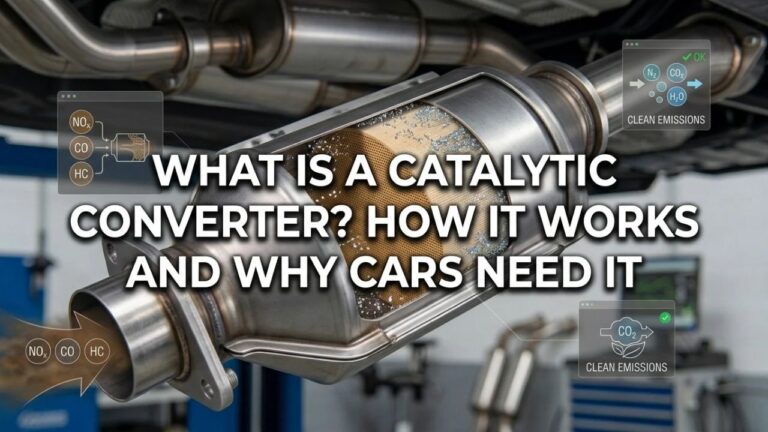
A catalytic converter usually resembles a metal canister or enlarged section of exhaust pipe.
It may be:
- Oval
- Round
- Flattened
- Integrated into an exhaust manifold
- Part of a larger front pipe assembly
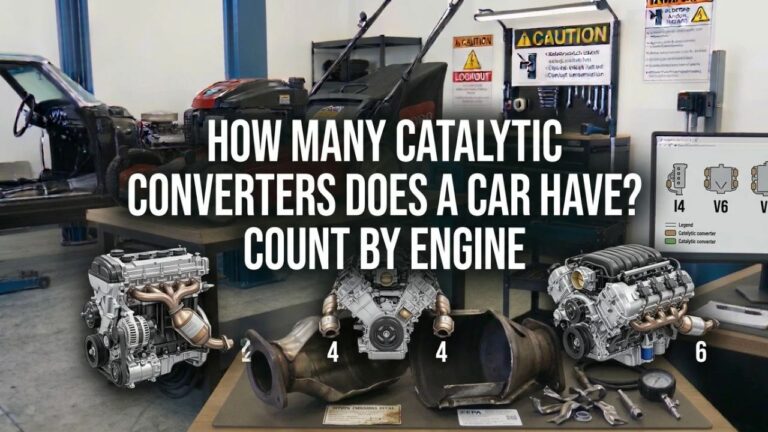
Some vehicles have more than one.
V6 and V8 engines may have separate converters serving different cylinder banks.
Look for an Empty Section
If the converter was stolen, you may see an obvious missing length of exhaust.
There may be several inches or more between the remaining pipes.
A factory exhaust would not normally have an open gap.
Look for Fresh Cut Ends
The remaining pipe ends can provide another clue.
Saw-cut edges may appear:
- Bright silver
- Rough
- Crooked
- Jagged
- Much cleaner than the surrounding pipe
This is especially suspicious if the exhaust was quiet the previous day.
Check for Missing Oxygen Sensors
Some converters have oxygen sensors positioned before, after, or directly within the converter assembly.
A thief may cut around them or remove part of the sensor wiring with the converter.
Look for unplugged connectors or damaged wiring near the exhaust.
Compare With a Vehicle-Specific Exhaust Diagram
Converter position differs significantly between vehicles.
If you are uncertain which component should be present, check the exhaust diagram for the exact:
- Year
- Make
- Model
- Engine
A parts diagram can show how many converters the vehicle originally had and where each is installed.
Key Takeaway: The surest way to tell if the converter is missing is to inspect the exhaust layout and look for an open gap, fresh pipe cuts, missing converter housings, or damaged oxygen-sensor wiring.
What Does a Car Sound Like With No Catalytic Converter?
The sound is usually much louder than normal.
Removing the converter creates an opening much closer to the engine than the normal tailpipe outlet.
Loud Cold Start
The first start may produce an immediate roar.
Owners sometimes describe the sound as similar to:
- A race car
- A large truck
- An engine with no muffler
- A broken exhaust manifold
- An open exhaust pipe
The exact tone depends on engine size and where the exhaust was cut.
Noise Gets Louder With RPM
Pressing the accelerator increases exhaust flow.
The sound may become dramatically louder as engine speed rises.
This characteristic is one reason many owners discover converter theft as soon as they start driving.
Noise Comes From Under the Front or Middle of the Vehicle
A normal exhaust is loudest near the rear tailpipe.
After converter removal, the strongest noise may come from underneath the front seats or engine area.
That location is another useful clue.
Can a Car Run With the Catalytic Converter Missing?
Yes, many gasoline vehicles can still start and move without a converter.
The catalytic converter’s main job is emissions treatment rather than creating the combustion required to start the engine.
That does not mean everything will operate normally.
The Check Engine Light May Stay On
The catalyst monitor can detect that expected converter operation is missing.
Sensor or catalyst codes may remain active until the exhaust is repaired and the required diagnostic tests run again.
Fuel Control May Be Affected on Some Vehicles
Upstream oxygen sensors are heavily involved in fuel control on many vehicles.
If theft damages those sensors or their wiring, engine operation can deteriorate.
Exhaust Can Enter Unsafe Areas
An open pipe beneath the vehicle may release gases much closer to the cabin than the tailpipe was designed to.
That is one of the bigger reasons to avoid unnecessary driving.
Is It Safe to Drive With a Missing Catalytic Converter?
A vehicle may be physically capable of driving, but getting the exhaust repaired promptly is the safer approach.
Carbon Monoxide Exposure Is a Concern
Exhaust gases contain carbon monoxide.
With an open exhaust beneath the vehicle, gases may collect around the floor or enter through body openings.
Carbon monoxide is colorless and odorless, so the absence of a strong smell does not prove the cabin is safe.
Exhaust Parts May Be Loose
A theft can leave damaged pipes, brackets, and wires underneath the vehicle.
These parts can drag, break free, or contact other components.
The Vehicle Will Be Much Louder
Excessive exhaust noise can make normal driving uncomfortable and may violate local noise laws.
The Emissions System Is Incomplete
EPA states that removing or rendering a catalytic converter inoperative constitutes prohibited emissions tampering under federal law.
A stolen converter obviously was not removed by the owner, but the vehicle still needs an approved replacement to restore the emissions system.
Key Takeaway: A car may run without its converter, but exhaust exposure, damaged pipes or wiring, emissions faults, and legal requirements make prompt repair the sensible next step.
Missing Catalytic Converter vs Bad Catalytic Converter
A bad converter and a missing converter can produce some similar warning lights, but the physical symptoms differ.
| Symptom | Missing Converter | Bad Converter |
| Sudden extreme exhaust noise | Very common | Uncommon |
| Visible empty exhaust gap | Yes | No |
| Fresh cut pipe ends | Common after theft | No |
| P0420/P0430 | Possible | Common |
| Rattling converter core | No converter present | Possible |
| Loss of power from clogging | Not typical | Possible |
| Exhaust exits under vehicle | Common | Usually no |
| Strong raw exhaust near cabin | Possible | Less typical |
A clogged converter often makes the engine quieter than an open exhaust while creating poor acceleration and excessive backpressure.
A missing converter usually produces the opposite airflow condition: exhaust can escape freely through the cut pipe, creating very loud noise.
Why Would a Catalytic Converter Be Missing?
The most common unexpected reason is theft.
Catalytic converters contain precious metals that can have recycling value.
Theft
A thief may raise or crawl beneath a vehicle and cut the converter from the exhaust.
Vehicles with more ground clearance can provide easier access.
The theft can happen quickly, which is why owners may discover no warning signs until the next engine start.
NICB recorded more than 64,000 U.S. catalytic-converter theft claims during 2022, though the organization noted that insurance claims capture only part of the true problem.
Previous Owner Removed It
A used vehicle can also be purchased with a converter already missing.
Someone may have installed:
- Straight pipe
- Improper replacement pipe
- Modified exhaust
- Noncompliant exhaust component
EPA specifically addresses used vehicles discovered without converters and states that removing the original emissions device without an approved replacement violates federal anti-tampering requirements.
Exhaust Repair Was Done Incorrectly
Poor previous repairs may leave an incorrect converter configuration.
This can be harder to spot because the exhaust may appear complete even though the proper catalyst is absent.
A VIN-specific parts diagram or emissions inspection can confirm the original system.
What Codes Can Appear if the Catalytic Converter Is Missing?
The exact codes depend on sensor placement and vehicle programming.
P0420
P0420 indicates catalyst-system efficiency below threshold on Bank 1.
Without a functioning converter, the downstream oxygen-sensor pattern may no longer show the expected catalyst activity.
P0430
P0430 is the corresponding catalyst-efficiency code for Bank 2 on engines using two banks.
A vehicle with multiple converters may store one bank code while another bank remains normal.
Oxygen-Sensor Codes
Theft can damage or remove oxygen sensors.
Possible code groups include:
- Sensor circuit faults
- Heater circuit faults
- Low signal
- High signal
- No activity
The exact code should be diagnosed before replacing a sensor because cut wiring may be the real fault.
What Should You Do if Your Catalytic Converter Is Missing?
If you discover that the converter has been stolen, avoid treating the problem as only a loud exhaust.
There are several practical steps to take.
Move the Vehicle to a Safe Location
If the vehicle is parked somewhere vulnerable, arrange secure storage or towing when practical.
Do not drive if the exhaust is dragging or the vehicle runs poorly.
Contact Law Enforcement
Report suspected theft according to local procedures.
A police report may also be required by your insurance company.
Contact Your Insurance Company
Comprehensive auto insurance may cover catalytic converter theft, depending on the policy and deductible.
Coverage varies, so confirm directly with the insurer.
Have the Exhaust Inspected
A repair shop should check:
- Pipe damage
- Oxygen sensors
- Sensor wiring
- Exhaust hangers
- Heat shields
- Flanges
- Adjacent exhaust components
A simple converter replacement may not address every part damaged during removal.
Install the Correct Replacement
Replacement converters must match the vehicle’s application and applicable emissions requirements.
Do not use an empty pipe as a substitute for the converter.
EPA states that converter replacement pipes used in place of required catalysts are prohibited under federal anti-tampering rules.
Key Takeaway: After suspected theft, document the damage, report it, contact your insurer if applicable, inspect the full exhaust and sensor system, and install the correct emissions-compliant replacement.
How to Reduce the Risk of Catalytic Converter Theft
No prevention method can guarantee that a converter will remain untouched, but making theft slower or more visible can discourage some attempts.
Park in a Garage When Possible
A locked garage limits access underneath the vehicle.
Use Well-Lit Parking Areas
Choose visible areas near entrances, cameras, or regular pedestrian traffic when a garage is unavailable.
Consider an Anti-Theft Shield
Vehicle-specific shields or cages can increase the amount of time and effort required to reach the converter.
Make sure any protection device is designed so it does not create unsafe heat retention or interfere with normal servicing.
Mark the Converter
Some law-enforcement agencies and insurance groups organize converter-marking or etching events.
NICB participated in a San Diego event in May 2025 where more than 100 vehicle owners had identifying information etched onto their converters to assist deterrence and theft-claim processing.
Review Camera Placement
If you park at home, a camera aimed at the driveway can provide documentation if theft occurs.
Conclusion
The clearest signs of missing catalytic converter are a sudden dramatic increase in exhaust noise, roaring during acceleration, a visible gap underneath the vehicle, fresh saw marks on the exhaust, damaged oxygen-sensor wiring, stronger exhaust fumes, and a Check Engine Light.
For how to tell if catalytic converter is missing, physical inspection gives the strongest confirmation. Follow the exhaust system and look for the enlarged converter housing that should sit between the engine and the rest of the exhaust. An open space with freshly cut pipe ends is a strong sign that the converter has been stolen or removed.
A vehicle may still start without the converter, but that does not make continued driving a good plan. Exhaust can escape beneath the passenger area, wiring or pipes may be damaged, and the emissions system is no longer complete.
If theft is suspected, document the damage, make any required police and insurance reports, and have the vehicle inspected for converter, pipe, oxygen-sensor, and wiring damage before returning it to normal use.
FAQs About a Missing Catalytic Converter
How Do I Know if Someone Stole My Catalytic Converter?
The biggest clue is a sudden, extremely loud exhaust when you start the vehicle.
Look underneath for an empty section of exhaust pipe, fresh saw marks, cut oxygen-sensor wiring, or hanging pipes. If the exhaust was normal when you parked and extremely loud the next time you started it, theft is a strong possibility.
Will a Car Start if the Catalytic Converter Is Missing?
Yes, many cars will still start.
The converter treats exhaust emissions rather than creating the spark, fuel, compression, and timing needed for the engine to run. Sensor damage caused during removal can still create poor running on some vehicles.
Will the Check Engine Light Come On if the Converter Is Missing?
It often will.
The engine computer may detect abnormal catalyst-monitor readings and store P0420 or P0430. Cut or damaged oxygen-sensor wiring can also trigger sensor circuit or heater codes.
What Does a Missing Catalytic Converter Sound Like?
It normally creates a very loud, deep exhaust roar.
The noise often comes from under the front or middle of the vehicle and becomes much louder during acceleration. The change can sound similar to a severely broken exhaust pipe.
Can You Smell a Missing Catalytic Converter?
You may notice stronger raw-exhaust odors because gases are escaping underneath the vehicle rather than leaving through the rear tailpipe.
Do not rely on smell to judge carbon monoxide exposure because carbon monoxide itself has no odor.
Can a Catalytic Converter Fall Off on Its Own?
Severe corrosion or exhaust damage can occasionally cause exhaust components to separate, but a cleanly cut gap with fresh metal surfaces points much more strongly toward theft or deliberate removal.
A repair shop can distinguish corrosion failure from saw-cut damage.
Can You Drive After a Catalytic Converter Is Stolen?
The engine may still run, but limit driving until the exhaust is inspected.
Damaged pipes, hanging parts, oxygen-sensor wiring, excessive noise, and exhaust gases escaping beneath the cabin can make continued driving unsafe or impractical.
How Much of the Exhaust Is Missing When a Converter Is Stolen?
The amount varies with converter design and how it was removed.
A thief may cut immediately before and after the converter, leaving a gap about the length of the converter assembly. On some vehicles, nearby pipes, flanges, oxygen sensors, or wiring may also be damaged.