Can a Bad Catalytic Converter Cause Car to Shut Off? Key Symptoms
Yes, a badly clogged catalytic converter can make an engine sputter, stall, or shut off because exhaust gases cannot leave the engine freely. The resulting exhaust backpressure restricts engine breathing. A converter that has only lost emissions-cleaning ability, though, normally does not make the engine shut off by itself.
The distinction between a failed converter and a restricted converter matters. A converter can trigger an emissions-related trouble code while the vehicle still drives normally. Stalling becomes more likely when the internal ceramic substrate melts, collapses, or breaks apart and blocks exhaust flow.
A correct diagnosis can prevent an expensive mistake. Fuel-pump faults, crankshaft-position sensor failures, ignition problems, electrical faults, and several air-management problems can also make a car die while driving. Replacing the converter without testing the exhaust restriction may leave the original shutdown problem unchanged.
A real U.S. example shows how serious converter-related failures can become. In 2019, NHTSA recalled 378,967 model-year 2012–2016 Kia Soul vehicles because high exhaust temperatures could damage the catalytic converter and contribute to piston damage; NHTSA stated that piston damage could lead to an engine stall.
For anyone asking can a bad catalytic converter cause car to shut off, I would focus first on how the car loses power. A vehicle that becomes increasingly sluggish, struggles more as RPM rises, then sputters or stalls fits an exhaust-restriction pattern better than a car that switches off instantly as if someone turned the key.
The sections below explain how a clogged converter shuts an engine down, which symptoms point toward restriction, what damages converters, how technicians test backpressure, and which other faults should be checked before a replacement converter is ordered.
Can a Bad Catalytic Converter Cause Car to Shut Off While Driving?
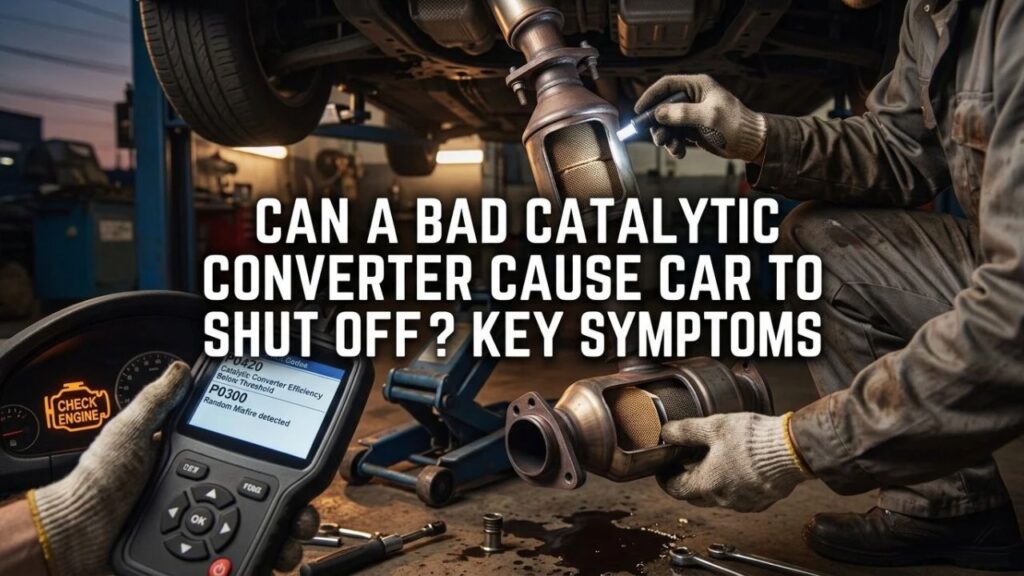
Yes. A sufficiently restricted catalytic converter can cause an engine to stall while driving.
The failure usually develops because exhaust flow becomes restricted rather than because the converter’s emissions-cleaning chemistry simply stops working.
Exhaust Backpressure Can Choke the Engine
An engine needs to move exhaust gases out of its cylinders after combustion.
If the converter becomes plugged, pressure builds in the exhaust system. The engine then has a harder time clearing burned gases and filling the cylinders with the next fresh air-fuel charge.
As the restriction becomes worse, the engine may:
- Accelerate poorly
- Refuse to reach higher RPM
- Lose power on hills
- Sputter under load
- Run increasingly rough
- Stall
Walker lists loss of power, hard starting, delayed acceleration, and stalling among possible symptoms of a clogged converter.
A P0420 or P0430 Code Does Not Automatically Mean the Car Will Stall
A catalytic converter can fail an efficiency monitor without being physically blocked.
Codes such as P0420 and P0430 commonly relate to catalyst efficiency. A converter can set one of these codes because it is no longer cleaning exhaust gases well enough while still allowing exhaust to pass through normally.
MagnaFlow identifies P0420 and P0430 as common converter-related codes and separately lists severe exhaust restriction as a possible cause of hard starting or a no-start condition.
That difference is important. A low-efficiency converter may turn on the check-engine light without causing noticeable drivability trouble. A melted or collapsed converter creates a physical breathing restriction.
Severe Restriction Can Stop the Engine Completely
If exhaust flow becomes restricted enough, the engine may no longer stay running.
AA1Car describes a completely plugged converter as capable of making an engine stall because excessive backpressure prevents normal exhaust flow.
The car may restart after sitting because temperatures and exhaust pressure have changed, only to lose power and stall again once the engine runs under load.
Key Takeaway: A converter normally causes shutdown when it becomes physically restricted; an emissions-efficiency failure alone does not automatically cause stalling.
Signs a Clogged Catalytic Converter May Be Causing the Shutdown
A stalled engine does not identify the failed component by itself.
Look for a pattern of symptoms related to restricted exhaust flow.
The Car Loses Power Before It Dies
Gradual power loss is one of the stronger clues.
A clogged converter often feels as if the engine cannot breathe. Pressing the accelerator farther may produce little increase in speed, especially during highway acceleration or climbing a hill.
Walker states that a plugged converter can produce sluggish operation and loss of power, while severe restriction can also lead to stalling.
If the engine shuts off instantly with no previous loss of power, an electrical, sensor, or fuel-supply fault may fit the symptoms better.
The Engine Struggles More at Higher RPM
An engine moves a greater volume of exhaust as RPM and load increase.
A partially blocked exhaust may therefore let the engine idle reasonably well but restrict it severely during acceleration.
Typical behavior can include:
- Normal or nearly normal idle
- Poor acceleration
- Limited engine speed
- Loss of power under load
- Sputtering when the throttle is opened
- Stalling after the engine is worked harder
The worse the blockage becomes, the lower the RPM at which symptoms may begin.
The Car Is Hard to Start or Restarts After Cooling
Severe exhaust restriction can interfere with starting.
MagnaFlow lists a hard-start/no-start condition among possible severe converter-restriction symptoms.
A car that stalls hot and restarts after cooling may have a converter problem, but that pattern is not specific enough for diagnosis. Crankshaft sensors, ignition components, fuel pumps, and electrical parts can also fail with heat.
You Notice Excessive Heat or a Hot Smell
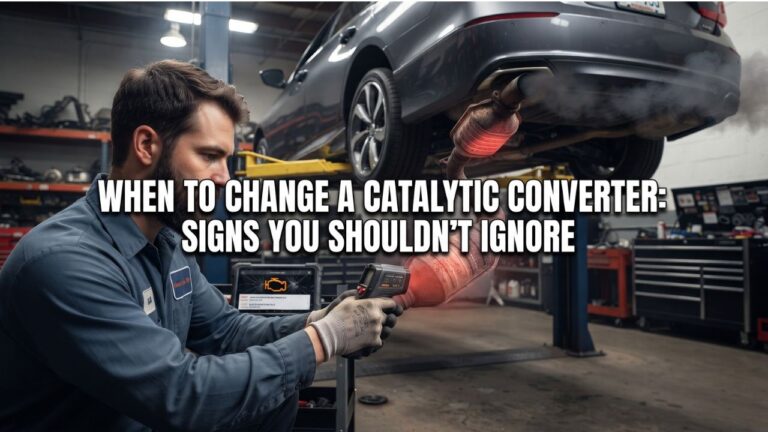
A converter can become extremely hot when unburned fuel reaches the exhaust or when the substrate is damaged.
Walker states that converter operation above roughly 1,600°F can damage catalyst material and that temperatures above roughly 1,700°F can damage or melt the internal substrate.
An unusual hot-metal smell, scorching odor, or visibly glowing converter calls for immediate attention.
Do not crawl under a hot vehicle to inspect the converter.
The Converter Rattles Internally
The catalytic converter contains a ceramic or metallic substrate.
If that internal structure breaks apart, pieces can rattle inside the housing. Loose material can also move and intermittently block exhaust flow.
That may create symptoms that change from one drive to another.
A rattle alone does not prove the converter is causing a shutdown, but a rattle combined with severe power loss strengthens the suspicion of internal damage.
Key Takeaway: Loss of power before stalling, poor high-RPM operation, hard starting, excessive heat, and converter rattling fit a restricted-converter pattern better than shutdown alone.
Why Does a Catalytic Converter Become Clogged?
A catalytic converter often becomes damaged because another engine problem sends abnormal heat, fuel, oil, or coolant into it.
Replacing the converter without correcting that cause can damage the new one.
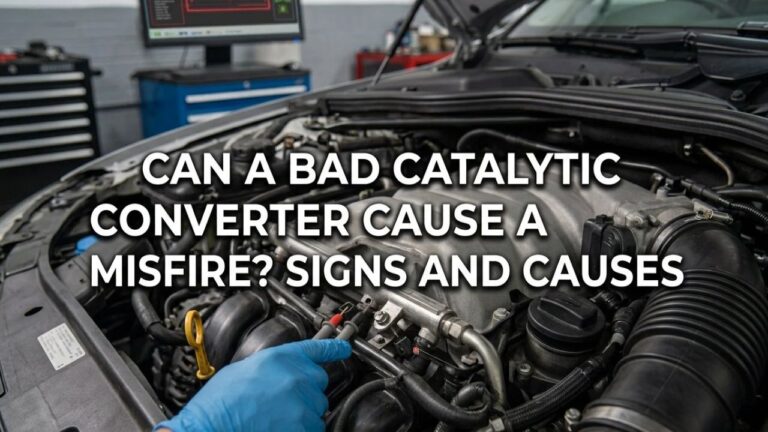
Engine Misfires Can Overheat the Converter
A misfiring cylinder may send unburned fuel and oxygen into the exhaust.
That fuel can burn inside the converter instead of inside the combustion chamber, raising converter temperature sharply.
Walker lists misfires and poor or absent spark among causes that can overheat and melt catalytic-converter substrates.
A flashing check-engine light commonly accompanies an active severe misfire. Bosch advises safely stopping and shutting down when the check-engine light is flashing because it points to a more serious fault.
A Rich Fuel Mixture Can Damage the Catalyst
An engine running too rich receives more fuel than it can burn correctly.
Excess fuel entering the converter raises exhaust temperature and can eventually melt the substrate.
Possible causes include injector faults, fuel-pressure problems, sensor errors, ignition trouble, and engine-control issues.
Installing a new converter while the engine is still running excessively rich can lead to another converter failure.
Oil or Coolant Can Contaminate the Converter
Internal engine problems can send oil or coolant through the combustion chambers and into the exhaust.
Walker notes that internal cooling-system leaks can contaminate and damage a catalytic converter.
Oil burning can also coat catalyst surfaces and contribute to converter deterioration.
Blue exhaust smoke, unexplained oil consumption, white exhaust associated with coolant loss, or recurring coolant loss deserves diagnosis before converter replacement.
The Internal Substrate Can Melt or Break
Once converter temperatures become excessive, the honeycomb structure can deform.
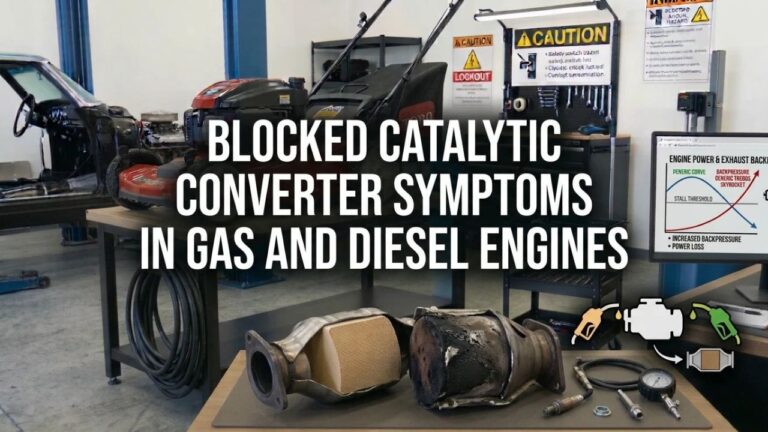
Passages that should carry exhaust gas may partly close or melt into a solid mass. Walker identifies melted substrate as a cause of plugged converters and severe loss of power.
Physical impact can also damage the converter housing or substrate.
Key Takeaway: Misfires, rich running, oil or coolant contamination, extreme heat, and physical damage can destroy the internal catalyst and create an exhaust restriction.
How to Tell if the Catalytic Converter Is Causing the Car to Shut Off
A converter should be tested before replacement, especially when the main complaint is stalling.
Several tests can show if the exhaust is physically restricted.
Scan the Trouble Codes First
Connect an OBD-II scan tool and retrieve stored and pending codes.
Catalyst-related codes such as P0420 or P0430 deserve attention, but they do not prove the converter is clogged.
Also look for codes related to:
- Misfires
- Fuel mixture
- Oxygen sensors
- Mass airflow
- Throttle control
- Crankshaft or camshaft sensors
- Fuel pressure
Fixing the root problem matters because many engine faults can both cause stalling and damage the converter.
Measure Exhaust Backpressure
Backpressure testing is one of the strongest ways to verify a restriction.
A technician can install a pressure gauge in an oxygen-sensor port and measure exhaust pressure at different engine speeds.
Walker states that on many vehicles, exhaust backpressure should generally remain below about 1 psi at idle and 3 psi at 2,500 RPM. Testing ahead of and behind the converter can help locate the blockage.
Walker also notes that high pressure ahead of the converter points toward a restricted converter, while high pressure farther downstream can indicate a blocked muffler or resonator.
Vehicle-specific specifications should be used when available.
Perform an Engine Vacuum Test
A vacuum gauge can provide another clue.
With an exhaust restriction, intake vacuum may fall as engine speed is held above idle because the engine cannot expel gases normally.
Walker describes a large vacuum drop during a raised-RPM test as a possible indication of exhaust blockage.
Vacuum readings can also change because of valve timing and other engine conditions, so this test should be interpreted with other evidence.
Inspect for Heat and Internal Damage
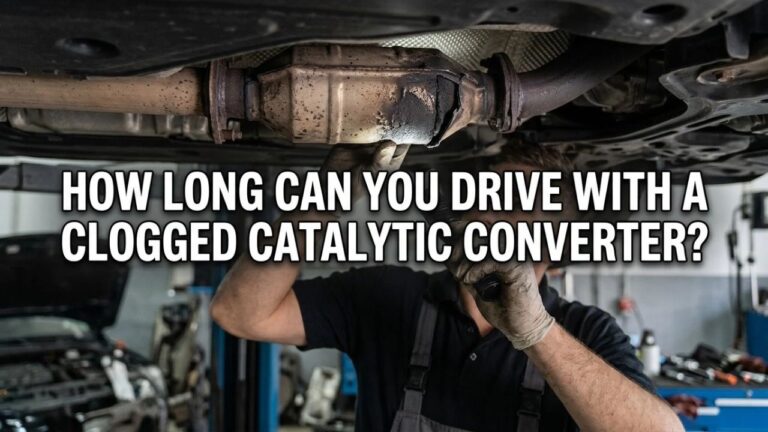
A technician may inspect the converter housing for:
- Heat discoloration
- Impact damage
- Rattling
- Melted substrate
- Broken internal material
Temperature testing can provide supporting evidence, but temperature alone should not decide the diagnosis. Engine mixture, load, converter design, and operating conditions all influence readings.
Check Other Shutdown Causes Before Buying a Converter
A vehicle that dies on the road may have no converter restriction at all.
Other causes include:
- Weak or failing fuel pump
- Fuel-pressure loss
- Crankshaft-position sensor failure
- Camshaft-position sensor fault
- Ignition-module or coil problems
- Alternator or charging failure
- Loose battery connections
- Main relay failure
- Throttle-body faults
- Wiring or ground problems
- Severe vacuum leaks
I would put exhaust backpressure testing fairly high on the list if the car loses power progressively before stalling. An instant clean shutdown with normal power immediately beforehand points me toward electrical, ignition, or engine-position signals first.
Key Takeaway: Trouble codes support diagnosis, but backpressure measurement is much stronger evidence of a physically clogged catalytic converter.
What Should You Do if the Car Shuts Off From a Bad Converter?
Repeated stalling should be treated as a drivability and road-safety problem, not just an emissions issue.
A vehicle that loses engine power in moving traffic can become difficult to place safely.
Move Out of Traffic Safely
If the engine begins losing power, turn on the hazard lights and move toward a safe stopping place while the vehicle still has momentum and control.
Steering and braking behavior can change after the engine stops, depending on the vehicle.
Do not continue driving simply to see how long the engine will remain running.
Stop if the Converter Is Extremely Hot
A strong scorching smell or visible red glow near the converter is a reason to shut the vehicle down.
NHTSA documentation has recorded real cases in which converter overheating was connected with fire risk or engine damage.
Park away from dry grass or other combustible material if the exhaust system appears extremely hot.
Diagnose the Cause Before Replacing the Converter
A converter is often damaged by another problem.
Before fitting a replacement, inspect:
- Misfire causes
- Spark plugs and ignition components
- Fuel mixture
- Injectors
- Fuel pressure
- Oxygen-sensor operation
- Oil consumption
- Coolant consumption
- Exhaust leaks
Walker advises correcting underlying engine and emissions faults before installing a replacement converter because an unresolved cause can damage the new unit.
Key Takeaway: If the vehicle repeatedly stalls or the converter overheats, stop normal driving and diagnose both the exhaust restriction and the engine problem that may have caused it.
Can a Clogged Catalytic Converter Cause a No-Start?
Yes, a severely blocked converter can contribute to a no-start condition.
Combustion requires the engine to move air through the cylinders. If exhaust gases cannot escape, the engine may struggle to start or may start briefly and die.
This tends to happen with a severe blockage rather than ordinary catalyst-efficiency deterioration.
A no-start has many more common possible causes, including fuel-pressure loss, lack of spark, immobilizer faults, crankshaft-sensor failure, weak battery voltage, and starter-system problems.
Do not replace a converter based on a no-start symptom alone.
Can a Bad Catalytic Converter Make a Car Shut Off at Idle?
It can, especially if the restriction has become severe.
A partially clogged converter may first cause problems during acceleration because exhaust flow is greatest under load. As the restriction worsens, even idle exhaust flow may become difficult enough for the engine to run poorly or stall.
Idle stalling also has many other causes.
Dirty throttle components, vacuum leaks, fuel problems, sensor faults, EGR problems, ignition faults, and charging-system issues should remain part of the diagnosis.
Will Removing the Catalytic Converter Confirm It Is Clogged?
Opening the exhaust ahead of a suspected restriction can change engine behavior and may provide diagnostic information, but catalytic-converter removal is not a casual home test.
Exhaust parts become extremely hot, oxygen sensors can seize in their threads, and exhaust leaks expose people to harmful gases.
Federal emissions law also regulates catalytic-converter removal and replacement on road vehicles.
A backpressure test through an oxygen-sensor port gives a technician a less disruptive way to test for restriction.
Conclusion
The answer to can a bad catalytic converter cause car to shut off is yes when the converter becomes badly clogged or its internal substrate collapses enough to restrict exhaust flow. Excessive backpressure can make the engine lose power, sputter, stall, or in severe cases fail to start.
The symptom pattern provides useful clues. Progressive loss of acceleration, inability to reach higher RPM, hard starting, excessive converter heat, and stalling under load fit an exhaust restriction. A simple P0420 or P0430 code without those symptoms does not prove the converter is physically blocked.
Backpressure testing is one of the best ways to verify the restriction. Codes, vacuum readings, temperature observations, and inspection of the converter add supporting information.
I would also insist on finding the reason the converter failed. Misfires, rich fuel mixtures, oil burning, coolant contamination, and other engine problems can ruin the catalyst, and replacing only the converter may set up the new part for the same failure.
FAQs About a Bad Catalytic Converter Causing Shutdown
Can a Clogged Catalytic Converter Make a Car Die While Driving?
Yes. A severe blockage raises exhaust backpressure and can prevent the engine from moving enough air through the cylinders. The car may first feel weak or sluggish, then sputter and stall as the restriction becomes worse.
Can a Bad Catalytic Converter Cause Stalling at a Stop?
Yes, severe restriction can make an engine stall even at idle. A mildly restricted converter is more likely to show symptoms during acceleration first. Idle stalling can also come from throttle, fuel, ignition, vacuum, EGR, or sensor problems.
Will a Bad Catalytic Converter Cause the Car to Start and Then Die?
It can. A heavily plugged converter may let the engine start briefly but prevent enough exhaust flow for continued operation. Fuel-pressure loss, immobilizer faults, sensor problems, and ignition failures can produce a similar start-and-die symptom.
Does P0420 Mean My Catalytic Converter Is Clogged?
No. P0420 generally indicates catalyst-system efficiency below the expected threshold. It does not prove that exhaust flow is restricted. A backpressure test is much more useful when checking for a physical blockage.
Can a Clogged Catalytic Converter Cause Loss of Power?
Yes. Loss of power is one of the common symptoms of exhaust restriction. The problem may become more obvious at higher RPM, during hard acceleration, or on hills because the engine needs to move a larger volume of exhaust.
Can a Bad Catalytic Converter Damage the Engine?
A severe converter-related problem can be associated with engine damage, especially if excessive heat or exhaust restriction is involved. NHTSA’s 2019 Kia Soul recall documented converter damage associated with abnormal combustion, piston damage, and possible engine stall.
Can a Bad Oxygen Sensor Make It Seem Like the Converter Is Bad?
Yes. Oxygen-sensor faults and fuel-control problems can trigger emissions codes or contribute to incorrect converter diagnosis. Converter testing should include scan data and inspection of related engine faults rather than replacing the converter based only on one trouble code.
Should I Drive a Car That Keeps Stalling From a Clogged Converter?
No. Repeated stalling can leave you without engine power in traffic, and a severely overheated converter may create additional damage. Park the vehicle safely and have the exhaust restriction and its root cause diagnosed before returning to normal driving.