How Often Do Catalytic Converters Go Bad? Lifespan and Causes
Catalytic converters do not have a routine replacement interval. A healthy original converter often lasts 10 years or longer and may remain in service for the life of the vehicle. Premature failures usually happen because another problem—such as engine misfire, excess fuel, oil burning, coolant contamination, or impact damage—overheats, coats, or breaks the catalyst.
A converter is different from brake pads, spark plugs, or engine oil. There is normally no maintenance schedule telling you to replace it every certain number of miles. It stays in place until testing shows it can no longer process exhaust correctly or its internal structure becomes damaged or restricted.
For drivers asking how often do catalytic converters go bad, a reasonable expectation is that a properly operating vehicle may go well beyond 100,000 miles without needing one. Cars.com reports that converters often last 10 years or longer, and some remain functional for the life of the vehicle.
Federal warranty requirements also give some perspective on expected durability. The EPA states that catalytic converters are among the specified major emissions components covered for 8 years or 80,000 miles on qualifying light-duty vehicles under federal emissions warranty provisions. That warranty period is not a replacement schedule, but it is worth checking before paying for an early converter failure.
Mileage alone rarely tells the full story. A converter on a well-maintained 150,000-mile vehicle can still work correctly, while one on a much newer vehicle can fail after repeated misfires or contamination.
The sections below explain typical lifespan, why some converters fail early, what happens as mileage rises, warning signs, preventive steps, and when replacement is actually justified.
How Long Do Catalytic Converters Usually Last?
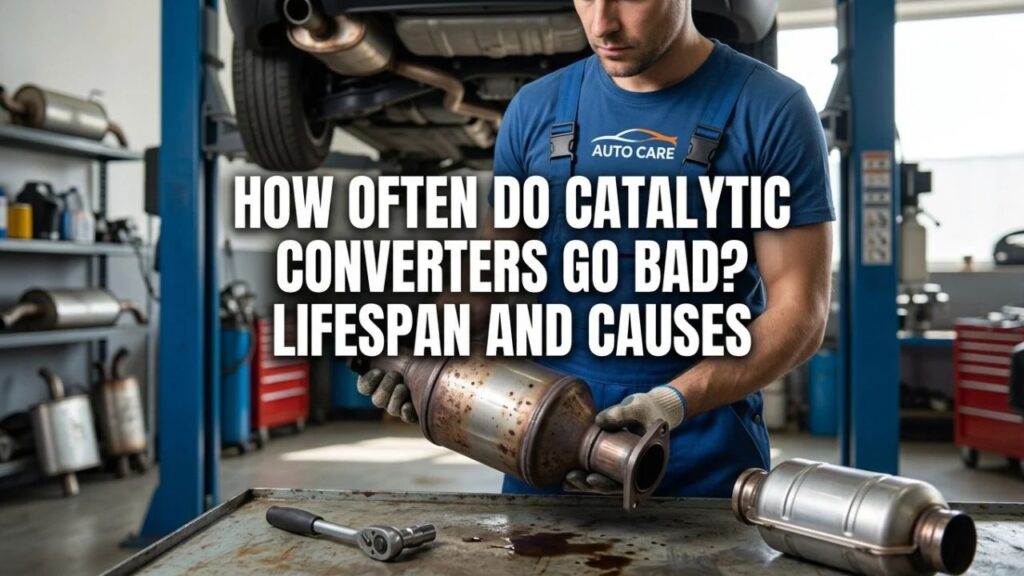
There is no fixed service life that applies to every vehicle.
A converter’s lifespan is strongly tied to engine condition, fuel control, oil consumption, cooling-system health, driving environment, and physical condition of the exhaust system.
Many Last 10 Years or More
Cars.com notes that catalytic converters often last 10 years or longer and should generally be replaced only after a fault has been confirmed.
Another Cars.com overview lists roughly 10 years or 100,000 miles as a general average, while recognizing that individual converters can last much longer or fail sooner.
That makes 100,000 miles a useful reference point, not an expiration date.
A converter that passes emissions monitoring, flows exhaust freely, and causes no drivability problems does not need replacement simply because the odometer reaches six figures.
Some Last the Life of the Vehicle
A converter operates with no moving parts.
Under normal conditions, exhaust passes through its catalyst-coated internal substrate for thousands of heating and cooling cycles without requiring routine mechanical service.
MagnaFlow states that catalytic converters are often expected to last the life of the vehicle and that early failure frequently traces back to another engine or engine-management problem.
Early Failure Is Possible
A converter can also be destroyed far earlier than 100,000 miles.
Examples include:
- Severe or prolonged engine misfires
- Leaking fuel injectors
- Excessively rich air-fuel mixture
- Heavy oil consumption
- Internal coolant leaks
- Physical impact
- Severe corrosion
- Repeated overheating
A converter exposed to one of these conditions can fail in a relatively short time.
Key Takeaway: A catalytic converter often lasts at least 10 years or around 100,000 miles and may survive for the vehicle’s entire service life, but engine faults can destroy one much earlier.
Do Catalytic Converters Need Scheduled Replacement?
No. A catalytic converter is not normally replaced as routine maintenance.
There is no standard instruction such as “replace every 100,000 miles” that applies to all vehicles.
Replace It Only After Confirming a Fault
Replacement is generally justified when diagnosis confirms problems such as:
- Catalyst conversion below the required threshold
- Melted internal substrate
- Severe exhaust restriction
- Broken internal honeycomb
- Physical housing damage
- Contamination that has permanently damaged the catalyst
A check engine light alone does not prove replacement is needed.
High Mileage Alone Is Not a Reason
A vehicle can have 120,000, 150,000, or even 200,000 miles and still have a functioning original converter.
Age can gradually reduce catalyst performance, but there is no automatic mileage point where replacement becomes mandatory.
If the converter still passes the vehicle’s onboard monitoring and local emissions requirements, there may be no reason to disturb it.
P0420 Does Not Always Mean Immediate Replacement
P0420 generally indicates that catalyst system performance for Bank 1 has fallen below the level expected by the engine computer.
P0430 is the corresponding code commonly associated with Bank 2.
Possible contributing factors can include:
- Exhaust leaks
- Engine misfires
- Incorrect fuel mixture
- Oxygen-sensor faults
- Oil consumption
- Exhaust contamination
Diagnosis should identify the root cause before parts are ordered.
Key Takeaway: Catalytic converters have no routine replacement schedule; replace one after testing confirms that it is damaged, restricted, or no longer meeting emissions requirements.
Why Do Catalytic Converters Go Bad Early?
Premature converter failure is commonly the result of another vehicle problem.
Walker groups converter failures into three broad categories: overheated or broken substrates, contamination of the catalyst surface, and structural damage.
Engine Misfires Can Overheat the Converter
A misfire means one or more cylinders are not burning their air-fuel charge normally.
Unburned fuel and oxygen can then enter the exhaust.
When that fuel reaches the hot catalytic converter, it may burn inside the converter itself.
Converter temperature can rise high enough to damage or melt the ceramic substrate. Walker notes that temperatures above approximately 1,600°F can damage catalyst material even without obvious external melting.
Potential misfire causes include:
- Worn spark plugs
- Failed ignition coils
- Injector problems
- Low compression
- Ignition wiring faults
A flashing check engine light should be treated seriously because an active misfire can quickly increase converter temperature.
Rich Fuel Mixtures Can Damage the Catalyst
An engine running rich receives more fuel than it can burn normally.
Possible causes include:
- Leaking injectors
- Excessive fuel pressure
- Faulty air measurement
- Sensor problems
- Ignition faults
- Fuel-control problems
Excess hydrocarbons entering the exhaust increase the thermal load inside the converter.
Repeated exposure can melt the substrate or coat it with deposits.
Burning Oil Can Contaminate the Converter
Oil entering the combustion chamber eventually reaches the exhaust as burned oil, ash, and other residue.
Possible engine causes include:
- Worn piston rings
- Worn valve seals
- Cylinder wear
- PCV-system faults
These deposits can coat the catalyst surface.
Once enough surface area becomes contaminated, the converter may no longer process exhaust gases correctly.
Walker specifically lists excessive oil consumption among the causes of catalyst fouling.
Coolant Leaks Can Poison the Catalyst
An internal head-gasket leak or another cooling-system problem may allow coolant into a combustion chamber.
Coolant passing through the engine can contaminate the catalyst material.
Watch for related symptoms such as:
- Unexplained coolant loss
- Persistent white exhaust vapor after warm-up
- Engine overheating
- Sweet-smelling exhaust
- Coolant-contaminated oil
Installing a new converter without repairing the internal coolant leak can damage the new unit.
Physical Impact Can Break the Internal Substrate
Converters mounted underneath the vehicle can be struck by:
- Road debris
- Large rocks
- Curbs
- Off-road obstacles
- Accident damage
The ceramic honeycomb inside is strong under normal exhaust conditions but can crack after a heavy impact.
Broken sections may rattle or move inside the housing and restrict exhaust flow.
Corrosion Can Cause Structural Failure
Rust may attack the converter housing, flanges, welds, or nearby exhaust pipes.
Vehicles exposed to road salt and moisture may develop corrosion earlier.
Internal support components can also weaken after many heating cycles.
Key Takeaway: Early converter failure usually traces back to overheating, oil or coolant contamination, rich running, misfires, impact damage, or corrosion rather than simple mileage.
Does High Mileage Make a Catalytic Converter More Likely to Fail?
Yes, age and mileage can increase the chance of failure, but the relationship is indirect.
A high-mileage engine is more likely to develop conditions that damage a converter.
Older Engines May Burn More Oil
Piston rings, valve seals, and cylinder surfaces wear over time.
If oil consumption increases, more combustion residue enters the exhaust.
That contamination can slowly reduce catalyst performance.
Sensors and Ignition Parts Age Too
High-mileage vehicles may develop:
- Aging oxygen sensors
- Weak ignition coils
- Worn spark plugs
- Injector problems
- Vacuum leaks
- Compression loss
Any of these can change combustion enough to place extra stress on the converter.
Years of Heat Cycles Affect Materials
Every drive warms the converter from ambient temperature to several hundred degrees or more, then it cools again after shutdown.
Thousands of these thermal cycles can gradually age the internal substrate, catalyst coating, housing, and mounting materials.
High Mileage Does Not Guarantee Failure
A 180,000-mile vehicle with good fuel control, little oil consumption, and no history of misfires may still have its original converter.
Another vehicle with 60,000 miles could need one after running with a severe ignition problem.
Key Takeaway: High mileage raises the chance of converter trouble mainly because engines and exhaust components develop other faults with age, not because the converter expires at a certain odometer reading.
Can a Catalytic Converter Go Bad Suddenly?
Yes, some failures can happen quickly.
Other failures develop gradually over months or years.
Sudden Failure From Severe Misfire
A major ignition problem can send large amounts of unburned fuel into the exhaust.
The converter may overheat rapidly.
In extreme cases, internal material can melt and restrict exhaust flow in a short period.
The driver may suddenly notice:
- Major power loss
- Engine struggling to rev
- Strong heat from beneath the vehicle
- Burning odor
- Flashing check engine light
Sudden Failure From Impact
Striking a hard object underneath the vehicle can crack the catalyst substrate or crush the converter housing instantly.
Rattling or restricted exhaust may appear immediately afterward.
Gradual Loss of Catalyst Activity
Normal aging and contamination often produce slower deterioration.
The first symptom may simply be:
- A P0420 or P0430 code
- Failed emissions inspection
- No obvious drivability problem
The converter can continue flowing exhaust normally while its ability to process pollutants declines.
Key Takeaway: Misfires and impacts can damage a converter quickly, while aging and contamination often cause a slower decline in catalyst performance.
What Are the Signs a Catalytic Converter Is Going Bad?
Converter symptoms vary according to the type of failure.
A converter with reduced emissions performance acts differently from one that is physically clogged.
Check Engine Light
P0420 and P0430 are among the best-known catalyst-related trouble codes.
The computer reaches these conclusions by analyzing information from oxygen or air-fuel sensors and other operating data.
Do not assume every catalyst code means the converter itself caused the original problem.
Reduced Engine Power
A melted or collapsed substrate can block exhaust flow.
Symptoms may become worse as engine speed rises because the engine needs to move a greater volume of exhaust.
The vehicle may:
- Accelerate slowly
- Struggle on hills
- Refuse to rev freely
- Lose top-end power
- Stall in severe cases
Rotten-Egg or Sulfur Smell
A sulfur-like exhaust odor can appear with converter or fuel-control problems.
The smell is not a standalone diagnostic test.
Rich running and other combustion problems can produce similar odors.
Rattling From Under the Vehicle
A damaged honeycomb may break loose inside the converter housing.
The resulting rattle may appear during:
- Cold startup
- Acceleration
- Deceleration
- Engine vibration
Loose exhaust heat shields can produce a similar sound.
Excessive Heat
A converter receiving excess unburned fuel may run much hotter than normal.
Visible glowing, smoke, scorching, or intense burning odor requires immediate attention.
Failed Emissions Test
A converter may have no obvious driving symptoms but fail to process exhaust gases at the required level.
This may cause:
- Failed tailpipe testing
- Catalyst-monitor codes
- Failed onboard diagnostic inspection
Key Takeaway: Common warning signs include catalyst codes, power loss, rattling, sulfur odor, excessive heat, and emissions-test failure, but diagnosis should confirm the converter before replacement.
How Can You Make a Catalytic Converter Last Longer?
You do not normally maintain the converter itself.
The best approach is keeping the engine from sending damaging exhaust into it.
Fix Misfires Quickly
Do not drive for extended periods with a flashing check engine light or severe misfire.
Diagnose ignition, fuel, compression, and air-management problems promptly.
Keep Up With Spark Plug Service
Worn plugs can contribute to incomplete combustion and misfires.
Follow the vehicle manufacturer’s plug replacement interval and use the correct plug type.
Address Oil Consumption
If the engine requires frequent oil additions, identify why.
Continuous oil burning can contaminate oxygen sensors and the catalytic converter.
Investigate Coolant Loss
A cooling system should not require frequent unexplained topping up.
Internal coolant leakage can damage both the engine and converter.
Repair Rich-Running Conditions
Strong fuel odor, black exhaust smoke, poor fuel economy, and rich mixture codes deserve diagnosis.
Continued rich running may overheat the catalyst.
Avoid Physical Damage
Use care around:
- Deep potholes
- Curbs
- Road debris
- Off-road obstacles
Damage underneath the vehicle can affect the converter as well as exhaust pipes and oxygen sensors.
Key Takeaway: Converter life is strongly connected to engine health, so fixing misfires, oil burning, coolant leaks, and fuel-control faults early gives the catalyst the best chance of lasting.
Should You Replace an Old Converter Before It Fails?
Usually, no.
Preventive replacement offers little advantage if the converter is functioning correctly.
A properly operating old converter can stay in service.
Replacement makes more sense after diagnosis confirms:
- Internal restriction
- Structural damage
- Catalyst failure
- Emissions noncompliance
- Irreparable contamination
Before paying for a converter, check the vehicle’s warranty booklet.
The EPA states that specified major emissions components, including catalytic converters, receive federal coverage for 8 years or 80,000 miles on qualifying light-duty vehicles, subject to warranty terms.
Some manufacturers or states may provide additional coverage in certain cases.
How Long Can You Drive With a Failing Catalytic Converter?
There is no safe universal mileage allowance after symptoms begin.
The urgency depends on the failure.
A vehicle with a catalyst-efficiency code but normal engine operation is different from a vehicle with a melted converter and severe exhaust restriction.
Arrange diagnosis soon if you notice:
- P0420 or P0430
- Increasing exhaust odor
- New rattling
- Reduced acceleration
- Failed emissions test
Stop driving or limit operation when symptoms include:
- Flashing check engine light
- Severe misfire
- Large power loss
- Stalling
- Converter glowing red
- Smoke
- Extreme heat beneath the vehicle
A converter damaged by active misfiring can become much more expensive if driving continues.
Why Does a Replacement Catalytic Converter Go Bad Again?
A replacement converter that fails early often points to an unresolved upstream problem.
Walker specifically warns that the cause of converter failure should be identified before a new unit is installed.
Common repeat-failure causes include:
- Ignition misfire
- Leaking injector
- Excess oil consumption
- Coolant leak
- Rich fuel mixture
- Incorrect fuel pressure
- Exhaust leaks affecting sensor readings
- Engine mechanical problems
Replacing the converter treats the damaged part.
Repairing the engine problem protects the replacement from suffering the same damage.
Conclusion
For how often do catalytic converters go bad, there is no scheduled interval that fits every vehicle. Many original converters last 10 years or more, often passing 100,000 miles, and some remain in place for the life of the car.
Premature converter failure usually has a cause. Misfires, rich running, oil consumption, coolant contamination, physical impact, corrosion, and extreme heat account for many early failures.
Do not replace a converter merely because the vehicle has high mileage. Diagnose catalyst codes, power loss, rattling, unusual heat, and emissions failures first.
If replacement becomes necessary, correct the fault that damaged the old converter before installing the new one. That step has a major influence on how long the replacement lasts.
FAQs About How Often Catalytic Converters Go Bad
Is 100,000 miles a normal lifespan for a catalytic converter?
Around 100,000 miles is a useful general reference, but it is not a replacement interval. Many converters last beyond 100,000 miles, and some remain functional for the vehicle’s entire life. Engine condition has more influence on early failure than the odometer alone.
Can a catalytic converter last 200,000 miles?
Yes. A converter can remain functional at 200,000 miles if the engine has maintained good combustion, has not burned excessive oil or coolant, and the converter has avoided overheating and physical damage. Mileage by itself does not determine catalyst condition.
How often should a catalytic converter be replaced?
There is normally no scheduled replacement period. Replace the converter after testing confirms that it is damaged, clogged, broken, or unable to meet emissions requirements. A functioning converter can stay in service regardless of age.
Do catalytic converters suddenly go bad?
They can. A severe misfire may overheat and melt the internal substrate quickly, while an impact can break it instantly. Other failures, such as catalyst aging or gradual contamination, develop more slowly.
Why would a catalytic converter fail before 80,000 miles?
Early failure may result from engine misfires, rich fueling, leaking injectors, oil burning, coolant entering the cylinders, impact damage, or a defective component. Check federal emissions warranty coverage if the vehicle is still within the applicable time and mileage limits.
Does a P0420 code mean the catalytic converter is worn out?
Not automatically. P0420 indicates catalyst system performance below the computer’s expected threshold for Bank 1. Exhaust leaks, engine-running problems, sensor faults, and contamination can affect the result. Proper diagnosis should come before converter replacement.
Can poor maintenance shorten catalytic converter life?
Yes. Neglected spark plugs, ongoing misfires, ignored oil consumption, cooling-system problems, and fuel-control faults can expose the converter to excess heat or contamination. Correcting engine problems early reduces the chance of premature converter damage.
Is it worth replacing a catalytic converter on an older car?
It can be, but consider the vehicle’s overall condition, repair cost, emissions requirements, and the cause of the converter failure. An otherwise sound vehicle may justify the repair. If the engine has severe oil consumption or major mechanical problems, those issues should be evaluated before spending money on a new converter.