Signs of Catalytic Converter Going Out: Key Symptoms and Causes
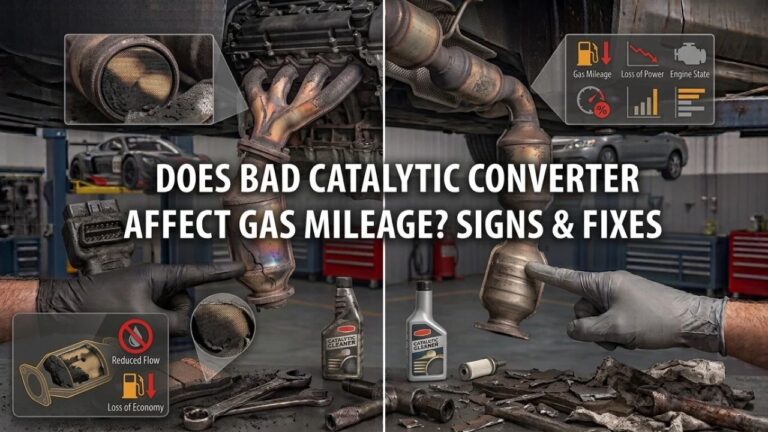
A catalytic converter that is starting to fail may trigger a Check Engine light, reduce acceleration, create a sulfur or rotten-egg exhaust smell, lower fuel economy, rattle internally, run unusually hot, or make the engine hard to start. A badly restricted converter may eventually cause stalling or prevent the engine from running.
These symptoms do not all appear at once. A converter that has lost its ability to treat exhaust may cause little more than an emissions-related trouble code, while a converter with a melted or collapsed internal substrate can sharply restrict exhaust flow and affect how the engine runs.
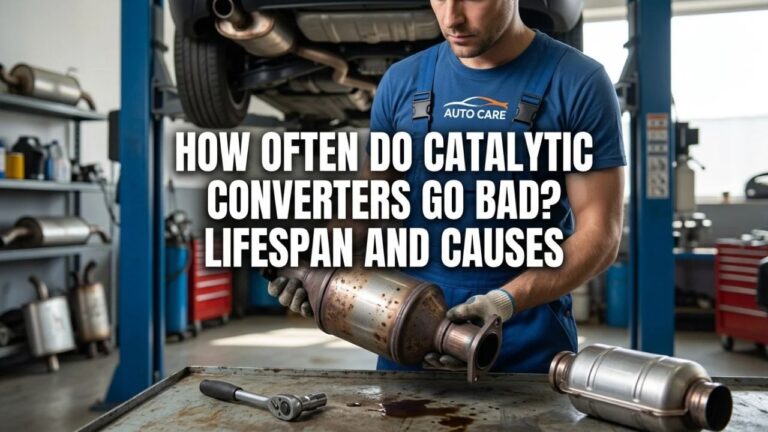
Catching the problem before the converter becomes fully restricted may prevent a roadside stall and may reveal the engine fault that damaged it. Misfires, excessive fuel, oil burning, coolant entering the exhaust, and extreme converter temperatures can all shorten catalyst life.
For U.S. vehicles, catalytic converters are classified by the EPA as major emission-control components. Eligible light-duty vehicles receive federal emissions warranty coverage for 8 years or 80,000 miles, whichever comes first, subject to the applicable warranty conditions.
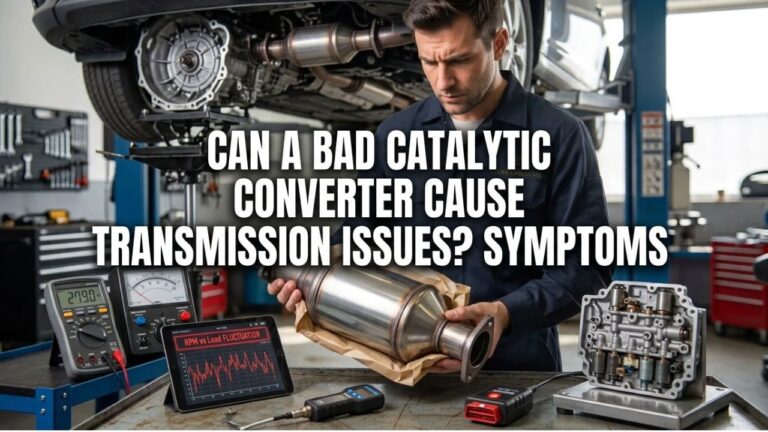
The most useful signs of catalytic converter going out are a combination of symptoms rather than one clue by itself. A rotten-egg odor, for example, can point toward catalyst trouble, but an engine running rich may be the actual cause. A P0420 code also needs diagnosis before a converter is automatically replaced.
I would treat a flashing Check Engine light, major power loss, repeated stalling, or extreme exhaust heat as more urgent than a steady catalyst-efficiency code with otherwise normal driving. Those stronger symptoms may indicate a misfire or physical restriction that can cause further damage.
The sections below cover the common warning signs, how a clogged converter changes engine behavior, what noises and smells matter, how converter trouble differs from O2-sensor problems, and what should be checked before replacement.
Signs of Catalytic Converter Going Out You Should Watch For
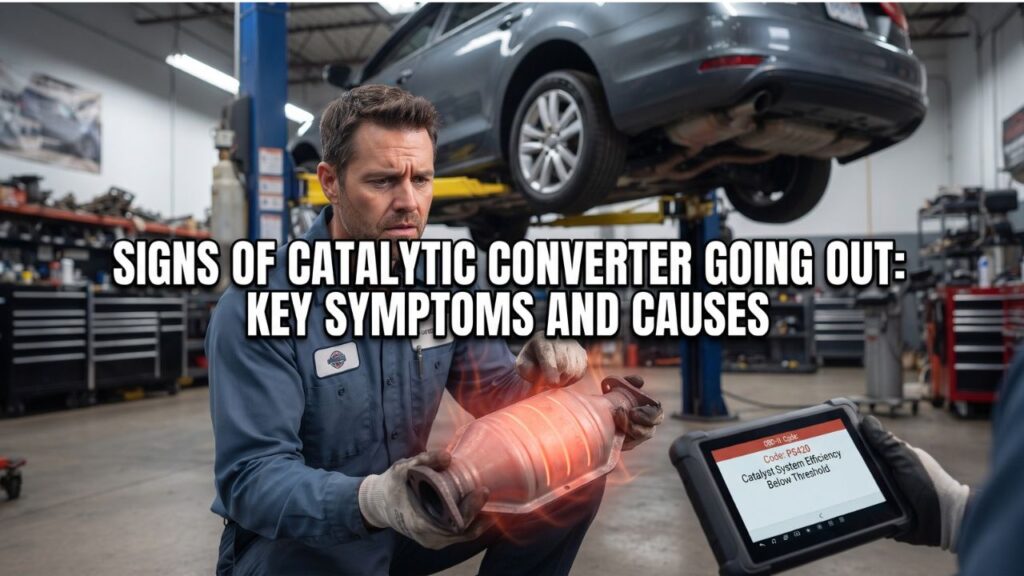
A failing converter may show electrical, mechanical, thermal, and drivability symptoms. Some point toward loss of catalyst efficiency, while others suggest the converter has become physically damaged or restricted.
Check Engine Light Comes On
A Check Engine light is one of the most common early clues.
Modern vehicles use oxygen sensors before and after the converter to monitor how well the catalyst is storing and processing oxygen. If the engine computer determines catalyst activity has fallen below its expected threshold, it may set codes such as:
- P0420 — Catalyst System Efficiency Below Threshold, Bank 1
- P0430 — Catalyst System Efficiency Below Threshold, Bank 2
RepairPal notes that catalyst-monitoring faults often appear when upstream and downstream oxygen-sensor behavior suggests the converter is no longer treating exhaust as expected.
A P0420 or P0430 code is not automatic proof that the converter itself is bad. Exhaust leaks, fuel-control faults, misfires, and sensor problems may affect the test.
Acceleration Becomes Weak
A converter that is beginning to clog can restrict the amount of exhaust leaving the engine.
You may notice:
- Slower acceleration
- Poor response at highway speeds
- Weak hill climbing
- Engine that struggles at higher RPM
- More throttle needed than usual
The symptom often becomes more obvious as engine load rises because more exhaust gas needs to pass through the converter.
AutoZone lists sluggish acceleration and reduced engine output among common symptoms of converter restriction.
Rotten-Egg or Sulfur Smell
A sulfur or rotten-egg odor from the exhaust may appear when exhaust chemistry is abnormal.
The smell is associated with sulfur compounds such as hydrogen sulfide. A converter that is no longer processing exhaust correctly may allow a stronger sulfur odor to reach the tailpipe.
Do not assume the smell proves the converter has failed. A rich-running engine may contribute to the odor and may also damage the converter over time.
Rattling From Under the Vehicle
Converters contain an internal catalyst substrate with many small passages.
Heat damage, impact, or age can cause that material to crack or break apart. Loose sections may rattle inside the converter housing.
The noise may be strongest:
- At startup
- At idle
- When lightly revving the engine
- When moving from acceleration to deceleration
RepairPal notes that broken catalyst material may rattle inside the shell and may eventually move farther down the exhaust system.
Fuel Economy Drops
A clogged exhaust can force the engine to work against higher backpressure.
You may notice that fuel mileage declines without a major change in driving habits.
Poor fuel economy has many causes, including low tire pressure, ignition faults, sensor problems, fuel-system faults, and engine wear. It becomes more suggestive of converter trouble when paired with power loss, catalyst codes, heat, or sulfur odor.
The Converter Runs Extremely Hot
Excess converter temperature can be both a cause and a symptom of trouble.
Walker notes that converter temperatures above roughly 1,600°F may damage catalyst material, while severe overheating may melt or collapse the substrate.
Possible signs include:
- Strong heat under the floor
- Burning odor
- Blue or bronze discoloration of the converter shell
- Smoke near the exhaust
- Converter glowing red in severe cases
A glowing converter is not normal.
Hard Starting or Stalling
A heavily restricted converter may eventually prevent exhaust from leaving fast enough for normal engine operation.
The engine may:
- Crank longer before starting
- Start and run poorly
- Stall after a short time
- Stall under load
- Refuse to rev
- Eventually fail to remain running
This tends to occur after the converter is badly clogged rather than during an early efficiency failure.
Key Takeaway: The strongest converter clues are catalyst codes combined with power loss, sulfur odor, rattling, excessive heat, poor mileage, hard starting, or stalling.
What a Clogged Catalytic Converter Feels Like While Driving
A clogged converter changes the way an engine breathes.
The engine may receive air normally, but combustion gases cannot leave the exhaust system freely.
Power Drops as RPM Rises
A partially restricted converter may let the engine idle almost normally.
At higher RPM, the engine produces much more exhaust gas. If that gas cannot pass through the converter fast enough, pressure builds ahead of the restriction.
This often creates a distinctive pattern:
- Car starts normally
- Idle seems acceptable
- Light acceleration feels mostly normal
- Heavy acceleration feels weak
- Engine stops pulling strongly at higher RPM
Walker lists delayed acceleration, loss of power, hard starting, and stalling among problems associated with a bad or restricted converter.
The Car May Feel Better After Cooling
A damaged converter can sometimes create symptoms that seem to change with temperature.
Internal pieces may expand as they heat, or a marginal restriction may become more noticeable after exhaust volume and temperature rise.
Do not treat temporary improvement after cooling as proof the problem has disappeared.
Severe Restriction May Cause Stalling
If the passages become nearly blocked, exhaust backpressure may interfere with cylinder filling and combustion.
The engine may stall at a stop, stall during acceleration, or start and then die.
A vehicle that cannot maintain normal road speed should not be driven through traffic simply to see if the condition improves.
Key Takeaway: A clogged converter often causes greater power loss as RPM and engine load rise because exhaust volume increases against the restriction.
What Does a Failing Catalytic Converter Sound Like?
Converter failure does not always make noise.
When it does, a metallic rattle is one of the more recognizable sounds.
Loose Catalyst Material
The internal catalyst structure may crack from:
- Extreme heat
- Road impact
- Long-term thermal cycling
- Internal deterioration
Loose pieces can bounce inside the steel shell.
The sound may resemble small stones or broken ceramic rattling inside a metal container.
Rattling Is Not Always the Converter
Heat shields, exhaust hangers, clamps, muffler internals, and loose brackets may create similar sounds.
Before buying a converter, check the surrounding exhaust hardware.
A technician may inspect the housing and listen for internal movement after the exhaust cools.
A Clogged Converter May Be Quiet
A melted converter can become a solid internal restriction without producing much rattling.
This is why lack of noise does not rule out a clog.
Key Takeaway: Broken converter material may rattle, but a melted or clogged converter may remain quiet while causing severe power loss.
What Does a Failing Catalytic Converter Smell Like?
The best-known odor is rotten eggs or sulfur.
A properly operating emissions system should not routinely produce a strong sulfur smell from the tailpipe.
Sulfur Smell From the Exhaust
A catalyst problem may change how sulfur compounds are processed.
RepairPal lists unusual sulfur odor among the symptoms associated with converter trouble.
The smell may become stronger after:
- Hard acceleration
- Extended idling
- Driving uphill
- Heavy engine load
Raw Fuel Smell
A raw-fuel smell may point toward an engine running rich or misfiring rather than the converter alone.
That distinction matters because excessive unburned fuel entering the exhaust can overheat the converter.
Burning Smell
A converter operating at abnormally high temperature may create a hot-metal or burning odor.
Oil dripping onto the exhaust, overheated brakes, wiring problems, and plastic contacting hot exhaust parts can create similar smells.
Key Takeaway: Sulfur odor supports a converter diagnosis, but raw-fuel or burning smells often point toward an upstream problem that may be damaging the converter.
Why a Catalytic Converter Starts Going Bad
Converters are often damaged by another engine problem.
Walker states that converter failure usually points toward a larger underlying fault rather than a catalyst that simply failed on its own.
Engine Misfires
A misfiring cylinder may send unburned fuel and oxygen into the exhaust.
That fuel may burn inside the converter, causing a large temperature increase.
Possible misfire causes include:
- Worn spark plugs
- Bad ignition coil
- Injector problem
- Low compression
- Wiring fault
A flashing Check Engine light commonly indicates a severe misfire. RepairPal warns that this type of misfire can damage the converter rapidly.
Rich Air-Fuel Mixture
An engine receives too much fuel when it runs rich.
Possible causes include:
- Leaking injector
- High fuel pressure
- Sensor fault
- Ignition failure
- Restricted air supply
Excess fuel can overheat the catalyst and eventually melt the internal structure.
Oil Consumption
An engine that burns oil sends oil-derived deposits through the exhaust.
Those deposits may coat catalyst surfaces and reduce their ability to process exhaust gases.
Coolant Entering the Combustion Chambers
An internal coolant leak may send coolant through the cylinders and into the exhaust.
Walker states that coolant contamination can poison the catalyst and damage converter operation.
Possible sources include head-gasket failure or other internal engine leaks.
Physical Impact
Road debris can dent the converter housing or crack its internal ceramic structure.
A damaged unit may begin rattling before it develops a major restriction.
Key Takeaway: Misfires, excessive fuel, oil consumption, coolant contamination, and physical impact are common causes behind converter failure.
Catalytic Converter Failure vs O2 Sensor Failure
These two problems are often confused because both may trigger a Check Engine light and affect emissions-related codes.
O2 Sensors Measure Exhaust Conditions
Oxygen sensors report exhaust information to the engine computer.
Most modern gasoline vehicles have sensors located before and after the catalytic converter.
The downstream sensor is used in part to monitor catalyst operation.
A Bad Sensor Can Mimic Converter Trouble
A slow, biased, or failed sensor may provide incorrect information.
That means a converter should not be replaced only because a catalyst-related trouble code appears.
Walker recommends checking sensor operation, exhaust leaks, fuel control, and other trouble codes before condemning a converter.
Physical Restriction Points More Toward the Converter
An oxygen sensor fault by itself usually does not physically block exhaust flow.
Strong power loss that worsens with RPM, high exhaust backpressure, and a melted substrate point more directly toward restriction.
Key Takeaway: O2-sensor faults may produce catalyst-related codes, but a physically clogged converter is more likely to cause rising backpressure and severe power loss under load.
How a Mechanic Confirms the Catalytic Converter Is Bad
No single symptom proves a converter has failed.
A good diagnosis checks both the catalyst and the engine conditions that may have damaged it.
Scan Trouble Codes
An OBD-II scan is a logical starting point.
Relevant codes may include:
- P0420
- P0430
- P0300-series misfire codes
- Fuel-trim codes
- Oxygen-sensor codes
- Air-fuel sensor codes
Record the codes before clearing them.
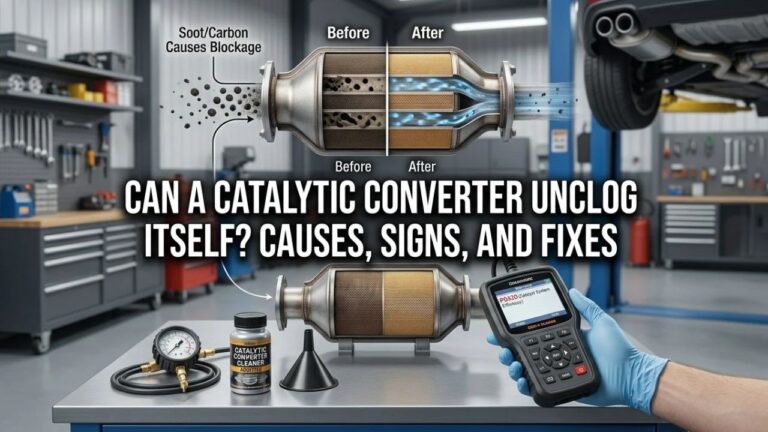
Check Exhaust Backpressure
Backpressure testing is useful when the vehicle has major power loss.
Walker states that typical exhaust backpressure should generally remain below about 1.5 PSI at idle and 3 PSI at 2,000 RPM, though the vehicle maker’s specification takes priority. High pressure ahead of the converter may indicate restriction.
This is more convincing than guessing from a P0420 code.
Inspect Converter Temperature
Temperature readings may reveal abnormal catalyst activity or overheating.
Walker notes that many converters begin operating around 350°F and are fully active around 500°F, while extreme temperatures above the normal range may damage the substrate.
Temperature alone should not be used as the only test.
Check for Exhaust Leaks
Leaks near oxygen sensors may introduce outside air and alter sensor readings.
Inspect:
- Exhaust manifold
- Flex pipe
- Sensor ports
- Pipe connections
- Flanges
- Gaskets
- Welds
Walker recommends correcting exhaust leaks before making a final converter diagnosis.
Check Fuel and Ignition Problems
A new converter may fail again if the engine continues misfiring or running rich.
The diagnostic process may include:
- Spark plug inspection
- Ignition coil testing
- Fuel-pressure checks
- Injector testing
- Fuel-trim analysis
- Compression testing
- Coolant-leak checks
- Oil-consumption diagnosis
Key Takeaway: Codes, backpressure, temperature, sensor data, exhaust leaks, and engine condition should be checked before an expensive converter is replaced.
Can You Keep Driving When the Converter Is Going Out?
That depends on the symptoms.
A car with a catalyst-efficiency code but normal power is in a different situation from a vehicle with a glowing converter or severe restriction.
Steady Check Engine Light With Normal Driving
If the light is steady and the vehicle:
- Runs smoothly
- Accelerates normally
- Does not overheat
- Has no strong exhaust fumes in the cabin
- Does not stall
a short drive for diagnosis may be reasonable.
Do not postpone the inspection indefinitely.
Flashing Check Engine Light
A flashing light changes the situation.
It often indicates a misfire severe enough to threaten the converter.
I would stop driving and arrange diagnosis rather than continuing to send unburned fuel into the exhaust.
Major Power Loss
Do not continue normal driving if the vehicle struggles to maintain traffic speed.
A converter restriction can become worse and may eventually cause stalling.
Converter Glowing Red or Producing Smoke
Shut the engine off in a safe place away from dry vegetation or combustible material.
Extreme converter heat calls for inspection before the vehicle is driven again.
Key Takeaway: A steady warning light with normal performance may allow a short trip for diagnosis, while flashing lights, severe power loss, stalling, smoke, or extreme heat call for faster action.
Does a Bad Catalytic Converter Always Need Replacement?
Not every catalyst-related code means the converter should be replaced.
The decision depends on what has actually failed.
Physically Melted or Broken Converter
A converter with a melted, collapsed, cracked, or broken substrate generally needs replacement.
Chemical cleaners cannot rebuild damaged ceramic material.
Converter Contaminated by Engine Problems
Oil or coolant contamination may permanently damage catalyst surfaces.
Correct the engine problem first, then determine if the converter still performs within specification.
Converter Code Caused by Another Fault
If an exhaust leak, sensor problem, or fuel-control fault caused the catalyst monitor to fail, repairing that issue may solve the warning without converter replacement.
Walker specifically advises repairing other trouble codes, exhaust leaks, fuel faults, and contamination sources before installing a new unit.
Conclusion
The most common signs of catalytic converter going out include a Check Engine light, sluggish acceleration, sulfur odor, rattling, reduced fuel economy, excess heat, hard starting, and stalling. Symptoms become more serious once the converter starts physically restricting exhaust flow.
A P0420 or P0430 code alone is not enough to prove the converter is bad. Exhaust leaks, oxygen-sensor faults, misfires, fuel-system problems, oil burning, and coolant contamination all need consideration before replacement.
Pay closest attention to symptom combinations. Power loss that worsens with RPM, high backpressure, rattling catalyst material, and extreme converter heat point more strongly toward physical failure than a warning light by itself.
I would address the cause before installing a replacement converter. A misfire or rich-running engine that destroys one converter may damage the next one too.
FAQs About Catalytic Converter Warning Signs
What Is the First Sign of a Catalytic Converter Going Bad?
A Check Engine light may be the first noticeable sign, especially when the converter is losing catalyst efficiency but has not become restricted.
Codes such as P0420 or P0430 may appear before the driver notices power loss. The code still needs diagnosis because sensor, exhaust-leak, or engine faults may produce similar results.
Can a Bad Catalytic Converter Cause Loss of Power?
Yes. A converter with melted or blocked internal passages restricts exhaust flow.
Power loss often becomes worse during acceleration or at higher RPM because the engine is producing more exhaust gas. Severe restriction may eventually cause stalling or a no-start condition.
Does a Bad Catalytic Converter Make a Rattling Noise?
It may.
Extreme heat or physical damage can break the catalyst substrate inside the converter shell. The loose material may create a metallic or ceramic rattling sound, commonly heard during startup, idle, or throttle changes.
Can a Bad Catalytic Converter Cause Poor Gas Mileage?
Yes, especially when the converter is restricted or the engine fault that damaged it is affecting fuel control.
Poor fuel economy alone does not confirm converter failure. Tire pressure, ignition faults, sensors, fuel-system problems, and driving conditions can also reduce mileage.
What Does a Bad Catalytic Converter Smell Like?
A failing converter may produce a sulfur or rotten-egg odor from the exhaust.
A rich-running engine may create similar exhaust chemistry and can also overheat the converter, so the smell should be combined with scan data and other symptoms before replacing the part.
Can a Bad Catalytic Converter Cause a Car to Stall?
Yes. A heavily clogged converter may create enough exhaust backpressure to interfere with normal engine operation.
The engine may stall under load, at idle, or shortly after starting. Fuel, ignition, sensor, and electrical faults can also cause stalling, so restriction should be tested.
How Do I Know if the Converter Is Clogged or Just Worn Out?
A converter that has simply lost catalyst efficiency may trigger emissions codes while the vehicle still drives normally.
A clogged converter is more likely to cause weak acceleration, rising backpressure, poor high-RPM performance, hard starting, or stalling. Exhaust backpressure testing is one of the better ways to confirm a physical restriction.