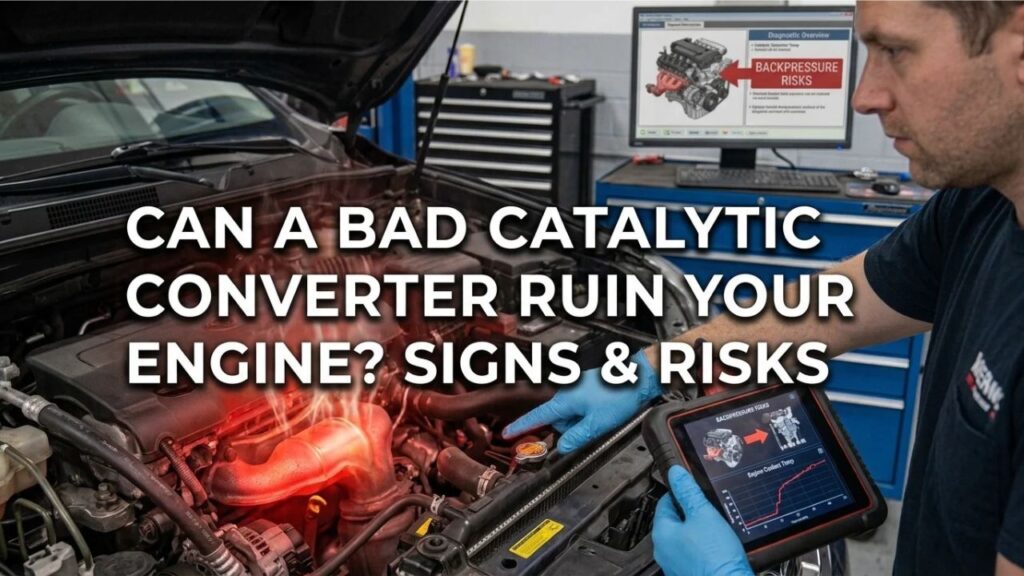
Can a Bad Catalytic Converter Ruin Your Engine? Signs & Risks
Yes, a severely clogged or melted catalytic converter can contribute to engine damage if you continue driving with it. The blockage restricts exhaust flow, raises backpressure and heat, and can make the engine lose power, stall, or run poorly. A simple catalyst-efficiency fault without an exhaust restriction is far less likely to ruin the engine.
The distinction between a weak converter and a blocked converter matters. A converter can stop cleaning exhaust gases properly and trigger a check-engine light while the engine still breathes normally. The greater mechanical risk appears when the internal honeycomb melts, collapses, breaks apart, or becomes restricted enough to stop exhaust gases from leaving freely.
Excessive exhaust restriction makes the engine work against pressure during the exhaust stroke. That can reduce acceleration, cause power to fall sharply at higher RPM, increase exhaust temperatures, and place extra thermal stress on the engine and nearby exhaust components.
The U.S. Environmental Protection Agency says catalytic converters have been installed on most passenger cars and light-duty trucks since the 1975 model year. EPA information also describes the original converter as an integrated part of the engine and emissions system, with incorrect backpressure capable of affecting engine performance.
The practical answer to can a bad catalytic converter ruin your engine is therefore yes, but usually through severe restriction and heat rather than because the catalyst simply stops cleaning emissions. Loss of catalyst efficiency by itself is different from a converter that has physically melted or plugged.
Another point deserves attention: the engine often damages the converter first. Misfires, rich fuel mixtures, oil burning, coolant entering the cylinders, and low compression can overheat or contaminate the catalyst. Replacing the converter without repairing that underlying fault can lead to another failed converter.
The sections below explain how a failed converter can harm an engine, which symptoms suggest a blockage, why misfires often come first, how P0420 and P0430 codes should be interpreted, and when driving should stop.
Can a Bad Catalytic Converter Ruin Your Engine Directly?
A bad converter does not automatically destroy an engine. The level of risk depends on how the converter has failed.
A converter that has simply lost emissions-cleaning ability may cause a check-engine light and an emissions-test failure without creating a major exhaust restriction.
A melted or clogged converter is different.
Excessive Backpressure Restricts Exhaust Flow
Every cylinder has to push burned gases into the exhaust system after combustion.
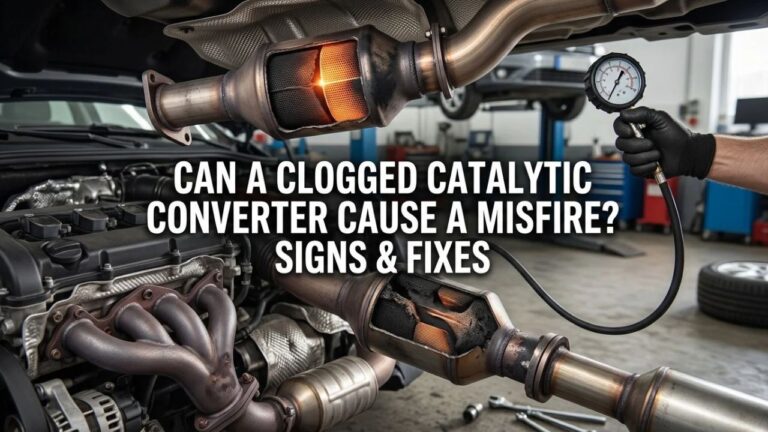
If the converter’s honeycomb becomes blocked, exhaust cannot move through the system freely. Pressure builds upstream of the restriction.
Government automotive training material describes a clogged converter as a source of increased exhaust backpressure and states that high backpressure can cause a major loss of engine power.
The engine may still idle, yet struggle badly as RPM and load increase because more exhaust volume is trying to pass through the restriction.
Common complaints include:
- Weak acceleration
- Loss of power at highway speed
- Difficulty climbing hills
- Stalling
- Poor high-RPM performance
- Hard starting in severe cases
A vehicle can sometimes feel almost normal during light driving and then fall flat as soon as the driver asks for more power.
Heat Builds Up Ahead of the Restriction
A blocked exhaust also traps heat.
Walker states that extended driving with a faulty converter can raise engine temperature, while its diagnostic information links high converter temperatures with damaged or melted substrate.
The exhaust manifold, cylinder head area, oxygen sensors, converter shell, and surrounding components can all see abnormal heat.
Extreme converter overheating can also create a fire hazard. U.S. military automotive training material notes that a clogged converter may overheat enough to create a possible fire risk.
Engine Damage Is Not Guaranteed
Many cars are diagnosed and repaired before a converter problem reaches the point of internal engine damage.
A P0420 code, for example, does not mean the engine is about to fail.
The risk becomes more serious when there is:
- Severe loss of power
- Confirmed excessive exhaust backpressure
- A melted converter
- Engine overheating
- Persistent misfire
- Extreme converter temperature
- Stalling under load
- A glowing-hot exhaust component
Key Takeaway: A weak catalyst does not automatically ruin an engine. A physically clogged or melted converter is the larger concern because it can trap exhaust, raise heat, and severely restrict engine breathing.
How a Clogged Catalytic Converter Can Harm the Engine
A gasoline engine depends on intake flow and exhaust flow working together. Blocking the exhaust changes what happens inside the cylinders as well as downstream in the exhaust system.
The Engine Has to Push Against More Pressure
During the exhaust stroke, the piston travels upward and forces burned gases out through the exhaust valve.
A clogged converter adds resistance to that flow.
The engine then spends more energy pushing exhaust out instead of sending that energy to the wheels. This is why a blocked converter often feels like the engine is being held back.
EPA material on replacement converters specifically warns that converter-related backpressure changes can adversely affect vehicle and engine performance.
The harder the engine is driven, the more obvious the restriction may become.
Cylinders May Not Clear Exhaust as Well
Good exhaust flow helps remove burned gases before the next intake charge enters.
Severe restriction can leave more residual exhaust in the cylinder. That reduces the amount of fresh air and fuel the cylinder can take in on the next cycle.
The result may include:
- Reduced torque
- Sluggish acceleration
- Poor combustion
- Rough running
- Higher heat
- Stalling under heavy load
This is why a clogged converter can sometimes be mistaken for a fuel-delivery or ignition problem.
Excess Heat Can Stress Engine Components
Heat is the bigger long-term concern.
Exhaust valves, the cylinder head, exhaust manifold, oxygen sensors, turbocharger components on turbocharged engines, and surrounding wiring or shields can all be exposed to abnormal exhaust temperature when a serious restriction exists.
The exact failure path differs among engines, so a clogged converter does not mean a specific internal part will fail next.
The practical concern is prolonged operation while the exhaust is severely restricted.
Engine Performance May Collapse Before Permanent Damage Occurs
Many drivers notice the performance problem first.
The engine may rev normally in Park or Neutral yet struggle badly on the road. Others notice that acceleration gets progressively worse as the vehicle warms up.
A badly melted converter can eventually restrict flow enough for the engine to stall or refuse to rev properly.
That loss of power is a warning to diagnose the restriction rather than continuing to force the engine harder.
Key Takeaway: A clogged converter harms engine operation mainly through exhaust backpressure and trapped heat. Severe power loss often appears before permanent internal damage, giving you a chance to diagnose the fault.
The Engine Often Ruins the Catalytic Converter First
This is one of the most useful facts when diagnosing converter failure.
Catalytic converters are usually damaged by another fault rather than failing for no reason.
Walker states that converters generally do not fail on their own and recommends finding the underlying engine or emissions problem before installing a replacement.
Engine Misfires Can Overheat the Converter
A misfire means combustion fails or occurs incorrectly in one or more cylinders.
That can send unburned fuel and oxygen into the exhaust.
Once that mixture reaches the hot catalytic converter, it can burn inside the converter and create extreme temperature.
Walker identifies engine misfires as a major cause of melted converter substrate and states that severe converter meltdown can occur when temperatures rise far beyond normal operation.
A flashing check-engine light commonly indicates an active misfire severe enough to risk catalyst damage. Follow the vehicle manufacturer’s warning guidance and avoid continuing to load the engine heavily.
A Rich Fuel Mixture Can Damage the Catalyst
An engine running too rich receives more fuel than the combustion process can properly use.
Unburned hydrocarbons then enter the exhaust.
Possible causes include:
- Leaking fuel injector
- Fuel-control fault
- Sensor problems
- Ignition faults
- Excessive fuel pressure
- Cylinder imbalance
That extra fuel can raise converter temperature and eventually melt the internal substrate.
Burning Oil Can Coat the Catalyst
Oil entering the combustion chambers can travel into the exhaust as ash and deposits.
Worn piston rings, valve-seal problems, or other oil-consumption faults can contaminate the catalyst coating and block the small passages inside the substrate.
Walker lists excessive oil consumption as a common cause of oil-fouled converter substrate.
A new converter installed behind an engine that continues burning large amounts of oil may suffer the same fate.
Coolant Leaks Can Contaminate the Converter
An internal coolant leak can also damage the catalyst.
A leaking head gasket, intake gasket on some engines, cracked cylinder head, or another internal coolant path may allow coolant into the combustion chamber.
The resulting contamination can coat the converter’s working surfaces.
White exhaust smoke, unexplained coolant loss, cooling-system pressure problems, or coolant-fouled spark plugs call for engine diagnosis before a converter is replaced.
Key Takeaway: Misfires, rich running, oil consumption, and internal coolant leaks can destroy a converter. Fix the cause first or a new converter may fail again.
Signs a Bad Catalytic Converter May Be Restricting the Engine
A converter-efficiency fault and a plugged converter do not always produce the same symptoms.
Restriction is more likely when several of these signs appear together:
- Noticeable loss of engine power
- Very weak acceleration
- Engine struggles more as RPM rises
- Stalling after the vehicle warms up
- Hard starting
- Excessive heat under the vehicle
- Sulfur or rotten-egg odor
- Rattling from broken converter material
- Poor fuel economy
- Check-engine light
- P0420 or P0430 stored
- Engine running better when an exhaust restriction is temporarily relieved during diagnosis
Walker lists loss of power, delayed acceleration, hard starting, stalling, misfires, reduced fuel economy, and overheating among possible effects associated with a failing converter.
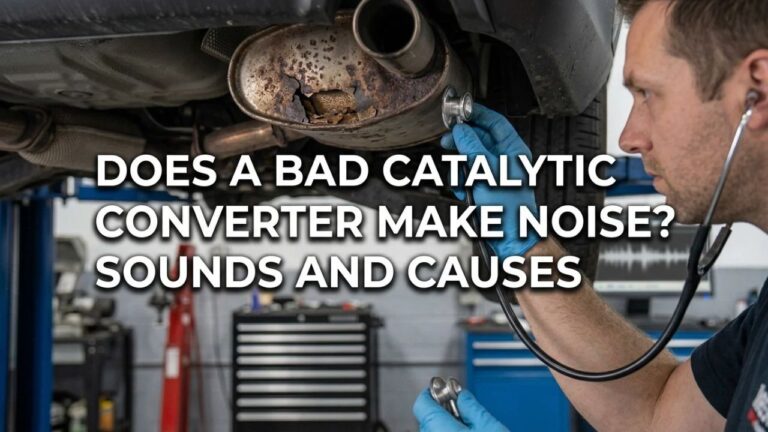
A rattle can mean the internal ceramic substrate has broken loose. Broken material can move around inside the converter and may eventually obstruct the exhaust path.
A red-hot converter is a different level of warning. Stop driving, shut the vehicle down in a safe location away from dry grass or other combustible material, and have the cause diagnosed.
Does P0420 Mean the Catalytic Converter Is Clogged?
No.
P0420 means catalyst-system efficiency is below the expected threshold on Bank 1. P0430 represents a similar catalyst-efficiency fault on Bank 2.
Neither code, by itself, proves the converter is physically clogged.
Walker notes that a P0420 code can appear when exhaust gases entering the converter are not properly balanced, and it advises correcting other engine codes before condemning the converter.
Possible causes around a catalyst-efficiency code can include:
- Worn catalytic converter
- Engine misfire
- Rich or lean mixture problem
- Exhaust leak
- Oxygen-sensor problem
- Oil consumption
- Coolant contamination
- Cylinder imbalance
A mechanic should look at the other codes and engine operating data before simply installing a converter.
How a Mechanic Checks for a Clogged Catalytic Converter
A proper diagnosis tries to confirm restriction and identify its cause.
Exhaust Backpressure Test
One direct method is an exhaust backpressure test.
A pressure gauge can be installed in an oxygen-sensor port or another approved test location to measure pressure upstream and downstream of suspected restrictions.
Walker states that high pressure ahead of the converter can indicate a restricted converter. Its general diagnostic guidance uses less than about 1.5 psi at idle and 3 psi at 2,000 RPM as typical reference values while noting that specifications can vary by application.
Vehicle-specific service information should control the diagnosis.
Scan-Tool Diagnosis
A scan tool can check:
- Misfire counts
- Fuel trims
- Oxygen-sensor activity
- Catalyst codes
- Air-fuel sensor data
- Engine temperature
- Related fuel or ignition faults
This helps determine if the converter is the cause of the complaint or the victim of another engine fault.
Temperature Inspection
Converter temperatures can also provide clues, though temperature alone is not enough to prove a blockage.
A converter running abnormally hot may point toward misfire, excessive fuel entering the exhaust, or another combustion problem.
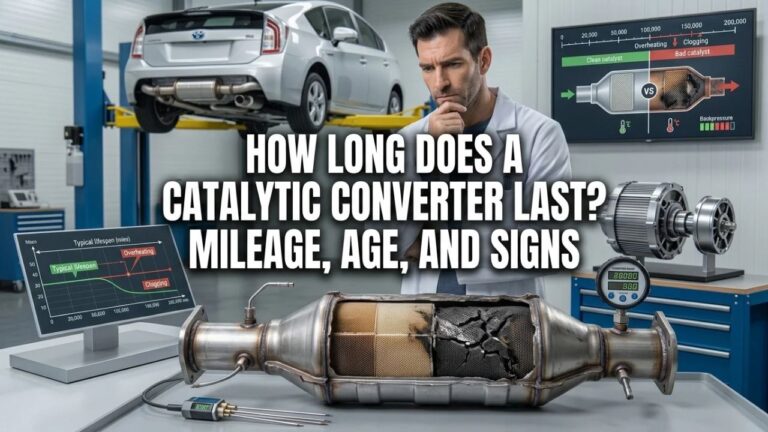
Walker states that a properly running engine typically keeps converter temperatures below about 1,200°F, while sustained temperatures above 1,600°F can damage catalyst material.
Physical Inspection
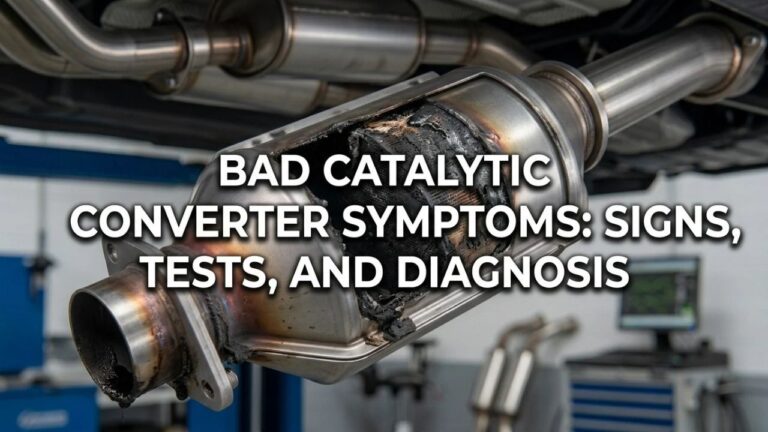
A damaged converter may:
- Rattle
- Show impact damage
- Show heat discoloration
- Contain loose substrate
- Have melted internal passages
- Be externally dented
A borescope or removal of the converter may be required to see internal collapse.
Key Takeaway: P0420 alone does not diagnose a plugged converter. Backpressure measurement, scan data, temperature checks, and inspection provide a much stronger diagnosis.
Can You Drive With a Bad Catalytic Converter?
Sometimes a car with reduced catalyst efficiency can still drive normally, but that does not mean every converter fault is safe to ignore.
The deciding factor is how the vehicle is behaving.
If the only symptom is a steady check-engine light with no overheating, no misfire, and normal power, the car may still be driveable long enough to arrange diagnosis.
Driving should stop sooner if you notice:
- Severe loss of power
- Engine overheating
- A flashing check-engine light
- Stalling
- A glowing converter
- Smoke under the vehicle
- Strong burning odors
- Extreme exhaust heat
- Severe misfiring
- The engine barely revs under load
A clogged converter will not repair itself after enough highway driving.
Chemical products may have limited usefulness for certain deposits, but they cannot restore a ceramic substrate that has melted, collapsed, cracked apart, or physically plugged the exhaust.
If the converter is severely restricted, replacement and correction of the original cause are the normal repair path.
What to Do If You Suspect a Bad Catalytic Converter
Avoid replacing the converter from a trouble code alone.
A better sequence is to identify why the converter appears faulty.
Diagnose Misfires and Fuel Problems First
Misfire codes, rich-mixture codes, injector faults, ignition faults, or abnormal fuel trims should be corrected before installing a new catalyst.
Walker specifically recommends resolving misfire and fuel-control faults before replacing a converter because those conditions can damage the replacement unit.
Check for Oil or Coolant Consumption
If the engine is burning oil or losing coolant internally, find the source.
A new converter may only mask the problem for a short period if contamination continues.
Look for related signs such as:
- Frequent oil top-offs
- Blue exhaust smoke
- White exhaust smoke after warm-up
- Unexplained coolant loss
- Fouled spark plugs
- Low compression
- Cooling-system pressure problems
Replace a Confirmed Failed Converter With the Correct Unit
Use a converter approved for the exact vehicle and emissions application.
Federal and California emissions requirements can differ, and some vehicles require more than one converter.
EPA also prohibits removing a required converter and replacing it with a straight pipe as an emissions-system modification.
Check Federal Emissions Warranty Coverage
For U.S. light-duty vehicles, the EPA states that specified major emissions components—including catalytic converters—receive federal emissions warranty coverage for 8 years or 80,000 miles, whichever occurs first, subject to the warranty conditions.
If the vehicle falls within that range, check the warranty booklet and contact an authorized dealer before paying for converter replacement.
Key Takeaway: Confirm the converter failure, repair the misfire or contamination source, then install the correct replacement. U.S. owners should also check 8-year/80,000-mile federal emissions warranty eligibility.
Conclusion
Yes, can a bad catalytic converter ruin your engine has a qualified answer: a severely clogged or melted converter can contribute to serious engine trouble by restricting exhaust flow, increasing backpressure, and trapping heat. A catalyst-efficiency code without a physical blockage is much less likely to cause that level of damage.
Loss of power under load, overheating, stalling, extreme converter heat, and confirmed high exhaust backpressure are more concerning than a check-engine light alone. P0420 or P0430 should start a diagnosis, not automatically trigger converter replacement.
The other side of the problem matters just as much. Misfires, rich fueling, oil burning, and coolant leaks commonly damage catalytic converters. I would fix those faults before installing a replacement so the same failure does not return.
FAQs About Bad Catalytic Converters and Engine Damage
Can a Clogged Catalytic Converter Destroy an Engine?
A severely clogged converter can create enough exhaust restriction and heat to place the engine under abnormal stress. Continued driving may lead to overheating, major performance loss, and damage to engine or exhaust components.
A mildly weak catalyst that only fails an emissions-efficiency test is not the same as a physical blockage.
Can a Bad Catalytic Converter Cause Engine Overheating?
Yes, a severely restricted converter can contribute to overheating because hot exhaust cannot escape freely.
Overheating has many other causes, including low coolant, a failed thermostat, radiator problems, cooling-fan faults, or a damaged water pump. Confirm the cause instead of assuming the converter is responsible.
Can a Bad Catalytic Converter Cause a Misfire?
A severe exhaust restriction can make an engine run poorly and may contribute to misfire-like symptoms.
More often, the direction is reversed: an engine misfire sends unburned fuel and oxygen into the exhaust, causing the converter to overheat and melt. A misfire code should be diagnosed before the converter is replaced.
Can a Bad Catalytic Converter Cause Loss of Power?
Yes. Loss of power is a classic symptom of a restricted converter.
As exhaust backpressure rises, the engine has more difficulty expelling burned gases. Acceleration may feel weak, and the problem can become worse at higher RPM or under heavy load.
Can a Catalytic Converter Cause an Engine to Stall?
A heavily restricted converter can cause stalling because the engine cannot move enough exhaust through the system.
Stalling can also come from fuel delivery, ignition, electrical, airflow, sensor, or mechanical problems. Exhaust backpressure testing can confirm if restriction is involved.
Does P0420 Mean My Engine Is in Danger?
Not by itself.
P0420 indicates that catalyst efficiency on Bank 1 has fallen below the expected threshold. It does not prove that the converter is clogged or that engine damage is occurring.
Check for misfires, fuel-control faults, exhaust leaks, oxygen-sensor issues, oil burning, and actual exhaust restriction before deciding what needs replacement.
Can I Keep Driving With a Bad Catalytic Converter?
A car with a simple efficiency fault and normal performance may remain driveable long enough to schedule diagnosis.
Stop driving if the vehicle loses major power, overheats, misfires heavily, stalls repeatedly, produces extreme exhaust heat, or has a glowing converter. Those symptoms raise the risk of further damage.
Will Replacing the Catalytic Converter Fix the Engine Problem?
Only if the converter itself is the true cause of the problem.
If a misfire, rich mixture, oil consumption, coolant leak, or another engine fault ruined the original converter, that fault must also be repaired. Replacing only the converter can lead to another failure.