Is Catalytic Converter Necessary? Purpose, Legal Rules, and Risks
Yes, a catalytic converter is needed on nearly every modern gasoline vehicle that was originally built with one. The engine may still start and move the car if the converter is missing, but the vehicle will release far more harmful exhaust pollution, may trigger warning lights, can fail emissions inspection, and can violate U.S. federal anti-tampering law.
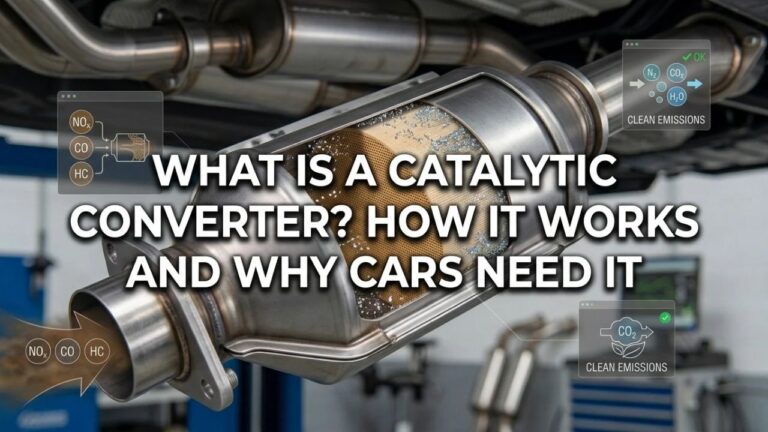
The converter sits in the exhaust system and chemically changes carbon monoxide, unburned hydrocarbons, and nitrogen oxides into less harmful exhaust products. It does not create engine power, but it is part of the certified emissions system on vehicles equipped with it.
Removing a working converter is not the same as replacing a failed exhaust part. A vehicle may become much louder if the converter is removed, and late-model engine controls may detect abnormal catalyst behavior through the oxygen-sensor system. A missing converter can also leave the car unable to pass an OBD or visual emissions inspection where those checks apply.
Catalytic converters have been installed on most U.S. cars and light trucks since the mid-1970s. EPA guidance also identifies the catalytic converter as one of the specified major emissions components covered by the federal emissions warranty for 8 years or 80,000 miles, whichever comes first, under applicable warranty conditions.
For a U.S. road vehicle, the practical answer to is catalytic converter necessary is yes if the vehicle was certified with one. The Clean Air Act prohibits removing or rendering required emissions controls inoperative, and EPA enforcement guidance treats catalytic-converter removal as tampering.
The useful distinction is between a converter that is required and a converter that is actually defective. A clogged, melted, stolen, or chemically worn-out unit may need replacement, but deleting a healthy converter is not the repair. The sections below explain what the converter does, what happens without it, legal considerations, performance myths, replacement cases, and the few vehicles that do not use this part.
Is Catalytic Converter Necessary for a Car to Run?
A gasoline engine does not need the catalytic converter to perform the basic combustion cycle. Air and fuel enter the cylinders, combustion creates power, and exhaust leaves the engine before it reaches the converter.
That means a car can often start and move after a converter has been stolen or removed. Physical operation and proper road-legal operation are two different questions.
The converter is an exhaust-aftertreatment device. Its job begins after combustion by treating pollutants before exhaust exits the tailpipe.
A modern vehicle was also calibrated and certified as a complete system. Exhaust hardware, oxygen sensors, catalyst monitoring, fuel control, and emissions diagnostics are designed to work together. EPA material describes the original converter as an integral part of the vehicle’s emissions and engine system.
If a converter is missing, the engine may run, but common consequences include:
- Check engine light
- P0420 or P0430-related catalyst faults
- Louder exhaust
- Stronger exhaust odor
- Failed emissions inspection where applicable
- Increased harmful emissions
- Possible exhaust leaks if removal was crude or theft-related
A stolen converter can also leave cut pipes, damaged oxygen-sensor wiring, and sharp exhaust edges that need repair before normal use.
What Does a Catalytic Converter Actually Do?
It Converts Harmful Exhaust Pollutants
A modern three-way catalytic converter treats three major pollutant groups from gasoline-engine exhaust:
- Carbon monoxide (CO)
- Unburned hydrocarbons (HC)
- Nitrogen oxides (NOx)
The catalyst promotes chemical reactions that turn much of these pollutants into carbon dioxide, water vapor, and nitrogen before the exhaust leaves the vehicle. EPA identifies converters as major emissions components because incomplete combustion creates pollutants that require aftertreatment.
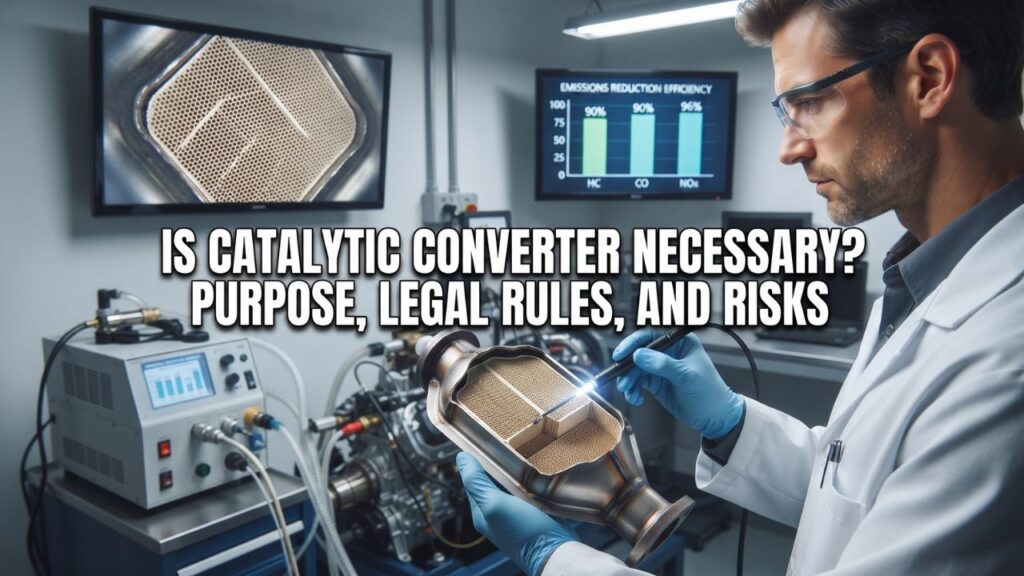
The converter contains a ceramic or metallic substrate with many small passages. Its surface is coated with catalyst materials that promote those reactions without being consumed in the same way as fuel.
It Works With the Oxygen-Sensor System
Most modern gasoline vehicles use oxygen sensors or air-fuel sensors before the converter and at least one sensor after it.
The upstream sensor helps the engine computer manage mixture. The downstream sensor provides information used to judge catalyst behavior on many OBD-II vehicles.
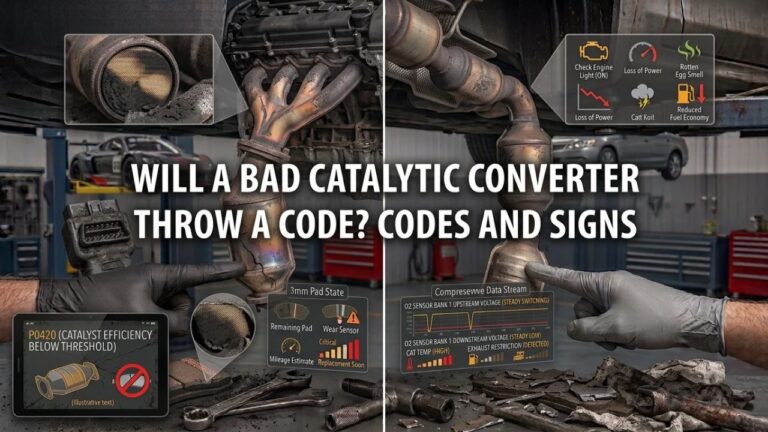
If catalyst performance falls below the programmed threshold, the computer may set P0420 for Bank 1 or P0430 for Bank 2.
A catalyst code does not prove the converter is the only possible fault. Exhaust leaks, sensor problems, misfires, and fuel-control faults can affect catalyst monitoring.
It Forms Part of the Vehicle’s Certified Emissions System
The vehicle was tested and certified with a defined emissions configuration.
EPA states that removing or making an installed emissions-control device inoperative is prohibited tampering. The rule covers more than the converter; it applies to required emissions systems and defeat devices more broadly.
That makes the converter more than an optional muffler-like component. On a vehicle originally certified with one, it forms part of the system that keeps tailpipe pollutants within applicable standards.
Key Takeaway: The converter treats carbon monoxide, hydrocarbons, and nitrogen oxides, works with the OBD emissions system, and forms part of the certified exhaust configuration.
What Happens If You Drive Without a Catalytic Converter?
Exhaust Pollution Rises
This is the main reason the converter exists.
Without catalyst treatment, carbon monoxide, hydrocarbons, and nitrogen oxides leave the tailpipe at much higher levels than they would with the emissions system intact.
EPA enforcement material states that removing emissions controls can increase vehicle pollution sharply, with increases reaching tens or hundreds of times for some pollutants depending on the vehicle and modification.
The engine still producing power does not mean the exhaust is being treated properly.
The Check Engine Light May Come On
Late-model vehicles monitor catalyst performance.
Removing the converter can make downstream oxygen-sensor behavior look wrong to the engine computer and can lead to catalyst-efficiency or related faults.
The exact response varies by vehicle. Some may set a code quickly; others need the catalyst monitor to complete its programmed test conditions first.
Clearing the code does not repair the missing emissions component.
The Exhaust Becomes Louder
A converter also changes exhaust sound as gases pass through its internal substrate and housing.
Removing it can make the exhaust louder, harsher, or more metallic, especially if theft leaves an open section of exhaust pipe.
The change may be dramatic if the converter was cut from beneath the vehicle.
The Vehicle May Fail Inspection
States and local areas use different emissions programs.
Where a vehicle receives an OBD emissions inspection, an illuminated check engine light, catalyst code, or incomplete readiness monitor can cause a failed test. A visual inspection may also reveal that required emissions hardware is missing.
State rules vary, so the local inspection program should be checked for the exact vehicle and registration location.
Removal Can Create Other Repair Problems
A converter theft or poor removal job can damage nearby parts.
Common damage includes:
- Cut oxygen-sensor wiring
- Torn exhaust hangers
- Damaged flanges
- Exhaust leaks
- Bent heat shields
- Cut pipes requiring welding or replacement
Those issues can create noise, fumes, warning lights, and poor fit even before emissions compliance is considered.
Key Takeaway: A missing converter raises pollution, can trigger warning lights, increases exhaust noise, may cause inspection failure, and can leave additional exhaust-system damage.
Is It Legal to Remove a Catalytic Converter in the United States?
For a road vehicle that was originally equipped with a required catalytic converter, removing it and leaving the emissions control defeated is prohibited under federal law.
EPA’s current enforcement page states that the Clean Air Act prohibits tampering with emissions-control devices by removing them or making them inoperative. It also prohibits manufacturing, selling, or installing defeat devices intended to bypass those controls.
Older EPA guidance specifically addresses catalytic converters and states that federal law does not permit replacing them with simple converter-replacement pipes.
A failed converter can be removed as part of a lawful repair when it is replaced with an appropriate compliant part for the vehicle.
State requirements can be stricter than the federal baseline. California and states following California emissions rules can require specific approved aftermarket converters for covered applications.
For a normal street vehicle, the safe approach is straightforward: replace a failed converter with the correct legal replacement rather than deleting it.
Does a Catalytic Converter Reduce Engine Performance?
A healthy modern converter normally does not create the dramatic horsepower loss sometimes associated with early emissions equipment.
Modern exhaust systems are designed around catalyst flow, pipe size, oxygen sensors, and engine calibration. MagnaFlow states that its testing does not show a meaningful performance advantage from simply removing a functioning modern catalytic converter.
The situation changes when a converter is clogged or melted.
A restricted converter can cause:
- Weak acceleration
- Poor high-RPM power
- Trouble climbing hills
- Hard starting
- Stalling in severe cases
That loss comes from abnormal exhaust restriction, not from the fact that the car has a converter.
Replacing a clogged converter with the correct free-flowing replacement restores normal exhaust flow without deleting the emissions system.
When Does a Catalytic Converter Need Replacement?
Catalyst Efficiency Has Fallen Below Specification
A converter may chemically deteriorate even though exhaust still flows through it.
Typical clues include:
- P0420
- P0430
- Check engine light
- Failed emissions test
- Normal or nearly normal driving performance
Before replacing the converter, check for exhaust leaks, oxygen-sensor faults, fuel-control problems, and misfires that can produce or contribute to the code.
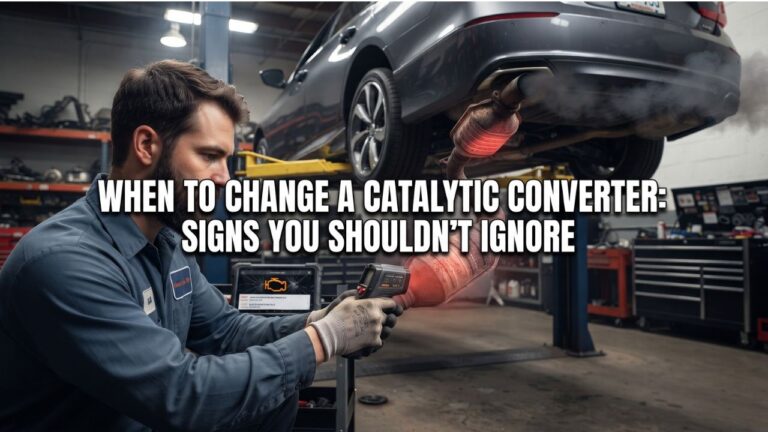
The Converter Is Clogged
A melted or collapsed substrate can physically block exhaust flow.
This type of failure often creates more obvious driveability symptoms:
- Slow acceleration
- Loss of high-RPM power
- Engine struggling under load
- Hard starting
- Stalling
- Excessive exhaust heat
Backpressure testing or another vehicle-specific diagnostic procedure can confirm restriction.
The Internal Substrate Is Broken
A converter can fail mechanically from impact or extreme heat.
Broken ceramic may rattle inside the shell. Pieces can shift and partially obstruct exhaust flow.
A loose heat shield can create a similar noise, so the source should be confirmed before ordering parts.
The Converter Was Stolen
Converter theft leaves the vehicle with an open exhaust and missing emissions equipment.
The correct repair is to install the proper replacement converter and repair any damaged pipes, wiring, sensors, hangers, or shields.
If theft is common in the area, a model-specific shield or anti-theft device may reduce future access to the converter.
Key Takeaway: Replacement is justified when testing confirms low catalyst performance, physical restriction, internal damage, or a missing converter—not simply because the part is old.
Why a Catalytic Converter Can Fail Early
Severe Engine Misfires
A misfire can send unburned fuel into the exhaust.
That fuel may burn inside the hot converter and raise temperature enough to melt or damage the substrate.
A flashing check engine light often points to a severe misfire condition and deserves fast diagnosis.
Rich Fuel Mixture
An engine receiving too much fuel can overheat the converter.
Possible causes include leaking injectors, fuel-pressure faults, airflow-measurement problems, or other fuel-control issues.
Installing a new converter without repairing rich operation can damage the replacement.
Burning Oil
Engine oil entering the combustion chambers creates ash and deposits.
Those contaminants can coat catalyst surfaces and reduce emissions-conversion ability.
If the engine is consuming oil, diagnose the cause before fitting an expensive new converter.
Coolant Entering the Cylinders
A head-gasket leak or another internal cooling-system fault can let coolant reach the combustion chambers.
Coolant-related deposits can contaminate the converter, and associated misfires can create excess exhaust heat.
Unexplained coolant loss deserves diagnosis before converter replacement.
Key Takeaway: Misfires, excess fuel, oil burning, and coolant contamination can destroy a replacement converter unless the engine fault is repaired first.
Do All Vehicles Need a Catalytic Converter?
No. The requirement depends on vehicle type, model year, emissions configuration, and powertrain.
Older Vehicles Built Without One
A genuinely older vehicle that was manufactured before catalytic converters became part of its certified emissions equipment may not have one.
EPA materials state that catalytic converters have been installed on most cars and trucks since 1975.
That does not mean any older vehicle can have existing emissions equipment removed. The original certified configuration and applicable law still matter.
Battery-Electric Vehicles
A battery-electric vehicle has no gasoline or diesel engine and no combustion exhaust stream.
It therefore does not use a conventional exhaust catalytic converter.
Hybrids
Gasoline-electric hybrids still have an internal-combustion engine.
Their exhaust systems generally use catalytic aftertreatment when the engine runs, so being a hybrid does not eliminate the need for the converter installed by the manufacturer.
Diesel Vehicles
Diesel emissions systems differ from gasoline three-way catalyst systems.
A diesel vehicle may use a diesel oxidation catalyst, diesel particulate filter, selective catalytic reduction system, or a combination of aftertreatment devices.
Do not apply gasoline-converter removal advice to a diesel emissions system.
Key Takeaway: Vehicles originally certified with catalytic aftertreatment need the required system; battery EVs have no combustion exhaust, while hybrids and diesels use emissions hardware suited to their powertrains.
Can You Replace a Catalytic Converter With a Straight Pipe?
A straight pipe may physically fill the empty space in the exhaust, but it does not replace the emissions function of the catalytic converter.
EPA guidance identifies replacing a converter with a bypass or replacement pipe as prohibited tampering on covered road vehicles.
A straight pipe can also leave the car with:
- Catalyst codes
- Check engine light
- Failed emissions inspection
- Increased exhaust pollution
- Louder exhaust
- Reduced resale appeal in areas where emissions compliance matters
If the converter is clogged, the solution is to diagnose why it failed and fit the correct replacement.
Removing the restriction without correcting the engine fault may also leave the condition that destroyed the converter in the first place.
Should You Replace a Bad Converter or Repair the Cause First?
The cause should be identified before or during converter replacement.
A catalytic converter often fails because another fault sends damaging material or heat into the exhaust.
A sensible diagnostic sequence is:
- Scan all stored and pending codes.
- Check for active misfires.
- Review fuel trims and related sensor data.
- Inspect the exhaust for leaks.
- Check abnormal oil consumption.
- Check unexplained coolant loss.
- Test exhaust restriction if power is low.
- Confirm the replacement converter matches the vehicle’s emissions application.
If a severe misfire or rich mixture remains, fitting the converter first risks damaging the new part.
For a U.S. vehicle under 8 years old and below 80,000 miles, check federal emissions warranty eligibility before paying for a converter. The EPA identifies the converter as one of the specified major components covered for that period under applicable conditions.
Conclusion
For a modern road vehicle originally equipped with one, is catalytic converter necessary has a clear practical answer: yes. The engine may physically run without the converter, but the vehicle loses a major emissions-control device and can face warning lights, inspection trouble, increased pollution, and federal anti-tampering issues.
A healthy converter should stay in place. If it becomes clogged, chemically weak, broken, or stolen, replace it with a compliant part that matches the exact vehicle rather than installing a bypass pipe.
I recommend diagnosing the reason for any converter failure before fitting the replacement. Misfires, excess fuel, oil burning, and coolant contamination can ruin the new converter too, turning one repair into a repeated expense.
FAQs About Catalytic Converter Necessity
Can a Car Run Without a Catalytic Converter?
Yes, many gasoline cars can physically start and move without the converter because combustion occurs before exhaust reaches it. Driving that way leaves the emissions system incomplete, can trigger codes and inspection problems, and is not a lawful delete for a covered U.S. road vehicle.
Is a Catalytic Converter Needed for the Engine to Start?
Not directly. The converter is an exhaust-aftertreatment device rather than a component required for spark, fuel delivery, compression, or starter operation. A severely clogged converter can still make starting difficult because exhaust cannot escape normally.
Is It Illegal to Drive Without a Catalytic Converter?
For a U.S. road vehicle originally equipped with a required converter, federal anti-tampering law prohibits removing or rendering required emissions controls inoperative. State registration and inspection rules can add separate requirements.
Does Removing a Catalytic Converter Add Horsepower?
Removing a healthy modern converter is not a reliable performance upgrade. A clogged converter can reduce power through excessive backpressure, but the proper repair is to replace the restricted unit and correct the cause of the failure.
Do Electric Cars Need Catalytic Converters?
Battery-electric cars do not use conventional catalytic converters because they have no combustion engine or tailpipe exhaust. Gasoline-electric hybrids still use exhaust aftertreatment for the combustion engine.
Do Older Cars Need Catalytic Converters?
An older vehicle manufactured without a catalytic converter may not need one added merely because newer cars use them. The vehicle’s original emissions configuration, model year, certification, and applicable law determine what equipment is required.
Can I Replace a Catalytic Converter With a Straight Pipe?
A straight pipe can physically replace the missing section of exhaust, but it does not perform the converter’s emissions function. On a covered U.S. road vehicle, bypassing a required converter is prohibited tampering. Use the correct compliant replacement instead.
Is a Catalytic Converter Covered by Warranty?
In the United States, the catalytic converter is one of the specified major emissions components covered by the federal emissions warranty for 8 years or 80,000 miles, whichever occurs first, under applicable warranty conditions. Check the vehicle warranty booklet before paying for replacement.