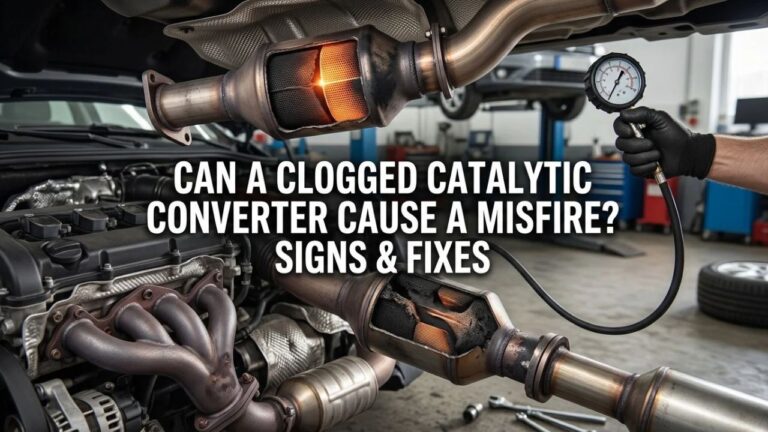
Do Catalytic Converters Reduce Power? Power Loss and Flow Limits
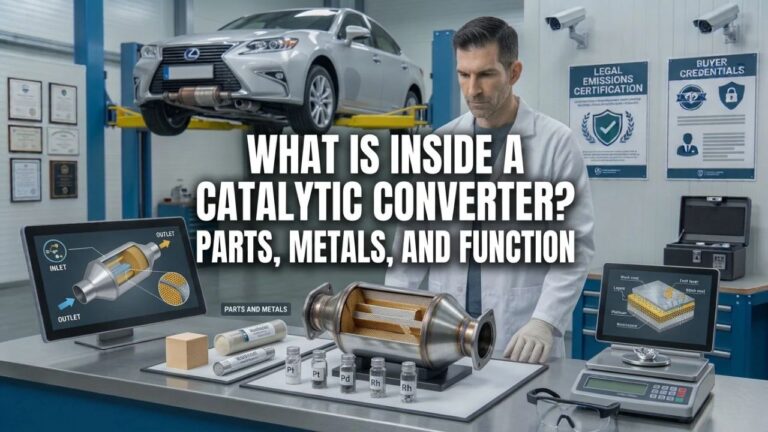
A healthy, properly sized catalytic converter usually causes little or no noticeable power loss on a modern street car. It does create some exhaust resistance, but manufacturers design the engine, converter, and exhaust system to work together. A clogged, melted, undersized, or badly matched converter can reduce horsepower and acceleration by creating excessive backpressure.
The distinction between a normal converter and a restricted one matters. A stock converter that flows as designed is not the same as a catalyst with collapsed honeycomb passages. The first is part of the vehicle’s calibrated exhaust system; the second can choke exhaust flow and make the engine struggle as RPM rises.
That difference also explains why removing a healthy converter rarely produces the dramatic gain some drivers expect. On a stock or mildly modified car, the limiting parts may be elsewhere, while a damaged converter can create a very real performance problem.
For U.S. vehicles, the EPA treats the catalytic converter as a major emissions-control component and requires specified federal emissions warranty coverage of 8 years or 80,000 miles on qualifying light-duty vehicles. That warranty figure is useful context because the converter is designed as a long-life part of the complete powertrain and emissions system.
For drivers asking do catalytic converters reduce power, the practical answer is: a healthy modern unit usually has little effect on usable street performance, while excessive exhaust restriction can cause a clear loss of power. Converter size, internal cell structure, engine airflow, boost level, and the condition of the catalyst all change the result.
The most useful way to judge the converter is by exhaust flow and backpressure rather than by assuming every catalyst steals horsepower. The sections below cover normal converter restriction, clogged-converter power loss, stock versus modified engines, high-flow units, symptoms, testing, and the legal problem with removing a converter.
Do Catalytic Converters Reduce Power on Modern Cars?
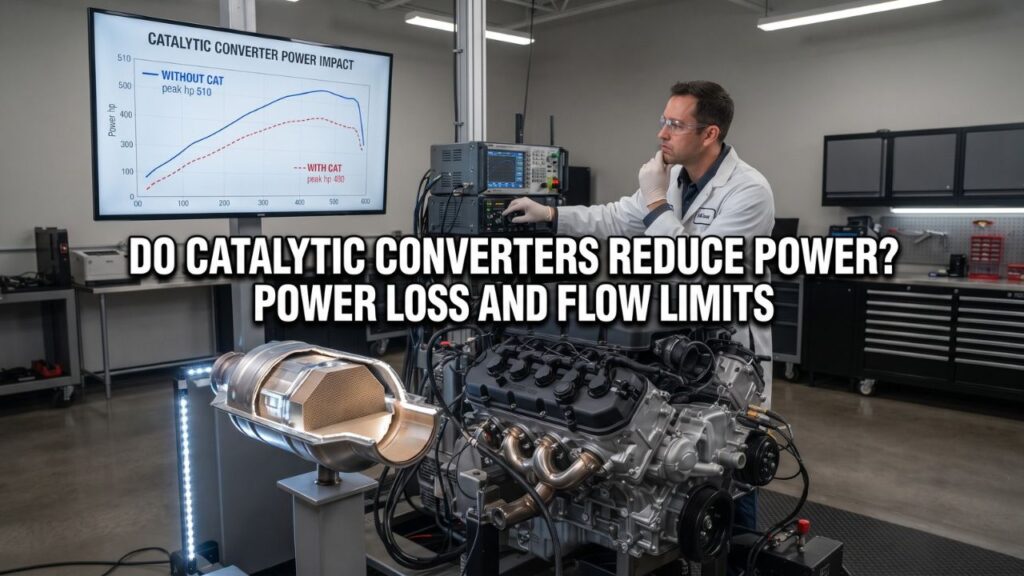
Modern catalytic converters create some pressure drop because exhaust gases must pass through thousands of small passages in the catalyst substrate. That does not mean the pressure drop is large enough to reduce power in a way the driver can feel.
Walker notes that properly sized modern steel or ceramic substrates have low restriction and should not cause a power loss in a correctly matched application. MagnaFlow also states that its testing has found no meaningful performance difference from simply removing a healthy converter on modern vehicles.
A Healthy Converter Is Part of the Engine Design
Vehicle manufacturers select converter volume, cell density, pipe diameter, exhaust routing, and catalyst location around the engine’s expected airflow.
The engine control system is then calibrated with that exhaust system in place. That means the converter is not an added blockage that engineers forgot to account for.
A stock engine operating inside its intended airflow range normally does not need an open pipe in place of the converter to make its rated power.
Exhaust Backpressure Can Reduce Power When It Gets Too High
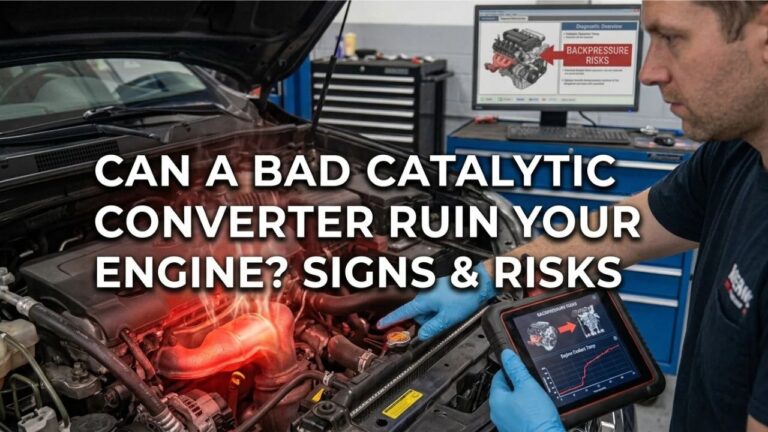
An engine has to push burned gases out of the cylinders during the exhaust stroke. Excessive resistance in the exhaust raises the amount of work required to clear those gases.
When backpressure becomes high enough, cylinder scavenging suffers, fresh charge can be displaced by residual exhaust gas, and power may fall.
SAE testing has examined how catalyst substrate selection and exhaust pressure drop affect horsepower, fuel use, and system performance. The takeaway is not that every converter creates the same loss; pressure drop changes with substrate and exhaust design.
Older Converter Designs Were More Restrictive
Early catalyst systems were less refined than current designs. Some older pellet-style converters created more restriction, helping establish the idea that catalytic converters always hurt performance.
Modern monolithic ceramic and metallic substrates provide many thin flow passages with much lower pressure drop. That design change is one reason current high-output production cars can meet emissions requirements while making very high horsepower.
Key Takeaway: A modern converter creates some exhaust resistance, but a properly sized healthy unit is designed into the powertrain and normally causes little or no noticeable street power loss.
When a Catalytic Converter Can Reduce Engine Power
A converter becomes a performance problem when exhaust flow through it is lower than the engine requires.
That can happen because the substrate is melted, broken, contaminated, physically damaged, or too restrictive for a heavily modified engine.
Melted or Clogged Substrate
A severe misfire or rich fuel mixture can send unburned fuel into the exhaust. That fuel can burn inside the converter and raise internal temperature high enough to damage or melt the substrate.
Walker states that a melted substrate can turn into a solid mass and make the vehicle feel sluggish from loss of exhaust flow.
A partial blockage may let the engine idle normally because exhaust volume is low. During hard acceleration, the engine produces much more exhaust and the restriction becomes far more obvious.
Broken Honeycomb Blocking the Outlet
The ceramic core can crack from heat, impact, or age. Pieces may move inside the housing and block part of the outlet.
This can produce an intermittent problem. The car may feel normal on one drive and weak on another if broken material shifts position.
A metallic rattle from inside the converter can appear with this type of failure, but noise is not required.
An Undersized Converter on a Modified Engine
A converter that flows enough air for a stock engine may become a bottleneck after major power changes.
Turbo upgrades, supercharger changes, larger engines, aggressive camshafts, and high-boost calibrations can raise exhaust mass flow beyond what the original system was designed to handle.
In that situation, the answer is not to assume the catalyst must be removed. A properly certified higher-flow converter and correctly sized exhaust can support more airflow while retaining emissions treatment.
Key Takeaway: Converter-related power loss appears when the substrate is clogged, melted, broken, or unable to flow the exhaust volume demanded by the engine.
How Much Horsepower Can a Catalytic Converter Cost?
There is no single horsepower number that applies to every car.
The loss can range from effectively unnoticeable on a healthy stock system to severe on a converter that is heavily blocked. Engine airflow, converter design, pipe diameter, RPM, boost, and the amount of restriction all matter.
Stock Street Engines
On a stock vehicle with a healthy factory converter, any power difference from the catalyst alone is generally small enough that removing it is unlikely to transform acceleration.
EPA material has long stated that the catalytic converter, as part of a properly designed emissions system, does not inherently reduce vehicle performance. Current exhaust manufacturers make a similar point about properly sized modern substrates.
If a stock car suddenly feels much slower than it used to, suspect a fault rather than assuming normal catalyst restriction has somehow become a new horsepower drain.
Modified and High-Output Engines
Modified engines can move much more air than the original engine.
At high RPM and load, a small converter may create a larger pressure difference across the substrate. That pressure can limit the airflow gains produced by other modifications.
This is why serious performance builds often use exhaust components selected around expected engine airflow rather than simply retaining every stock pipe dimension.
High-Flow Catalytic Converters
A high-flow converter uses substrate and housing design intended to pass more exhaust while still treating emissions.
It may use a different cell density, larger frontal area, metallic substrate, or larger inlet and outlet sizes.
A high-flow converter can make sense when the stock catalyst has become a confirmed airflow limit on a modified engine. It does not guarantee an automatic horsepower gain on an otherwise stock car.
Key Takeaway: Healthy stock converters usually cost little usable power, while heavily modified engines may need a higher-flow emissions-compliant converter to avoid an exhaust bottleneck.
Symptoms of a Catalytic Converter That Is Restricting Power
A restricted converter tends to cause symptoms that become worse as the engine tries to move more exhaust.
That makes load and RPM behavior very useful clues.
Weak Acceleration
Poor acceleration is one of the most common restriction symptoms.
AutoZone and Walker both list sluggish acceleration or loss of power among symptoms associated with a clogged converter.
The driver may press the accelerator farther, yet the engine feels unable to build speed normally.
Power Drops at Higher RPM
A partial blockage can hide at idle and light throttle.
As RPM rises, exhaust volume increases. The blocked substrate cannot pass the required flow, backpressure rises, and power falls.
A car that idles smoothly but feels as if it hits an invisible wall during highway acceleration is a classic pattern worth testing for exhaust restriction.
Poor Fuel Economy
A restricted engine may need more throttle to do the same work.
Fuel economy can fall, especially when the driver keeps adding throttle to compensate for weak acceleration.
Poor MPG alone does not prove a converter problem because fuel-system, ignition, tire, transmission, and driving-condition issues can produce the same complaint.
Hard Starting or Stalling
A severe blockage can trap enough exhaust to make starting difficult or cause the engine to stall.
At that stage, the problem is no longer a small horsepower loss. The exhaust system needs diagnosis before the vehicle is driven normally.
Check-Engine Light
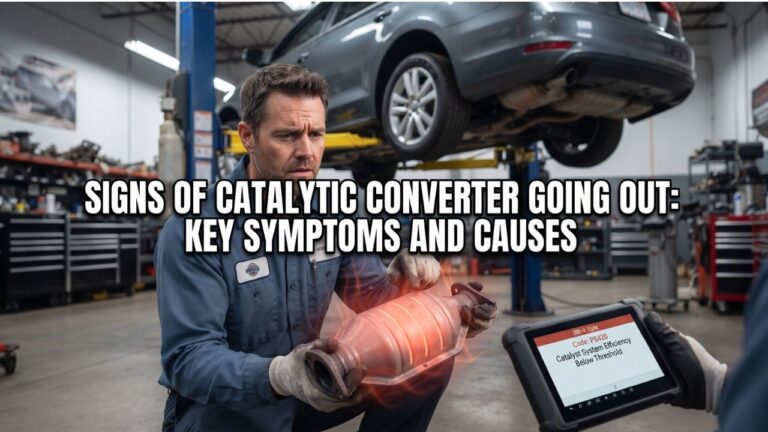
A clogged converter may set P0420 or P0430, but those codes do not mean “blocked converter.”
They report catalyst performance below the engine computer’s expected threshold. A converter can have poor chemical conversion and still flow freely, so backpressure testing is needed when the complaint is power loss.
Key Takeaway: Restriction is more likely when weak acceleration, high-RPM power loss, poor mileage, hard starting, or stalling appear together.
How to Test if the Converter Is Causing Power Loss
Do not replace a converter from feel alone.
A direct exhaust-flow test is far more convincing than guessing from a check-engine light.
Scan for Codes and Misfires
Start by reading stored, pending, and permanent OBD-II codes.
Look for catalyst codes, but also check for misfires, rich or lean mixture faults, oxygen-sensor problems, and airflow faults.
A misfire or rich mixture can both reduce power and damage the converter, so it may be the root cause rather than a separate issue.
Measure Exhaust Backpressure
Backpressure testing is one of the strongest ways to confirm restriction.
A low-pressure gauge can be connected at an oxygen-sensor port or another approved test point. Walker gives general screening figures of less than about 1.5 psi at idle and 3 psi at 2,000 RPM, while noting that the correct limit varies by application.
High pressure ahead of the converter points toward a restricted converter. High pressure measured behind it points more toward a muffler, resonator, or downstream pipe restriction.
Use the vehicle service specification for the final judgment.
Use a Vacuum Gauge as a Screening Test
An intake-manifold vacuum gauge can also suggest restricted exhaust.
Vacuum may drop as RPM is held above idle and fail to recover if exhaust cannot leave the engine normally.
Valve timing and other mechanical problems can create similar readings, so vacuum testing is best treated as a clue rather than final proof.
Check Temperature as Supporting Evidence
An infrared thermometer can compare converter inlet and outlet temperatures.
Temperature patterns may show catalyst activity or abnormal heat, but they do not directly measure airflow. A misfire or rich mixture can make the converter extremely hot even before a blockage develops.
For a power-loss complaint, I would give backpressure data more weight than a temperature reading alone.
Key Takeaway: Confirm converter-related power loss with scan data and exhaust backpressure testing; temperature and vacuum checks work better as supporting evidence.
Does Removing a Catalytic Converter Add Horsepower?
Removing a healthy converter from a stock modern vehicle usually does not produce the large horsepower gain often claimed.
A straight pipe removes one source of exhaust pressure drop, but that difference may be too small to matter on an engine whose factory converter already flows enough gas for its output.
A clogged converter is different. Replacing a blocked unit with a properly sized functioning converter can restore lost power because the restriction has been removed.
Federal law also prohibits removing or rendering emissions-control equipment inoperative. The EPA states that catalytic-converter removal without an approved replacement is emissions tampering, and current EPA guidance continues to state that aftermarket parts cannot bypass or remove required emissions controls.
For a street vehicle, the sensible performance solution is a working converter sized for the engine, not deleting emissions equipment.
High-Flow Catalytic Converter vs Stock Converter
A high-flow converter is most useful when the engine actually needs more exhaust-flow capacity.
That is more common on modified vehicles than on stock daily drivers.
Stock Converter
The factory converter is selected around the engine’s original airflow, emissions targets, packaging, durability, noise, and warm-up requirements.
For stock output, that package generally provides enough flow without a meaningful power penalty.
High-Flow Converter
A high-flow model can reduce pressure drop on an engine that has outgrown the factory exhaust.
The converter still needs to be approved for the vehicle and location where it will be used. Fitment, oxygen-sensor placement, emissions certification, and pipe size all matter.
Bigger Is Not Automatically Better
A very large converter may flow more, but the catalyst also has to heat quickly enough and provide the required emissions conversion.
That is why converter selection is an engineering balance rather than simply choosing the biggest housing available.
Key Takeaway: A high-flow converter is most useful after engine airflow has increased enough to make the stock catalyst a measured restriction, not as an automatic upgrade for every car.
Conclusion
For do catalytic converters reduce power, a healthy modern converter usually causes little or no noticeable loss on a stock street vehicle because it is sized and calibrated as part of the complete exhaust system.
Power loss becomes real when the converter is clogged, melted, broken internally, or too restrictive for a substantially modified engine. Weak acceleration that worsens at higher RPM is one of the strongest drivability clues, and backpressure testing can show if exhaust flow is actually blocked.
A high-flow converter may suit a modified engine that has outgrown the factory exhaust, but removing the converter is not the proper fix for a healthy street car. Federal emissions rules also prohibit disabling required catalytic-converter equipment.
I would diagnose the exhaust before spending money on performance parts. If pressure is normal, look elsewhere for the missing power. If pressure is excessive ahead of the converter, fix the engine fault that caused the damage and install a correctly matched replacement.
FAQs About Catalytic Converters and Engine Power
Can a healthy catalytic converter reduce horsepower?
A healthy converter creates some pressure drop, but a properly sized modern unit usually has little effect on usable horsepower in a stock vehicle. The engine and exhaust are designed around the converter. A measurable restriction becomes more likely when engine airflow rises far beyond stock levels.
Can a clogged catalytic converter cause major power loss?
Yes. A clogged or melted substrate can raise exhaust backpressure enough to cause severe acceleration loss, poor high-RPM performance, hard starting, or stalling. A direct backpressure test is one of the better ways to confirm that the converter is physically restricting flow.
Will a high-flow catalytic converter increase horsepower?
It can on an engine where the original converter has become a real airflow bottleneck. On a stock engine whose converter already flows enough exhaust, the gain may be very small or not measurable outside controlled testing.
Does a P0420 code mean the converter is reducing power?
No. P0420 indicates catalyst performance below the expected emissions threshold. It does not directly measure exhaust restriction. A vehicle can have P0420 with normal acceleration and normal backpressure, so additional testing is needed before blaming the code for power loss.
Is removing the catalytic converter a good way to make more power?
No for a street vehicle. A healthy modern converter often has little effect on stock-engine output, and federal law prohibits removing or disabling required emissions controls. If exhaust flow is a confirmed limit on a modified car, an approved higher-flow converter is the better route.