How to Fix Catalytic Converter Without Replacing: Real Options
A catalytic converter can sometimes be saved without replacement if the converter is only lightly fouled or if another engine or exhaust problem is causing a false catalyst code. A converter with a melted, cracked, broken, or heavily blocked internal substrate cannot be restored with a cleaner, fuel additive, or driving trick.
That difference matters because P0420 or P0430 does not prove the converter itself is physically ruined. Exhaust leaks, misfires, rich fuel mixtures, slow oxygen-sensor response, oil burning, coolant contamination, and software issues can all affect catalyst monitoring or damage the converter over time.
The best outcome comes from identifying the cause before buying parts. Fixing a misfire, sealing an exhaust leak, correcting fuel control, or clearing light hydrocarbon buildup may restore normal operation when the catalyst substrate is still intact.
In the United States, the EPA lists the catalytic converter as one of the specified major emissions components covered under the federal 8-year/80,000-mile emissions defect warranty on qualifying light-duty vehicles. Check the vehicle warranty booklet before paying for major converter work if the age and mileage fall inside that window.
For how to fix catalytic converter without replacing, the realistic options are limited to correcting the fault that is making the converter look bad, repairing leaks or sensor issues that distort catalyst monitoring, and cleaning only mild soot or deposit buildup. Walker advises repairing other diagnostic trouble codes, exhaust leaks, misfires, fuel-control problems, oil consumption, and coolant contamination before condemning the converter.
I would spend money on diagnosis before spending it on a bottle of cleaner. A cleaner may help a lightly fouled converter, but no additive can rebuild melted ceramic, reconnect a cracked substrate, or reopen passages that have collapsed from extreme heat.
The sections below explain what can actually be repaired without replacement, how to test the converter, when a cleaner is worth trying, which engine problems must be fixed first, and the signs that replacement is the only sound repair.
Can a Catalytic Converter Be Fixed Without Replacing It?
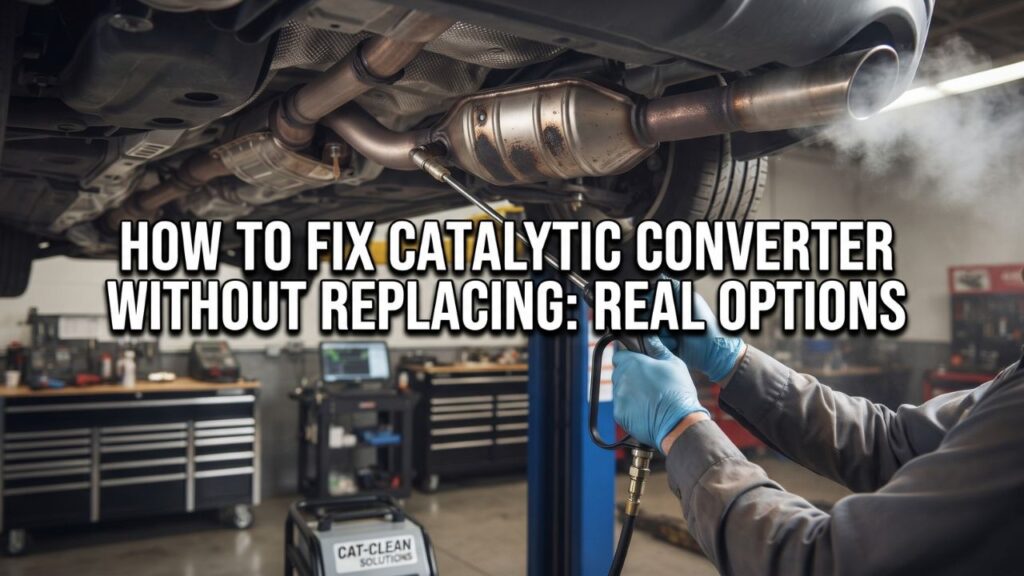
Sometimes, but only when the converter itself is not structurally damaged.
A catalytic converter contains a ceramic or metallic substrate with thousands of small passages coated with catalyst material. Exhaust flows through those passages while the catalyst promotes chemical reactions that reduce harmful emissions.
If the passages are lightly coated with hydrocarbon soot, restoring correct engine operation may let normal exhaust heat burn some of that buildup away. A fuel-system or catalyst-cleaning additive may also help in mild cases.
If the substrate has melted, broken apart, collapsed, or lost too much catalyst activity, cleaning cannot restore it. AutoZone notes that a truly clogged converter is commonly at the point where replacement is needed, while light contamination may respond to cleaning attempts.
The same rule applies to catalyst-efficiency faults. A P0420 or P0430 code can come from a converter that has chemically deteriorated even though it is not clogged. In that case, cleaning may do nothing.
How to Fix Catalytic Converter Without Replacing: Steps to Try
The safest path is diagnosis first, then repair the cause, then try cleaning only if the converter appears mildly fouled and physically intact.
1. Scan the Vehicle Before Doing Anything Else
Read all stored, pending, and permanent OBD-II trouble codes.
Do not focus only on P0420 or P0430. Look for codes related to:
- Cylinder misfires
- Rich or lean fuel mixtures
- Mass airflow
- Oxygen sensors
- Fuel pressure
- Coolant temperature
- Intake leaks
- Exhaust leaks
A catalyst code may be a consequence of another problem.
Walker specifically recommends correcting other engine and emissions codes before replacing a converter because misfire, airflow, rich/lean, and oxygen-sensor faults can affect converter operation or monitoring.
2. Repair Misfires and Fuel-Control Problems First
A severe misfire can send raw fuel and oxygen into the exhaust.
That fuel can burn inside the converter, driving temperature high enough to damage the catalyst. A rich mixture can create the same type of heat load.
Check the cause of any active misfire before trying to clean the converter. Possible faults include spark plugs, ignition coils, injectors, compression loss, intake leaks, or fuel-control problems.
If the engine is still misfiring, do not try to “burn out” the converter with a hard drive. More unburned fuel can make the damage worse.
3. Check and Repair Exhaust Leaks
Leaks ahead of or near the oxygen sensors can introduce outside air into the exhaust stream.
That extra oxygen can distort sensor readings and make the control module judge catalyst activity incorrectly.
Inspect:
- Exhaust manifold
- Manifold gasket
- Flex pipe
- Flanges
- Welds
- Oxygen-sensor bungs
- Pipes ahead of the converter
Repair confirmed leaks, clear the codes, and complete the required drive cycle before deciding the converter has failed.
4. Check Oxygen-Sensor Operation
A bad oxygen sensor can create misleading catalyst-monitor data, but replacing sensors blindly is not a proper repair.
The upstream sensor should react to mixture changes, while the downstream sensor is used partly to monitor catalyst behavior on many OBD-II vehicles.
A scan tool with live data can show how the sensors behave once the engine and converter are fully warm.
If a sensor is slow, biased, damaged, or has a heater fault, repair that problem first. If both sensors are working correctly and the downstream pattern still shows poor catalyst activity, the converter itself becomes more suspect.
5. Try a Cleaner Only for Mild Fouling
A fuel-tank catalytic-converter cleaner may be worth trying when:
- The engine runs smoothly
- There is no severe exhaust restriction
- The converter does not rattle
- The substrate is not known to be melted
- Oil or coolant consumption is under control
- Symptoms suggest light carbon or hydrocarbon buildup
CarParts notes that mild fouling may sometimes respond to fuel-tank additives or normal hot operation after the root engine problem is corrected, while melted, cracked, heavily clogged, or silicone-contaminated substrates cannot be restored this way.
Follow the product label exactly. Do not overdose the fuel tank or mix several cleaning chemicals together.
6. Complete a Normal Drive Cycle After Repairs
Once the engine fault is fixed and any approved cleaner has been used, drive the vehicle normally long enough for the engine and converter to reach full operating temperature.
A normal highway trip can provide sustained exhaust temperature that may burn off light hydrocarbon soot after the rich or misfire condition has been corrected.
Stay within traffic laws and the vehicle’s normal operating limits. High-speed runs, repeated full-throttle acceleration, or intentional overheating are not required.
7. Clear Codes Only After the Repair, Then Retest
Clearing a code without fixing the cause only resets the warning temporarily.
After repairs, clear codes with a scan tool if the service procedure calls for it, then allow the catalyst monitor to run through the required drive cycle.
If P0420 or P0430 returns after the engine, sensors, fuel control, exhaust system, and converter flow have been verified, the catalyst may have lost too much activity to remain in service.
Key Takeaway: Diagnose first, repair misfires and fuel-control faults, seal exhaust leaks, verify sensor operation, and try cleaner only for mild fouling. Structural converter damage cannot be cleaned away.
What Catalytic Converter Problems Can Be Fixed Without Replacement?
Some faults that look like converter failure are actually problems elsewhere in the engine or exhaust system.
Light Hydrocarbon or Soot Buildup
A converter lightly coated with soot may improve after the rich-running cause is repaired.
CarParts notes that hydrocarbon soot can sometimes burn out after the air-fuel problem is corrected, and a cleaner may be worth trying before replacement in a mild case.
This does not apply to a honeycomb that is physically blocked by melted ceramic or broken pieces.
Exhaust Leaks That Trigger Catalyst Codes
An exhaust leak can alter oxygen-sensor readings.
Fixing the leak may stop a catalyst code from returning if the converter is still working properly.
A leak should be repaired before making a final judgment about converter efficiency.
Sensor or Wiring Faults
Damaged oxygen-sensor wiring, a failed heater circuit, a slow sensor, or poor electrical connections can confuse catalyst monitoring.
Replacing or repairing the failed sensor circuit can resolve the code if the converter itself remains healthy.
Engine Problems That Make the Converter Look Bad
Misfires, rich mixtures, intake problems, and fuel-control faults can interfere with catalyst monitoring.
Fixing those faults may restore normal catalyst-monitor operation when the converter has not suffered permanent damage.
Key Takeaway: Light soot, exhaust leaks, sensor faults, and engine-control problems may be repairable without replacing the converter. Melted or broken catalyst material is a different problem.
How to Tell If Cleaning Is Worth Trying
Cleaning makes sense only when the converter is still physically sound and exhaust flow is not badly restricted.
Signs of Mild Fouling
A cleaning attempt may be reasonable if:
- The check-engine light is the main symptom
- The engine still accelerates normally
- There is no rattling from the converter
- The converter is not glowing
- There is no major loss of high-RPM power
- Oil and coolant consumption are normal
- Misfires and rich-running faults have been repaired
This is the type of case where light contamination is plausible.
Signs the Converter Is Too Damaged to Clean
Replacement becomes far more likely if the vehicle has:
- Severe loss of acceleration
- Engine that will not rev freely
- High exhaust backpressure
- Rattling ceramic inside the converter
- Visible heat damage
- A glowing converter
- Repeated stalling from exhaust restriction
- Melted or collapsed substrate
- Persistent catalyst codes after all other faults are fixed
A chemical cleaner cannot repair those conditions.
Backpressure Testing Gives a Better Answer
An exhaust backpressure test is one of the stronger ways to check for physical restriction.
A technician can measure exhaust pressure through an oxygen-sensor port or another test point. High pressure upstream of the converter supports a blockage.
The exact acceptable pressure varies by vehicle, so use service information for the engine being tested.
A vacuum gauge can also provide clues. With some exhaust restrictions, manifold vacuum falls while engine speed is held above idle.
Key Takeaway: Try cleaning only when symptoms are mild and flow appears normal. Severe power loss, rattling, high backpressure, or visible heat damage points toward replacement.
Do Catalytic Converter Cleaners Really Work?
They can help in a narrow set of conditions.
A cleaner is not a repair for every P0420 code and is not a chemical rebuild for a failed catalyst.
What a Cleaner May Do
A fuel-tank cleaner may reduce light carbon or hydrocarbon deposits in the fuel and exhaust path.
If the converter is mildly fouled and the engine is now running correctly, that may improve gas flow or catalyst exposure enough for the monitor to pass again.
AutoZone and CarParts both describe cleaners as a possible option for early or mild buildup, while warning that heavily clogged units commonly need replacement.
What a Cleaner Cannot Do
No bottle can:
- Rebuild melted ceramic
- Reattach broken substrate
- Replace missing catalyst coating
- Repair impact damage
- Fix cracked converter housing
- Correct severe oil consumption
- Seal a coolant leak
- Repair a misfire
- Restore a converter that has chemically aged beyond its operating threshold
If the converter is damaged in one of these ways, the cleaner may change nothing.
Avoid Aggressive DIY Cleaning Methods
Pressure washing, soaking the converter in harsh chemicals, drilling holes through the substrate, or striking the housing can damage the catalyst and create an exhaust restriction or emissions-law problem.
If a converter has to be removed for diagnosis, inspect it according to the service procedure rather than experimenting with chemicals that were not approved for the part.
Key Takeaway: Cleaner is worth considering only for light deposits on an intact converter. It cannot reverse melting, cracking, catalyst loss, or severe physical blockage.
Problems to Fix Before Blaming the Catalytic Converter
Converter failure is often the end result of another fault.
Walker states that converters normally fail because of an underlying problem and groups common failures into overheating, contamination, and structural damage.
Misfire
A persistent misfire can quickly overheat the converter.
Diagnose ignition, fuel, and mechanical causes instead of continuing to drive with a flashing check-engine light.
Rich Fuel Mixture
Too much fuel raises hydrocarbon levels in the exhaust.
Possible causes include a leaking injector, excessive fuel pressure, sensor error, or ignition problem.
Correct the rich condition before judging the converter.
Oil Burning
Oil entering the combustion chambers can coat the catalyst.
Check crankcase ventilation, valve seals, piston rings, turbocharger condition, and other likely oil-entry paths.
Cleaning the converter will not solve heavy oil consumption.
Coolant Entering the Exhaust
A leaking head gasket, cracked cylinder head, or another internal coolant leak can poison the catalyst.
If coolant disappears without an external leak, diagnose the engine before spending money on converter treatment.
Exhaust Leaks
Leaks can affect oxygen-sensor readings and catalyst-monitor results.
Repair them before replacing sensors or the converter.
Key Takeaway: Misfires, rich operation, oil burning, coolant leaks, and exhaust leaks can cause or imitate converter failure. Repair those faults first.
What Not to Do to a Bad Catalytic Converter
Trying to avoid replacement can lead to shortcuts that create larger problems.
Do Not Gut, Drill, or Straight-Pipe the Converter
Removing the catalyst material or replacing the converter with a straight pipe is not a legal repair for a street vehicle subject to U.S. federal emissions rules.
EPA guidance identifies replacing a catalyst with a straight pipe as emissions tampering.
It can also trigger warning lights, emissions-test failure, exhaust odor, and calibration problems.
Do Not Replace Oxygen Sensors Without Testing Them
P0420 or P0430 is not an instruction to install new oxygen sensors.
A sensor should be replaced because testing shows it is faulty.
RepairPal lists oxygen-sensor replacement as a common P0420 misdiagnosis and notes that misfires or converter deterioration may be the actual cause.
Do Not Keep Driving a Severely Restricted Converter
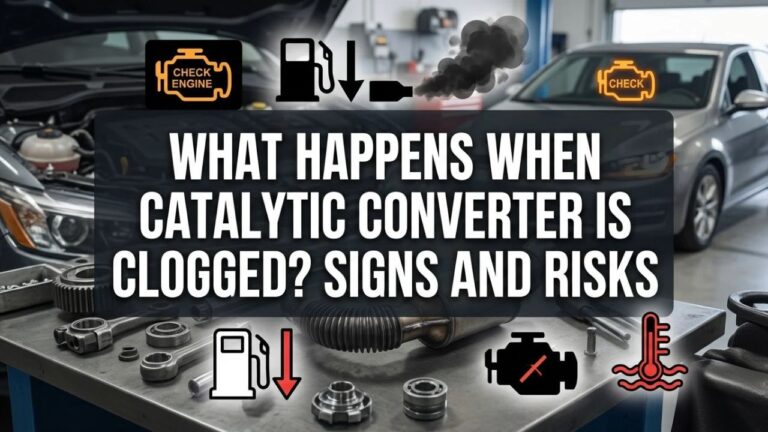
A badly clogged converter can cause major power loss, hard starting, stalling, and very high exhaust heat.
Continuing to drive can add stress to the engine and exhaust system.
If the vehicle cannot accelerate safely, stalls repeatedly, or the converter glows, stop driving and arrange diagnosis.
Key Takeaway: Do not gut the converter, drill through it, straight-pipe it, replace sensors by guesswork, or keep driving with severe restriction.
When Catalytic Converter Replacement Is Unavoidable
There is a point where fixing everything around the converter is not enough.
The Substrate Is Melted or Collapsed
Extreme heat can melt the honeycomb and close its small exhaust passages.
Once the ceramic has changed shape, no cleaner can return it to the original structure.
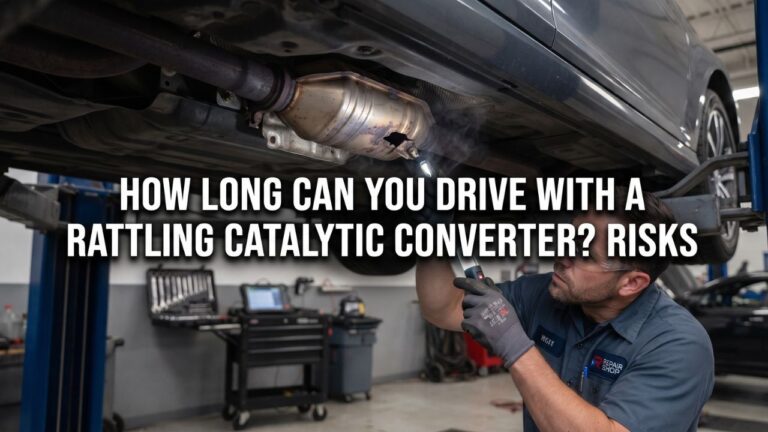
The Converter Rattles Internally
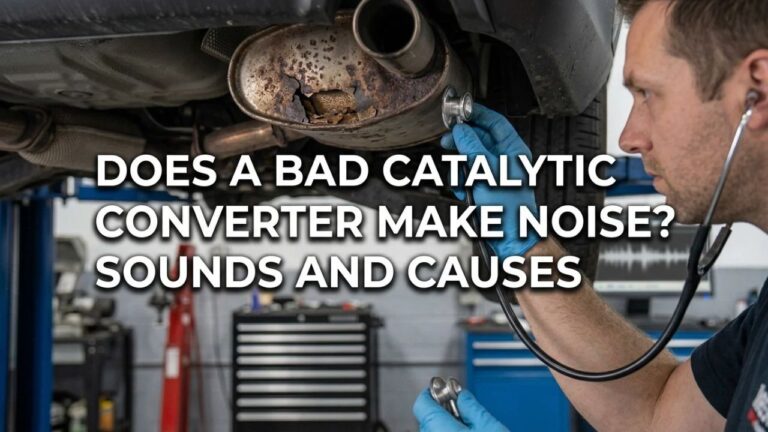
A metallic or ceramic rattle can indicate a broken substrate.
Loose pieces may move inside the housing and intermittently block exhaust flow.
The converter should be inspected and replaced if internal structural damage is confirmed.
Backpressure Remains High
If pressure testing confirms a restriction and other exhaust components are clear, the converter itself is physically blocked.
Cleaning products are unlikely to correct a severe mechanical obstruction.
Catalyst Efficiency Stays Below Threshold
If the engine runs correctly, there are no leaks, sensor operation is verified, flow is acceptable, and P0420 or P0430 continues to return, the catalyst coating may simply be worn out.
A cleaner cannot restore catalyst material that has chemically deteriorated.
The Converter Is Cracked or Impact-Damaged
A damaged shell, cracked substrate, or severe road impact can destroy the internal structure.
Physical damage calls for replacement rather than chemical treatment.
Key Takeaway: Replacement is the sound repair for melted, collapsed, broken, rattling, impact-damaged, severely restricted, or chemically exhausted converters.
Conclusion
The realistic answer to how to fix catalytic converter without replacing is to fix the problem around the converter when the catalyst itself is still intact. Repair misfires, rich fuel mixtures, exhaust leaks, sensor faults, oil consumption, or coolant contamination before deciding the converter has failed.
Light hydrocarbon buildup may respond to normal hot operation after the engine fault is corrected, and a properly used fuel-tank cleaner may help a mildly fouled unit. Those methods cannot repair melted ceramic, broken substrate, severe blockage, or depleted catalyst material.
I would confirm the fault with scan data and a restriction test before spending heavily on cleaners or parts. If the converter is still within the federal 8-year/80,000-mile emissions warranty window, check warranty coverage before authorizing paid repairs.
If diagnosis shows structural damage or persistent catalyst failure after every upstream fault is repaired, replacement is not avoidable. The money is better spent on the correct converter than on repeated additives or risky DIY methods that cannot restore a damaged substrate.
FAQs About Fixing a Catalytic Converter Without Replacing It
Can a Catalytic Converter Really Be Repaired?
A converter can sometimes recover if the problem is light soot buildup or a fault outside the converter, such as an exhaust leak, sensor problem, misfire, or fuel-control issue.
A melted, cracked, broken, or chemically worn-out catalyst cannot be rebuilt in place. That type of failure requires replacement.
Will Catalytic Converter Cleaner Fix P0420?
It may help only if mild contamination is reducing catalyst activity and the engine has no remaining fault.
P0420 can also come from an aged catalyst, exhaust leak, sensor problem, misfire, or fuel-control issue. If the substrate or catalyst coating is permanently damaged, cleaner will not stop the code from returning.
Can Driving on the Highway Clean a Catalytic Converter?
A normal highway drive after correcting a rich-running or misfire condition may provide enough sustained heat to burn off light hydrocarbon soot.
It will not repair melted ceramic or severe blockage. Do not drive aggressively to force the converter hotter, and do not continue driving if the converter glows or the engine is misfiring.
Can You Unclog a Catalytic Converter Without Removing It?
A mildly fouled converter may improve after the engine fault is fixed and a suitable fuel additive is used according to its instructions.
A severely clogged converter with high backpressure, melted substrate, or loose internal pieces cannot be reliably opened this way and generally needs replacement.
Can a Bad Oxygen Sensor Make It Look Like the Catalytic Converter Is Bad?
Yes. Slow or incorrect oxygen-sensor data can interfere with catalyst monitoring and may contribute to a catalyst-related code.
Test the sensors and wiring before replacing them. A catalyst code by itself does not prove the oxygen sensor is bad or that the converter needs replacement.
Is It Safe to Wash a Catalytic Converter With Water?
Pressure washing or soaking the converter is not a method I recommend. The substrate is fragile, and aggressive cleaning can damage the internal structure or leave residue behind.
If severe clogging is suspected, diagnose flow and internal condition instead of trying to pressure-clean the catalyst.
Can You Remove the Inside of a Catalytic Converter Instead of Replacing It?
No. Gutting the converter or replacing it with a straight pipe is emissions tampering under U.S. federal rules for street vehicles that require the catalyst.
It can also create check-engine lights, emissions-test failure, and exhaust problems.
When Should I Stop Trying to Clean the Converter?
Stop trying to clean it if the converter rattles, glows, has confirmed high backpressure, causes severe power loss, or has melted or collapsed substrate.
At that point, diagnosis should focus on the cause of the damage and selecting the correct replacement converter.