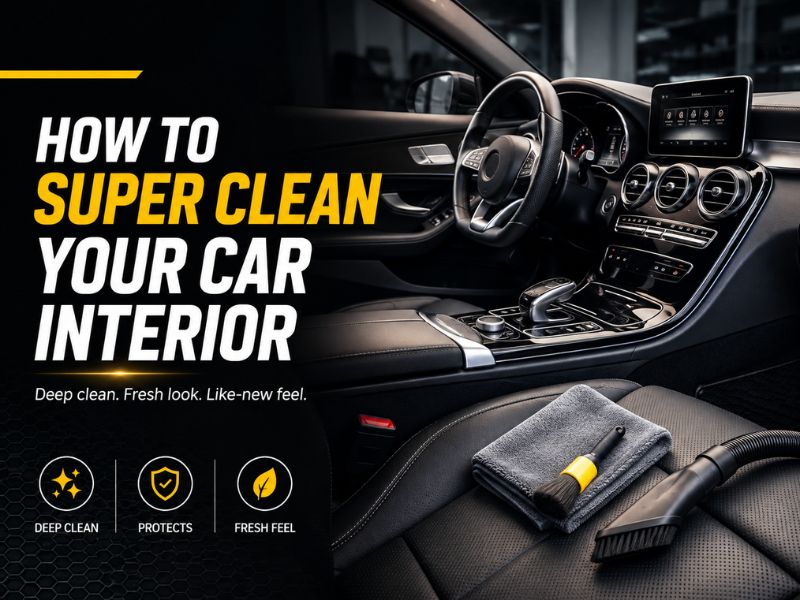
How to Super Clean Your Car Interior: Dashboard, Console, Door Panels & Glass
To super clean your car interior, remove loose dust first, vacuum tight areas, use material-safe cleaners on the dashboard, center console, and door panels, clean buttons and vents carefully, and finish the glass with a residue-free method that leaves no streaks.
A truly clean interior is not just one that looks shiny. The best result is an interior that feels clean, looks close to its factory finish, and has no greasy residue, streaky glass, or cleaner trapped around switches and seams.
The easiest way to get there is to work from dry cleaning to controlled wet cleaning. Remove loose dust first, use small amounts of product, match the cleaner to the surface, and save the glass for near the end.
What Does It Mean to Super Clean a Car Interior?
A deep interior detail should remove everyday contamination such as:
- Dust
- Fingerprints
- Body oils
- Food residue
- Sticky spills
- Dirt in seams
- Road grime transferred by hands
- Smudges on glass
At the same time, it should avoid creating new problems such as:
- Greasy dashboard shine
- Cleaner residue
- Wet switches
- Scratched trim
- Streaky glass
- Slippery steering surfaces
A properly cleaned interior should look natural and uniform rather than heavily coated.
What You Need to Clean the Interior
You do not need a huge detailing collection.
A practical setup includes:
- Vacuum cleaner
- Crevice attachment
- Microfiber towels
- Soft detailing brushes
- Interior-safe cleaner
- Automotive glass cleaner
- Small spray bottle
Optional tools may include:
- Soft vacuum brush
- Blower or compressed air
- Plastic or vinyl protectant
- Screen-safe cloth
- Small detailing swabs for tight areas
Use separate towels for dirty trim and glass. A microfiber towel carrying oily interior dressing can create frustrating windshield streaks.
Start by Removing Trash and Loose Items
Before cleaning any surface, empty the cabin.
Remove:
- Trash
- Cups and bottles
- Charging cables
- Coins
- Receipts
- Items in door pockets
- Loose objects in the center console
Clear cup holders and storage compartments as much as possible.
This gives you access to the entire surface and prevents you from moving dirt around objects instead of actually removing it.
Step 1: Dust the Interior Before Using Cleaner
Start high and work downward.
Dust areas such as:
- Dashboard
- Instrument-cluster hood
- Air vents
- Center stack
- Upper door panels
- Console
- Switch panels
Use a clean microfiber towel or soft detailing brush.
For seams and textured surfaces, brush the dust toward a nearby vacuum nozzle.
This is more effective than spraying cleaner directly onto a dusty dashboard.
Removing loose material first prevents the cleaner from turning dry dust into muddy residue.
Step 2: Vacuum Crevices and Tight Areas
The most visible surfaces are not always the dirtiest.
Use a crevice tool around:
- Cup holders
- Shifter
- Center-console seams
- Door pockets
- Seat edges
- Lower dashboard areas
- Around controls
A soft brush can loosen debris that the vacuum cannot reach by itself.
Try to pull dirt outward instead of pushing crumbs deeper into gaps.
How to Super Clean the Dashboard
Dashboards can contain several materials in one area.
You may encounter:
- Hard plastic
- Soft-touch plastic
- Vinyl
- Leather trim
- Painted pieces
- Screens
- Piano-black panels
Do not assume one product should be sprayed over everything.
Apply Cleaner to the Towel
Rather than soaking the dashboard, apply a small amount of cleaner to your microfiber towel.
This gives you more control and reduces overspray on:
- Windshield
- Screens
- Buttons
- Speaker openings
Wipe in Small Sections
Clean one area at a time.
Use light pressure and turn the towel frequently.
If the dashboard has a textured grain, use a soft brush to loosen dirt from the low points.
Buff the Surface Dry
Finish with a clean towel.
This removes excess cleaner and helps restore a natural appearance.
How to Clean a Sticky Dashboard
A sticky dashboard does not always mean it is simply dirty.
Possible causes include:
- Old dressing buildup
- Body oils
- Cleaner residue
- Material or coating deterioration
Start with a mild interior-safe cleaner and several light passes.
Do not immediately use aggressive solvents.
If the surface remains sticky after proper cleaning, the dashboard coating itself may be degrading. In that case, more scrubbing may make the problem worse rather than better.
Should You Make the Dashboard Shiny?
Usually, less shine is better.
An overly glossy dashboard can:
- Reflect in the windshield
- Attract dust
- Feel greasy
- Create an uneven appearance
A clean matte or satin finish generally looks closer to the original interior.
If you use a protectant, choose one that is appropriate for the material and apply it lightly.
More product does not mean more protection.
How to Clean the Center Console
The center console collects a mixture of dust, fingerprints, crumbs, and spills.
Focus on:
- Shifter area
- Cup holders
- Storage compartments
- Parking-brake area
- Drive-mode controls
- Console edges
Start by vacuuming.
Then brush dirt out of seams and wipe the surface with a lightly dampened microfiber towel.
Work carefully around electrical controls.
How to Clean Cup Holders
Cup holders frequently contain:
- Dried soda
- Coffee residue
- Dust
- Food crumbs
- Sticky syrup
If removable inserts are designed to come out, remove them and clean them separately.
Otherwise:
- Vacuum loose debris.
- Apply cleaner to a towel or small brush.
- Work around the edges.
- Wipe away loosened contamination.
- Dry the area completely.
Avoid pouring cleaner directly into cup holders that contain switches, lighting, or electrical components.
How to Clean Buttons, Switches, and Controls
Buttons and switches need minimal moisture.
Avoid directly spraying:
- Window controls
- Climate-control panels
- Steering-wheel buttons
- Drive selectors
- Electronic parking-brake switches
Instead, apply cleaner to a microfiber towel or small detailing brush.
Use just enough moisture to loosen dirt, then wipe the surface dry.
Clean around electronics rather than soaking them.
How to Clean Infotainment Screens
Screens should be treated more delicately than regular interior plastic.
Start with a clean, soft microfiber towel.
If needed, use a cleaner that is compatible with the specific display.
Avoid automatically using strong glass cleaner on:
- Touchscreens
- Anti-glare coatings
- Instrument displays
Also avoid spraying liquid directly onto screen edges, where it may run behind the panel.
Use light pressure because dust trapped under the towel can create fine scratches.
How to Super Clean Door Panels
Door panels often combine several materials.
One panel may contain:
- Plastic
- Vinyl
- Leather
- Fabric
- Painted trim
- Electronic switches
Start with the upper areas and work downward.
Vacuum Door Pockets
Remove loose debris before adding cleaner.
Clean the Main Panel
Apply cleaner to a microfiber towel.
For textured plastic, use a soft brush to work dirt out of the grain.
Focus on the Armrest and Pull Handle
These areas collect heavy contamination from hands, including:
- Skin oils
- Sunscreen
- Lotion
- Makeup
- General grime
Several gentle passes are better than one aggressive scrub.
Clean Switch Panels Carefully
Use minimal liquid and dry them promptly.
How to Clean Interior Plastic and Vinyl
Use a cleaner compatible with automotive trim.
Avoid unnecessarily strong:
- Degreasers
- Solvents
- Abrasive cleaners
For textured plastic, a soft brush helps reach dirt that towels pass over.
After cleaning, buff with a clean microfiber towel to remove remaining residue.
If you apply protectant afterward, use a thin layer.
How to Clean Piano-Black Trim Without Scratching It
Glossy black trim is one of the easiest interior surfaces to scratch.
The main rule is to remove loose particles before wiping.
Do not aggressively rub dusty piano-black trim with a dry towel.
Instead:
- Blow or gently lift away loose dust.
- Use a very clean, soft microfiber towel.
- Apply minimal pressure.
- Use a compatible cleaner if needed.
- Buff gently.
Avoid stiff detailing brushes on highly polished surfaces.
Fine scratches show very easily under sunlight.
How to Clean Air Vents
Air vents trap dust along the louvers and inside their edges.
Use:
- Soft detailing brush
- Vacuum
- Lightly damp microfiber towel
Brush loose dirt outward while vacuuming nearby.
Avoid spraying large amounts of cleaner deep into the vent.
Some vents contain:
- Electronic controls
- Motors
- Sensors
There is rarely a need to flood them for routine cleaning.
How to Clean the Steering Wheel
The steering wheel is one of the highest-contact surfaces in the vehicle.
It can accumulate:
- Skin oils
- Sweat
- Lotion
- Dirt
- Food residue
Use a cleaner appropriate for the wheel material and work gently around seams and controls.
Wipe thoroughly until the surface feels clean and dry.
Avoid leaving protectant or dressing that makes the wheel slippery.
A clean steering wheel should provide normal grip, not a greasy finish.
How to Clean Interior Glass Without Streaks
Interior glass often takes more effort than exterior glass because it develops oily film.
Sources include:
- Fingerprints
- Smoke
- Vape residue
- Dashboard product overspray
- Interior material off-gassing
Use Clean Towels
Have at least one towel for the cleaning pass and another for the final dry buff.
Apply Cleaner Lightly
On the windshield, applying cleaner to the towel can reduce overspray onto the dashboard.
Work Methodically
Clean one section at a time.
A useful trick is to wipe the inside of the glass in one direction and the outside in another. If you later see a streak, its direction helps identify which side needs more work.
Buff Dry
This final step is essential.
A second clean, dry towel removes the small amount of moisture and residue left behind by the first pass.
How to Clean the Inside of the Windshield
The windshield can be awkward because of its angle.
For better access:
- Move the seats if needed
- Lower or adjust the steering wheel when appropriate
- Work from both driver and passenger sides
- Reach the lower corners carefully
A dirty towel is one of the biggest causes of windshield streaking.
If the glass has a greasy film, one cleaning pass may loosen it without fully removing it. Follow with a fresh towel and a second light pass.
Can You Use Household Glass Cleaner in a Car?
Some products may be suitable, but compatibility matters.
Be cautious around:
- Aftermarket window tint
- Coated glass
- Screens
- Sensitive interior trim
A cleaner intended for automotive glass and compatible with any installed tint is the simpler choice.
Do not assume every household glass formula is appropriate for every automotive surface.
How to Clean Tinted Windows
If the vehicle has aftermarket window film, use a tint-compatible cleaning method.
Avoid:
- Abrasive pads
- Harsh chemicals
- Aggressive scraping
- Picking at film edges
Factory privacy glass and aftermarket tint film are not always constructed the same way, so a cautious approach is best.
How to Remove Greasy Film From Interior Glass
If normal glass cleaning still leaves haze, there may be an oily film on the surface.
Use a multi-pass approach:
- First pass to break up contamination.
- Fresh towel to remove loosened film.
- Light final cleaning pass.
- Dry buff with a separate towel.
Using the same saturated towel repeatedly may simply redistribute the film.
Should You Use Interior Protectant?
A suitable protectant can be useful on compatible:
- Plastic
- Vinyl
- Rubber trim
However, avoid applying it to surfaces where slickness or residue is undesirable.
Do not apply heavy dressing to:
- Steering wheel
- Pedals
- Touchscreens
- Glass
- Controls that need secure grip
Use a light, even application and buff away excess.
What About Airbag Areas?
Modern interiors can contain airbags in:
- Steering wheel
- Dashboard
- Door or seat areas
- Pillars
For routine cleaning:
- Do not soak seams
- Do not force cleaner into panel gaps
- Do not disassemble airbag-covered trim
- Avoid thick coatings over deployment areas
Use controlled wiping and follow any vehicle-specific guidance.
Best Order for a Full Interior Detail
A simple sequence helps prevent redoing work.
- Remove trash and loose items.
- Dust upper surfaces.
- Vacuum crevices.
- Clean the dashboard.
- Clean vents and controls.
- Clean the center console.
- Clean door panels.
- Clean the steering wheel.
- Apply protectant where appropriate.
- Clean interior glass.
- Perform a final inspection.
Cleaning the glass near the end helps remove any overspray created while working on nearby trim.
Common Interior-Cleaning Mistakes
Avoid these errors:
- Using one cleaner on every surface
- Spraying electronics directly
- Flooding cup holders
- Making the dashboard excessively glossy
- Scrubbing glossy trim while dusty
- Using dirty microfiber towels
- Leaving cleaner in seams
- Using aggressive chemicals on screens
- Making the steering wheel slippery
- Cleaning glass with oily towels
- Applying heavy dressing before finishing the windshield
- Skipping the final dry buff
Frequently Asked Questions
How Do You Super Clean a Car Interior?
Remove loose debris, dust and vacuum first, clean each material with a compatible product, use minimal moisture around electronics, and finish with streak-free glass cleaning.
What Is the Best Way to Clean a Dashboard?
Dust first, apply an interior-safe cleaner to a microfiber towel, wipe in small sections, agitate textured areas gently, and buff the surface dry.
How Do You Clean a Sticky Dashboard?
Start with a mild material-safe cleaner and several light passes. If stickiness remains, the surface coating itself may be deteriorating.
Should You Use Protectant on a Dashboard?
You can use a compatible protectant, but apply it lightly and avoid creating excessive gloss or greasy residue.
How Do You Clean a Center Console?
Vacuum crumbs first, brush seams, wipe with a lightly dampened towel, and use minimal liquid around switches and controls.
How Do You Clean Car Buttons Without Damaging Them?
Apply cleaner to a towel or soft brush instead of spraying the buttons directly, then wipe them dry.
How Do You Clean Piano-Black Interior Trim?
Remove loose dust first, use a very soft clean microfiber towel, and wipe with minimal pressure.
How Do You Clean Car Air Vents?
Use a soft brush and vacuum to remove dust, then wipe the louvers lightly. Avoid spraying cleaner deep inside.
How Do You Clean Door Panels?
Vacuum pockets, dust the panel, clean each material with a compatible product, and pay extra attention to armrests, handles, and switch areas.
How Do You Clean the Inside of a Windshield Without Streaks?
Use a clean glass towel, apply a small amount of cleaner, remove the film, and finish with a second completely dry microfiber towel.
Can You Use Household Glass Cleaner on Car Windows?
Some products may be suitable, but verify compatibility with automotive glass, aftermarket tint, and nearby surfaces.
What Should You Avoid Cleaning With Interior Dressing?
Avoid dressing steering wheels, pedals, glass, touchscreens, and other surfaces where slippery or oily residue can create problems.
Conclusion
To super clean your car interior, start by removing loose dust and debris, clean each dashboard, console, and door-panel material with a compatible product, use minimal moisture around electronics, and finish the glass with clean towels and a residue-free technique.
The best workflow starts dry. Dust and vacuum first so loose contamination does not become a muddy film once cleaner is added.
When working on the dashboard, console, and doors, use controlled amounts of cleaner rather than spraying every surface heavily. This protects switches, screens, seams, and sensitive trim while making residue easier to remove.
Pay special attention to glossy trim, touchscreens, and steering surfaces. Piano-black panels scratch easily, displays can have delicate coatings, and the steering wheel should never be left slick.
Save the interior glass for near the end. Use dedicated clean towels, break up any oily film, and finish with a dry buff to remove the streaks that are often only visible after the sun hits the windshield.
A truly clean interior is not the one with the most product on it. The best result comes from removing dust and grime carefully, preserving each surface’s original finish, keeping electronics dry, and leaving the glass clear, streak-free, and residue-free.