How Long Can You Drive With a Bad Throttle Body? Risks Explained
There is no guaranteed safe distance you can drive with a bad throttle body. A car with minor carbon buildup may continue running normally for some time, but a failing electronic throttle body can cause sudden power loss, stalling, or poor accelerator response. If your vehicle shows these symptoms, stop driving and arrange repairs.
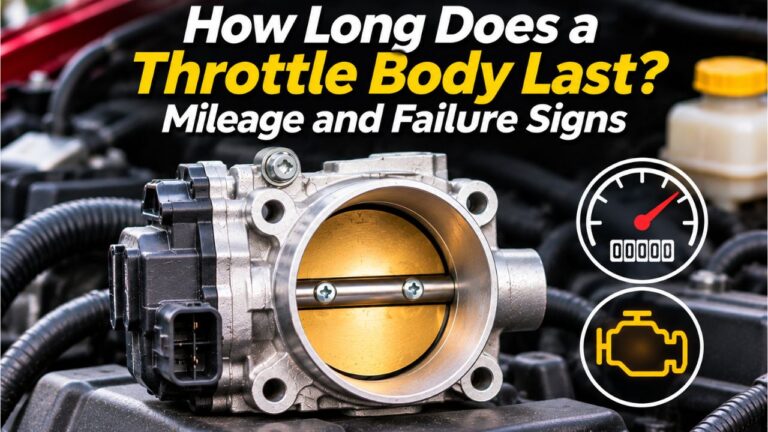
A throttle body controls how much air enters a gasoline engine. When its internal valve sticks or its electronic controls malfunction, the engine may struggle to idle smoothly or respond when you press the gas pedal.
Some drivers notice nothing more than occasional hesitation. Others experience reduced-power mode, unexpected stalling, or a vehicle that barely accelerates. These problems can become dangerous when merging onto a highway or crossing a busy intersection.
The tricky part is that throttle body symptoms don’t always mean the entire assembly has failed. Carbon deposits, damaged wiring, or a faulty sensor may be responsible.
This guide explains how long you might be able to drive, which symptoms require immediate attention, what happens if you keep driving, and how to decide between cleaning, repair, and replacement.
How Long Can You Drive With a Bad Throttle Body?

You cannot predict how many miles a bad throttle body will last. A dirty throttle body may cause mild idle problems without immediately stopping the engine, while a failing electronic throttle actuator can suddenly limit acceleration or cause stalling. The symptoms determine the risk, not the distance already driven.
Here’s a practical way to judge the situation.
| Throttle Body Condition | Driving Risk | Recommended Action |
| Light carbon buildup, no symptoms | Low immediate concern | Schedule inspection or approved cleaning |
| Occasional rough idle | Possible stalling | Diagnose promptly; avoid unnecessary driving |
| Repeated hesitation | Unreliable acceleration | Stop using the vehicle until diagnosed |
| Reduced-power mode | Limited engine response | Pull over safely and arrange assistance |
| Unexpected engine stalling | High safety risk | Stop driving and arrange towing |
| Accelerator stops responding | High safety risk | Pull over immediately when safe |
Can You Drive a Few Miles With a Bad Throttle Body?
A short drive isn’t automatically safe just because the repair shop is nearby.
Suppose your car idles roughly but accelerates normally and has never stalled. The immediate risk may be lower than that of a car that repeatedly loses throttle response.
Still, another fault could be causing the symptoms, so diagnosis matters.
If the car stalls, surges unpredictably, or enters reduced-power mode, don’t attempt to drive it to the repair shop. Arrange a tow instead.
Why There’s No Safe Mileage Limit
Throttle body failure doesn’t follow a predictable countdown.
An electronic motor may work intermittently before failing completely. A damaged connector might lose contact when the engine vibrates or heats up.
For example, a car could drive normally for several miles and suddenly lose acceleration at the next intersection.
The rule of thumb is simple: If you can’t trust the engine to respond normally, don’t trust it in traffic.
What Happens If You Keep Driving With a Bad Throttle Body?
Continuing to drive with a faulty throttle body can lead to rough running, engine stalling, weak acceleration, or reduced-power mode. These problems may make it difficult to maintain speed or respond safely to traffic. A throttle body fault doesn’t always damage the engine directly, but ignoring its symptoms creates avoidable risks.
Sudden Engine Stalling
The throttle body regulates airflow entering the intake manifold.
When it fails to control airflow correctly, the engine may struggle to maintain idle speed.
In certain situations, the engine can stall.
For example, your vehicle may run normally while moving but shut off when you slow down for a stoplight.
That can become dangerous in heavy traffic.
If the engine stops while you’re moving, steering and braking remain mechanically possible on conventional vehicles, but power assistance may become reduced or unavailable depending on the design.
You may need considerably more effort to steer or brake.
Reduced Engine Power
Many modern vehicles use electronic throttle control, where an electric motor moves the throttle plate based on commands from the engine computer.
When the computer detects certain throttle faults, it may activate a protective operating mode.
This is commonly called limp mode or reduced-power mode.
The vehicle might still move, but acceleration and engine speed can be limited.
For example, a car that normally accelerates comfortably onto a highway may struggle to build speed.
This can make merging, climbing hills, or crossing intersections unsafe.
Delayed or Unpredictable Accelerator Response
A malfunctioning throttle actuator or position sensor may cause delayed acceleration, hesitation, or inconsistent engine response.
The gas pedal may feel normal even though the engine doesn’t react as expected.
A defective accelerator pedal sensor can produce similar symptoms.
You shouldn’t assume the throttle body is responsible without testing.
Technical information about throttle position sensor faults and their symptoms explains how incorrect position signals can affect acceleration, starting, and engine operation.
What Warning Signs Mean You Should Stop Driving?
Stop driving when a suspected throttle body problem causes repeated stalling, significant power loss, unpredictable acceleration, or an accelerator that fails to respond. These symptoms can interfere with vehicle control in traffic. Warning lights add useful information, but the way the car behaves should guide your immediate safety decision.
Symptoms That Need Immediate Attention
| Warning Sign | What It Means for Driving |
| Engine stalls while moving | You may lose power assistance and engine power |
| Accelerator stops responding | You cannot reliably control acceleration |
| Severe hesitation | Vehicle may not accelerate when needed |
| Reduced-power warning | Engine output may be restricted |
| Repeated stalling at intersections | Vehicle may stop in an unsafe location |
| Flashing check-engine light | Possible severe misfire requiring prompt attention |
| Engine speed rises unexpectedly | Requires immediate safe control of the vehicle |
Not every warning light means the throttle body has failed.
A flashing check-engine light commonly indicates a serious misfire that could damage the catalytic converter. That’s a separate concern that also calls for stopping as soon as it’s safe.
What About a Steady Check-Engine Light?
A steady check-engine light doesn’t automatically mean you must stop in the middle of the road.
But it does mean the vehicle has detected a problem that needs diagnosis.
If the engine runs smoothly, responds normally, and shows no other warning signs, arranging an inspection promptly may be reasonable.
Don’t use the light alone to judge safety.
A vehicle with dangerous hesitation may need towing even if no warning light appears.
What Should You Do If the Throttle Body Fails While Driving?
If your vehicle suddenly loses throttle response, stay focused on maintaining control and moving out of traffic. Ease off the accelerator, steer toward a safe stopping place, and brake smoothly. Avoid trying to restore power through repeated acceleration attempts. Once stopped, arrange assistance rather than continuing the trip.
Follow these steps.
Step 1: Stay Calm and Maintain Steering Control
Keep both hands on the steering wheel.
Avoid sudden steering movements or hard braking unless needed to avoid a collision.
If the engine has stalled, the steering may feel heavier because power assistance can be reduced.
Continue steering toward a safe place.
Step 2: Ease Off the Accelerator
Release the gas pedal.
If engine response has become weak or delayed, repeatedly pressing the pedal may not help.
If the vehicle accelerates unexpectedly without your command, apply firm, steady braking and shift into Neutral when appropriate to separate engine power from the wheels.
Don’t switch the ignition off while moving unless the vehicle’s emergency procedure specifically calls for it.
Step 3: Turn On Your Hazard Lights
Activate the hazard warning lights when appropriate.
Use your turn signal as needed and look for a safe shoulder, parking area, or nearby exit.
Avoid stopping in a travel lane if you can safely move farther away from traffic.
Step 4: Pull Over and Stop
Brake smoothly and bring the vehicle to a controlled stop.
If the engine stalls, brake assistance may be limited after any remaining reserve is used, so the pedal may require more force.
Once parked, set the parking brake and turn off the engine.
Step 5: Request Roadside Assistance
Don’t restart the vehicle repeatedly and attempt to continue driving through the same dangerous fault.
Call for roadside assistance or towing.
The roadside breakdown safety guidance explains how to choose a safer stopping location and seek help after a breakdown.
If you’re on a narrow highway shoulder, follow local emergency guidance and avoid standing close to moving traffic.
Is It Safe to Drive to a Mechanic With a Bad Throttle Body?
Driving to a mechanic may be reasonable only when the vehicle operates normally and the problem is minor, such as suspected light deposits without stalling or power loss. If throttle response is unreliable, towing is the safer option. A short distance doesn’t remove the risk of failure in traffic.
When a Short Drive May Be Reasonable
Consider professional advice before moving the vehicle if:
- The engine starts and idles normally.
- Acceleration remains smooth and predictable.
- The engine hasn’t stalled.
- No reduced-power warning is active.
- No serious warning lights or other unsafe symptoms are present.
For example, a car with visible light deposits found during routine maintenance may not need towing when it has no operating problems.
That’s different from driving a car with a confirmed failing actuator.
When You Should Arrange Towing
Choose towing when the vehicle has repeated stalling, unexpected power loss, or an accelerator that doesn’t respond correctly.
Also arrange assistance if the car can’t safely maintain the speed of surrounding traffic.
Don’t take a chance on a highway because the shop is only a few miles away.
Safety should determine the transportation method, not the distance to the repair shop.
Can Cleaning a Throttle Body Make It Safe to Drive Again?
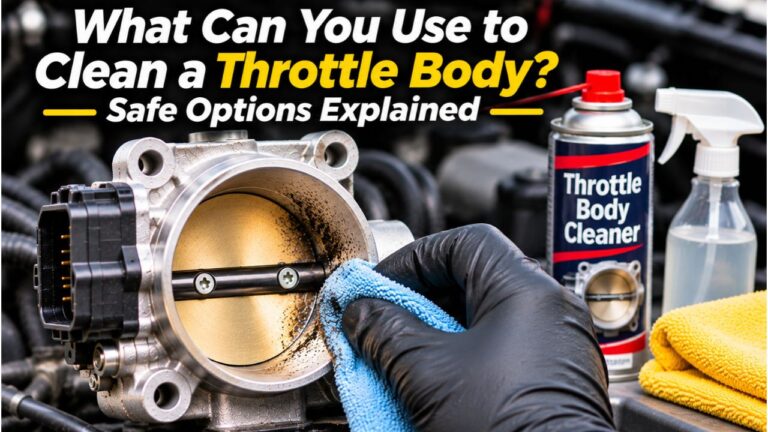
Cleaning can help when heavy carbon deposits interfere with throttle plate movement or idle airflow. It cannot repair a failed electronic motor, damaged position sensor, or broken wiring. The vehicle should operate normally after the correct repair and any required relearn procedure before you rely on it in traffic.
When Cleaning May Help
Carbon and oily residue can build up around the throttle plate.
This buildup may contribute to an uneven idle, sticking near the closed position, or occasional stalling.
For example, an engine that slowly developed rough idling over several months may have deposits affecting airflow.
If inspection confirms this problem, manufacturer-approved cleaning may restore normal operation.
When Cleaning Won’t Solve the Problem
Cleaning usually won’t fix:
- A failed throttle actuator motor
- Damaged internal position sensors
- Broken electrical connectors or wiring
- Worn or broken internal gears
- Mechanical damage to the throttle plate assembly
Some electronic throttle bodies also require an idle relearn, a procedure that lets the engine computer adjust its idle airflow settings after service.
Don’t force an electronic throttle plate open or spray cleaner into electrical components unless the vehicle’s service procedure permits it.
A quick cleaning isn’t proof the problem has been fixed. Confirm normal operation before driving.
How Can You Confirm the Throttle Body Is Actually Bad?
A faulty throttle body should be diagnosed through trouble codes, visual inspection, electrical checks, and live diagnostic data. Rough idling or hesitation alone isn’t enough to confirm failure because vacuum leaks, fuel problems, and pedal sensors can produce similar symptoms. Testing helps separate a dirty throttle body from a defective assembly.
Read the Diagnostic Trouble Codes
An OBD-II scanner reads fault codes stored by the engine computer.
Several codes can relate to electronic throttle operation.
| Trouble Code | General Meaning |
| P2101 | Throttle actuator control motor range or performance |
| P2111 | Throttle actuator control system stuck open |
| P2112 | Throttle actuator control system stuck closed |
| P2119 | Throttle actuator control range or performance |
| P2135 | Throttle/pedal position sensor voltage correlation |
These codes identify areas that need investigation.
They don’t automatically prove the throttle body must be replaced.
For example, damaged wiring or a loose connector may cause an actuator-related fault even when the throttle assembly works.
Inspect the Intake and Electrical Connections
With the engine off and cool, check accessible parts.
Look for cracked air intake hoses, loose clamps, damaged connectors, corrosion, or visible contamination.
A vacuum leak can create rough idling that resembles throttle body trouble.
You may end up back to square one if you replace the throttle body without checking for air leaks.
Have the Electronic Controls Tested
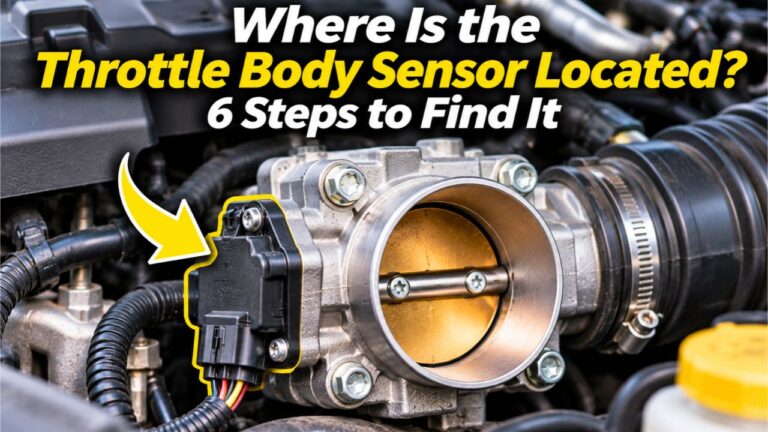
A technician can use a compatible diagnostic scanner to compare commanded throttle position with actual throttle position.
Additional tests may check sensor signals, electrical power, wiring continuity, and actuator response.
The proper test depends on the vehicle’s design.
Never place your fingers inside an electronic throttle body while it is powered. The plate may move unexpectedly.
If you’re unfamiliar with electrical diagnosis, have a qualified mechanic carry out these tests.
Can Driving With a Bad Throttle Body Damage Other Car Parts?
A malfunctioning throttle body doesn’t automatically destroy the engine, but continued abnormal operation can contribute to other problems. Persistent misfires may damage the catalytic converter, and stalling can create dangerous traffic situations. The actual consequences depend on the fault and whether other engine systems are affected.
Engine and Emissions System Concerns
Incorrect airflow control can disrupt normal engine operation.
Some throttle faults cause rough idle or stalling, while others trigger reduced-power mode.
A throttle problem that contributes to repeated combustion misfires may create additional concerns.
For example, persistent misfires can allow unburned fuel into the exhaust, potentially overheating the catalytic converter.
The guidance on flashing engine warning lights explains why severe misfires require prompt attention.
Not every throttle fault causes misfires or exhaust damage.
Repair Costs Can Increase if You Ignore the Cause
The cost of a throttle body repair depends on the vehicle, labor, and whether cleaning, wiring repair, or complete replacement is required.
Ignoring a damaged connector or intake leak may leave the engine running poorly even after a new throttle body is installed.
In a pinch, the least expensive repair is often the correct diagnosis before replacing parts.
Fix the actual fault instead of assuming every throttle-related symptom requires a new assembly.
Frequently Asked Questions
Driving with a bad throttle body raises questions about mileage, sudden stalling, limp mode, and long-term damage. The safest decision depends on how the vehicle behaves rather than how long the fault has existed. These answers address the most common concerns drivers face before scheduling repairs.
Can You Drive 10 Miles With a Bad Throttle Body?
There is no guarantee that driving 10 miles with a bad throttle body is safe. A vehicle with mild deposits may operate normally, but an electronic throttle fault can suddenly cause power loss or stalling. If acceleration is unreliable or the engine stalls, arrange towing rather than attempting the trip.
Can a Bad Throttle Body Shut Off Your Car While Driving?
Yes. A malfunctioning throttle body can contribute to engine stalling if it fails to regulate airflow correctly. Stalling may happen while slowing down or stopping, although other conditions can also cause it. If the engine shuts off unexpectedly, move to a safe location and arrange professional diagnosis.
Can You Drive in Limp Mode With a Bad Throttle Body?
A vehicle may still move in limp mode, but it may have severely limited acceleration and engine speed. This can make merging, crossing intersections, and maintaining traffic speed unsafe. Limp mode is a protective response, not permission to continue normal driving. Pull over safely and arrange assistance.
Will a Bad Throttle Body Fix Itself After Restarting?
No. Restarting may temporarily clear a reduced-power condition or make an intermittent symptom disappear, but it doesn’t repair a damaged actuator, sensor, or connection. The problem can return without warning. Diagnose the stored codes and underlying fault rather than treating a successful restart as a permanent fix.
Can a Bad Throttle Body Damage the Engine?
A bad throttle body doesn’t necessarily cause direct engine damage. Its main effects may include rough idle, stalling, and poor acceleration. If the fault contributes to persistent misfires or other abnormal operating conditions, further damage may be possible. Prompt diagnosis helps reduce risks and unnecessary repair costs.
How Long Does a Throttle Body Last Before Replacement?
Throttle bodies don’t have a universal replacement mileage. Many operate for years without major problems, while others develop deposits, electrical faults, or mechanical wear earlier. Service life depends on component design and operating conditions. Replace the throttle body when diagnosis confirms a failure that cleaning or a related repair cannot correct.
Make the Driving Decision Based on Safety, Not Mileage
There’s no reliable way to predict how long a bad throttle body will keep working. A car with mild deposits may continue operating normally, while one with a failing electronic throttle actuator can lose power or stall without much warning.
The main concern is your ability to control the vehicle safely.
If your engine repeatedly stalls, acceleration becomes unpredictable, or reduced-power mode activates, don’t continue driving. Pull over safely and arrange assistance.
If the problem is limited to a minor idle complaint, arrange diagnosis before it becomes more serious.
Remember that a dirty throttle body and a failed electronic assembly aren’t the same problem. Cleaning may help with deposits, but damaged motors, sensors, and wiring require proper repair.
Avoid replacing parts based only on symptoms.
Your next step is to check for stored trouble codes and have the throttle system inspected before driving again. When vehicle control is affected, towing is the safer choice.