Will a Car Run Without an EVAP Purge Valve? Problems & Risks
Yes, a car can often run without a functioning EVAP purge valve, but how well it runs depends on what has actually happened to the valve and its hoses.
If the purge valve is simply electrically disconnected while the vacuum lines remain sealed, the engine may start and drive almost normally, although the Check Engine Light will usually come on and the EVAP system will stop working correctly. If the purge valve is physically removed and the intake-manifold vacuum hose is left open, however, the engine may develop a major vacuum leak, causing rough idle, high or unstable idle, lean running, stalling, or difficulty starting.
So, while the answer to will a car run without an EVAP purge valve is generally yes, removing or bypassing the valve is not a proper long-term repair. The purge valve is part of the vehicle’s emissions system and helps the engine safely burn gasoline vapors stored in the charcoal canister.
This guide explains what happens in each situation, whether you can drive the vehicle, what symptoms to expect, and why simply removing the purge valve can create additional problems.
Will a Car Run Without an EVAP Purge Valve?
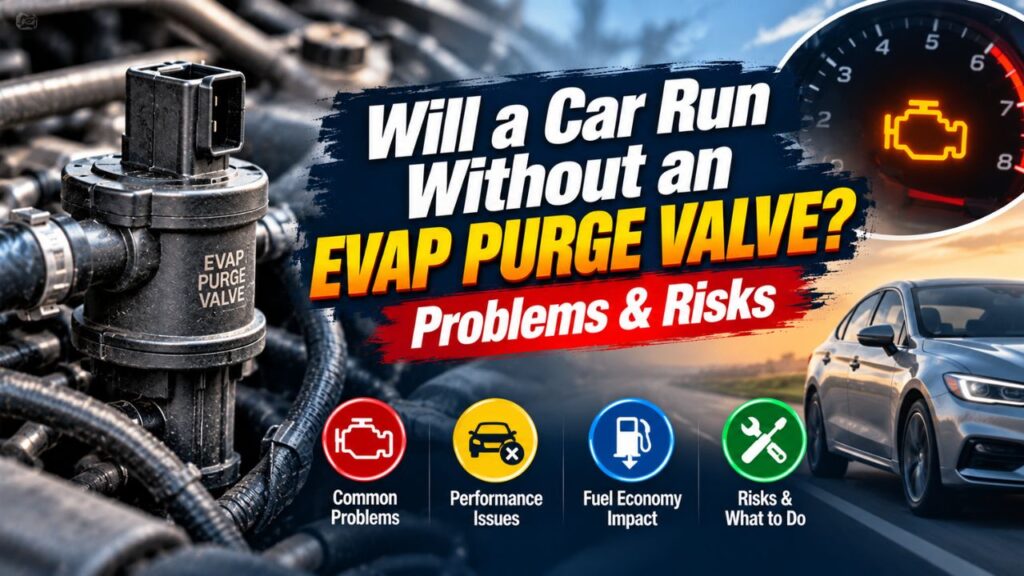
Yes, a car will often run without an EVAP purge valve, but the result depends on whether the intake system remains sealed.
There are three very different situations:
| Situation | Will Engine Run? | Likely Result |
| Purge valve electrically unplugged | Usually yes | Check Engine Light, EVAP codes, no commanded purge |
| Purge valve removed but intake hose left open | Possibly, but poorly | Vacuum leak, rough idle, lean condition, stalling |
| Purge valve removed and intake port sealed | Usually runs better | EVAP system disabled, warning light, emissions problems |
The engine control module normally controls the purge valve so fuel vapors enter the intake only under suitable operating conditions. EVAP diagnostic systems also monitor whether commanded purge actually occurs and can set a fault when the purge system does not respond correctly.
The important point is that “running without a purge valve” can mean several different things.
An unplugged electrical connector is very different from leaving an open vacuum hose connected directly to the intake manifold.
What Does the EVAP Purge Valve Actually Do?
The EVAP purge valve, also called a canister purge valve or purge solenoid, controls the movement of gasoline vapor from the charcoal canister into the engine.
Gasoline naturally produces vapor inside the fuel tank.
Rather than allowing those hydrocarbons to escape directly into the atmosphere, the evaporative emission control system (EVAP) captures them in a charcoal canister.
When operating conditions are appropriate, the engine control module opens the purge valve.
Engine vacuum then draws stored fuel vapors from the charcoal canister into the intake manifold, where they are burned during normal combustion.
The valve is generally closed when purge is not requested and is electronically controlled to regulate vapor flow. Toyota training information, for example, describes ECM-controlled purge valves as normally closed and duty-cycle controlled.
That controlled operation matters because unrestricted flow at the wrong time can disturb the engine’s air-fuel mixture.
What Happens If You Unplug the EVAP Purge Valve?
If you disconnect only the electrical connector from the purge valve and leave all hoses connected, many vehicles will continue to start and drive.
The valve will normally stay in its default position, which on many systems is closed.
That means intake vacuum remains contained, so there may be no major vacuum leak.
However, the engine computer can detect that the electrical circuit or purge function is not operating properly.
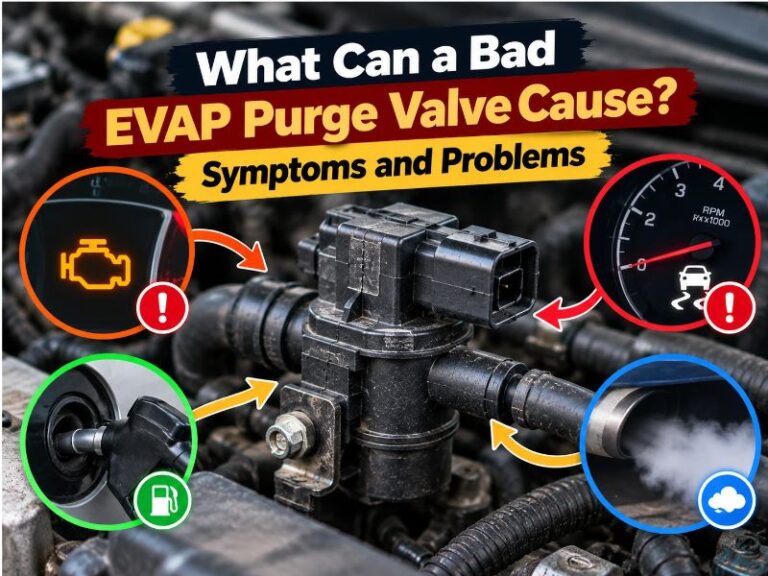
You can expect one or more of the following:
- Check Engine Light
- EVAP diagnostic trouble code
- Failed emissions test or inspection
- No normal purging of the charcoal canister
- Possible fuel vapor odor over time
- Reduced EVAP system performance
A purge-related circuit problem may produce a code such as P0443, although exact codes depend on the vehicle.
An EVAP monitor may also detect that expected tank vacuum is not developing when the purge valve is commanded open. Manufacturer diagnostic strategies specifically monitor purge-flow failures and can illuminate the malfunction indicator lamp when the valve does not operate as commanded.
Will the Engine Run Normally With the Connector Unplugged?
It may feel completely normal at first.
The purge system is not continuously required to keep the engine running. Fuel injection, ignition, airflow measurement, and other systems continue functioning independently.
However, the vehicle should still be repaired because the purge valve is part of the emissions-control strategy.
What Happens If You Completely Remove the Purge Valve?
Completely removing the purge valve is more likely to cause drivability problems because one side of the valve is commonly connected to intake manifold vacuum.
If the intake-side hose or port is left open, outside air can enter the intake without being properly controlled.
This creates a vacuum leak.
At idle, manifold vacuum is relatively high, so even a small open hose can have a noticeable effect.
Possible symptoms include:
- Rough idle
- High idle
- Surging idle
- Lean air-fuel mixture
- Stalling
- Hesitation
- Poor acceleration
- Lean trouble codes
- Difficulty starting
- Check Engine Light
The engine computer may compensate for a relatively small leak by adding fuel.
A larger leak can exceed the amount of correction the computer can provide.
Why Does an Open Purge Hose Cause a Vacuum Leak?
The intake manifold normally operates under vacuum during many engine conditions.
The purge valve acts as a controlled gate between the intake manifold and EVAP system.
When the valve is closed, intake vacuum should not freely pull through the EVAP line.
Remove the valve and leave that intake connection open, and air can enter continuously.
That air may bypass the normal airflow measurement system.
The engine then receives more air than expected, causing the mixture to become too lean.
This is why removing the purge valve is very different from simply disconnecting its electrical connector.
Will a Car Start Without an EVAP Purge Valve?
It often will, but not always.
If the intake side is properly sealed, the engine will usually have a much better chance of starting and idling normally.
If the intake-side purge hose is left open, the vacuum leak may cause:
- Extended cranking
- Rough starting
- Immediate stalling
- Very high idle
- Lean running
Engine design matters as well.
A small vacuum leak that one engine can compensate for may cause significant problems on another.
What Happens If You Cap the Purge Valve Vacuum Line?
Capping the intake-manifold connection can prevent the major vacuum leak that would otherwise occur if the purge valve were removed.
The engine may then appear to run normally.
However, capping the line does not repair the EVAP system.
The engine computer can still detect that expected purge flow is missing.
You may experience:
- Check Engine Light
- EVAP trouble codes
- Failed emissions inspection
- Charcoal canister not being purged normally
- Increased evaporative emissions
So sealing the port may prevent a vacuum leak during diagnosis, but it should not be treated as a permanent replacement for a properly functioning purge valve.
Can You Bypass the EVAP Purge Valve?
Mechanically bypassing the purge valve is generally a bad idea.
Connecting the charcoal canister directly to intake manifold vacuum can allow uncontrolled purge flow whenever manifold vacuum is present.
That can produce symptoms similar to a purge valve stuck open.
The engine control module is designed to determine when and how much vapor should enter the intake.
Bypassing that control can interfere with fuel mixture and EVAP diagnostics.
It may also cause problems such as:
- Rough idle
- Hard starting
- Excessive purge flow
- Fuel vapor being pulled into the engine at the wrong time
- EVAP trouble codes
A better solution is to test the valve and replace it if it has failed.
What If the Purge Valve Is Stuck Closed?
A purge valve stuck closed creates a different situation.
The engine will usually still run because the valve being closed does not normally create an intake vacuum leak.
Instead, the EVAP system cannot purge stored fuel vapors from the charcoal canister correctly.
Possible results include:
- Check Engine Light
- EVAP diagnostic code
- Failed emissions test
- Increased evaporative emissions
- Charcoal canister becoming heavily loaded with vapor over time
Vehicle diagnostic systems specifically test whether fuel-tank vacuum changes when the purge valve is commanded open. If expected purge does not occur, a fault can be recorded.
Does a Stuck-Closed Purge Valve Usually Cause Rough Idle?
Usually not by itself.
Because the valve remains closed, it generally does not introduce a vacuum leak into the intake.
If your engine has a severe rough idle and the purge valve is genuinely stuck closed, another problem may also be present.
What If the Purge Valve Is Stuck Open?
A stuck-open purge valve is often more noticeable from a drivability standpoint.
If the valve remains open when the computer wants it closed, intake manifold vacuum can continuously act on the EVAP system.
General Motors diagnostic documentation describes monitoring for unintended purge flow by checking whether tank vacuum develops when purge is supposed to be off.
Possible symptoms of a stuck-open purge valve include:
- Rough idle
- Difficult starting
- Hard start after refueling
- Stalling
- Check Engine Light
- Excessive fuel vapor entering the engine
- Unstable air-fuel mixture
Hard starting after filling the fuel tank is a particularly common pattern associated with excessive purge flow.
After refueling, the EVAP system can contain a high concentration of fuel vapor. If a stuck-open purge valve immediately allows those vapors into the intake, the engine may temporarily receive a mixture that is difficult to ignite correctly.
Can a Bad Purge Valve Cause a Car Not to Start?
Yes, under some conditions.
A completely failed purge valve does not always cause a no-start condition, but a valve stuck wide open can contribute to difficult starting.
The problem is especially noticeable after refueling.
The engine may:
- Crank longer than usual
- Start and immediately stall
- Run roughly for several seconds
- Require throttle input to stay running
However, many other faults can cause the same symptoms.
Do not replace the purge valve solely because the engine will not start.
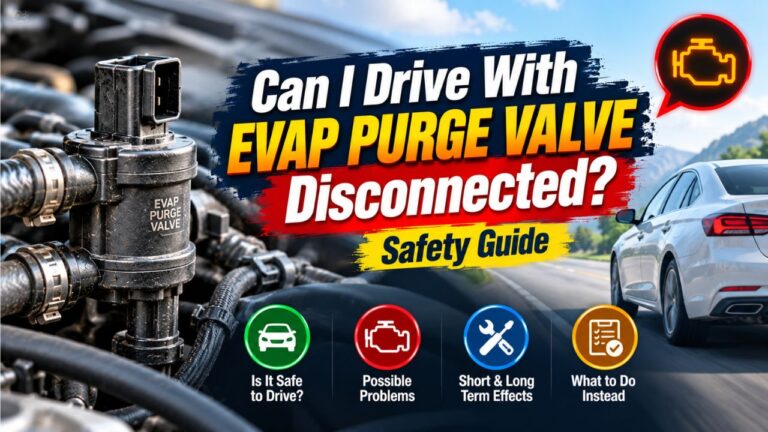
Can You Drive Without an EVAP Purge Valve?
A vehicle may physically be drivable, but driving without a functioning purge valve is not recommended as a long-term solution.
If the engine runs smoothly and the intake system remains sealed, you might be able to drive a short distance for diagnosis or repair.
However, continuing indefinitely can leave the EVAP system disabled.
Potential consequences include:
- Persistent Check Engine Light
- Emissions-test failure
- Increased hydrocarbon emissions
- Fuel vapor odor
- Charcoal canister problems
- Additional EVAP codes
If removing the valve creates a vacuum leak, continued driving is even less advisable.
A significant vacuum leak can cause unstable idle and poor engine performance.
Will Driving Without the Purge Valve Damage the Engine?
Simply losing purge operation does not normally cause immediate catastrophic engine damage.
The bigger concern is how the system has been left after the valve is removed.
If the intake port is open and causes a substantial lean condition, prolonged poor combustion can lead to:
- Misfires
- Poor performance
- Excessive heat in some operating conditions
- Increased stress on emissions components
If the intake is sealed but the EVAP system is disabled, the immediate engine risk is lower, but the emissions system is still not functioning correctly.
Repairing the system is preferable to continuing to drive with a bypass.
Will the Check Engine Light Come On?
Very likely.
Modern OBD-II vehicles monitor the EVAP system closely.
The engine control module may check:
- Purge valve electrical circuit
- Purge flow
- Fuel tank pressure
- System leaks
- Unwanted purge flow
- Vent operation
Possible codes vary by vehicle and failure type.
Examples may include:
- P0441 – Incorrect EVAP purge flow
- P0443 – Purge control valve circuit problem
- P0455 – Large EVAP leak
- P0496 – EVAP flow when purge should not occur on applicable vehicles
Not every vehicle uses the same diagnostic strategy, so the actual code should be diagnosed rather than interpreted by description alone.
Will a Car Pass Emissions Without a Purge Valve?
Usually not if the emissions inspection checks the OBD-II system and the EVAP monitor has detected a fault.
A missing or disabled purge valve may:
- Illuminate the Check Engine Light
- Store an emissions-related diagnostic code
- Prevent the EVAP readiness monitor from completing
Inspection requirements differ by U.S. state and locality, but an active emissions-related malfunction or incomplete readiness monitors can cause inspection problems where OBD testing is required.
Replacing the faulty component and completing the required drive cycles is generally the correct approach.
Does the Purge Valve Affect Fuel Economy?
A valve that is simply stuck closed may have little noticeable immediate effect on fuel economy.
A valve stuck open can have a greater effect because it may disturb the engine’s air-fuel mixture.
The engine computer may compensate by changing fuel delivery.
Fuel economy symptoms are not reliable enough to diagnose a purge valve by themselves, however.
Poor gas mileage can come from dozens of other causes.
Will the Fuel Tank Build Pressure Without a Purge Valve?
Not necessarily.
The purge valve is only one component of the EVAP system.
Most EVAP systems also contain a vent valve that allows controlled movement of fresh air through the charcoal canister.
Therefore, a missing or stuck-closed purge valve does not automatically mean the fuel tank becomes completely sealed.
However, if other EVAP components are also blocked or malfunctioning, abnormal tank pressure or vacuum can develop.
Do not assume opening or bypassing the purge line is a safe way to “vent” the tank.
The complete EVAP system should be diagnosed properly.
What Should You Do If Your Purge Valve Is Missing?
If you purchased a vehicle and discover that the purge valve has been removed or bypassed, restoring the factory-style system is usually the best solution.
Check:
- Purge valve
- Electrical connector
- Intake vacuum hose
- Canister vapor hose
- Charcoal canister
- Vent valve
- Damaged or capped lines
Do not assume the previous owner removed the valve because it was unnecessary.
It may have been bypassed to hide another EVAP problem.
Replacing the correct purge valve is normally much better than leaving hoses capped or connected together.
How Can You Tell Whether the Purge Valve Is Actually Bad?
Diagnosis depends on the vehicle, but a technician may check:
Electrical Operation
The valve can be tested to determine whether its solenoid responds when commanded.
Vacuum Sealing
A normally closed purge valve should generally block unwanted flow when it is not energized.
If air passes freely through a valve that should be closed, it may be leaking internally.
Scan-Tool Commands
A bidirectional scan tool can command the purge valve open and closed while the technician monitors:
- Fuel trim
- Tank pressure
- Engine response
- Purge percentage
Diagnostic Trouble Codes
Codes can point toward the purge circuit or EVAP system, but a code does not automatically prove the valve itself is defective.
Damaged wiring, hoses, connectors, or other EVAP components can produce similar faults.
Is It Better to Replace or Bypass a Bad Purge Valve?
Replacement is the better repair.
A purge valve is designed to provide controlled vapor flow while remaining sealed when purge is not requested.
A bypass cannot reproduce that control.
Replacing the valve restores:
- Normal EVAP operation
- Controlled fuel-vapor flow
- Correct engine-computer control
- Proper emissions monitoring
- Better chance of clearing related trouble codes
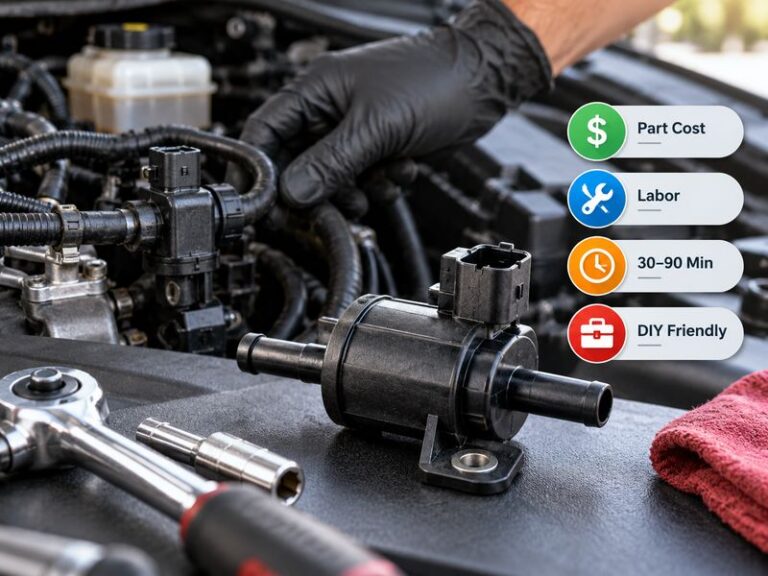
Make sure the replacement valve is correct for the vehicle’s year, make, model, engine, and emissions configuration.
FAQs About Will a Car Run Without an EVAP Purge Valve
Can I start my car with the purge valve unplugged?
Usually, yes.
If only the electrical connector is unplugged and the valve remains installed with all vacuum hoses sealed, many engines will start and run. The Check Engine Light will likely appear because the computer can detect the fault.
What happens if I remove the purge valve and leave the hose open?
If the hose connects to intake manifold vacuum, leaving it open can create a vacuum leak.
The engine may run rough, idle too high, stall, hesitate, or develop lean-condition codes.
Can I cap off the purge valve?
Capping the intake connection can stop a vacuum leak during diagnosis, but it disables normal EVAP purge operation.
It should not be considered a permanent repair.
Will a car run with the purge valve stuck closed?
Usually, yes.
A stuck-closed valve often affects the EVAP system more than immediate engine operation. The Check Engine Light may come on because the engine computer cannot produce the expected purge flow.
Will a car run with the purge valve stuck open?
It may run, but a stuck-open purge valve is more likely to cause drivability problems such as rough idle, stalling, or hard starting after refueling.
Can a bad purge valve cause a no-start?
Yes, especially if the valve is stuck open and allows excessive fuel vapor into the intake.
However, a no-start condition has many possible causes, so the purge valve should be tested rather than replaced based only on that symptom.
Can I drive with the EVAP purge valve disconnected?
The vehicle may remain drivable if it runs normally, but leaving the purge valve disconnected is not recommended.
The EVAP system will not operate correctly, and the vehicle may illuminate the Check Engine Light or fail an emissions inspection.
Does the purge valve affect the engine or only emissions?
It primarily controls evaporative emissions, but it is connected to the engine’s intake system.
A leaking or stuck-open valve can affect the air-fuel mixture, idle quality, starting, and overall drivability.
Conclusion
So, will a car run without an EVAP purge valve? In many cases, yes, but the condition of the hoses and intake system makes a major difference.
An electrically disconnected valve may allow the engine to run almost normally while triggering an EVAP fault. A completely removed valve with an open intake hose can create a serious vacuum leak, causing rough idle, lean running, stalling, or starting problems. Capping the intake port may make the engine run better, but it still leaves the EVAP system disabled.
The best solution is to diagnose why the purge valve failed and restore the system with the correct valve and hose connections rather than permanently bypassing it.