Can You Drive With a Bad PCV Valve? How Long Is Safe?
A bad PCV valve does not always make a vehicle undrivable immediately. In many cases, the engine may continue starting and running even when the Positive Crankcase Ventilation (PCV) system is not working correctly. That can make the problem easy to ignore, especially if the only early symptoms are a rough idle, minor oil consumption, or a check engine light.
Yes, you can sometimes drive with a bad PCV valve for a short period, but you should repair it as soon as reasonably possible. How long you can drive depends on whether the valve is stuck open, stuck closed, leaking, or causing excessive crankcase pressure or oil consumption.
A PCV valve stuck open often behaves like a vacuum leak and may cause rough idle, lean running, or misfires. A blocked or stuck-closed valve can be more concerning because pressure may build inside the crankcase and push oil through gaskets and seals. Some PCV failures can also allow excessive oil vapor into the intake, increasing oil consumption and potentially causing smoke or deposits.
There is therefore no safe universal mileage such as “500 miles” or “1,000 miles” that applies to every bad PCV valve. A mildly faulty valve may cause only drivability issues for a while, while a severely blocked PCV system can create oil leaks or other problems much sooner.
This guide explains can you drive with a bad PCV valve, how long you may be able to continue driving, what determines the risk, and which symptoms mean the vehicle should be repaired immediately.
Can You Drive With a Bad PCV Valve?

Yes, a vehicle can often still be driven with a bad PCV valve, but continuing to drive is not recommended as a long-term solution.
The PCV system removes blow-by gases from the engine crankcase and routes them into the intake so they can be burned. It also helps regulate crankcase pressure.
When the PCV valve fails, the effects depend on how it fails.
A valve stuck open may allow too much airflow into the intake and cause a vacuum leak. A valve stuck closed may prevent gases from escaping the crankcase. A damaged PCV diaphragm or hose can create similar problems.
The vehicle may still move normally, but the engine could be operating under conditions that increase oil consumption, emissions, sludge formation, or pressure on gaskets and seals.
How Long Can You Drive With a Bad PCV Valve?
There is no exact distance or number of days that is safe for every vehicle.
If you are wondering how long can you drive with a bad PCV valve, the practical answer is: only as long as necessary to arrange a repair, provided the engine is not showing severe symptoms.
A mildly failing PCV valve may allow the vehicle to operate for days or even longer without obvious immediate damage. That does not mean it is safe to deliberately continue driving for weeks or months.
The urgency depends on symptoms.
If the engine is running reasonably well and there is no major oil leak, smoke, severe misfire, or abnormal crankcase pressure, a short drive to a repair shop may be reasonable.
If the engine is pushing out oil, smoking heavily, running extremely rough, or showing signs of excessive crankcase pressure, continued driving can make the problem worse.
Why a Bad PCV Valve Can Become a Problem
The PCV valve is part of the engine’s crankcase ventilation system.
During combustion, a small amount of gas escapes past the piston rings into the crankcase. This is called blow-by.
These gases can contain moisture, fuel vapor, combustion byproducts, and oil mist.
The PCV system removes those vapors and sends them back into the engine intake.
When the PCV valve is not regulating airflow correctly, the crankcase may experience either too much vacuum or too much pressure.
Both conditions can cause problems.
Driving With a PCV Valve Stuck Open
A PCV valve stuck open allows excessive airflow from the crankcase into the intake manifold.
This can act like a vacuum leak.
The engine may run lean because additional air enters the intake without being properly accounted for.
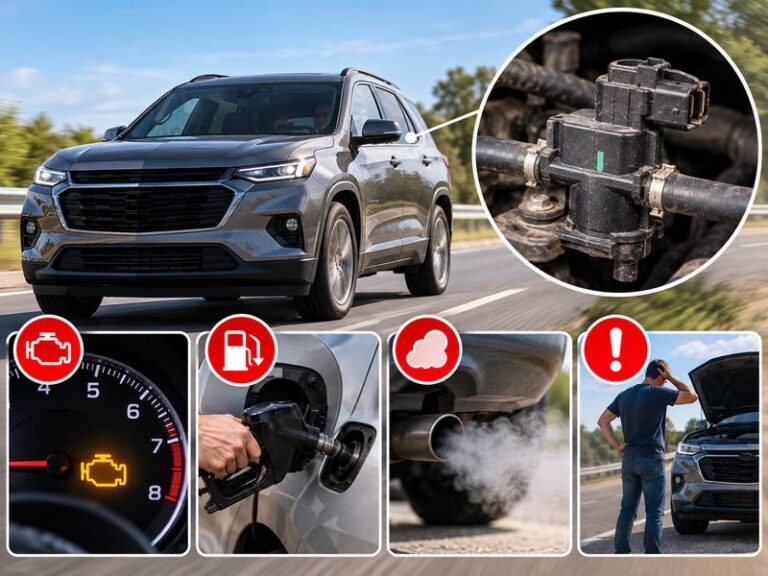
Possible symptoms include rough idle, high idle, hesitation, misfires, and a check engine light.
Modern engine computers may compensate by adding fuel, but they can only correct the mixture within a certain range.
If the leak becomes too large, drivability can deteriorate noticeably.
Is It Safe to Drive With a PCV Valve Stuck Open?
A minor vacuum leak may not immediately damage the engine, but you should not ignore it.
Persistent lean running or misfires can lead to poor performance and may eventually cause other problems.
A flashing check engine light is particularly important because it can indicate an active misfire severe enough to overheat the catalytic converter.
If the light flashes, reduce driving and have the vehicle diagnosed promptly.
Driving With a PCV Valve Stuck Closed
A stuck-closed or badly restricted PCV valve can create a different problem.
Blow-by gases continue entering the crankcase, but they cannot escape through the intended ventilation path.
Pressure may begin building inside the engine.
That pressure can force oil through weak sealing points.
Possible consequences include:
- Valve cover gasket leaks
- Crankshaft seal leaks
- Oil pushed into intake or breather hoses
- Increased oil consumption
- Sludge and moisture accumulation
A blocked PCV system can therefore become more serious than a minor vacuum leak.
Can a Bad PCV Valve Damage the Engine?
Yes, although the PCV valve itself does not usually destroy an engine immediately.
Damage generally develops because of the conditions created by the failed ventilation system.
For example, excessive crankcase pressure can worsen oil leaks.
If enough oil is lost and the engine continues running with a dangerously low oil level, serious engine damage can occur.
Excessive oil entering the intake can also cause fouled spark plugs, deposits, smoke, and increased catalytic converter contamination.
The risk depends on the type and severity of the PCV failure.
Can a Bad PCV Valve Cause an Oil Leak?
Yes.
A blocked PCV valve or ventilation passage can increase crankcase pressure.
That pressure looks for the easiest place to escape.
Oil may begin leaking from areas such as the valve cover gasket, crankshaft seals, or other engine seals.
Sometimes a gasket is replaced only for the leak to return because the underlying PCV problem was never corrected.
If several engine seals start leaking around the same time, checking crankcase ventilation is worthwhile.
Can a Bad PCV Valve Cause Oil Consumption?
Yes.
A failed PCV valve can increase oil consumption in several ways.
If the valve allows excessive vacuum, oil mist or liquid oil may be pulled into the intake.
A failed oil separator or diaphragm can produce a similar result.
The engine then burns the oil during combustion.
You may notice the engine oil level dropping faster than usual.
Because low engine oil can cause major damage, check the oil level frequently if you suspect a PCV-related oil consumption problem.
Can a Bad PCV Valve Cause Smoke?
Yes.
If the PCV system pulls excessive engine oil into the intake, the engine may burn that oil.
This can produce blue or bluish exhaust smoke.
However, smoke is not specific to PCV failure.
Other possible causes include worn piston rings, valve stem seals, turbocharger seals, or internal engine damage.
Heavy smoke should be diagnosed rather than assuming the PCV valve is the only problem.
Can a Bad PCV Valve Cause Rough Idle?
Yes.
A stuck-open PCV valve, cracked PCV hose, or torn diaphragm can create an intake vacuum leak.
This can make the engine idle:
- Roughly
- Too fast
- Unevenly
You may also notice occasional misfires or engine shaking.
A rough idle by itself does not prove the PCV valve is faulty, because ignition, fuel, sensor, and vacuum problems can produce similar symptoms.
Can a Bad PCV Valve Cause a Misfire?
Yes, especially if the PCV fault creates a large vacuum leak or causes spark plugs to become oil-fouled.
A vacuum leak can produce a lean mixture.
Oil entering the cylinders can contaminate spark plugs.
Either condition can contribute to misfires.
A scan tool may show codes such as P0300 or cylinder-specific P0301, P0302, and similar codes.
Those codes identify a misfire but do not automatically identify the PCV valve as the cause.
Can a Bad PCV Valve Cause a Check Engine Light?
Yes.
A PCV problem can influence engine airflow and fuel trim enough to trigger the check engine light.
Possible related code types include lean-condition codes, misfire codes, and crankcase ventilation system codes on vehicles that monitor the system directly.
If the check engine light is steady and the vehicle runs normally, you may have time to arrange diagnosis.
If the light is flashing and the engine is misfiring severely, continuing to drive can damage the catalytic converter.
Can a Bad PCV Valve Cause Low Oil Pressure?
A bad PCV valve does not normally cause low oil pressure directly.
However, if the failure contributes to severe oil consumption or external oil leakage and the oil level becomes too low, the engine may eventually experience lubrication problems.
If the oil-pressure warning light comes on while driving, treat it as a serious issue.
Stop the engine as soon as it is safe and check the cause rather than assuming it is only a PCV problem.
What Happens If You Keep Driving With a Bad PCV Valve?
The outcome depends on the failure mode, but long-term driving can allow secondary problems to develop.
A vacuum-leak-type failure may lead to persistent rough running, fuel-trim problems, and misfires.
A blocked system may increase crankcase pressure and cause oil leaks.
An oil-separation problem can increase oil consumption and intake deposits.
What begins as a relatively inexpensive PCV repair can therefore turn into a more expensive problem if ignored.
Signs You Should Stop Driving
Some symptoms deserve faster action.
Avoid continuing normal driving if you notice severe oil leakage, heavy exhaust smoke, a flashing check engine light, major misfiring, or rapidly decreasing engine oil.
Also pay attention to obvious signs of crankcase pressure, such as oil being pushed out around seals or the dipstick.
If the engine makes abnormal mechanical noises or an oil-pressure warning appears, shut it down as soon as it is safe.
These symptoms can indicate problems beyond the PCV valve itself.
Is a Bad PCV Valve an Emergency?
Usually, a mild PCV valve failure is not an immediate roadside emergency.
The vehicle may still be safe enough to drive a short distance for service.
However, the situation becomes more urgent if the failure causes substantial oil loss, severe drivability problems, or excessive crankcase pressure.
The key is not simply whether the engine still runs.
The important question is whether continuing to run it could cause secondary damage.
How Do You Know If the PCV Valve Is Bad?
Diagnosis depends on the vehicle.
Older engines may use a simple removable PCV valve.
Modern engines may integrate the PCV regulator into the valve cover or oil separator.
Possible diagnostic clues include abnormal crankcase vacuum, vacuum leaks, rough idle, oil consumption, and damaged PCV hoses.
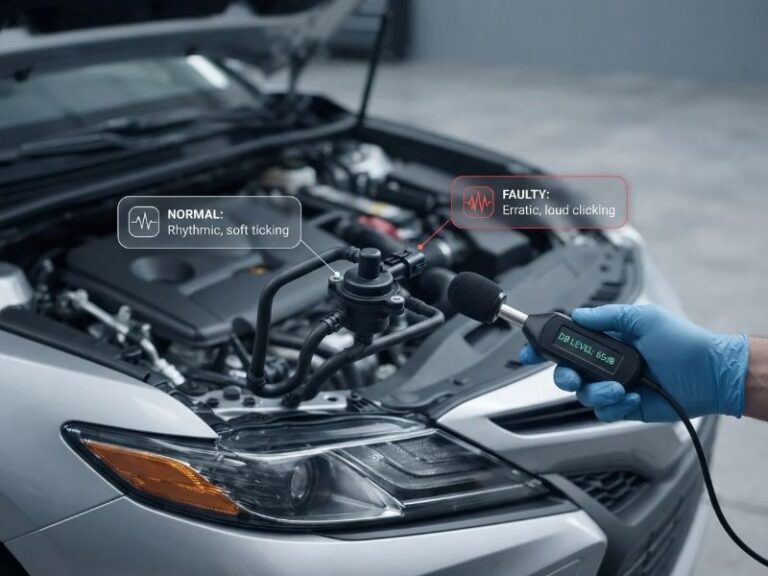
A traditional valve may sometimes make a rattling sound when shaken, but this is not a definitive test.
Modern PCV systems often require crankcase pressure testing or vehicle-specific diagnostic procedures.
Check the PCV Hose Too
Do not replace the PCV valve without inspecting the hose.
A PCV hose can become:
- Cracked
- Collapsed
- Brittle
- Oil-soaked
- Disconnected
A cracked hose may create a vacuum leak even if the valve itself is functioning correctly.
A collapsed hose can restrict ventilation and contribute to crankcase pressure.
The entire system should be considered during diagnosis.
What If the PCV Valve Is Built Into the Valve Cover?
Many modern engines do not have a separate inexpensive PCV valve.
The pressure-regulating diaphragm or valve may be integrated into the valve cover assembly.
If that diaphragm fails, repair may require replacing:
- A serviceable diaphragm kit, where approved
- PCV module
- Complete valve cover
The correct approach depends on the engine design and available manufacturer service parts.
How Much Does a Bad PCV Valve Cost to Fix?
A traditional replaceable PCV valve is usually a relatively inexpensive repair.
Costs can rise if the system includes an integrated valve cover, oil separator, or complicated hose assembly.
Labor also depends heavily on accessibility.
On one engine, the valve may be visible on top of the valve cover.
On another, intake components may need to be removed before the PCV system can be reached.
Should You Replace a Bad PCV Valve Immediately?
You should repair a confirmed PCV fault reasonably soon.
There is little benefit to delaying the repair because PCV problems can affect oil control, emissions, idle quality, and crankcase pressure.
If the replacement valve is simple and inexpensive, postponing it can increase the chance that a small problem creates larger repair costs.
Can You Temporarily Drive to a Mechanic?
Usually, yes, if the engine is running normally enough and there are no severe warning signs.
Before driving, check the engine oil level.
If the engine has been consuming or leaking oil, make sure the level is within the safe range specified by the manufacturer.
A short trip for diagnosis is very different from continuing normal commuting for weeks with a known faulty PCV system.
What Else Can Mimic a Bad PCV Valve?
PCV symptoms overlap with many other problems.
A rough idle can come from ignition or fuel issues.
Oil consumption can come from worn piston rings, valve seals, or a turbocharger.
Crankcase pressure can also become excessive because of severe engine blow-by even when the PCV valve is functioning.
That is why diagnosis should not stop at replacing the PCV valve if symptoms continue.
FAQs About Can You Drive With a Bad PCV Valve
How long can you drive with a bad PCV valve?
There is no universal safe mileage.
A mildly faulty PCV valve may allow the vehicle to run for some time, but the safest approach is to repair it as soon as practical rather than deliberately driving for a set number of miles.
Can I drive for a week with a bad PCV valve?
Possibly, if the failure is minor and there is no significant oil loss, severe rough running, or crankcase pressure.
However, waiting a full week simply because the engine still runs is not ideal. Arrange the repair as soon as reasonably possible.
Can a bad PCV valve leave you stranded?
It can indirectly contribute to problems, but a PCV valve does not commonly cause an immediate no-start by itself.
Severe vacuum leaks, oil loss, or related engine problems can eventually make the vehicle difficult or unsafe to operate.
Will driving with a bad PCV valve damage seals?
A blocked PCV system can increase crankcase pressure, which may worsen leaks at gaskets and seals.
How quickly this happens depends on the amount of pressure and the condition of the existing seals.
Is a stuck-open or stuck-closed PCV valve worse?
Both can cause problems, but a stuck-closed or severely restricted system can be particularly concerning because crankcase pressure may build.
A stuck-open valve more commonly causes vacuum-leak symptoms such as rough idle and lean operation.
Can a bad PCV valve cause permanent engine damage?
A PCV failure can contribute to conditions that eventually cause damage, especially if it leads to severe oil loss, sludge, or prolonged abnormal crankcase pressure.
Repairing the problem early greatly reduces that risk.
Can you drive with a bad PCV valve if there is no check engine light?
Possibly, but the absence of a warning light does not mean the PCV system is healthy.
Some PCV problems cause oil leakage or crankcase pressure without immediately triggering a diagnostic code.
Should I check the oil before driving with a bad PCV valve?
Yes.
Because some PCV faults can increase oil consumption or leakage, checking the engine oil level is a sensible precaution before driving the vehicle to a repair location.
Conclusion
The overall verdict on can you drive with a bad PCV valve is that the vehicle may remain drivable for a short period, but a known PCV problem should not be treated as something you can safely ignore indefinitely. The PCV system controls crankcase pressure and routes blow-by gases back through the engine, so a failure can affect idle quality, oil consumption, emissions, and engine sealing.
As for how long can you drive with a bad PCV valve, there is no reliable mileage or time limit. A mildly stuck-open valve may cause little more than a vacuum leak initially, while a blocked valve can build crankcase pressure and begin pushing oil past gaskets and seals much sooner.
If the engine runs reasonably well, has a normal oil level, and shows no severe symptoms, a short drive to arrange service is generally more reasonable than continuing normal use for weeks or months. Heavy smoke, rapid oil loss, severe misfires, a flashing check engine light, or obvious crankcase pressure are signs to stop driving and diagnose the problem promptly.
The practical choice is to repair a confirmed bad PCV valve early. The PCV component itself is often inexpensive compared with the oil leaks, fouled spark plugs, catalytic converter problems, or other secondary damage that can develop when the underlying ventilation problem is allowed to continue.