What Causes an Oxygen Sensor to Go Bad? Common Reasons Explained
An oxygen sensor is constantly exposed to hot exhaust gases while monitoring the amount of oxygen in the exhaust stream. Over time, that harsh environment can wear the sensor down. In other cases, an engine problem can contaminate or overheat the sensor long before its normal service life is reached.
The most common causes of oxygen sensor failure are age, excessive exhaust heat, oil or coolant contamination, rich fuel mixtures, silicone or chemical contamination, and unresolved engine misfires.
Understanding what causes an oxygen sensor to go bad is important because replacing the sensor without correcting the underlying problem can result in another premature failure. For example, if an engine is burning oil, leaking coolant into the combustion chamber, or running excessively rich, a new oxygen sensor may become contaminated again.
Some oxygen sensors simply wear out after years of normal heat cycles. Others fail because their internal heater circuit, wiring, connector, or sensing element is damaged. This guide explains the most common causes of oxygen sensor failure, how those problems damage the sensor, which symptoms may appear, and what should be checked before installing a replacement.
What Causes an Oxygen Sensor to Go Bad?
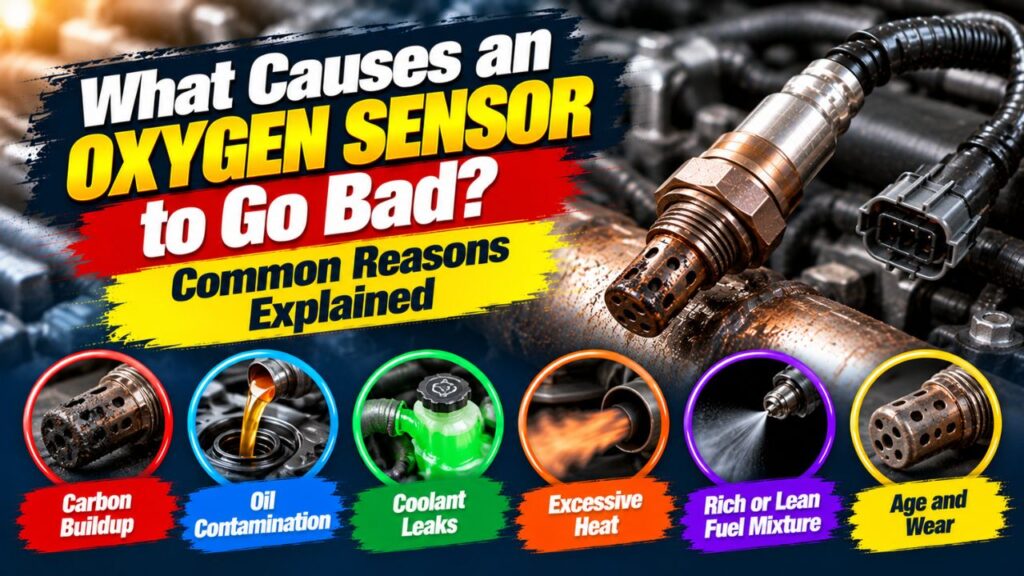
The main causes of oxygen sensor failure are prolonged exposure to high exhaust temperatures, normal aging, contamination from oil or coolant, excessive fuel in the exhaust, chemical deposits, electrical problems, and physical damage.
An oxygen sensor is installed directly in the exhaust system, where it may experience hundreds of degrees of heat every time the vehicle is driven. The sensor must repeatedly heat up and cool down while being exposed to combustion byproducts.
Eventually, the sensing element may become slower or stop producing an accurate signal.
Premature failure is more likely when the engine itself is not running correctly.
A new oxygen sensor may fail again if problems such as oil burning, coolant leakage, or repeated misfires are not repaired.
Normal Age and Wear
Sometimes there is no unusual engine problem at all.
Oxygen sensors are wear components that can gradually deteriorate as mileage and operating time accumulate.
Each time the engine is started, the sensor heats from ambient temperature to exhaust operating temperature. After the engine shuts down, it cools again.
These repeated thermal cycles can slowly affect the sensor’s internal materials.
Over time, an aging sensor may become less responsive.
Instead of quickly detecting changes in exhaust oxygen, it begins switching more slowly.
The engine control module may eventually detect this sluggish response and store an oxygen-sensor-related trouble code.
There is no universal mileage at which every oxygen sensor fails. Service life depends on the sensor design, engine condition, driving habits, fuel quality, and operating environment.
Excessive Exhaust Heat
Oxygen sensors are designed to operate at high temperatures, but excessive heat can shorten their life.
Abnormally high exhaust temperatures can result from problems such as:
- Engine misfires
- Excessively rich fuel mixture
- Incorrect ignition timing
- Catalytic converter overheating
- Continuous heavy engine load
A severe misfire is particularly damaging because unburned fuel can enter the exhaust system.
That fuel may ignite inside the catalytic converter or exhaust, producing extremely high temperatures.
The catalytic converter can overheat, and nearby oxygen sensors may be exposed to more heat than they were designed to handle.
Repeated overheating can damage the sensing element, internal heater, or wiring.
Oil Burning Can Contaminate an Oxygen Sensor
An engine that burns oil can shorten oxygen sensor life.
Oil enters the combustion chamber and burns along with the normal air-fuel mixture.
The combustion process leaves ash and chemical deposits behind.
Those deposits can coat the sensor’s sensing element.
Once contaminated, the sensor may no longer react accurately to oxygen in the exhaust.
Common causes of oil entering the combustion chamber include:
- Worn piston rings
- Worn valve stem seals
- Turbocharger oil leakage
- PCV system problems
If an oxygen sensor has failed because of oil contamination, simply replacing it may not provide a lasting repair.
The oil consumption problem should also be investigated.
Coolant Leaks Can Damage Oxygen Sensors
Coolant entering the combustion chamber can also contaminate an oxygen sensor.
This may happen because of problems such as:
- Failed head gasket
- Cracked cylinder head
- Cracked engine block
- Certain intake gasket failures
Burned coolant can leave deposits on the sensing element.
Coolant additives can be particularly harmful because some contain compounds that contaminate oxygen-sensitive surfaces.
A vehicle with coolant contamination may also show other symptoms, such as unexplained coolant loss, white exhaust smoke, overheating, or combustion gases in the cooling system.
Replacing the oxygen sensor without correcting the coolant leak can result in another contaminated sensor.
Running Too Rich
A rich air-fuel mixture means the engine is receiving too much fuel compared with the amount of air available for combustion.
An engine that consistently runs rich can produce excessive soot and unburned hydrocarbons.
These combustion byproducts can contaminate the oxygen sensor over time.
A rich mixture may be caused by:
- Leaking fuel injector
- Excessive fuel pressure
- Faulty mass airflow sensor
- Faulty engine coolant temperature sensor
- Airflow restriction
- Engine management problems
A rich-running engine can also overheat the catalytic converter because extra fuel burns in the exhaust.
That means the oxygen sensor may suffer from both contamination and excessive heat.
Engine Misfires
Misfires can be especially hard on the exhaust system.
When a cylinder fails to burn its air-fuel mixture correctly, oxygen and unburned fuel can enter the exhaust.
The oxygen sensor sees abnormal exhaust composition, while the catalytic converter may be forced to process fuel it was never intended to receive continuously.
Persistent misfires can eventually create enough heat to damage:
- Catalytic converter
- Oxygen sensors
- Exhaust components
Common misfire causes include bad spark plugs, ignition coils, fuel injectors, vacuum leaks, and mechanical engine problems.
If the check engine light is flashing, the misfire may be severe enough to damage the catalytic converter. The vehicle should be diagnosed promptly.
Silicone Contamination
Silicone can poison certain oxygen sensors.
The contamination may come from silicone-based sealers or gasket compounds that are not labeled as safe for oxygen-sensor-equipped engines.
When unsuitable silicone products cure or burn, vapors may enter the engine or exhaust stream.
Those compounds can coat the sensor’s sensing element and prevent it from measuring exhaust oxygen correctly.
If you are using RTV sealant around engine components, choose a product specifically labeled sensor-safe where the application requires it.
Fuel and Oil Additives
Some chemical additives can also contribute to sensor contamination.
Modern oxygen sensors are designed to operate with normal combustion byproducts, but unusual metallic or chemical compounds may leave deposits on the sensor.
This is one reason unnecessary additives should not be poured into the fuel or crankcase without confirming they are compatible with the vehicle.
Poor-quality or inappropriate additives may affect:
- Oxygen sensors
- Spark plugs
- Catalytic converters
- Combustion chambers
Using the fuel and fluids recommended by the vehicle manufacturer minimizes unnecessary contamination risk.
Leaded Fuel
Lead is extremely harmful to oxygen sensors and catalytic converters.
Modern road vehicles in the United States are designed for unleaded gasoline.
Lead compounds can rapidly contaminate the sensor surface and prevent it from responding properly to exhaust oxygen.
Leaded racing fuel or other non-road fuels should not be used in a street vehicle unless the vehicle and emissions system are specifically designed for that fuel.
Even relatively limited exposure can cause problems for emissions components.
Antifreeze and Chemical Contamination From External Leaks
Contamination does not always have to pass through the combustion chamber.
If oil, coolant, or another chemical leaks onto the sensor wiring or connector, it can damage electrical connections.
The oxygen sensor connector should remain:
- Clean
- Dry
- Secure
- Protected from exhaust heat
A leaking valve cover gasket or other nearby fluid leak can sometimes contaminate wiring and connectors.
External contamination should therefore be corrected during diagnosis.
Oxygen Sensor Heater Failure
Most modern oxygen sensors contain an internal heater circuit.
The heater brings the sensor up to operating temperature quickly after the engine starts.
This helps the engine enter closed-loop fuel control sooner and reduces emissions during warm-up.
The heater can fail because of:
- Age
- Internal electrical failure
- Excessive voltage
- Wiring problems
- Blown fuse
- Connector damage
A sensor may still have a functioning sensing element but set a trouble code because the heater circuit has failed.
In many designs, the heater is built into the sensor and cannot be replaced separately.
The complete sensor must be replaced after confirming the wiring and power supply are good.
Wiring and Connector Damage
Sometimes the oxygen sensor itself is not the original problem.
Its wiring runs close to the exhaust system, where temperatures are high.
Wires can become:
- Melted
- Brittle
- Chafed
- Cut
- Shorted
Connectors may also become loose or corroded.
If wiring becomes damaged, the engine computer may receive an incorrect or missing oxygen sensor signal.
This can look like a failed sensor.
Before replacing an oxygen sensor, inspect the wiring and connector carefully.
A new sensor will not fix a broken circuit elsewhere in the harness.
Water and Road Contamination
Oxygen sensors mounted underneath a vehicle operate in a harsh environment.
They may be exposed to:
- Water
- Road salt
- Mud
- Snow
- Dirt
- Debris
The sensor body is designed to tolerate normal exposure, but severe corrosion can damage the housing, connector, or threads.
Vehicles operated in areas where road salt is heavily used may develop more corrosion around exhaust components.
Corroded threads can also make sensor removal difficult.
Physical Impact Damage
Because some oxygen sensors are located underneath the vehicle, they can sometimes be damaged by physical impact.
Road debris or off-road contact may strike:
- Sensor body
- Connector
- Wiring
- Exhaust pipe around the sensor
A bent or cracked sensor may stop operating correctly.
Physical inspection is therefore useful when troubleshooting a sudden oxygen sensor fault after the vehicle has hit debris or driven over a large object.
Exhaust Leaks
An exhaust leak does not always physically destroy the oxygen sensor, but it can create readings that make the sensor appear faulty.
This is especially important for upstream oxygen sensors.
If outside air enters the exhaust through a leak ahead of or near the sensor, the additional oxygen can make the sensor report a lean condition.
The engine computer may then respond by adding fuel.
Possible leak locations include:
- Exhaust manifold
- Manifold gasket
- Flex pipe
- Exhaust flange
- Cracked exhaust pipe
Before blaming an oxygen sensor for lean readings, inspect for exhaust leaks upstream of the sensor.
Carbon and Soot Deposits
Carbon buildup can gradually cover the sensing element and reduce sensor responsiveness.
Soot is especially common when an engine runs rich or burns oil.
The sensor may not fail completely at first.
Instead, it becomes sluggish.
A slow oxygen sensor can affect the engine computer’s ability to adjust fuel mixture quickly.
Eventually, a diagnostic trouble code may be stored because the sensor response is outside the expected range.
Can Short Trips Make an Oxygen Sensor Go Bad?
Short trips by themselves do not instantly damage an oxygen sensor.
However, repeated short-distance driving can contribute to unfavorable operating conditions.
The exhaust system may not remain fully hot for long periods, which can allow more moisture and combustion deposits to accumulate.
Short-trip driving can also be associated with:
- Increased condensation
- Carbon buildup
- Frequent cold starts
Modern heated oxygen sensors are designed to warm quickly, so short trips are less of a direct concern than they were with older unheated sensor designs.
Still, overall driving conditions can influence sensor life.
Can a Bad Catalytic Converter Damage an Oxygen Sensor?
A failing catalytic converter and oxygen sensor can affect each other’s diagnostic readings, but one does not always directly damage the other.
A catalytic converter that becomes severely overheated can expose downstream sensors to excessive temperatures.
A physically damaged converter may also produce abnormal exhaust behavior.
Conversely, engine problems that damage oxygen sensors often damage the catalytic converter too.
For example, a persistent rich mixture or severe misfire can expose both components to excessive fuel and heat.
Upstream vs Downstream Oxygen Sensor Failure
Modern vehicles commonly use multiple oxygen sensors.
The upstream sensor is located before the catalytic converter and plays an important role in fuel control.
The downstream sensor is located after the catalytic converter and is used mainly to monitor catalyst performance.
Both can fail from:
- Age
- Heat
- Contamination
- Wiring damage
The upstream sensor often experiences particularly demanding exhaust conditions because it is closer to the engine.
Diagnosis should identify the exact sensor position before replacement.
Does a Dirty Oxygen Sensor Mean It Should Be Cleaned?
Usually, cleaning is not the recommended repair.
Once an oxygen sensor has been chemically contaminated or its sensing element has deteriorated, external cleaning may not restore its accuracy.
Strong solvents, wire brushes, and other cleaning methods can also damage the sensor.
If diagnosis confirms a failed sensor, replacement is generally more reliable.
More importantly, identify what contaminated it.
A replacement sensor can fail again if the engine continues burning oil, leaking coolant, or running excessively rich.
Signs an Oxygen Sensor May Be Going Bad
A failing oxygen sensor can produce several symptoms, but not every failed sensor produces obvious drivability problems.
Possible symptoms include:
- Check engine light
- Reduced fuel economy
- Rough idle
- Increased emissions
- Hesitation
- Failed emissions test
- Rich or lean operation
These symptoms overlap with many other engine problems.
A trouble code related to an oxygen sensor also does not automatically prove the sensor itself is defective.
Further testing is usually worthwhile.
Can a Bad Oxygen Sensor Be Caused by Another Bad Sensor?
Sometimes another engine-management problem can create operating conditions that eventually damage the oxygen sensor.
For example, a faulty coolant temperature sensor might cause an engine to run excessively rich.
That rich operation can create soot and elevated exhaust temperatures, potentially shortening oxygen sensor life.
Likewise, a faulty mass airflow sensor or fuel system problem can indirectly affect oxygen sensor condition.
This is another reason to diagnose the complete problem rather than simply replacing whichever component appears in a fault code.
How to Prevent Premature Oxygen Sensor Failure
You cannot prevent normal age-related wear, but you can reduce unnecessary damage by keeping the engine in good condition.
Follow the recommended maintenance schedule, repair misfires promptly, and investigate excessive oil or coolant consumption rather than ignoring it.
Use correct fluids and sensor-safe sealants.
If the check engine light appears, diagnosing the problem early can prevent a small engine issue from damaging more expensive exhaust components.
Should You Replace Both Oxygen Sensors at the Same Time?
Not automatically.
If one oxygen sensor fails, the other sensors do not necessarily need replacement.
Each sensor should be evaluated individually unless:
- Multiple sensors show similar age-related problems.
- Manufacturer guidance recommends replacement.
- Diagnostic testing confirms more than one failed sensor.
Replacing good sensors adds unnecessary cost.
However, if several original sensors have extremely high mileage, additional failures may eventually occur simply because they have experienced similar operating conditions.
What to Check Before Replacing a Bad Oxygen Sensor
Before installing a replacement, verify that the sensor is actually the cause of the problem.
Check the diagnostic trouble code, sensor live data, wiring, connectors, exhaust leaks, fuel trims, and engine condition.
Also investigate any signs of:
- Oil burning
- Coolant loss
- Rich running
- Misfire
If contamination caused the failure, fix that problem first.
Otherwise, the new sensor may have a shortened life.
FAQs About What Causes an Oxygen Sensor to Go Bad
Can Oil Make an Oxygen Sensor Go Bad?
Yes. Burning oil can leave ash and deposits on the sensing element, causing the oxygen sensor to respond slowly or inaccurately.
The underlying oil-consumption problem should be repaired if possible.
Can Coolant Ruin an Oxygen Sensor?
Yes. Coolant entering the combustion chamber can leave chemical deposits on the oxygen sensor.
A head gasket or other internal coolant leak should be repaired before replacing a contaminated sensor.
Can a Misfire Damage an Oxygen Sensor?
Yes, particularly when the misfire sends unburned fuel into the exhaust and creates excessive exhaust temperatures.
Persistent misfires can also damage the catalytic converter.
Can Running Rich Damage an O2 Sensor?
Yes.
A continuously rich engine can produce soot and excessive fuel in the exhaust, contaminating the sensor and creating additional heat.
Can an Exhaust Leak Make an Oxygen Sensor Look Bad?
Yes.
An exhaust leak ahead of or near the sensor can allow outside oxygen into the exhaust stream and create inaccurate lean readings even when the sensor itself is functioning.
Can Bad Gas Damage an Oxygen Sensor?
Contaminated or inappropriate fuel can potentially contribute to sensor deposits, particularly if it contains substances harmful to emissions components.
Using the correct unleaded fuel reduces this risk.
Do Oxygen Sensors Just Wear Out?
Yes.
Even in a healthy engine, oxygen sensors can become slower or fail after years of heat cycles and exposure to exhaust gases.
Can a New Oxygen Sensor Go Bad Quickly?
Yes, especially if an unresolved engine problem contaminates or overheats it.
Oil burning, coolant leakage, rich running, misfires, incorrect wiring, and incompatible chemicals can all shorten the life of a new sensor.
Conclusion
The overall verdict on what causes an oxygen sensor to go bad is that failure can come from either normal aging or abnormal engine conditions. Oxygen sensors naturally endure thousands of heat cycles and constant exposure to exhaust gases, so eventually their sensing elements and internal heater circuits can wear out even when the engine is healthy.
Premature failures deserve more investigation. Oil burning, coolant leaks, rich fuel mixtures, persistent misfires, excessive exhaust heat, silicone contamination, wiring damage, and exhaust leaks can all damage the sensor or make it appear defective. Among these causes, oil and coolant contamination and unresolved rich or misfire conditions are especially important because they can quickly damage a replacement sensor as well.
The practical approach is not to replace an oxygen sensor based only on a trouble code. Confirm the sensor’s operation, inspect its wiring and exhaust system, and check for engine problems that could have caused the failure. If the sensor is genuinely worn out and the engine is otherwise operating correctly, replacement should restore accurate exhaust monitoring. If contamination or abnormal combustion caused the failure, fixing that underlying problem is the most important step for preventing the new sensor from going bad again.