Can You Bypass EVAP Purge Valve? Risks, Testing, and Fixes
If you are wondering can you bypass EVAP purge valve, it may be physically possible to alter or block parts of the EVAP plumbing, but a permanent bypass is not a proper repair and should generally be avoided.
The purge valve is part of the vehicle’s evaporative emission control system, and removing it from normal operation can cause a Check Engine light, EVAP trouble codes, incorrect vapor management, fuel odors, and emissions-inspection problems.
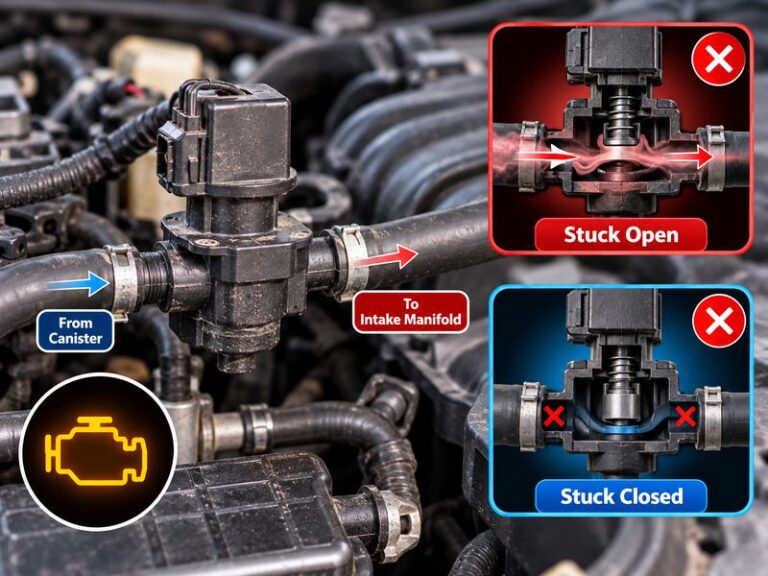
The purge valve has an important job: it controls when gasoline vapor stored in the charcoal canister is allowed to enter the engine and burn. Simply blocking the purge line or routing around the valve prevents the system from operating the way the engine computer expects.
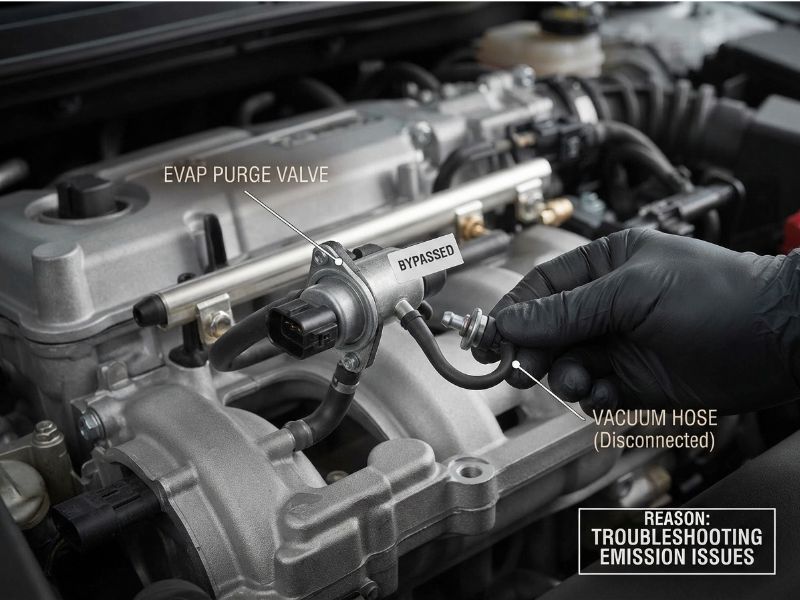
There is an important difference between permanently bypassing a purge valve and temporarily isolating the purge circuit during diagnosis. A technician may temporarily block or disconnect a purge line while testing for a vacuum leak or stuck-open valve. That is a diagnostic procedure, not a modification that should remain in place.
If the purge valve is defective, replacing the valve or repairing the related wiring, hoses, or EVAP component is the correct solution.
Can You Bypass EVAP Purge Valve?
You should not permanently bypass an EVAP purge valve.
A functioning purge valve allows the powertrain control module, or PCM, to regulate fuel vapor traveling from the charcoal canister to the engine.
Removing that control can interfere with both engine operation and EVAP self-testing.
Depending on how the system is bypassed, the vehicle may experience:
- Check Engine light
- EVAP diagnostic trouble codes
- Failed emissions readiness monitor
- Fuel-vapor odor
- Charcoal canister saturation
- Incorrect fuel tank pressure
- Rough idle
- Hard starting
- Vacuum leak symptoms
The exact result depends on whether the purge line is blocked, left open, or incorrectly connected.
None of these approaches properly replaces the function of the purge valve.
What Does the EVAP Purge Valve Normally Do?
The EVAP purge valve, also called the canister purge valve or purge solenoid, manages gasoline vapor captured from the fuel tank.
Gasoline naturally evaporates. Rather than allowing those hydrocarbons into the atmosphere, the EVAP system stores them inside an activated-charcoal canister.
When engine conditions are suitable, the PCM opens or pulses the purge valve.
Vapor then follows a path similar to:
Fuel tank → charcoal canister → purge valve → intake system → engine
The engine burns the vapor during normal combustion.
When purge is not appropriate, the valve closes and restricts vapor flow.
Bypassing the valve removes this controlled metering function.
Why Would Someone Want to Bypass a Purge Valve?
Most people consider bypassing the purge valve because the vehicle has developed an EVAP problem and they want a quick temporary solution.
Common reasons include:
- Purge valve stuck open
- Purge valve stuck closed
- Hard starting after refueling
- Rough idle
- EVAP trouble code
- Replacement part not immediately available
- Suspected vacuum leak
- Repeated purge valve failure
A bypass may appear easier than diagnosing the system, but it can create new symptoms without fixing the underlying fault.
If a purge valve is defective, replacement is usually relatively straightforward compared with modifying the entire EVAP system.
How to Bypass Purge Valve: Why a Permanent Bypass Is Not Recommended
If you are searching how to bypass purge valve, the better approach is to diagnose which part of the system has actually failed.
A permanent bypass normally involves altering vapor routing, blocking the purge circuit, or preventing the PCM-controlled valve from doing its intended job.
That can create several different problems.
Blocking the Purge Line
If the purge path is permanently blocked, vapors stored in the charcoal canister cannot be purged normally.
The engine may run reasonably well because there is no unwanted vapor entering the intake, but the EVAP system may detect insufficient purge flow.
Over time, the canister may also have difficulty handling additional fuel vapor because it is not being regenerated normally.
Leaving the Intake Purge Port Open
An open intake-side purge connection can create a substantial vacuum leak.
That can cause:
- High or rough idle
- Lean fuel mixture
- Positive fuel trims
- Hesitation
- Check Engine light
This is not a safe substitute for a purge valve.
Connecting EVAP Vapor Directly to Intake Vacuum
Directly connecting the charcoal canister to intake vacuum removes the valve that meters purge flow.
The engine could then pull vapor continuously.
Possible results include:
- Hard starting
- Rich startup after refueling
- Rough idle
- Excessive purge flow
- Fuel-trim problems
The purge valve exists specifically to prevent uncontrolled flow like this.
Can You Delete the EVAP Purge Valve?
Removing or deleting the purge valve from a street-driven vehicle is generally not a proper repair.
Modern vehicles monitor EVAP operation through the PCM.
Simply removing the physical valve does not remove the vehicle’s expectation that the valve and system operate correctly.
The PCM may monitor:
- Purge command
- Purge circuit condition
- Fuel tank pressure
- EVAP vacuum
- System leak behavior
If expected responses are missing, diagnostic codes can be stored.
Tampering with emissions-control equipment may also conflict with applicable emissions regulations, particularly on vehicles operated on public roads.
For a normal street vehicle, repairing the EVAP system is the appropriate approach.
Can You Temporarily Isolate the Purge Valve for Testing?
Yes. This is different from permanently bypassing it.
During diagnosis, a technician may temporarily isolate the purge circuit to determine whether unwanted purge flow is causing an engine problem.
For example, if a vehicle has:
- Rough idle
- High positive fuel trims
- Hard starting after refueling
- Suspected stuck-open purge valve
temporarily stopping purge flow can help determine whether the EVAP circuit is affecting the engine.
If the idle suddenly becomes smoother or fuel trims move closer to normal when the purge path is isolated, the purge valve or related plumbing deserves further testing.
The system should be restored to its original configuration after the diagnostic check.
Can You Drive With the Purge Valve Disconnected?
The engine may run with the electrical connector unplugged, but disconnecting the purge valve is not a proper long-term repair.
The PCM will usually detect that the circuit is not operating normally.
Possible consequences include:
- Check Engine light
- Purge-circuit code
- EVAP monitor not completing
- Increased emissions
- Charcoal canister not purging correctly
Disconnecting the electrical connector also does not necessarily solve a mechanically stuck-open valve.
A purge valve can leak internally even when it has no electrical power.
That means unplugging it may leave the original vacuum or vapor-flow problem unchanged.
Can You Cap the Purge Valve Line?
Temporarily blocking a purge line can sometimes be useful as part of diagnosis, but permanently capping it is not recommended.
If the line between the intake and purge valve is temporarily isolated and a rough idle disappears, that can help identify unwanted airflow through the EVAP circuit.
However, leaving the line capped prevents normal EVAP purging.
The PCM may eventually detect that commanded purge flow is not occurring.
The proper next step is to determine whether the problem is:
- Leaking purge valve
- Blocked purge line
- Electrical fault
- Incorrect PCM command
- Damaged charcoal canister
- Another EVAP component
Then repair that fault.
What Happens If You Bypass a Stuck-Open Purge Valve?
A purge valve stuck open can create an uncontrolled path from the EVAP system to the engine intake.
Temporarily isolating that path during diagnosis may improve:
- Rough idle
- Hard starting
- Fuel trims
- Stalling
But permanently blocking the line simply replaces one fault with another.
The engine may run better in the short term, while the EVAP system can no longer perform normal canister purging.
The correct fix for a confirmed mechanically leaking purge valve is usually purge valve replacement.
What Happens If You Bypass a Stuck-Closed Purge Valve?
A purge valve stuck closed already prevents normal vapor flow.
Blocking or bypassing it will not restore proper EVAP operation.
If the valve does not open, the real issue may be:
- Failed solenoid
- Mechanical blockage
- Broken wiring
- Poor connector
- Missing power or control signal
Repairing the actual fault allows the PCM to control purge again.
Routing vapor around the valve would remove that control rather than restore it.
Will Bypassing the Purge Valve Turn Off the Check Engine Light?
Usually not.
In fact, bypassing the valve can create additional diagnostic codes.
The PCM can monitor whether the EVAP system behaves as expected after it commands purge.
If the valve is removed, disconnected, or its lines are permanently blocked, the vehicle may recognize that:
- Purge flow is missing
- Electrical circuit is open
- Tank pressure does not change correctly
- EVAP self-test cannot complete
Clearing the code does not repair the problem. The warning light can return once the monitor runs again.
Can Bypassing a Purge Valve Damage the Engine?
A blocked purge circuit does not necessarily cause immediate engine damage, but an incorrectly routed system can negatively affect engine operation.
For example, allowing uncontrolled intake vacuum through the EVAP plumbing can create a large vacuum leak.
Allowing unrestricted fuel vapor into the intake can disturb the air-fuel mixture.
The greater concern is usually poor drivability, improper vapor control, EVAP system problems, and emissions faults rather than immediate mechanical engine destruction.
Still, there is little benefit to leaving the system improperly configured.
Can a Purge Valve Be Bypassed to Fix Rough Idle?
Not as a permanent repair.
If temporarily isolating the purge line makes the engine idle normally, that is useful diagnostic information.
It suggests checking:
- Purge valve sealing
- Purge hose condition
- EVAP plumbing
- PCM purge command
A purge valve that is supposed to be closed but continues passing air may need replacement.
The diagnostic result should lead to the repair rather than becoming the repair itself.
Can You Bypass a Purge Valve to Fix Hard Starting After Refueling?
Hard starting after filling the fuel tank is commonly associated with a purge valve that leaks or sticks open.
Temporarily isolating the purge circuit can help confirm the diagnosis.
However, permanently blocking the system is not the right solution.
If testing confirms the valve cannot seal, replacing it restores controlled EVAP operation while also addressing the starting problem.
Other causes should also be considered if replacement does not fix the symptom, including charcoal-canister or vent-system problems.
Can You Bypass the Purge Valve With a Vacuum Hose?
You should not reroute hoses in an attempt to eliminate the purge valve.
The hoses are designed to connect specific parts of the emissions system.
Changing their routing can create:
- Direct vacuum leaks
- Uncontrolled vapor flow
- Incorrect tank pressure
- EVAP diagnostic codes
If a hose itself is damaged, replace it with the correct vapor-rated hose or assembly rather than changing the system layout.
Can You Bypass the Purge Valve Electrically?
Simply unplugging the connector or altering the electrical circuit does not recreate correct purge-valve operation.
The PCM expects the solenoid circuit to behave in a particular way.
Electrical modification may result in circuit codes while leaving a mechanically leaking valve unchanged.
If electrical testing shows that the solenoid is not receiving a command, diagnose:
- Wiring
- Connector
- Power supply
- Control circuit
- PCM output
rather than bypassing the circuit.
Better Alternatives to Bypassing the EVAP Purge Valve
A permanent bypass is rarely necessary because the underlying problems can normally be diagnosed and repaired directly.
Replace a Faulty Purge Valve
If the valve fails a sealing or functional test, replacement is generally the most straightforward solution.
Many purge valves are accessible from the engine compartment.
Repair Damaged EVAP Hoses
A cracked or disconnected hose can imitate purge-valve symptoms.
Inspect vapor lines for:
- Cracks
- Loose connections
- Broken fittings
- Collapsed sections
Check the Electrical Connector
Corroded terminals or damaged wiring can prevent the valve from operating.
Fixing the circuit may restore operation without replacing the valve.
Test the Vent System
Not every EVAP fault is caused by the purge valve.
A failed vent valve, blocked canister, or restricted vent line may create refueling or pressure-related symptoms.
Check the Charcoal Canister
A saturated, damaged, or contaminated canister can affect vapor flow.
Replacing the purge valve alone will not repair a failed canister.
How Do You Know If the Purge Valve Actually Needs Replacement?
Do not replace it based only on an EVAP code.
A proper diagnosis may check whether the valve:
- Seals when commanded closed
- Opens when commanded
- Receives the correct electrical signal
- Responds to a scan-tool command
- Causes fuel-trim changes
- Allows the expected vapor flow
A purge valve can click and still leak.
Likewise, a valve that appears silent during one operating condition may simply not be receiving a purge command at that moment.
Functional testing is more reliable than guessing.
Is It Better to Replace or Clean a Purge Valve?
Replacement is usually more dependable when the purge valve has an internal mechanical or electrical failure.
Most purge solenoids are sealed assemblies and are not designed to be disassembled for service.
Trying to flush them with solvents may damage:
- Internal seals
- Plastic components
- Electrical coil
If external dirt is preventing a hose or connector from seating properly, that can be cleaned carefully. But an internally leaking or seized valve generally needs replacement.
FAQs About Can You Bypass EVAP Purge Valve
Can you bypass EVAP purge valve permanently?
You should not. A permanent bypass prevents the EVAP system from operating as designed and can create trouble codes, emissions-monitor problems, incorrect vapor flow, or drivability symptoms.
How to bypass purge valve for testing?
A purge circuit may be temporarily isolated during diagnosis to see whether unwanted purge flow is causing rough idle, hard starting, or abnormal fuel trims. The EVAP system should be restored afterward and the actual failed component repaired.
Can I just disconnect the purge valve?
You can disconnect it for certain diagnostic procedures, but leaving it disconnected can trigger electrical and EVAP codes. It is not a permanent repair.
Can I block the purge hose?
Temporarily blocking the purge path can be useful during testing, but leaving it permanently blocked prevents normal charcoal-canister purging.
Will a car run without an EVAP purge valve?
It may run, but the EVAP system will not function properly, the Check Engine light may illuminate, and the vehicle may have emissions or drivability problems.
Can bypassing the purge valve fix hard starting after refueling?
Temporarily isolating the system may help confirm that unwanted purge flow is causing the symptom. A confirmed leaking purge valve should then be replaced rather than permanently bypassed.
Will bypassing the purge valve improve performance?
No meaningful performance improvement should be expected. The purge valve is controlled so vapor can be burned without interfering with normal engine operation.
Is it better to replace a bad purge valve?
Yes. If testing confirms the purge valve has failed, replacing it restores the EVAP system’s intended operation without creating the additional problems associated with a bypass.
Conclusion
So, can you bypass EVAP purge valve? While parts of the purge circuit can be temporarily isolated during diagnosis, permanently bypassing the purge valve is not a proper repair.
The valve controls fuel-vapor flow between the charcoal canister and engine. Blocking it prevents normal purging, while routing around it can allow uncontrolled vapor or intake airflow. Either approach may cause EVAP trouble codes, a Check Engine light, emissions-monitor problems, or drivability issues.
If you are researching how to bypass purge valve because the engine has a rough idle, hard starting after refueling, or an EVAP code, use the bypass idea only as a diagnostic concept. Test whether the valve seals and opens correctly, inspect the hoses and wiring, and repair or replace the actual failed component so the EVAP system can operate normally.