Will a Bad PCV Valve Throw a Code? Common Codes Explained
Yes, a bad PCV valve can cause the check engine light to come on and trigger trouble codes, but it does not always produce a PCV-specific code.
A faulty positive crankcase ventilation (PCV) valve can affect the amount of air entering the engine, crankcase pressure, fuel mixture, idle quality, and oil consumption. Because modern engine computers monitor many of those conditions, a PCV problem may indirectly trigger diagnostic trouble codes even when the computer cannot identify the PCV valve itself as the failed component.
If you are asking will a bad PCV valve throw a code, the answer depends on how the valve fails and how the vehicle’s engine-management system is designed. A PCV valve stuck open can behave like a vacuum leak and cause lean-mixture or idle-related codes. A valve that is stuck closed can increase crankcase pressure and contribute to oil leaks, sludge, or oil consumption without immediately setting a code.
This is why replacing parts based only on a trouble code can be misleading. Codes such as P0171, P0174, or P0507 may point toward conditions that a bad PCV system can cause, but the same codes can also result from intake leaks, mass airflow sensor problems, fuel-delivery issues, or other faults.
This guide explains which codes may be associated with a failing PCV valve, the symptoms to watch for, how different PCV failures affect the engine, and how to determine whether the PCV system is actually responsible.
Will a Bad PCV Valve Throw a Code?
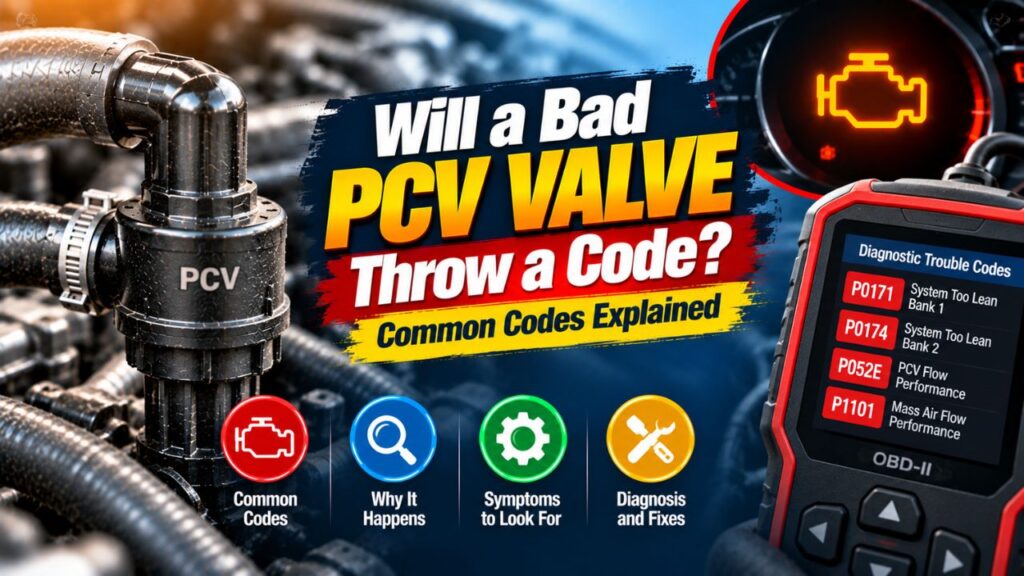
Yes, a bad PCV valve can throw a code, especially when it creates an abnormal amount of unmetered air, causes an unstable idle, or alters the engine’s air-fuel mixture enough for the engine control module to detect a problem.
However, many vehicles do not monitor the PCV valve directly.
Instead, the computer sees the result of the failure.
For example, a PCV valve stuck open may allow too much air into the intake manifold. The oxygen sensors detect a lean condition, and the engine computer may respond by setting a lean-mixture code.
A stuck PCV valve may therefore produce codes related to:
- Lean air-fuel mixture
- Idle speed
- Misfires
- Crankcase ventilation
- Airflow plausibility
- Fuel trim
The exact code depends on the vehicle.
What Does the PCV Valve Do?
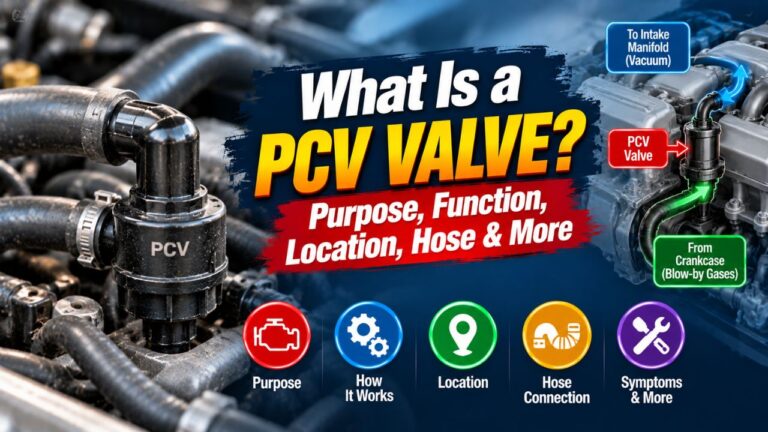
The PCV valve controls the flow of crankcase gases back into the engine’s intake system.
During normal engine operation, a small amount of combustion gas escapes past the piston rings and enters the crankcase. This is called blow-by.
Blow-by gases can contain:
- Unburned fuel vapors
- Combustion gases
- Moisture
- Oil vapor
The PCV system routes these gases back into the intake so they can be burned instead of building pressure inside the engine.
The valve helps regulate how much crankcase vapor enters the intake at different operating conditions.
What Happens When a PCV Valve Goes Bad?
A PCV valve can fail in several ways.
PCV Valve Stuck Open
A valve stuck open may allow too much airflow into the intake.
This can act like a vacuum leak.
Possible effects include:
- Lean fuel mixture
- High idle
- Rough idle
- Whistling noise
- Misfires
- Increased fuel trim
- Check engine light
This type of failure is more likely to trigger a trouble code.
PCV Valve Stuck Closed
A valve stuck closed prevents crankcase gases from leaving properly.
Crankcase pressure can increase.
Possible results include:
- Oil leaks
- Oil pushed past seals
- Sludge formation
- Increased oil consumption
- Moisture buildup
- Dipstick movement or pressure
A stuck-closed valve may not immediately trigger a code because the engine computer may not directly monitor crankcase pressure on every vehicle.
Torn PCV Diaphragm
Many modern engines use a PCV diaphragm built into the valve cover rather than a simple removable valve.
A torn diaphragm can create a large vacuum leak.
Symptoms may include:
- Whistling
- Rough idle
- Lean codes
- High idle
- Excessive crankcase vacuum
On some vehicles, the entire valve cover assembly must be replaced if the diaphragm is not separately serviceable.
Common Codes a Bad PCV Valve Can Cause
There is no single trouble code that appears on every vehicle with a bad PCV valve.
The most common codes are usually related to the effects of the failure.
P0171 – System Too Lean Bank 1
P0171 means the engine control module has detected a lean condition on Bank 1.
A PCV valve stuck open can introduce unmetered air into the intake and contribute to this code.
Other possible causes include:
- Vacuum leak
- Dirty or faulty MAF sensor
- Low fuel pressure
- Clogged fuel injector
- Intake manifold gasket leak
So P0171 does not automatically mean the PCV valve is bad.
P0174 – System Too Lean Bank 2
P0174 is similar to P0171 but applies to Bank 2 on engines with two cylinder banks.
If both P0171 and P0174 appear together, a vacuum leak affecting the entire intake system becomes more likely.
A failed PCV system can be one possible source.
P0507 – Idle Control System RPM Higher Than Expected
A stuck-open PCV valve can introduce extra air and raise idle speed.
If the engine computer cannot reduce the idle enough, it may set P0507.
Other causes include:
- Vacuum leaks
- Dirty throttle body
- Electronic throttle problem
- Idle control fault on older vehicles
Misfire Codes P0300–P0308
A major PCV vacuum leak can make the air-fuel mixture too lean for stable combustion.
This can contribute to:
- P0300 – Random/multiple-cylinder misfire
- P0301 – Cylinder 1 misfire
- P0302 – Cylinder 2 misfire
- Additional cylinder-specific codes
Misfire codes alone do not identify the PCV system as the cause.
Manufacturer-Specific PCV Codes
Some vehicles have more sophisticated crankcase ventilation monitoring.
They may set manufacturer-specific codes related to:
- Crankcase ventilation flow
- Pressure
- PCV heater circuit
- Breather system
- Crankcase vacuum
The exact code depends heavily on make, model, engine, and model year.
Can a Bad PCV Valve Cause a Check Engine Light Without a Specific PCV Code?
Yes.
This is actually very common.
The computer may detect:
- Lean fuel trims
- Abnormal idle speed
- Misfires
- Incorrect airflow
without knowing that the root cause is the PCV valve.
The check engine light therefore indicates the condition the engine computer sees, not necessarily the failed part.
This is why diagnosis is more important than simply reading the code description.
Can a Bad PCV Valve Cause Lean Codes?
Yes.
A stuck-open PCV valve or torn PCV diaphragm can act as a significant intake vacuum leak.
Air entering through the PCV system may bypass the normal airflow measurement.
The oxygen sensors detect extra oxygen in the exhaust, and the engine computer increases fuel delivery to compensate.
This appears in scan data as positive fuel trim.
If correction exceeds the computer’s acceptable range, lean codes such as P0171 or P0174 may be stored.
Can a Bad PCV Valve Cause Rich Codes?
It is less common, but certain PCV-system failures can influence mixture behavior in ways that contribute to abnormal fuel control.
For example, excessive oil vapor entering the intake can affect combustion and sensor readings.
However, rich codes such as P0172 or P0175 are more commonly associated with:
- Leaking fuel injectors
- Excessive fuel pressure
- Faulty MAF sensor
- Faulty oxygen sensor input
- Evaporative-system problems
A PCV valve is usually a stronger suspect when the engine shows a lean condition.
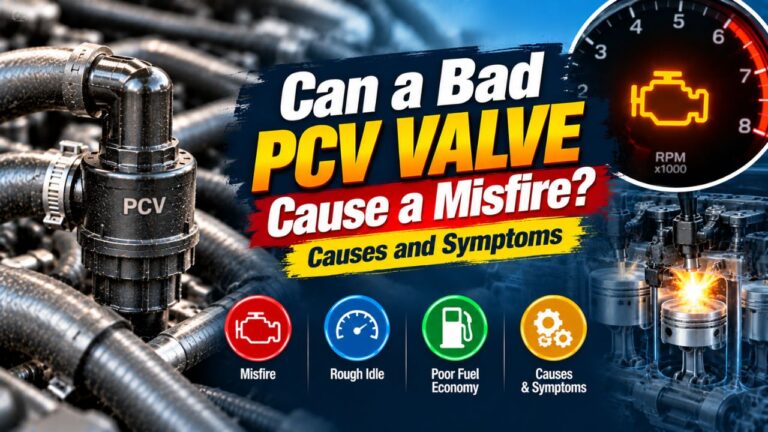
Can a Bad PCV Valve Cause Misfire Codes?
Yes.
A severe vacuum leak from a failed PCV valve can make the mixture too lean, particularly at idle.
Lean combustion can become unstable and create misfires.
You may notice:
- Rough idle
- Shaking
- Hesitation
- Flashing or steady check engine light
- P0300 or cylinder-specific misfire codes
A misfire can damage the catalytic converter if unburned fuel reaches the exhaust, so a persistent misfire should be diagnosed promptly.
Can a Bad PCV Valve Cause a P0420 Code?
Not directly in most cases.
P0420 indicates catalyst efficiency below threshold on Bank 1.
A PCV problem would not normally be the first suspect.
However, a severe PCV-related misfire or oil-consumption problem could indirectly contribute to catalytic converter damage over time.
For example, excessive oil entering the combustion chamber can contaminate the catalyst.
Still, a P0420 diagnosis should focus on the catalytic converter, oxygen sensors, exhaust leaks, misfires, and fuel-control problems rather than assuming the PCV valve is the cause.
Can a Bad PCV Valve Cause an EVAP Code?
Usually not directly.
The EVAP system controls fuel vapors from the fuel tank, while the PCV system controls crankcase vapors from the engine.
They are separate systems.
However, vacuum-related problems can sometimes create confusing symptoms, and certain engine designs integrate several vacuum circuits close together.
Typical EVAP codes such as P0440, P0442, or P0455 are more likely related to:
- Gas cap
- Purge valve
- Vent valve
- EVAP hoses
- Charcoal canister
- System leaks
Do not replace the PCV valve just because an EVAP code appears.
Symptoms of a Bad PCV Valve Besides Trouble Codes
A failing PCV valve can cause noticeable symptoms even when no code has been stored.
Rough Idle
A stuck-open PCV valve can act like a vacuum leak.
Idle may become:
- Uneven
- Shaky
- Too high
- Unstable
Whistling or Hissing Noise
A torn diaphragm or leaking PCV hose can create a noticeable whistle or hiss.
The sound is often strongest at idle because intake vacuum is high.
Excessive Oil Consumption
A faulty PCV system can allow excessive oil vapor to enter the intake.
This can contribute to:
- Low oil level
- Blue exhaust smoke
- Oil deposits in intake plumbing
- Spark plug fouling
Oil Leaks
A blocked PCV system can allow crankcase pressure to rise.
Pressure may push oil past:
- Valve cover gaskets
- Camshaft seals
- Crankshaft seals
- Other engine seals
Sludge Formation
If crankcase ventilation is poor, moisture and combustion byproducts may remain inside the engine.
Over time, sludge and deposits can form.
Oil in the Intake
Some oil mist in a PCV system can be normal.
Heavy oil accumulation in the intake may suggest:
- PCV malfunction
- Excessive blow-by
- Engine wear
- Oil separator problem
Can a Bad PCV Valve Cause No Code at All?
Yes.
A PCV valve can fail without setting any trouble code.
This is especially possible when:
- The failure is mild
- The engine computer can compensate
- The valve is stuck closed
- The vehicle does not monitor crankcase pressure
- Symptoms occur only under certain conditions
You may have:
- Oil leaks
- Sludge
- Oil consumption
- Crankcase pressure
without a check engine light.
A lack of codes therefore does not prove the PCV system is working correctly.
How to Diagnose a Bad PCV Valve
Diagnosis depends on the PCV system design.
Older engines often have a simple removable valve, while newer engines may use a diaphragm or oil separator integrated into the valve cover.
Inspect the PCV Hoses
Look for:
- Cracks
- Collapsed hoses
- Loose fittings
- Oil saturation
- Disconnected hoses
A cracked PCV hose can cause the same symptoms as a faulty valve.
Listen for Vacuum Noise
A loud whistle or hiss near the valve cover can indicate:
- PCV diaphragm failure
- Vacuum leak
- Cracked hose
Check Fuel Trim With a Scan Tool
A scan tool can show short-term fuel trim and long-term fuel trim.
Large positive fuel trims at idle may indicate unmetered air entering the engine.
If fuel trims improve at higher RPM, a vacuum leak becomes more likely.
The PCV system should be inspected as one possible source.
Check Crankcase Vacuum
Some technicians measure crankcase pressure or vacuum using proper diagnostic equipment.
Too much vacuum can suggest a stuck-open PCV system.
Positive crankcase pressure can suggest restriction or failure elsewhere in the ventilation system.
Manufacturer specifications should be used because normal values vary by engine.
Inspect the PCV Valve
If your engine uses a removable PCV valve, check it according to the service procedure.
A traditional valve may rattle when shaken, but the rattle test alone is not a reliable diagnosis.
A valve can rattle and still meter airflow incorrectly.
Can You Test a PCV Valve by Removing the Oil Cap?
The oil cap can sometimes provide a clue, but this is not a definitive test.
With the engine idling, some crankcase vacuum is normal on many engines.
If the oil cap is extremely difficult to remove because of strong suction, excessive crankcase vacuum may be present.
On the other hand, pressure blowing strongly from the opening can suggest restricted ventilation or excessive blow-by.
However, engine designs differ significantly.
Do not diagnose a PCV valve based only on oil-cap behavior.
Can You Drive With a Bad PCV Valve?
The urgency depends on how badly the system has failed.
A minor PCV problem may not immediately leave you stranded, but continuing to drive can cause additional issues.
Possible consequences include:
- Oil leaks
- Increased oil consumption
- Misfires
- Lean running
- Sludge
- Seal damage
- Catalytic converter damage in severe cases
If the engine is misfiring badly, the check engine light is flashing, or oil is leaking heavily, stop driving and have the vehicle inspected.
How Much Does It Cost to Replace a PCV Valve?
Cost varies widely because PCV systems differ.
A traditional removable PCV valve can be inexpensive and quick to replace.
A modern integrated PCV system may require:
- Complete valve cover replacement
- Intake manifold removal
- Additional hoses
- Labor-intensive access
As a result, the repair can range from relatively inexpensive to several hundred dollars or more.
Vehicle-specific pricing is more useful than a general estimate.
Should You Replace a PCV Valve Just Because of a Lean Code?
No.
A lean code tells you the engine computer is adding fuel to compensate for excess air or insufficient fuel.
Possible causes include:
- PCV leak
- Intake gasket leak
- Vacuum hose leak
- Brake booster leak
- MAF sensor problem
- Fuel-pressure problem
- Injector issue
Inspect and test before replacing parts.
A smoke test is often useful for locating intake and PCV vacuum leaks.
How Often Should a PCV Valve Be Replaced?
There is no universal replacement interval.
Some manufacturers list a scheduled replacement interval, while others treat the PCV system as an inspection item.
Modern integrated PCV systems may not have a separate replaceable valve.
Check your owner’s manual or factory maintenance schedule.
If the engine develops symptoms such as rough idle, excessive crankcase pressure, oil leaks, or lean codes, inspect the PCV system regardless of mileage.
Common PCV Diagnosis Mistakes
Assuming Any Lean Code Means the PCV Valve Is Bad
Lean codes have many possible causes.
Inspect the complete intake and fuel system.
Replacing Only the Valve and Ignoring the Hose
A cracked or collapsed hose can create the same symptoms.
Inspect the entire PCV circuit.
Assuming No Code Means the PCV System Is Fine
A stuck-closed PCV valve may create pressure and oil leaks without triggering the check engine light.
Ignoring an Integrated PCV Diaphragm
Some engines do not use a traditional removable valve.
The PCV diaphragm may be built into the valve cover.
Using the Rattle Test as Proof
A PCV valve that rattles can still be defective.
Flow and crankcase pressure are more meaningful than sound alone.
FAQs About Will a Bad PCV Valve Throw a Code
What Code Does a Bad PCV Valve Usually Cause?
There is no single universal code.
Common possibilities include lean codes such as P0171 and P0174, idle-related codes such as P0507, and misfire codes such as P0300.
Some vehicles can also set manufacturer-specific crankcase ventilation codes.
Can a Bad PCV Valve Cause P0171?
Yes.
A PCV valve stuck open can allow unmetered air into the intake and create a lean condition that triggers P0171.
Other vacuum leaks and fuel-delivery problems can cause the same code.
Can a Bad PCV Valve Cause P0171 and P0174 Together?
Yes.
If the PCV leak affects the whole intake manifold on a V-type engine, both banks may run lean.
However, other intake leaks can produce the same pair of codes.
Will a Stuck-Closed PCV Valve Turn On the Check Engine Light?
Not always.
A stuck-closed valve may mainly cause crankcase pressure, oil leaks, or sludge.
Some vehicles may detect the problem, while others may not set a code.
Can a Bad PCV Valve Cause a Misfire Code?
Yes.
A major PCV vacuum leak can create a lean mixture and unstable combustion, leading to P0300 or cylinder-specific misfire codes.
Can a Bad PCV Valve Cause a High Idle Code?
Yes.
Too much airflow through the PCV system can raise idle speed and potentially contribute to P0507 or a similar idle-control code.
Will Replacing the PCV Valve Clear the Code?
Only if the PCV system was actually causing the problem.
After the repair, the code may clear itself after successful drive cycles, or it may be cleared with a scan tool.
If the code returns, additional diagnosis is needed.
Can a Bad PCV Valve Cause Problems Without Any Warning Light?
Yes.
Oil leaks, excessive crankcase pressure, oil consumption, and sludge can occur without a check engine light.
Conclusion
The overall answer to will a bad PCV valve throw a code is yes, but not always—and the code may not specifically mention the PCV valve. A stuck-open valve or torn PCV diaphragm commonly acts like a vacuum leak and can trigger lean codes such as P0171 or P0174, high-idle codes, or misfire codes. A stuck-closed PCV valve is more likely to create excessive crankcase pressure, oil leaks, and sludge without immediately turning on the check engine light.
The practical takeaway is to treat trouble codes as diagnostic clues rather than proof that the PCV valve itself has failed. Inspect the PCV valve or diaphragm, hoses, fuel trims, intake system, and crankcase pressure before replacing parts. If a bad PCV system is confirmed, fixing it promptly can prevent recurring misfires, oil leaks, excessive oil consumption, and other engine problems.