Can a Bad PCV Valve Cause Smoke? Causes, Colors, and Fixes
A smoking exhaust can immediately make you think of worn piston rings, bad valve seals, or a serious engine problem. However, the positive crankcase ventilation (PCV) system can sometimes be responsible, especially when engine oil is being pulled into the intake and burned.
Yes, a bad PCV valve can cause smoke. A failed PCV system can allow engine oil or excessive oil vapor into the intake, where it burns inside the cylinders and produces blue or blue-gray exhaust smoke. A blocked PCV system can also increase crankcase pressure and force oil through seals, where it may burn on hot engine or exhaust components and create smoke from under the hood.
The type of PCV failure matters. A valve that allows excessive flow may pull too much oil mist into the intake. A restricted valve or hose can allow crankcase pressure to increase and contribute to external oil leaks. Either condition can eventually create visible smoke, but through different mechanisms.
However, seeing smoke does not automatically prove the PCV valve is bad. Worn piston rings, valve stem seals, turbocharger problems, coolant leaks, fuel-mixture problems, and external oil leaks can produce similar symptoms. Smoke color, when it appears, oil consumption, and evidence of oil inside the PCV or intake system can help narrow down the cause.
This guide stays focused on whether a bad PCV valve can cause smoke, what that smoke usually looks like, why it happens, and how to tell PCV-related smoke from other engine problems.
Can a Bad PCV Valve Cause Smoke From the Exhaust?
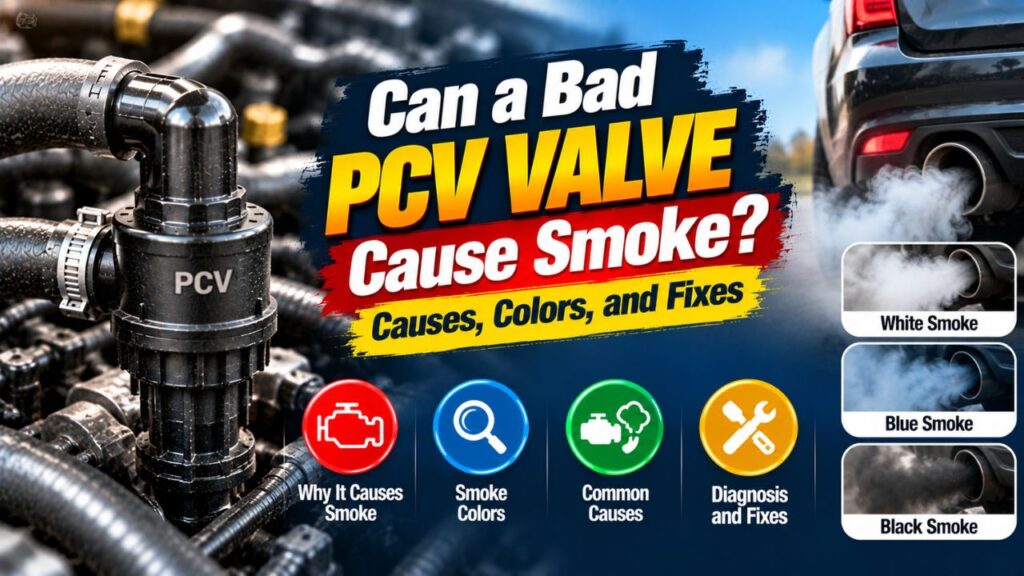
Yes. A bad PCV valve can cause exhaust smoke when the PCV system allows too much engine oil or oil vapor to enter the intake manifold.
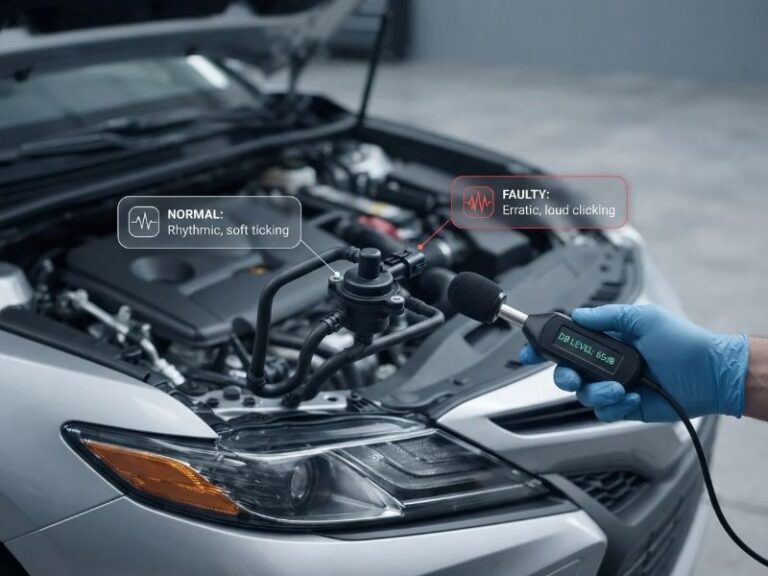
The PCV system normally draws blow-by gases out of the crankcase and routes them into the engine’s intake so they can be burned.
A properly operating system controls this airflow and helps separate much of the liquid oil from the crankcase vapor.
If the PCV valve, oil separator, diaphragm, or related hoses fail, excessive oil can sometimes enter the intake.
That oil reaches the combustion chambers and burns with the air-fuel mixture.
Burning engine oil typically creates blue or blue-gray exhaust smoke.
How a Bad PCV Valve Causes Smoke
Understanding the smoke becomes easier once you understand what the PCV system normally does.
A small amount of combustion gas naturally escapes past the piston rings during engine operation. This is called blow-by.
Those gases enter the crankcase and can contain:
- Combustion gases
- Fuel vapor
- Moisture
- Oil mist
The PCV system removes these vapors and routes them back to the intake.
The PCV valve regulates the amount of flow.
Problems occur when that controlled ventilation is disrupted.
Excessive PCV Flow Can Pull Oil Into the Intake
If the PCV system creates excessive airflow through the crankcase, it may carry more oil mist than intended into the intake.
Depending on the engine design, a failed:
- PCV valve
- PCV diaphragm
- Oil separator
- Valve-cover PCV assembly
can contribute to excessive oil entering the intake tract.
Once that oil reaches the cylinders, it burns and may produce blue exhaust smoke.
A Blocked PCV System Can Build Crankcase Pressure
The opposite problem can also occur.
If the PCV valve or hose becomes restricted, blow-by gases may not escape from the crankcase properly.
Crankcase pressure can rise.
That pressure may encourage oil leakage through:
- Valve-cover gaskets
- Crankshaft seals
- Other engine seals and gaskets
If leaking oil reaches a hot exhaust manifold or another hot component, it can burn externally.
In this situation, the smoke may come from under the hood rather than the tailpipe.
What Color Smoke Does a Bad PCV Valve Cause?
The most common exhaust color associated with PCV-related oil burning is blue or blue-gray.
Smoke color is useful for diagnosis, although lighting and exhaust temperature can sometimes make colors difficult to distinguish.
Blue or Blue-Gray Smoke
Blue smoke usually indicates that engine oil is being burned in the combustion chambers.
A faulty PCV system can cause this if it pulls excessive oil into the intake.
Other causes of blue smoke include:
- Worn piston rings
- Worn cylinder walls
- Bad valve stem seals
- Worn valve guides
- Turbocharger oil-seal problems
This is why blue smoke alone cannot confirm PCV failure.
White Smoke
A bad PCV valve is not normally the first explanation for persistent thick white exhaust smoke.
Thick white smoke or steam that continues after the engine warms up can indicate coolant entering the combustion chamber.
Possible causes include:
- Head gasket failure
- Cracked cylinder head
- Other internal coolant leaks
However, burning oil can sometimes appear light gray or whitish under certain lighting conditions.
Do not diagnose solely by color.
Black Smoke
Black exhaust generally indicates an excessively rich air-fuel mixture rather than oil burning.
A malfunctioning PCV system can influence engine airflow in some situations, but a bad PCV valve is not usually the primary explanation for heavy black smoke.
Fuel-system and air-metering problems are more likely causes.
Can a Bad PCV Valve Cause Blue Smoke?
Yes. Blue smoke is the smoke color most directly associated with a PCV system that is causing excessive oil consumption.
If the PCV system draws liquid oil or excessive oil mist into the intake, the engine burns that oil.
You may notice blue smoke:
- During acceleration
- After idling
- During startup
- Under high engine vacuum
- During deceleration
The exact pattern depends on the engine and the nature of the PCV failure.
If replacing a known faulty PCV component eliminates the blue smoke and oil consumption returns to normal, the PCV system was likely responsible.
Can a Bad PCV Valve Cause Smoke at Startup?
It can, but startup smoke has several other common causes.
If oil has accumulated inside the intake while the engine was parked, that oil may be burned shortly after startup.
This could produce a temporary blue-gray cloud.
However, blue smoke primarily during startup is also commonly associated with valve stem seal leakage.
Before blaming the PCV valve, check whether there is excessive oil inside:
- PCV hose
- Intake tube
- Intake manifold
- Throttle-body area where applicable
A light oil film may be normal on some engines. Significant liquid oil accumulation deserves investigation.
Can a Bad PCV Valve Cause Smoke at Idle?
Yes, PCV-related oil consumption can sometimes become noticeable at idle.
Intake manifold vacuum is generally high during idle on a naturally aspirated gasoline engine.
Because the PCV system relies on intake vacuum, certain PCV failures can allow excessive oil vapor or liquid oil to be drawn into the intake under these conditions.
You may notice:
- Blue-gray exhaust after extended idling
- Smoke when accelerating after idling
- Oil accumulating in the intake
Again, these patterns are not unique to PCV failure.
Valve seals and other engine wear can produce similar behavior.
Can a Bad PCV Valve Cause Smoke During Acceleration?
It can.
If significant oil has entered the intake, increasing engine speed may burn that accumulated oil and produce visible blue smoke.
However, blue smoke under acceleration can also be an important sign of piston-ring or cylinder wear because cylinder pressure increases under load.
A PCV inspection is usually much simpler and less expensive than internal engine testing, so checking the PCV system makes sense when oil-burning symptoms appear.
But do not assume a new PCV valve will fix every engine that smokes during acceleration.
Can a Bad PCV Valve Cause Smoke From Under the Hood?
Yes, indirectly.
A restricted PCV system can allow excessive crankcase pressure to build.
That pressure can encourage engine oil to escape through weak seals or gaskets.
If leaking oil contacts:
- Exhaust manifold
- Exhaust pipe
- Turbocharger housing
- Other hot engine surfaces
the oil can burn and create smoke from the engine compartment.
This smoke may smell strongly like burning oil.
The source is different from PCV-related tailpipe smoke.
In this case, the oil is burning outside the engine, not inside the combustion chambers.
Tailpipe Smoke vs. Under-Hood Smoke
Identifying where the smoke originates is an important first diagnostic step.
| Smoke Location | Possible PCV-Related Cause |
| Tailpipe | Oil entering intake and burning in cylinders |
| Under hood | Crankcase pressure contributing to an external oil leak |
| Intake area | Oil accumulation or vapor in PCV/intake system |
| Both areas | More than one oil-control problem may be present |
If smoke appears only from beneath the hood, inspect for an external oil leak before assuming the engine is internally burning oil.
Stuck-Open vs. Clogged PCV Valve and Smoke
Different failures can create different oil-control problems.
PCV Valve Allowing Excessive Flow
A PCV valve or integrated PCV regulator that allows excessive airflow may pull too much oil vapor toward the intake.
Possible result:
Oil enters the engine and creates blue exhaust smoke.
The exact failure mode depends on the PCV system design.
Many newer engines do not use a simple removable one-way valve. Instead, the PCV regulation system may be integrated into the valve cover or oil separator.
Restricted PCV Valve or Hose
A restriction prevents crankcase vapors from leaving normally.
Pressure can build inside the crankcase.
Possible result:
Oil is pushed through seals or gaskets and burns on hot external surfaces.
A restricted breather hose or oil separator can sometimes produce the same effect as a clogged PCV valve.
Can a Bad PCV Valve Cause Excessive Oil Consumption and Smoke Together?
Yes.
This combination is an important reason to inspect the PCV system.
If the engine begins consuming oil and producing blue smoke at approximately the same time, oil may be entering the intake through the crankcase ventilation system.
Check for excessive oil in:
- PCV hoses
- Intake piping
- Intake manifold
- Oil separator
However, worn internal engine components can also cause both oil consumption and blue smoke.
PCV failure should therefore be considered one possible cause, not an automatic diagnosis.
How to Tell if the Smoke Is Coming From the PCV System
No single observation confirms PCV-related smoke, but several pieces of evidence together can make the diagnosis stronger.
Inspect the PCV Hose and Intake
Remove components only according to the vehicle manufacturer’s service procedure.
Look for excessive liquid oil.
A slight oily coating can be normal because crankcase vapor naturally contains oil mist.
Pools of oil or unusually heavy deposits may indicate a problem with crankcase ventilation or oil separation.
Inspect the PCV Valve or PCV Assembly
Older vehicles may have a replaceable PCV valve.
Newer engines may use:
- Integrated PCV diaphragm
- Valve-cover PCV assembly
- Crankcase pressure regulator
- Oil separator
Look for:
- Clogged passages
- Damaged hoses
- Cracked fittings
- Torn diaphragm
- Excessive oil contamination
The appropriate test varies by vehicle.
Check Crankcase Pressure
A properly operating PCV system normally maintains controlled crankcase ventilation.
Unusual positive crankcase pressure can point toward:
- PCV restriction
- Excessive engine blow-by
- Blocked breather system
Because worn piston rings can create excessive blow-by even with a good PCV system, abnormal pressure does not automatically prove the PCV valve is defective.
Monitor Oil Consumption
Check the engine oil level correctly and record how quickly it drops.
If oil consumption increases along with blue smoke and excessive oil is found in the PCV/intake tract, the PCV system becomes a stronger suspect.
How to Distinguish PCV Smoke From Bad Piston Rings
Both problems can cause blue exhaust smoke and oil consumption.
With worn piston rings, excessive combustion gases can leak into the crankcase, producing high blow-by.
The engine may also have reduced compression.
Possible clues toward ring or cylinder wear include:
- Excessive blow-by despite a functioning PCV system
- Low or uneven compression
- Poor leak-down test results
- Persistent blue smoke under load
- Heavy oil consumption
A compression test and cylinder leak-down test can help evaluate internal engine sealing.
Replacing the PCV valve will not repair worn piston rings.
How to Distinguish PCV Smoke From Bad Valve Stem Seals
Worn valve stem seals allow engine oil to travel along the valve stems and enter the combustion chamber.
A common pattern is blue smoke:
- Immediately after startup
- After extended idling
- After long deceleration
A PCV problem can sometimes create similar patterns, so additional inspection is needed.
Finding substantial oil being pulled directly through the PCV system makes PCV failure more likely.
How to Distinguish PCV Smoke From Turbocharger Problems
On turbocharged engines, blue smoke can also result from oil entering the intake or exhaust through a turbocharger-related problem.
A technician may inspect:
- Turbocharger compressor side
- Turbine side
- Charge piping
- Intercooler
- Oil supply and drain system
- PCV system
This distinction is particularly important because the PCV system and turbocharger intake system can influence each other.
Do not replace an expensive turbocharger until crankcase ventilation and other possible oil sources have been checked.
Can Replacing the PCV Valve Stop the Smoke?
Yes—if the faulty PCV system is actually allowing the oil to enter the engine or creating the pressure responsible for an external oil leak.
After replacing the defective component, smoke may not disappear instantly.
Oil already present in the:
- Intake manifold
- Intake piping
- Combustion chambers
- Exhaust system
may take some time to burn away.
If substantial smoke continues after the residual oil has cleared, additional diagnosis is necessary.
What if a New PCV Valve Does Not Stop the Smoke?
Do not keep replacing PCV components.
If the PCV system is functioning properly but blue smoke remains, investigate other oil-burning causes.
Likely areas include:
- Piston rings
- Cylinder walls
- Valve stem seals
- Valve guides
- Turbocharger
- Oil-control components specific to the engine
Persistent thick white smoke should shift attention toward possible coolant entry rather than PCV-related oil burning.
Should You Keep Driving if a Bad PCV Valve Is Causing Smoke?
A small amount of smoke does not always mean immediate engine failure, but continued oil burning should not be ignored.
Excessive oil consumption can eventually allow the oil level to become dangerously low.
Burning oil can also contaminate or damage:
- Spark plugs
- Oxygen sensors
- Catalytic converter
If smoke becomes heavy, oil consumption is rapid, the engine runs poorly, or the oil-pressure warning appears, stop driving and diagnose the problem promptly.
Always maintain the engine oil at the correct level while the cause is being investigated.
Common Mistakes When Diagnosing PCV-Related Smoke
One common mistake is assuming every blue-smoking engine needs major internal repair.
Checking the PCV system first can identify a much simpler problem.
The opposite mistake is assuming that every smoking engine has a bad PCV valve.
Avoid these diagnostic shortcuts:
- Replacing the PCV valve without inspecting the intake
- Ignoring severe oil consumption
- Assuming white smoke is always PCV-related
- Ignoring turbocharger problems
- Ignoring piston-ring or valve-seal wear
- Treating all oily PCV hoses as abnormal
- Diagnosing solely from smoke color
The goal is to determine how the oil is entering the combustion chamber, not merely to find a component that could theoretically cause the symptom.
FAQs About Can a Bad PCV Valve Cause Smoke
What color smoke does a bad PCV valve cause?
A PCV system that allows engine oil into the intake most commonly produces blue or blue-gray exhaust smoke because the engine is burning oil.
Can a clogged PCV valve cause smoke?
Yes.
A restriction can increase crankcase pressure and contribute to oil leakage through seals or gaskets. If the leaking oil reaches hot exhaust components, it can create smoke from under the hood.
Depending on the system design, crankcase ventilation problems may also contribute to oil entering the intake.
Can a bad PCV valve cause white smoke?
A PCV-related oil-burning problem can sometimes produce smoke that looks gray or whitish, but persistent thick white exhaust is more commonly associated with water or coolant vapor.
Do not automatically blame a PCV valve for thick white smoke.
Can a PCV valve cause blue smoke when accelerating?
Yes, especially if excessive oil has been pulled into the intake.
However, blue smoke during acceleration can also indicate worn piston rings or another internal oil-control problem.
Can a PCV valve cause smoke at idle?
Yes.
Certain PCV failures can allow excessive oil into the intake while manifold vacuum is high at idle. You may notice smoke during idle or when accelerating afterward.
Why is there oil in my PCV hose?
A light oily film can be normal because crankcase vapors naturally contain oil mist.
A large amount of liquid oil may indicate a failed PCV regulator, oil separator problem, excessive blow-by, or another engine issue.
Will replacing the PCV valve immediately stop blue smoke?
It may if the valve was the cause, but residual oil already inside the intake and exhaust can continue burning temporarily.
Persistent smoke after the system is repaired requires further diagnosis.
How do I know if blue smoke is PCV-related or engine wear?
Inspect the PCV system and intake for excessive oil, verify crankcase ventilation, and monitor oil consumption.
If the PCV system checks out, compression or leak-down testing may be needed to investigate worn piston rings or other internal engine problems.
Conclusion
The overall verdict on can a bad PCV valve cause smoke is yes, but the type of PCV failure determines how the smoke develops. A PCV system that allows excessive oil into the intake can cause the engine to burn that oil, producing the characteristic blue or blue-gray smoke from the exhaust. A restricted PCV system can instead allow crankcase pressure to rise, potentially forcing oil through gaskets or seals where it may burn on hot engine components and create under-hood smoke.
The most useful clues are where the smoke originates, its color, whether engine oil consumption has increased, and whether excessive liquid oil is present inside the PCV hoses or intake system. Because worn piston rings, valve stem seals, turbocharger problems, and external oil leaks can create similar symptoms, smoke alone is not enough to condemn the PCV valve.
If PCV failure is confirmed, repairing the valve, diaphragm, hose, separator, or integrated PCV assembly can stop the oil from entering the wrong place. If the smoke continues after the PCV system is operating correctly and residual oil has burned away, the engine should be checked for another source of oil consumption rather than continuing to replace PCV components.