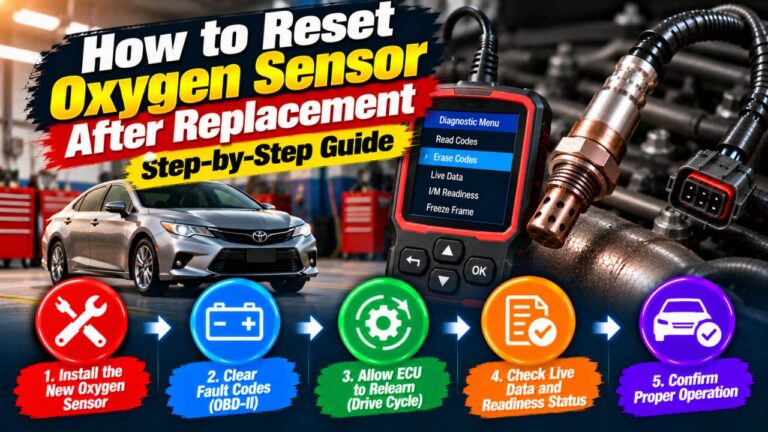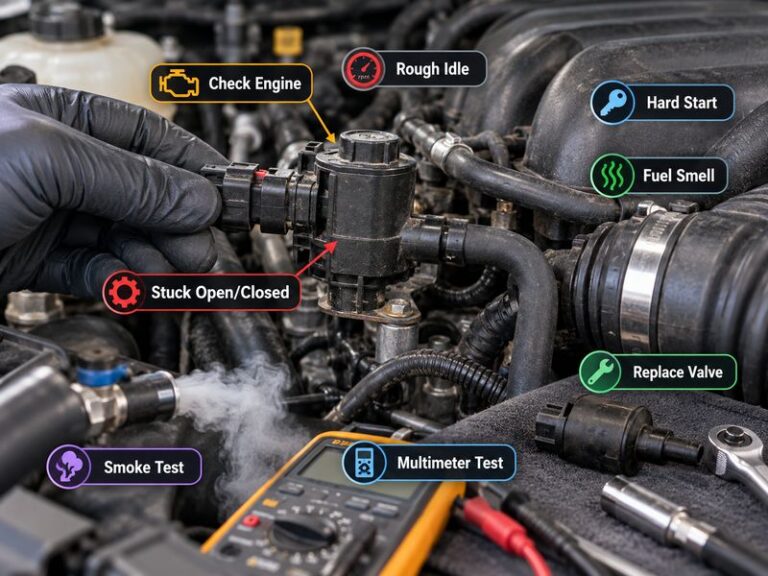
Can a Bad Oxygen Sensor Cause Stalling? Causes and Diagnosis
Yes, a bad oxygen sensor can contribute to engine stalling, but it is not one of the most common causes. A faulty upstream O2 sensor may send incorrect feedback that makes the air-fuel mixture excessively rich or lean, potentially causing unstable idle or stalling after the engine enters closed-loop operation.
If you are asking can a bad oxygen sensor cause stalling, it is important not to replace the sensor based on the symptom alone. Engines can stall for many reasons, including vacuum leaks, fuel-pressure problems, dirty throttle components, crankshaft or camshaft sensor failures, ignition problems, or a malfunctioning PCV system.
An oxygen sensor becomes a stronger suspect when the stalling occurs after the engine warms up, the check engine light is on, fuel trims are abnormal, and scan-tool data shows that an upstream sensor is responding incorrectly. A downstream oxygen sensor, located after the catalytic converter, is much less likely to make an engine stall because its main job is monitoring catalyst performance rather than controlling the basic air-fuel mixture.
Can a Bad Oxygen Sensor Cause Stalling?
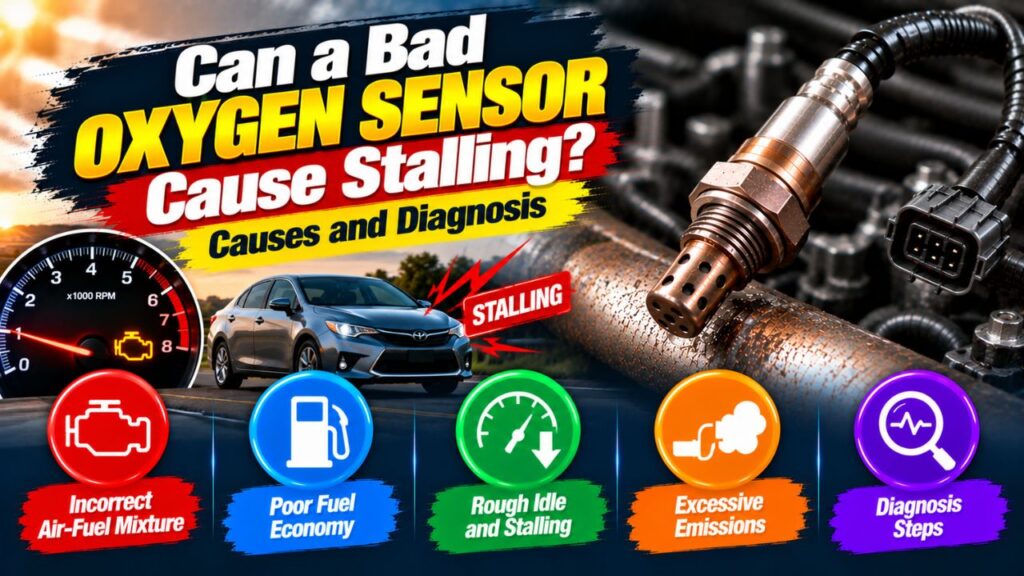
Yes, a bad oxygen sensor can cause or contribute to stalling, particularly when an upstream sensor provides inaccurate feedback to the engine control module.
The engine computer uses upstream oxygen-sensor information to adjust fuel delivery once the engine enters closed-loop operation. If the sensor incorrectly reports that the mixture is lean, the computer may add excessive fuel. If it incorrectly indicates a rich condition, the computer may remove too much fuel.
Either extreme can make combustion unstable.
The problem may be especially noticeable at idle, where the engine has less momentum and is more sensitive to incorrect fuel mixtures.
However, stalling by itself does not prove the O2 sensor is bad.
How an Oxygen Sensor Affects Engine Operation
An oxygen sensor measures oxygen remaining in the exhaust after combustion.
The engine control module (ECM) uses that information to determine whether the engine is operating richer or leaner than intended.
An upstream oxygen sensor provides feedback that helps the ECM continuously correct fuel delivery.
The basic process works like this:
The engine burns an air-fuel mixture, exhaust gases pass the oxygen sensor, and the sensor reports exhaust oxygen content. The computer then adjusts injector operation to keep combustion within the desired range.
When the sensor provides inaccurate information, those fuel corrections may become excessive.
That is how a failed sensor can indirectly affect idle quality and, in some situations, cause the engine to stall.
Why a Bad O2 Sensor May Cause Stalling After Warm-Up
This is an important diagnostic clue.
When a gasoline engine first starts, it often operates in open loop. During this period, the ECM relies more heavily on programmed fuel calculations and information from sensors such as engine coolant temperature, mass airflow, and manifold pressure.
The oxygen sensor must warm up before its feedback becomes useful.
After the sensor reaches operating temperature, the ECM normally enters closed loop and begins using oxygen-sensor feedback more actively.
If the engine starts and idles normally when cold but begins running poorly or stalling after it warms up, an oxygen-sensor or fuel-control issue becomes more plausible.
It still does not prove the O2 sensor is responsible, but the timing of the symptom provides useful diagnostic information.
Can a Bad Upstream Oxygen Sensor Cause Stalling?
Yes, an upstream oxygen sensor is the O2 sensor most likely to contribute to stalling.
The upstream sensor is installed before the catalytic converter and plays an important role in fuel control.
If its signal is incorrect or responds too slowly, the ECM may make inappropriate fuel corrections.
Possible symptoms can include rough idle, hesitation, poor fuel economy, surging, and occasionally stalling.
A failed upstream sensor may also trigger a check engine light.
Can a Bad Downstream Oxygen Sensor Cause Stalling?
Usually not.
The downstream oxygen sensor, often called Sensor 2, sits after the catalytic converter and mainly monitors whether the converter is functioning effectively.
A failed downstream sensor commonly causes:
- Check engine light
- O2 sensor circuit codes
- Heater circuit codes
- Catalyst-monitoring problems
It usually has much less influence on normal fuel control than the upstream sensor.
Therefore, if the engine is stalling and the only fault appears to involve a downstream sensor, you should investigate other causes before assuming that sensor explains the stalling.
Vehicle control strategies vary, so manufacturer-specific diagnostic information always takes priority.
How Can a Bad Oxygen Sensor Make the Engine Stall?
Several mechanisms can lead from bad sensor data to poor combustion.
The Engine Runs Too Lean
If the ECM removes too much fuel, the mixture may become too lean to burn consistently at idle.
This can produce:
- Rough idle
- Hesitation
- Misfires
- RPM dropping too low
- Stalling
A genuine vacuum leak can create similar symptoms, so the sensor may sometimes be reporting a real lean condition rather than causing it.
The Engine Runs Too Rich
A sensor that incorrectly signals a lean condition may cause the ECM to add excessive fuel.
An overly rich mixture can foul spark plugs and make combustion unstable.
You may also notice poor fuel economy, fuel smell, dark exhaust deposits, or black smoke in severe cases.
Fuel Corrections Become Unstable
A slow or erratic oxygen sensor can cause the ECM to chase incorrect readings.
Fuel delivery may fluctuate enough to create surging or unstable idle.
At very low engine speed, the engine may eventually stall.
Signs That an O2 Sensor May Be Related to Stalling
Stalling is more likely to involve an oxygen-sensor or fuel-control problem when it occurs along with other symptoms.
Watch for a check engine light, poor fuel economy, rough idle, hesitation, strong exhaust odor, unusual fuel trims, or O2-sensor trouble codes.
The symptom pattern matters more than any one sign.
For example, an engine that stalls only after warming up and simultaneously develops abnormal fuel-trim readings deserves investigation of closed-loop fuel-control components.
Can a Bad Oxygen Sensor Cause Rough Idle Before Stalling?
Yes.
Rough idle may appear before the engine actually stalls.
When fuel delivery becomes inaccurate, combustion from one or more cylinders may become inconsistent.
The engine may begin:
- Shaking
- Surging
- Dropping RPM
- Misfiring
- Nearly stalling at traffic lights
If the fuel imbalance becomes severe enough, the engine can stop running.
However, vacuum leaks and throttle-body problems are often more common causes of rough idle and stalling.
Can a Bad O2 Sensor Cause a Car to Stall at Stops?
It can, particularly if the engine is struggling to maintain a stable idle.
At highway speed or during acceleration, the engine has more airflow and RPM. A marginal fuel-control problem may therefore be less noticeable.
When you stop at a traffic light and the throttle closes, the engine must maintain combustion at a very low speed.
If incorrect sensor feedback pushes the mixture too rich or lean, RPM may fall below the level needed to keep the engine running.
Still, a vehicle that repeatedly stalls at stops should also be checked for throttle-body contamination, vacuum leaks, idle-control problems on applicable vehicles, and fuel-delivery issues.
Can a Bad O2 Sensor Cause Stalling When Cold?
It is possible, but generally less likely.
During a cold start, the engine may not rely heavily on oxygen-sensor feedback yet.
If a car stalls immediately after starting while cold, other components usually deserve attention first, including the engine coolant temperature sensor, fuel system, throttle body, ignition system, vacuum leaks, and crankshaft position sensor.
A severe electrical fault involving the O2 sensor circuit could potentially affect operation differently, but ordinary sensor degradation is less likely to explain immediate cold-start stalling.
Will a Bad Oxygen Sensor Cause the Engine to Shut Off While Driving?
A failing oxygen sensor alone usually does not cause the engine to suddenly shut off as though the ignition were switched off.
If a vehicle abruptly dies while driving, stronger suspects may include:
- Crankshaft position sensor
- Camshaft position sensor
- Fuel pump
- Fuel-pump electrical circuit
- Main relay
- Charging or electrical system
- Ignition system
An O2-related fuel-control problem is more likely to produce roughness, hesitation, surging, or gradually worsening idle before stalling.
Sudden total shutdown deserves broader diagnosis.
Check Engine Light and Oxygen-Sensor Codes
A failing O2 sensor may turn on the check engine light and store a diagnostic trouble code.
Possible codes may describe conditions such as a slow response, heater malfunction, circuit fault, or sensor signal stuck rich or lean.
The important point is that a trouble code identifies a detected condition, not necessarily the component that caused it.
For example, if an upstream sensor reports lean exhaust, possible causes include the sensor itself, but also:
- Intake vacuum leak
- Exhaust leak before the sensor
- Low fuel pressure
- Restricted injector
- Incorrect airflow measurement
Replacing the O2 sensor without testing these possibilities can leave the stalling problem unchanged.
How to Check Whether the O2 Sensor Is Causing the Stall
A scan tool with live-data capability is one of the most useful diagnostic tools.
Start by reading stored and pending trouble codes. Do not immediately clear them because freeze-frame information can show engine conditions when the fault occurred.
Next, examine oxygen-sensor data and short-term and long-term fuel trims.
If an upstream sensor signal behaves abnormally and the ECM is making extreme fuel corrections at the same time the engine begins to stall, the sensor or another fuel-control problem deserves closer investigation.
Wiring should also be inspected because an O2 sensor may be perfectly functional while its harness is melted, corroded, or damaged by exhaust heat.
Check for Vacuum Leaks Before Replacing the Sensor
A vacuum leak is an especially important alternative cause.
Unmetered air entering the intake can make the engine genuinely lean.
The oxygen sensor detects that lean exhaust and reports it to the ECM.
The computer adds fuel in response.
If you simply replace the O2 sensor, the replacement sensor will detect the same lean condition because the vacuum leak is still present.
Common leak areas include PCV hoses, intake-manifold gaskets, brake-booster lines, vacuum hoses, and throttle-body seals.
A smoke test is often useful for locating hard-to-find intake leaks.
Check for Exhaust Leaks
An exhaust leak upstream of an oxygen sensor can also create misleading sensor readings.
Outside air can enter the exhaust stream and increase measured oxygen content.
The sensor may then appear to report a lean condition.
Possible leak locations include the exhaust manifold, manifold gasket, flex pipe, and pipe connections near the sensor.
Repairing the exhaust leak may correct the sensor reading without replacing the sensor.
Fuel Pressure Can Cause Similar Symptoms
Low fuel pressure can make the engine run lean and stall, especially at idle or under load.
Possible fuel-system causes include a failing pump, restricted filter on applicable systems, pressure-regulator problems, or electrical issues.
Again, the oxygen sensor may correctly detect the lean exhaust rather than causing it.
This is why sensor data should always be interpreted alongside the rest of the engine.
Can a Bad Oxygen Sensor Cause Misfires and Stalling?
Yes, indirectly.
If incorrect fuel control creates a sufficiently rich or lean mixture, combustion may become unstable and cause misfires.
Multiple misfires can make the engine shake heavily and eventually stall.
But the relationship works in the opposite direction too.
A misfiring cylinder sends extra oxygen into the exhaust because the mixture did not burn normally. The oxygen sensor then sees that oxygen and may report a lean condition.
That can make it appear that the O2 sensor is the problem when the real cause is an ignition coil, spark plug, injector, or compression fault.
Can a Dirty O2 Sensor Cause Stalling?
An oxygen sensor contaminated with soot, oil, coolant residue, or other deposits may respond slowly or inaccurately.
If the affected sensor is upstream and its signal significantly disrupts fuel control, stalling is possible.
However, contamination itself often indicates another problem.
For example, heavy oil contamination can suggest engine oil consumption, while certain deposits may point toward coolant entering the combustion chamber.
Simply replacing the sensor without correcting the contamination source may cause the new sensor to fail again.
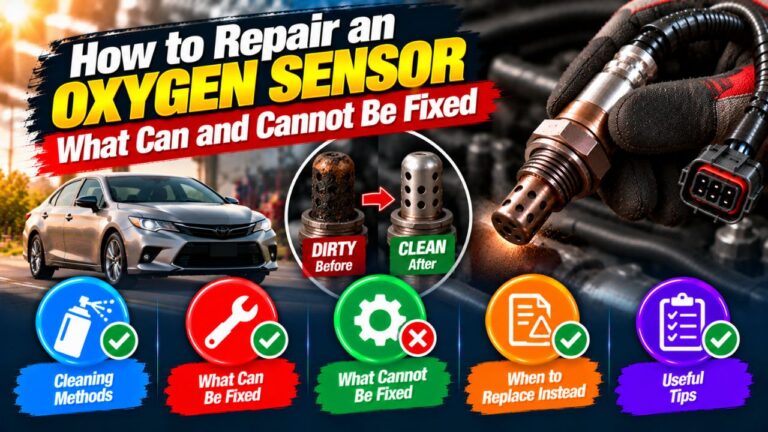
Should You Clean an Oxygen Sensor?
Generally, oxygen sensors are not considered routine clean-and-reuse components.
Their sensing elements are delicate, and aggressive solvents or physical cleaning can damage them.
If testing confirms that a sensor has failed or become contaminated beyond proper operation, replacement is usually preferable.
More importantly, determine why the contamination occurred before installing a new sensor.
Can Disconnecting the O2 Sensor Stop the Stalling?
Sometimes an engine may appear to run differently when an oxygen sensor is disconnected because the ECM substitutes default values and changes control strategy.
However, this is not a reliable repair or definitive diagnostic test.
Disconnecting the sensor will normally set trouble codes and may increase emissions or fuel consumption.
A vehicle should not be driven indefinitely with an oxygen sensor deliberately disconnected.
Proper diagnosis is preferable.
Other Common Causes of Engine Stalling
Although an O2 sensor can contribute to stalling, several other problems are often more likely.
A dirty electronic throttle body can interfere with the small amount of airflow needed at idle. Vacuum leaks can create an excessively lean mixture. Weak fuel pressure can prevent the injectors from delivering enough fuel.
Crankshaft position sensors are particularly important because the ECM needs crankshaft information to control fuel injection and ignition. If that signal disappears, the engine may shut off completely.
Ignition-system failures, electrical faults, PCV problems, and mass airflow sensor issues can also produce similar symptoms.
This is why replacing an oxygen sensor solely because the engine stalls is rarely the best diagnostic approach.
Can You Drive With a Bad Oxygen Sensor That Causes Stalling?
If the vehicle is actually stalling, continued driving is not recommended until the problem is diagnosed.
An unexpected stall can reduce your ability to accelerate and may occur at an unsafe time, such as when entering traffic or crossing an intersection.
A rich-running engine can also send excess fuel into the catalytic converter, potentially causing overheating and damage.
If the check engine light is flashing, the engine is severely misfiring, or the vehicle repeatedly stalls, avoid unnecessary driving and have the problem inspected.
FAQs About Can a Bad Oxygen Sensor Cause Stalling
Can a bad oxygen sensor cause a car to stall at idle?
Yes. An inaccurate upstream oxygen sensor can cause incorrect fuel corrections that make the mixture too rich or lean, potentially producing rough idle and stalling.
Other idle-related problems should also be checked.
Can a bad O2 sensor cause stalling after the engine warms up?
Yes, and this pattern can be significant because oxygen-sensor feedback becomes more important after the engine enters closed-loop operation.
A warm-engine stall still requires proper diagnosis because other temperature-related faults can behave similarly.
Can a downstream oxygen sensor make a car stall?
It is much less likely.
Downstream sensors are primarily used to monitor catalytic-converter performance and generally have less influence on basic fuel control.
Can an oxygen sensor cause a car to shut off while driving?
A severely incorrect fuel mixture could contribute to stalling, but sudden engine shutdown while driving is more commonly associated with problems such as a crankshaft sensor, fuel pump, ignition circuit, or electrical failure.
Will a bad O2 sensor cause rough idle?
Yes, especially when an upstream sensor provides incorrect fuel feedback.
The engine may shake, surge, misfire, or struggle to maintain idle speed.
How do I know if my oxygen sensor is causing the stalling?
Read trouble codes and examine live sensor data and fuel trims with a scan tool. Also check wiring, vacuum leaks, exhaust leaks, fuel pressure, and ignition problems before replacing the sensor.
Can a bad oxygen sensor cause a no-start condition?
A normal O2 sensor failure is usually not a common cause of a no-start because oxygen-sensor feedback is less important during initial cranking and cold startup.
Fuel, ignition, compression, and crankshaft-sensor problems are usually stronger suspects.
Conclusion
The overall verdict on can a bad oxygen sensor cause stalling is yes, but an O2 sensor should not be the first part replaced simply because an engine stalls. A faulty upstream oxygen sensor can provide incorrect fuel feedback, push the mixture too rich or lean, cause rough idle or misfires, and eventually make the engine stall—especially after the engine has warmed up and entered closed-loop operation.
A downstream oxygen sensor is much less likely to create this problem because it primarily monitors catalytic-converter performance. If the vehicle suddenly shuts off while driving or stalls immediately after a cold start, other faults such as fuel-pressure loss, vacuum leaks, crankshaft-sensor failure, throttle problems, or ignition faults may be more likely.
The most reliable approach is to use trouble codes, live O2-sensor data, fuel trims, and basic engine checks together. Confirm that the oxygen sensor is actually providing incorrect information before replacing it, because an O2 sensor may simply be accurately reporting another engine problem.