
Why Is My Purge Valve Clicking? Normal vs Faulty Valve Sounds
If you are wondering why is my purge valve clicking, the sound may be completely normal. The EVAP purge valve is an electrically controlled solenoid, and the engine computer often switches it on and off rapidly to control how much fuel vapor enters the engine. Each movement of the internal solenoid can produce a small clicking or ticking sound.
A healthy purge valve may be especially noticeable while the engine is idling with the hood open. Depending on the vehicle, the clicking can sound similar to a fuel injector, relay, or light valve-train tick.
Even a new purge valve ticking does not automatically mean the replacement part is defective. A new valve can click because it is doing exactly what the engine control module is commanding it to do.
The important question is not simply whether the valve clicks, but whether the sound is accompanied by problems such as rough idle, hard starting after refueling, stalling, abnormal fuel trims, or a Check Engine light.
This guide explains normal purge valve clicking, why a new valve may tick, what a faulty purge valve can sound like, and how to distinguish normal solenoid operation from a problem that needs diagnosis.
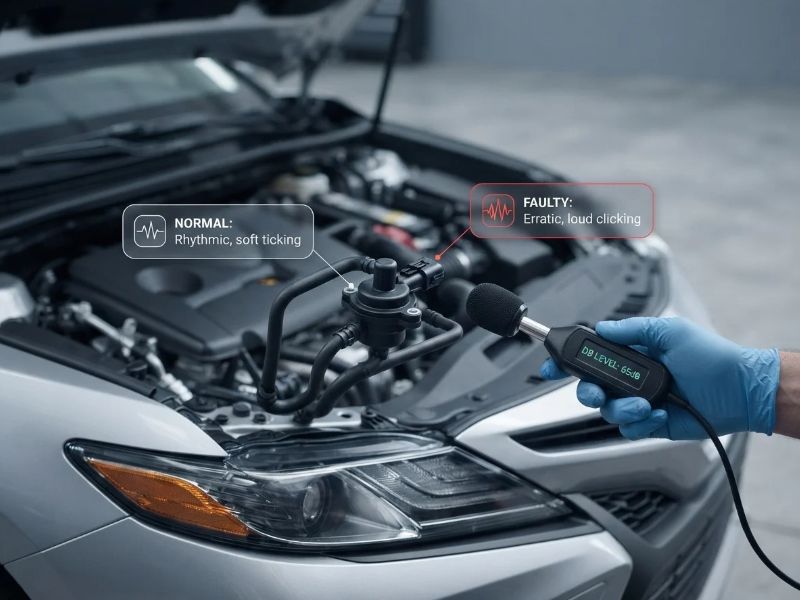
Why Is My Purge Valve Clicking?
Your purge valve is usually clicking because the engine control module (ECM or PCM) is rapidly activating the valve to regulate fuel-vapor flow through the EVAP system.
The purge valve sits between the charcoal canister and the engine intake. Gasoline vapors stored in the charcoal canister eventually need to be sent into the engine and burned.
Rather than keeping the valve fully open all the time, the computer can pulse the solenoid.
Each pulse moves an internal plunger.
That movement creates the characteristic:
click-click-click-click
or
tick-tick-tick-tick
sound.
The clicking frequency may change as the computer adjusts purge flow.
So, if the engine is running normally and there are no EVAP trouble codes or drivability problems, a rhythmic purge-valve click can simply be normal operation.
Is It Normal for a Purge Valve to Click?
Yes. It can be completely normal for an EVAP purge valve to click while the engine is running.
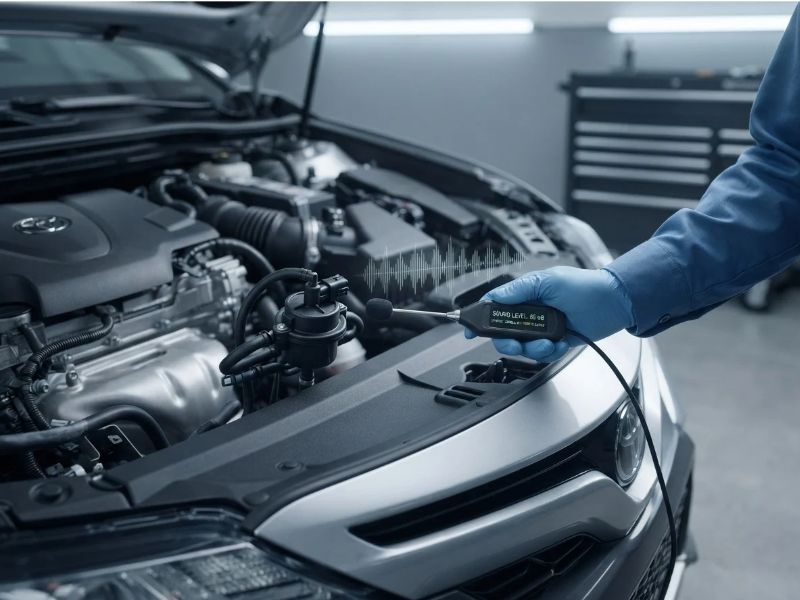
The purge valve is an electromagnetic solenoid rather than a silent mechanical passage.
When electrical current reaches its internal coil, the magnetic field moves a small plunger. When the electrical command changes, the plunger moves again.
Repeated operation naturally creates sound.
A normal purge-valve sound is usually:
- Rhythmic
- Fairly light
- Consistent
- Similar to injector ticking
- Most obvious with the hood open
You may hear it more clearly at idle because road, wind, and engine-load noises are lower.
The valve may also become easier to hear once the engine reaches conditions where the computer begins commanding normal EVAP purging.
Why Does the Purge Valve Need to Pulse?
The engine does not always want the same amount of fuel vapor.
The PCM has to carefully control how much vapor enters the intake so that the EVAP system does not disturb the engine’s air-fuel mixture.
Modern systems can use pulse-width modulation, or a similar duty-cycle strategy, to regulate purge flow.
Instead of simply doing this:
Closed → Open → Closed
the computer can rapidly command something more like:
Open → Closed → Open → Closed → Open
for as long as controlled purge flow is required.
The percentage of time the valve remains energized can change according to operating conditions.
That rapid switching is one of the main reasons an EVAP purge valve can make an audible ticking sound.
What Does a Normal Purge Valve Sound Like?
A normal purge valve typically sounds like a small electrical solenoid repeatedly clicking.
The sound may resemble:
- Fuel injector ticking
- Light relay clicking
- A quiet mechanical tapping
- A small plastic valve cycling rapidly
The sound should usually come directly from the area where the purge solenoid is mounted.
If you place a mechanic’s stethoscope against the purge valve, the clicking can sound much louder than it does normally.
A screwdriver can sometimes transmit sound in a similar way, but keep tools, hands, clothing, and hair away from moving engine components.
Why Is My New Purge Valve Ticking?
A new purge valve ticking is often normal.
Replacing the old valve does not eliminate the electrical pulses the vehicle uses to control the EVAP system. The new valve still contains a moving solenoid, so it can make the same basic clicking noise.
In some cases, the replacement may actually seem louder.
That does not necessarily mean something is wrong.
The New Valve May Have a Different Internal Design
OEM and aftermarket purge valves can differ slightly in:
- Housing material
- Solenoid construction
- Internal spring design
- Mounting design
Those differences can change how much sound is transmitted.
The New Valve May Be Operating More Clearly Than the Old One
A worn or partially seized old valve may not have moved normally.
A correctly operating new valve can produce a sharper, more noticeable click because its internal plunger is moving through its full travel.
The Mounting Point Can Amplify the Sound
The valve’s bracket can transmit vibration into the:
- Firewall
- Intake manifold
- Body panel
- Engine cover
- Nearby hoses
A normal valve can therefore sound unusually loud from inside the passenger compartment if its vibration is being transferred into another component.
The Replacement Valve May Simply Be Naturally Louder
Different brands can produce slightly different levels of audible solenoid noise while performing the same function.
The sound itself is not enough to decide that a replacement valve is defective.
When Is Purge Valve Clicking NOT Normal?
Clicking becomes more suspicious when the sound is accompanied by other symptoms.
Pay closer attention if you have a loud or unusual purge-valve noise along with:
- Check Engine light
- Hard starting after refueling
- Rough idle
- Engine stalling
- Long cranking
- Strong fuel-vapor odor
- EVAP trouble codes
- Unusual fuel trims
Even then, the clicking itself may not be the failure.
A purge valve can make a perfectly normal clicking sound while still leaking internally.
Likewise, another engine component can make a clicking noise that is mistakenly blamed on the purge valve.
What Does a Faulty Purge Valve Sound Like?
There is no single sound that proves an EVAP purge valve is faulty.
This is important because many people expect a bad purge valve to make a specific noise.
It may not.
A faulty purge valve can:
- Click normally
- Click unusually loudly
- Click intermittently
- Make no clicking sound
- Operate electrically but leak mechanically
The type of failure determines what you might hear.
No Clicking From the Purge Valve
If a technician commands the purge solenoid on and off and there is no clicking at all, the valve may have an electrical or mechanical problem.
Possible causes include:
- Failed solenoid coil
- Broken wiring
- Poor electrical connector
- No PCM command
- Internally jammed valve
However, not hearing the valve during normal engine operation does not automatically indicate failure.
The computer may simply not be commanding purge at that moment.
A proper test is needed before replacing it.
Very Loud Clicking or Clacking
A purge valve can sometimes become noticeably louder than expected.
Possible reasons include:
- Internal wear
- Loose mounting bracket
- Valve touching another component
- Vibration transferring into the body
- Different replacement-valve construction
A loud click by itself still does not prove the valve is bad.
If the engine runs perfectly, the EVAP monitor operates normally, and the valve passes functional testing, the sound may simply be an operating characteristic.
Irregular Clicking
A purge valve does not necessarily have to click at a perfectly constant rate.
The PCM can change the purge duty cycle as engine conditions change.
Therefore, a changing clicking frequency may be normal.
If the sound is accompanied by unstable idle, EVAP codes, or other symptoms, further diagnosis becomes more important.
Can a Bad Purge Valve Still Click?
Yes. This is one of the most important things to understand.
A purge valve can click and still be bad.
The electrical solenoid may move enough to create a click while the valve fails to seal internally.
For example, a purge valve can be stuck partially open or leaking even though its solenoid continues moving.
That means a simple listening test cannot prove the valve is good.
A proper diagnosis may require checking whether the valve:
- Seals when it should be closed
- Allows flow when commanded open
- Receives the correct electrical command
Can a Purge Valve Be Stuck Open and Still Click?
Yes.
The internal electrical portion and the vapor-sealing portion are related but not identical.
The solenoid can still move or make noise even if contamination, wear, or internal damage prevents the valve from sealing completely.
A leaking or stuck-open purge valve is more likely to cause symptoms such as:
hard starting after refueling, rough idle, excessive purge flow, or fuel-trim changes.
Therefore, normal clicking does not rule out a stuck-open valve.
Can a Purge Valve Be Stuck Closed and Still Click?
It is possible.
You may hear the solenoid actuating while the internal vapor passage fails to open correctly.
For example, the plunger may move but the valve could be restricted or mechanically damaged.
A stuck-closed purge valve is more likely to cause:
- Insufficient purge flow
- EVAP trouble codes
- Failure to purge the charcoal canister properly
Again, airflow or vacuum testing provides more useful information than sound alone.
Purge Valve Clicking vs Fuel Injector Ticking
Fuel injectors are another common source of normal clicking under the hood.
Each injector uses an electromagnetic mechanism to open and close very rapidly while metering fuel into the engine.
Because both components are electrically actuated, their noises can sound similar.
| Sound Source | Typical Character |
| Purge valve | Localized rhythmic clicking |
| Fuel injectors | Multiple rapid ticks along engine/fuel rail |
| Relay | More distinct occasional click |
| Valve train | Mechanical tick following engine speed |
| High-pressure fuel pump | Rapid mechanical ticking on some engines |
Location is one of the easiest ways to distinguish the sounds.
If the noise is strongest directly at the purge solenoid, the purge valve is a likely source.
Does Purge Valve Clicking Change With Engine RPM?
It may, but not necessarily in direct proportion to RPM.
The purge valve is controlled by the PCM according to EVAP and engine operating requirements.
The computer can alter purge duty based on conditions such as:
- Engine load
- Temperature
- Intake conditions
- Fuel-system feedback
- Vehicle operating state
Therefore, purge ticking may speed up, slow down, appear, or disappear as conditions change.
A valve-train tick, on the other hand, tends to have a more direct relationship with engine speed.
Why Is the Purge Valve Clicking at Idle?
Idle is often when drivers first notice the noise.
There are two reasons.
First, there is less background noise at idle.
Second, the PCM may command purge under certain warm-engine idle conditions, depending on the vehicle’s calibration.
When purge is active, the solenoid cycles and you hear the clicking.
If the idle remains smooth and there are no warning lights or EVAP symptoms, clicking at idle can be perfectly normal.
Why Does My Purge Valve Click After Replacement?
If the old valve was replaced because of a diagnostic code or leak, hearing the new valve operate can make it seem as though the repair failed.
But a working replacement valve is still supposed to actuate.
What matters after replacement is whether:
- The original trouble code returns
- Hard starting improves
- Idle quality improves
- The EVAP system completes its monitor
- The replacement valve seals properly
Do not replace the new part again based only on normal solenoid ticking.
Should a Purge Valve Click With the Ignition On?
Vehicle behavior varies.
Some systems may activate EVAP solenoids during certain diagnostic or self-test routines, while others will not command normal purge unless specific engine-running conditions are met.
Therefore, whether the valve should click with the ignition on but engine off is vehicle-specific.
A service manual or scan-tool active test is the better way to determine expected operation.
How Do You Check Whether Purge Valve Clicking Is Normal?
Start by considering the vehicle’s behavior rather than the sound alone.
If you have:
- No Check Engine light
- Normal starting
- Smooth idle
- No unusual fuel odor
- No EVAP codes
then a light rhythmic clicking is usually less concerning.
If symptoms are present, the valve should be tested.
Scan-Tool Test
A bidirectional scan tool can command the purge valve while the technician listens and monitors system response.
This confirms whether the sound corresponds with the computer command.
Vacuum or Flow Test
A purge valve that should be closed can be tested to determine whether it leaks.
A valve can sound completely normal but fail this test.
Electrical Test
If the valve does not operate, its electrical circuit can be checked for:
- Power
- Control signal
- Connector condition
- Solenoid integrity
Vehicle-specific specifications should be used.
Should You Replace a Clicking Purge Valve?
Not just because it clicks.
Clicking is part of normal solenoid operation on many purge valves.
Replacement makes more sense when testing confirms problems such as:
- Valve leaks when commanded closed
- Valve does not open when commanded
- Solenoid has an electrical fault
- Valve is mechanically jammed
- EVAP diagnosis identifies it as the failed component
Replacing a functioning valve solely to eliminate normal clicking may not change the noise.
What If a New Purge Valve Is Much Louder Than the Old One?
First confirm that the correct replacement part was installed.
Then check whether:
- Mounting bracket is secure
- Valve is touching another component
- Rubber isolators are correctly positioned, if equipped
- Hoses are routed correctly
- Electrical connector is fully seated
A solenoid mounted directly against a body panel can transmit clicking and make it sound much louder inside the vehicle.
If the installation is correct and there are no EVAP or drivability problems, the valve may simply have a different audible operating characteristic.
If the noise is extreme or appeared together with new engine problems, verify the part and system operation.
Can You Make a Normal Purge Valve Quieter?
Do not wrap the valve in insulation or modify it in a way that could interfere with operation.
Instead, check for abnormal vibration transmission.
Make sure:
- Factory mounting hardware is present
- Bracket is not loose
- Valve does not contact the body unnecessarily
- Hoses are properly secured
If a manufacturer provides an updated mounting arrangement or replacement part for a particular vehicle, following that model-specific repair procedure is preferable to improvising a noise fix.
FAQs About Why Is My Purge Valve Clicking
Is it normal for a purge valve to click?
Yes. A purge valve is an electrically operated solenoid and may click repeatedly as the PCM pulses it to control fuel-vapor flow.
Why is my new purge valve ticking?
A new purge valve can tick because its internal solenoid is operating normally. The new part may also sound slightly louder because of its construction or how vibration travels through its mounting bracket.
What does a faulty purge valve sound like?
There is no universal bad purge-valve sound. A faulty valve may click loudly, click normally, operate intermittently, or make no sound at all. Functional testing is more reliable than sound.
Should the purge valve click continuously?
It can click repeatedly while the PCM is actively controlling purge flow. The rate and duration may change with operating conditions.
Can a purge valve click and still be bad?
Yes. The solenoid can make a normal click while the valve leaks internally or fails to control vapor flow correctly.
Is loud purge valve clicking a sign of failure?
Not necessarily. Loud clicking can be caused by normal solenoid operation, replacement-part design, or vibration being transmitted through the mounting bracket. Check for codes and drivability symptoms before assuming the valve has failed.
Why does the purge valve only click when the engine is warm?
The PCM may begin or increase EVAP purging only after certain operating conditions are met. Exact purge strategy varies by vehicle.
Why is my purge valve clicking and my engine running rough?
If both occur together, test the valve for leakage or excessive purge flow. A stuck-open purge valve can affect intake airflow and fuel vapor entering the engine, but other vacuum, fuel, and ignition problems can cause similar rough-running symptoms.
Conclusion
If you are asking why is my purge valve clicking, a light rhythmic ticking sound is often simply the EVAP purge solenoid doing its job. The PCM repeatedly activates the valve to precisely control the amount of stored fuel vapor entering the engine.
A new purge valve ticking can also be completely normal, and the replacement may sound different from the original because of its construction or mounting.
The key point is that sound alone cannot tell you whether a purge valve is good or bad. A faulty purge valve may make no sound, make an unusually loud sound, or continue clicking normally while leaking internally.
If the clicking occurs without a Check Engine light, rough idle, hard starting after refueling, stalling, or EVAP codes, it is usually less concerning. If those symptoms are present, test the purge valve’s sealing, airflow, electrical operation, and PCM command before deciding that replacement is necessary.