How Long Can I Drive With a Bad Purge Valve? Safety & Risks
If you are wondering how long can I drive with a bad purge valve, there is no fixed number of miles or days that is safe for every vehicle.
If the only symptom is a steady check engine light and the vehicle starts, idles, and drives normally, you can often make necessary short trips while arranging a repair. However, you should not treat a bad purge valve as something to ignore for weeks or months.
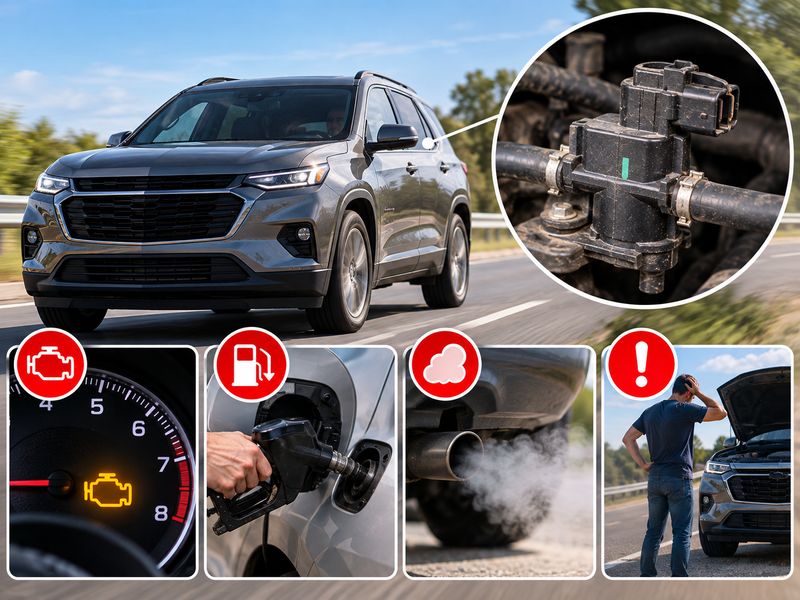
A purge valve that is stuck open can cause rough idle, hard starting after refueling, hesitation, stalling, or an incorrect air-fuel mixture. A valve stuck closed may have little effect on drivability but can prevent the EVAP system from purging fuel vapor correctly and keep the check engine light on.
If the vehicle begins stalling, becomes difficult to start, loses significant power, or develops a strong gasoline smell, continuing to drive is not a good idea.
How Long Can I Drive With a Bad Purge Valve?
There is no reliable mileage limit for how long can I drive with a bad purge valve.
One vehicle may drive almost normally for a considerable period with a purge valve stuck closed. Another vehicle with a valve stuck open may develop rough running or stalling immediately.
The safest way to judge the situation is by the symptoms rather than by mileage.
If the vehicle has only a steady check engine light and otherwise behaves normally, driving a short distance to work, home, or a repair shop is usually much less concerning than driving a vehicle that is stalling or struggling to start.
The repair should still be scheduled reasonably soon.
Continuing to drive indefinitely can lead to repeated starting problems, poor drivability, increased emissions, failed emissions testing, and difficulty recognizing additional engine problems because the check engine light is already illuminated.
Can You Drive With a Bad Canister Purge Valve?
Yes, you can sometimes drive with a bad canister purge valve, especially when the failure is mild and the vehicle has no drivability symptoms.
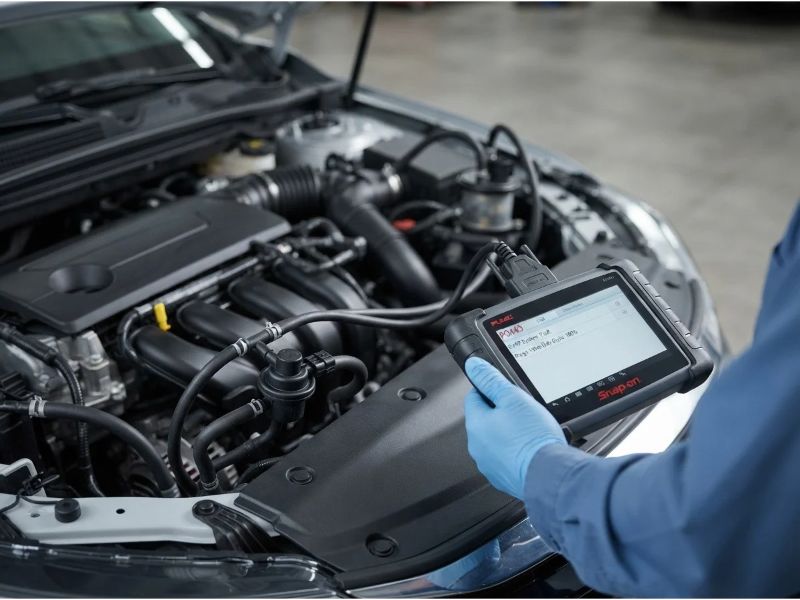
The canister purge valve is part of the EVAP system rather than a component that directly controls steering or braking.
That does not mean every purge-valve failure is harmless.
A purge valve stuck open can interfere with how the engine runs. If it causes the engine to stall while entering traffic, turning through an intersection, or stopping at a light, the problem becomes a driving-safety concern even though the purge valve itself is an emissions component.
Whether you should continue driving therefore depends mainly on how the engine is behaving.
Can I Drive With a Bad EVAP Purge Valve?
If you are asking can I drive with a bad EVAP purge valve, the answer is generally yes for limited driving when the engine still runs normally.
However, the EVAP purge valve should be repaired rather than ignored.
A bad valve can cause very different problems depending on whether it is stuck open or stuck closed.
A stuck-open valve is generally more likely to affect engine operation because it may allow fuel vapor and additional airflow into the intake manifold when the engine computer is not expecting it.
A stuck-closed valve often creates fewer noticeable driving problems. You may see only a check engine light or EVAP-related diagnostic code.
What Does the Purge Valve Actually Do?
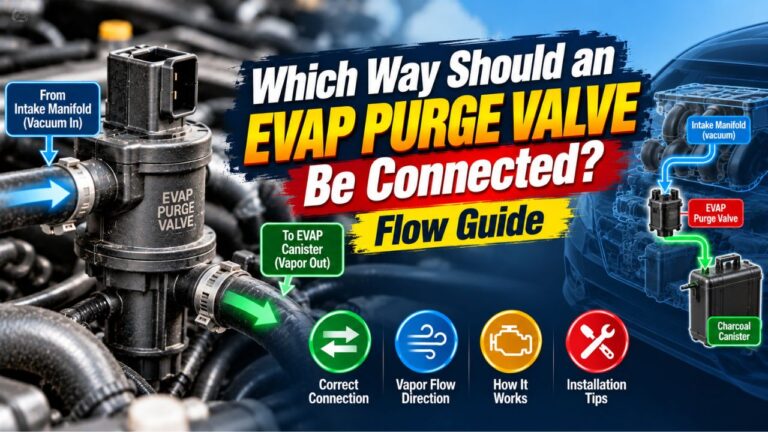
The EVAP purge valve, also called the canister purge valve or purge solenoid, controls fuel-vapor flow between the charcoal canister and the engine.
Gasoline continuously produces vapor inside the fuel tank.
Instead of releasing those vapors into the atmosphere, the EVAP system stores them in a charcoal canister.
When engine conditions are suitable, the engine computer opens the purge valve. Intake vacuum then pulls those stored vapors into the engine so they can be burned during combustion.
The valve should remain closed when purge flow is not required.
Problems occur when the valve remains open, refuses to open, leaks internally, or stops responding to electrical commands.
Driving With a Purge Valve Stuck Open
A purge valve stuck open is usually the type of failure that deserves more attention while driving.
When the valve remains open, the intake manifold can pull vapor or air through the EVAP system continuously.
This can upset the engine’s normal air-fuel calculations.
Rough Idle
The engine may shake, surge, or idle inconsistently.
The effect is often strongest at idle because the engine is consuming relatively little air, making an unwanted flow through the purge system more noticeable.
Hard Starting After Refueling
Difficulty starting after filling the fuel tank is a particularly common clue associated with a leaking or stuck-open purge valve.
A freshly filled tank can produce and displace a large amount of vapor.
If the purge valve allows that vapor directly into the intake, the engine may receive an overly rich mixture during startup.
The engine may crank for longer than usual, start and stall, or run roughly for several seconds.
Stalling
A severely leaking purge valve can sometimes make the engine stall at idle or shortly after starting.
This is one of the symptoms that should make you reconsider continued driving.
A vehicle that can stall unexpectedly is less predictable in traffic.
Hesitation and Weak Acceleration
Unexpected purge flow can interfere with mixture control and cause a brief hesitation when accelerating.
The vehicle may feel sluggish or less responsive than normal.
Severe power loss, however, is less typical and should prompt investigation for additional problems.
Driving With a Purge Valve Stuck Closed
A purge valve stuck closed often causes fewer immediate drivability problems.
The engine may continue to start, idle, and accelerate normally.
The main issue is that stored fuel vapor cannot move from the charcoal canister into the engine as designed.
The vehicle’s computer may detect the missing purge flow and illuminate the check engine light.
You could also fail an emissions inspection because of an EVAP trouble code or incomplete readiness monitor.
Even though a stuck-closed valve may not make the vehicle difficult to drive, it should still be repaired.
Is a Bad Purge Valve an Emergency?
Usually, a purge-valve failure is not an immediate emergency if the engine is running normally.
It becomes more urgent when the failure affects drivability.
A practical distinction is:
If you have a steady check engine light but normal starting, idle, acceleration, and braking, arranging repair soon is generally reasonable.
If the engine repeatedly stalls, becomes very difficult to start, runs extremely rough, or you smell strong raw gasoline, stop treating the problem as a minor emissions issue.
A strong gasoline smell deserves particular attention because it may indicate something other than the purge valve, including an actual fuel leak.
When Should You Stop Driving?
Do not continue normal driving simply because you believe the purge valve is the cause.
Stop driving or arrange professional help if you experience repeated stalling, severe hesitation, major loss of power, or a strong raw-fuel smell.
You should also be cautious if the check engine light begins flashing. A flashing check engine light usually indicates an active misfire severe enough to potentially damage the catalytic converter, and that situation should not be treated as an ordinary EVAP warning.
A purge valve problem can sometimes contribute to mixture disturbances, but other engine faults may be present as well.
Can a Bad Purge Valve Leave You Stranded?
It can, although this is not the most common outcome.
A valve stuck closed may leave the vehicle driving normally despite an EVAP warning light.
A severely leaking valve can be different.
If it causes repeated hard starts or stalling, there is a possibility that the engine may become increasingly difficult to start, particularly after refueling.
For that reason, a vehicle that consistently struggles after every fuel stop should be repaired rather than relying on it to continue starting normally.
Can a Bad Purge Valve Cause the Car to Stall While Driving?
It can cause stalling in some situations, particularly when the valve is stuck open and the resulting mixture disturbance is severe enough.
Stalling is more commonly noticed at idle or low engine speed because the engine is more sensitive to unwanted airflow under those conditions.
You might notice the engine die while:
Sitting at a traffic light
Coming to a stop
Starting after refueling
Idling shortly after startup
If this happens repeatedly, continued driving is not recommended until the problem is diagnosed.
Can a Bad Purge Valve Cause Loss of Power?
Yes, a bad purge valve can sometimes cause mild loss of power or hesitation.
A stuck-open purge valve introduces vapor or airflow when the engine computer may not be expecting it.
That can disturb the air-fuel mixture and cause sluggish throttle response.
However, major power loss is not a classic purge-valve symptom.
If the vehicle struggles badly under acceleration or cannot maintain normal speed, additional causes such as ignition problems, fuel-pressure issues, airflow-sensor faults, or exhaust restrictions should be checked.
Can a Bad Purge Valve Affect Fuel Economy?
It can.
A leaking purge valve can cause the engine computer to continually compensate for unexpected airflow or fuel vapor.
That may reduce fuel economy somewhat.
However, a dramatic decrease in MPG is more likely to have additional causes.
Fuel economy alone is therefore not a good way to determine whether you can continue driving.
Hard starting, stalling, and severe drivability symptoms are much more important when deciding whether the vehicle should remain on the road.
Will Driving With a Bad Purge Valve Damage the Engine?
A bad purge valve usually does not cause immediate mechanical engine damage.
Its effects are mainly related to emissions control and the air-fuel mixture.
That said, persistent mixture problems should not be ignored.
If a severe purge-valve failure contributes to repeated misfires or very poor combustion, other components such as the catalytic converter can eventually be affected.
This is not the normal outcome of every bad purge valve, but it is another reason to repair a confirmed failure instead of driving indefinitely.
Can a Bad Purge Valve Damage the Catalytic Converter?
A bad purge valve does not usually damage the catalytic converter directly.
The concern comes from what happens if the engine runs excessively rich or develops persistent misfires.
Unburned fuel entering the exhaust can cause excessive catalytic-converter temperatures.
If the check engine light flashes or the engine is clearly misfiring, continuing to drive is more concerning than simply having an EVAP code.
Can Driving With a Bad Purge Valve Hurt the Charcoal Canister?
A purge valve stuck closed prevents normal vapor purging from the charcoal canister.
That means the canister cannot operate exactly as intended.
However, canister problems are not determined by the purge valve alone. The EVAP vent system, fuel-tank conditions, and refueling habits also matter.
Repeatedly topping off the fuel tank after the pump automatically clicks off should be avoided because liquid gasoline can enter parts of the EVAP system that are intended primarily for vapor.
Will a Bad Purge Valve Cause a Fuel Smell?
It can contribute to abnormal vapor behavior, but a strong gasoline odor should never automatically be attributed to the purge valve.
Other possible causes include a damaged EVAP hose, loose fuel cap, cracked charcoal canister, damaged filler neck, or actual fuel-system leak.
If you smell strong raw gasoline, especially underneath the vehicle or inside the engine compartment, have the vehicle inspected before continuing normal driving.
Can I Drive With a Bad Purge Valve if the Check Engine Light Is On?
If the check engine light is steady, the vehicle starts normally, and there are no significant drivability problems, a short necessary drive is usually different from an immediate breakdown situation.
However, the code should still be diagnosed.
A steady check engine light could also represent another fault that has nothing to do with the purge valve.
Never assume that the purge valve is responsible without reading and diagnosing the stored codes.
If the check engine light is flashing, reduce driving and have the vehicle inspected promptly because a flashing light typically indicates a severe active misfire.
Why You Should Not Ignore the Problem for Months
A vehicle may continue running with an EVAP fault, which makes it tempting to postpone the repair.
The problem is that the check engine light remains occupied by an existing fault.
If another engine-management problem appears later, you may not notice it immediately because the warning light was already on.
An unresolved EVAP fault can also lead to:
Failed emissions testing
Incomplete EVAP readiness monitoring
Repeated hard starts
Poor idle quality
Increased emissions
Reduced fuel economy in some cases
Since purge-valve replacement is often relatively straightforward, delaying a confirmed repair generally offers little benefit.
How Do You Know the Purge Valve Is Actually Bad?
Before deciding whether it is safe to keep driving, make sure the purge valve is really the problem.
EVAP trouble codes can be caused by several components.
A technician may inspect the vapor lines, check the valve electrically, test whether it seals when closed, monitor purge commands with a scan tool, or perform an EVAP smoke test.
One useful clue is a normally closed purge valve that allows airflow when it should be sealed.
Another is a vehicle that repeatedly becomes difficult to start immediately after refueling.
Neither symptom alone replaces proper diagnosis, but together with scan data they can strongly point toward the purge system.
How Soon Should You Replace a Bad Purge Valve?
If the valve has been confirmed bad, repair it as soon as practical rather than searching for a maximum distance you can safely drive.
A vehicle with no drivability problems may not require emergency towing simply because of a purge-valve code.
But if you know the valve is faulty, there is little advantage in leaving the problem unresolved.
Repair becomes more urgent if you notice hard starting, rough idle, frequent stalling, hesitation, worsening fuel economy, or strong fuel odors.
How Long Does Purge Valve Replacement Take?
Many purge valves are relatively easy to access.
On some vehicles, replacement can take less than an hour because the valve is located near the intake manifold and has only an electrical connector, vapor lines, and a mounting fastener.
Other vehicles place the valve in a more difficult location or integrate it into a larger hose assembly.
The actual time therefore depends on the vehicle.
Correct diagnosis may take longer than the physical replacement.
Can You Replace a Bad Purge Valve Yourself?
Many average DIY owners can replace an easily accessible purge valve.
The repair may involve disconnecting the electrical connector, releasing the EVAP hoses, removing a mounting bolt or clip, and installing the replacement.
The bigger challenge is making sure the valve really is defective.
Replacing a purge valve unnecessarily will not fix an EVAP leak caused by a vent valve, damaged hose, charcoal canister, electrical problem, or fuel tank pressure sensor.
Older plastic EVAP connections can also become brittle, so they should be handled carefully.
What Happens After the Purge Valve Is Replaced?
After replacement, the diagnostic trouble codes can be cleared with a scan tool.
The vehicle’s computer will then need to rerun its EVAP self-tests.
The check engine light staying off immediately after code clearing does not prove that the problem is fixed.
Some EVAP monitors require specific fuel levels, engine temperatures, driving conditions, and periods with the vehicle turned off before testing can be completed.
If the same code returns, further diagnosis is necessary.
FAQs About How Long Can I Drive With a Bad Purge Valve
How Long Can You Drive With a Bad Purge Valve?
There is no fixed safe mileage or number of days.
If the vehicle has only a steady check engine light and drives normally, short necessary trips may be possible while you arrange repair.
If it stalls, struggles to start, runs very roughly, or smells strongly of gasoline, continued driving is not recommended.
Can You Drive With a Bad Canister Purge Valve?
Yes, some vehicles remain drivable with a faulty canister purge valve.
A stuck-closed valve may cause little more than a check engine light, while a stuck-open valve can cause rough idle, hard starting, hesitation, or stalling.
Can I Drive With a Bad EVAP Purge Valve to a Mechanic?
If the engine starts and runs normally and there is no strong fuel smell or severe drivability issue, driving a reasonable distance to a repair facility is generally possible.
If the vehicle is stalling or running severely rough, towing may be the safer choice.
Is a Bad Purge Valve Dangerous?
A bad purge valve is usually not immediately dangerous by itself.
The concern increases if it causes unexpected stalling, significant engine-running problems, or if a fuel smell is actually being caused by a separate fuel leak.
What Happens if I Ignore a Bad Purge Valve?
You may continue to experience a check engine light, hard starting, rough idle, increased emissions, failed emissions testing, or occasional stalling.
The exact symptoms depend on how the valve has failed.
Will a Bad Purge Valve Eventually Stop the Car From Running?
Usually not, but a severely leaking valve can cause enough mixture disturbance to create difficult starting or stalling.
It is better to repair the problem before the symptoms become more disruptive.
Can I Drive for a Month With a Bad Purge Valve?
There is no reliable way to guarantee that driving for a month will be trouble-free.
A mild failure may remain stable, while another purge valve can worsen and cause starting or stalling problems.
Repairing a confirmed failure soon is safer than relying on a time estimate.
Can a Bad Purge Valve Cause Problems After Filling the Gas Tank?
Yes.
Hard starting or rough running immediately after refueling is one of the more characteristic symptoms of a purge valve that is leaking or stuck open.
Conclusion
There is no universal answer to how long can I drive with a bad purge valve because the safe amount of driving depends on how the valve has failed and how the vehicle is behaving.
If you only have a steady check engine light and the engine starts, idles, and accelerates normally, limited necessary driving is often possible while you schedule the repair. That is very different from a vehicle that stalls, becomes difficult to start after refueling, loses significant power, or develops a strong gasoline smell.
A bad purge valve usually does not cause immediate catastrophic engine damage, but it can create drivability and emissions problems that become increasingly inconvenient. Once the valve has been correctly diagnosed as faulty, repairing it soon is a better approach than trying to determine the maximum number of miles you can continue driving.