Can You Drive With a Bad Oxygen Sensor? Risks and Warning Signs
A bad oxygen sensor does not always stop a car from running. In many cases, the engine will continue to start, idle, and drive because the engine control module can compensate for missing or inaccurate oxygen-sensor data. That can make the problem seem less urgent than it really is.
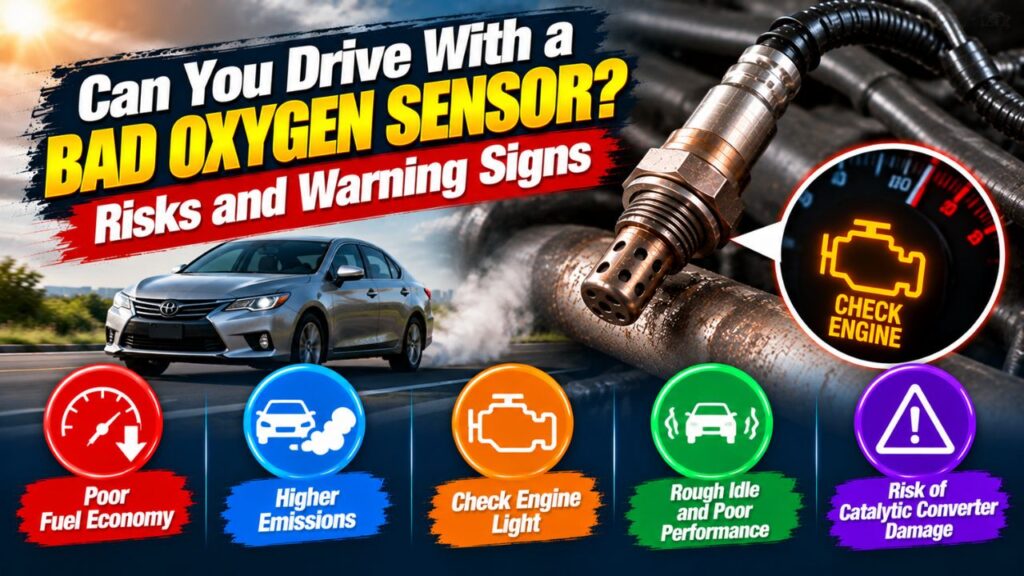
Yes, you can usually drive a short distance with a bad oxygen sensor, but you should not continue driving with it for a long time. A failed sensor can cause poor fuel economy, incorrect air-fuel mixture, higher emissions, rough performance, and eventually catalytic-converter damage.
Understanding can you drive with a bad oxygen sensor also requires knowing which sensor has failed and how the failure affects the engine. An upstream oxygen sensor generally plays a more direct role in fuel control, while a downstream sensor is used primarily to monitor catalytic-converter performance on many modern vehicles. Because of that difference, an upstream sensor failure may have a greater immediate effect on engine operation.
A steady check engine light with otherwise normal operation may allow you to drive carefully to a repair shop. A flashing check engine light, severe misfire, major power loss, overheating, or strong fuel smell indicates a more serious problem that should not be ignored.
Can You Drive With a Bad Oxygen Sensor?
Yes, a vehicle can often still be driven with a faulty oxygen sensor, especially for a short trip to obtain diagnosis or repair.
However, continuing normal driving for days or weeks is not a good idea.
The oxygen sensors provide important information about the oxygen content in the exhaust. The engine computer uses this information to help regulate the air-fuel mixture and monitor whether the catalytic converter is functioning correctly.
If the sensor sends incorrect information or stops responding, the computer may substitute predetermined values or rely on information from other sensors. The engine can continue operating, but it may not run as efficiently as it should.
How serious the problem is depends heavily on whether the failed sensor is upstream or downstream.
What Does an Oxygen Sensor Do?
An oxygen sensor, often called an O2 sensor, measures oxygen in the exhaust gases.
This information helps the engine control module determine whether combustion is running relatively:
- Rich, meaning too much fuel compared with air
- Lean, meaning too much air compared with fuel
On a gasoline engine operating normally, the computer continually adjusts fuel delivery based partly on the upstream oxygen-sensor signal.
Modern vehicles may have several O2 sensors located before and after the catalytic converter.
The sensor before the converter is generally called an upstream sensor, while the one after it is called a downstream sensor.
Upstream vs. Downstream Oxygen Sensor Failure
Not every bad oxygen sensor affects the vehicle in exactly the same way.
Bad Upstream Oxygen Sensor
The upstream sensor is usually positioned between the engine and catalytic converter.
It plays an important role in fuel-mixture control.
If it fails or provides incorrect readings, the engine computer may struggle to maintain the proper air-fuel ratio.
Possible results include poor gas mileage, rough running, hesitation, increased emissions, and an overly rich or lean mixture.
For this reason, an upstream O2 sensor problem generally deserves prompt repair.
Bad Downstream Oxygen Sensor
The downstream sensor is positioned after the catalytic converter.
Its main job on many vehicles is to monitor converter efficiency rather than directly control the normal fuel mixture.
A failed downstream sensor may cause a check engine light without immediately changing how the engine drives.
However, you should still repair the problem because the computer may no longer be able to properly monitor emissions-system performance.
How Long Can You Drive With a Bad Oxygen Sensor?
There is no safe universal number of miles.
A vehicle might continue running for hundreds of miles with a failed sensor, but being physically capable of driving that distance does not mean doing so is wise.
The longer you operate with an inaccurate upstream sensor, the greater the possibility of:
- Wasted fuel
- Excessive emissions
- Spark plug fouling
- Poor performance
- Catalytic-converter overheating or contamination
A short drive to a nearby repair facility is very different from continuing your daily commute for several weeks.
Diagnose and repair the fault as soon as reasonably possible.
What Happens if You Keep Driving With a Bad O2 Sensor?
The consequences depend on how the sensor fails and how the engine computer responds.
Poor Fuel Economy
One of the most common consequences is increased fuel consumption.
If the engine computer receives incorrect information, it may command more fuel than necessary.
You may notice that a tank of gas no longer lasts as long even though your driving habits have not changed.
Rich Air-Fuel Mixture
A faulty upstream sensor can sometimes cause the engine to operate too rich.
A rich mixture means more fuel is entering the engine than combustion requires.
This can create several problems, including carbon buildup and increased fuel consumption.
Unburned fuel entering the exhaust is particularly concerning because of the catalytic converter.
Lean Running
Some sensor or fuel-control problems may also contribute to a lean condition.
A lean mixture contains too much air relative to fuel.
Symptoms can include hesitation, rough operation, or lack of power.
However, an O2 sensor trouble code does not necessarily mean the sensor itself caused a lean or rich condition. Vacuum leaks, fuel-pressure problems, exhaust leaks, and other faults can cause the sensor to report abnormal readings.
Can a Bad Oxygen Sensor Damage the Catalytic Converter?
Yes, indirectly.
This is one of the biggest reasons not to ignore an upstream oxygen-sensor problem.
If incorrect fuel control causes the engine to run excessively rich, unburned fuel can enter the exhaust and reach the catalytic converter.
The converter operates at high temperature. Additional fuel burning inside it can produce excessive heat.
Over time, this can damage or melt the catalyst material.
A catalytic converter is generally much more expensive to replace than an oxygen sensor, so delaying a relatively simple repair can become costly.
Can a Bad Oxygen Sensor Damage the Engine?
A failed oxygen sensor will not necessarily cause immediate internal engine damage.
However, prolonged incorrect fuel mixture can create secondary problems.
Running rich for an extended period can contribute to carbon deposits, fuel-contaminated engine oil, and spark plug fouling.
Severe lean operation can increase combustion temperatures under certain conditions.
Modern engine-management systems have multiple protective strategies, but they cannot compensate for every malfunction indefinitely.
The safest approach is to diagnose the problem before poor mixture control creates additional damage.
Is It Safe to Drive With the Check Engine Light On?
It depends on what the light is doing and how the vehicle behaves.
A steady check engine light caused by an oxygen-sensor code generally means the vehicle may still be driven cautiously for a short distance if it otherwise runs normally.
A flashing check engine light is more serious.
A flashing light commonly indicates an active misfire severe enough to threaten catalytic-converter damage.
If the check engine light is flashing, reduce engine load and stop driving as soon as it is safe to do so.
Do not assume a flashing light is simply the result of the bad O2 sensor.
Signs You Should Stop Driving
A bad oxygen sensor by itself does not always make the vehicle unsafe immediately, but certain symptoms suggest that more serious engine or exhaust problems are present.
Stop driving or arrange towing if you experience severe engine shaking, significant loss of power, overheating, smoke, a flashing check engine light, or a strong raw-fuel smell.
These symptoms may indicate a misfire, excessively rich mixture, fuel leak, or another issue that can damage the catalytic converter or create a safety hazard.
Can a Bad O2 Sensor Cause Rough Idle?
Yes, particularly when an upstream sensor failure affects fuel control.
The engine may idle unevenly because the computer is struggling to maintain the proper mixture.
However, rough idle has many possible causes, including vacuum leaks, ignition problems, dirty fuel injectors, throttle-body problems, and low compression.
A rough idle combined with an oxygen-sensor trouble code should be diagnosed rather than assuming the sensor automatically needs replacement.
Can a Bad Oxygen Sensor Cause Loss of Power?
It can.
If the engine runs too rich or too lean because of inaccurate sensor information, combustion efficiency may decrease.
You may notice hesitation or sluggish acceleration.
Some vehicles may also enter a fallback operating strategy when a sensor failure is detected.
Significant power loss, however, can have many other causes. A clogged catalytic converter, fuel-delivery problem, ignition failure, or airflow-sensor problem can produce similar symptoms.
Can a Bad Oxygen Sensor Cause a Car to Stall?
It is possible, but a bad O2 sensor is not among the most common causes of stalling.
Most engine computers can keep the engine running using substitute values if an oxygen sensor fails completely.
If the vehicle repeatedly stalls, investigate other possible causes along with the oxygen sensor, such as problems with fuel pressure, crankshaft position sensing, airflow measurement, ignition, or major vacuum leaks.
Can a Bad Oxygen Sensor Prevent a Car From Starting?
Usually not.
During a cold start, the engine often operates in open loop, meaning it does not rely heavily on oxygen-sensor feedback until the sensors and engine reach suitable operating conditions.
Therefore, a vehicle that cranks but will not start usually has another problem.
Possible causes include ignition failure, fuel-delivery problems, compression problems, or engine-position sensor faults.
A stored O2-sensor code may be present without being the reason the engine will not start.
Why a Bad O2 Sensor Can Increase Fuel Consumption
The engine computer tries to maintain a suitable air-fuel mixture.
When the upstream oxygen-sensor signal becomes unreliable, the computer may use a conservative fallback strategy to keep the engine running.
Depending on the vehicle, this can result in more fuel being injected than necessary.
That extra fuel may reduce miles per gallon noticeably.
If fuel economy suddenly decreases while an O2 sensor trouble code appears, diagnosis should not be delayed.
Does a Bad Downstream O2 Sensor Affect Gas Mileage?
Usually less than an upstream sensor because the downstream sensor primarily monitors the catalytic converter on many vehicles.
However, vehicle control strategies vary, and some systems may use downstream information as part of more advanced fuel-management functions.
Do not assume a downstream sensor can be ignored simply because the car seems to drive normally.
The check engine light may also prevent the vehicle from passing an emissions inspection in states that use OBD-based testing.
Can You Pass an Emissions Test With a Bad Oxygen Sensor?
Usually not if the sensor failure has triggered the check engine light or stored an emissions-related diagnostic trouble code.
Many U.S. emissions-inspection programs check the vehicle’s OBD-II system.
An illuminated malfunction indicator light or incomplete emissions monitors may cause the vehicle to fail inspection.
Replacing the sensor alone may not make the vehicle immediately ready for inspection because the engine computer may need to complete its readiness monitors afterward.
How Do You Know if the Oxygen Sensor Is Actually Bad?
An O2-sensor trouble code does not always prove the sensor itself failed.
This is an important diagnostic point.
A sensor can report abnormal exhaust oxygen because the engine really is running lean or rich.
For example, a lean-condition code may result from:
- Vacuum leak
- Exhaust leak before the sensor
- Weak fuel pump
- Low fuel pressure
- Dirty injector
Likewise, a rich reading may result from excessive fuel delivery or another engine problem.
A technician may examine live sensor data, wiring, heater-circuit operation, fuel trims, exhaust leaks, and related engine conditions before replacing the sensor.
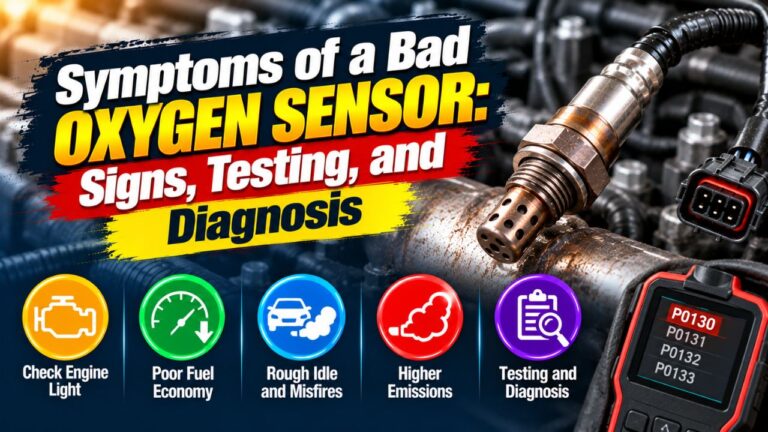
Common Oxygen Sensor Trouble Codes
OBD-II vehicles can store several O2-sensor-related diagnostic codes.
Examples include codes involving:
- Sensor circuit malfunction
- Slow sensor response
- Heater circuit failure
- Sensor voltage problems
The code normally identifies a bank and sensor position.
For example, Sensor 1 usually refers to an upstream sensor, while Sensor 2 generally identifies a downstream sensor on that exhaust bank.
Always confirm vehicle-specific terminology before replacing a sensor because engine and exhaust layouts vary.
Should You Replace a Bad Oxygen Sensor Immediately?
You should repair a confirmed failure promptly, particularly when the upstream sensor affects fuel control.
You may not need emergency roadside repair when the car is otherwise running normally and the check engine light is steady.
However, postponing the repair for weeks or months offers little benefit.
Fuel wasted during that period and potential catalytic-converter damage can eventually cost considerably more than repairing the original problem.
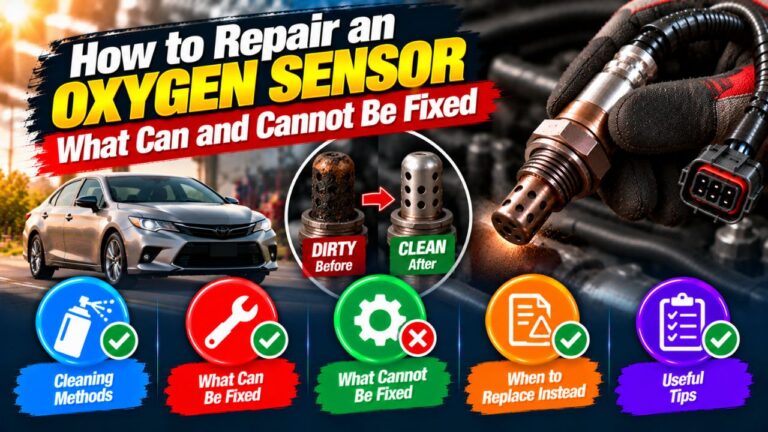
Can You Clean a Bad Oxygen Sensor Instead of Replacing It?
Cleaning is generally not a reliable repair for a failed oxygen sensor.
Oxygen sensors are precision components exposed to extremely high exhaust temperatures.
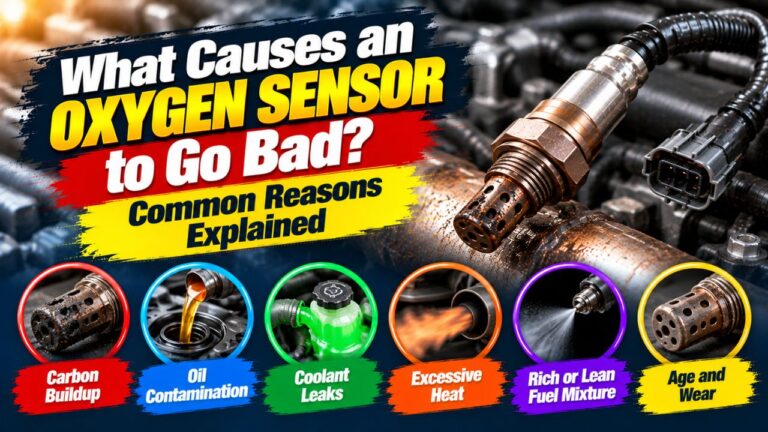
Sensor contamination can come from engine oil, coolant, silicone compounds, fuel additives, or carbon deposits.
Even if deposits can be removed visually, cleaning does not necessarily restore accurate sensor response or repair a failed heater or electrical circuit.
When testing confirms that the sensor itself has failed, replacement is generally the proper solution.
What if the Car Drives Normally With a Bad Oxygen Sensor?
That is possible.
Some oxygen-sensor failures produce almost no noticeable drivability symptoms.
You may see only:
- Check engine light
- Slight decrease in fuel economy
- Emissions-test failure
The lack of obvious symptoms does not mean the sensor serves no purpose.
A vehicle can feel normal while operating less efficiently or while the engine computer has lost important emissions-system feedback.
How to Drive if You Must Reach a Repair Shop
If the engine runs smoothly, the check engine light is steady, and there are no signs of overheating or severe fuel problems, a short drive to a nearby repair shop is generally more reasonable than continuing normal use.
Drive gently and avoid unnecessary heavy acceleration or high engine load.
Pay attention to any change in:
- Engine performance
- Warning lights
- Temperature
- Fuel smell
- Exhaust smoke
If symptoms become significantly worse, stop driving.
FAQs About Can You Drive With a Bad Oxygen Sensor
How long can I drive with a bad oxygen sensor?
There is no guaranteed safe mileage. A car may continue running for quite a while, but driving only as necessary until the sensor problem is diagnosed is the better approach.
Extended driving can waste fuel and potentially damage the catalytic converter if fuel control is affected.
Can I drive 100 miles with a bad O2 sensor?
The vehicle may physically be capable of traveling 100 miles, but that does not mean the trip is risk-free.
If an upstream sensor failure is causing an overly rich mixture, extended driving can increase catalytic-converter damage risk.
Repair the fault before unnecessary long-distance driving.
Is an upstream oxygen sensor more important than a downstream sensor?
For normal engine fuel control, generally yes.
The upstream sensor usually provides feedback used to adjust the air-fuel mixture, while the downstream sensor primarily monitors catalytic-converter operation on many vehicles.
Will a bad O2 sensor leave me stranded?
Usually not by itself.
Most vehicles can continue running with a failed oxygen sensor because the engine computer can use backup strategies.
However, the underlying problem associated with the sensor code could be more serious, so proper diagnosis still matters.
Can a bad oxygen sensor ruin a catalytic converter?
It can contribute to catalytic-converter damage if inaccurate sensor information causes an excessively rich air-fuel mixture.
Unburned fuel entering the converter can create extreme heat and damage the catalyst.
Will a car run better after replacing a bad oxygen sensor?
If the failed sensor was affecting fuel control, replacing it may improve fuel economy, idle quality, throttle response, and emissions.
If the sensor was not actually the root cause, replacing it may make little difference.
Should I stop driving if my O2 sensor light comes on?
There is no dedicated oxygen-sensor warning light on most cars; the problem normally illuminates the check engine light.
If the light remains steady and the vehicle drives normally, arrange repair soon. If it flashes or the engine runs badly, stop driving as soon as safely possible.
Can I ignore a downstream oxygen sensor?
No.
Even if the vehicle appears to run normally, the downstream sensor is important for monitoring catalytic-converter performance and emissions-system operation.
It should still be diagnosed and repaired.
Conclusion
The overall verdict on can you drive with a bad oxygen sensor is that a short, careful drive is often possible when the check engine light is steady and the vehicle otherwise runs normally, but continuing to drive for an extended period is not a good idea.
A failed upstream oxygen sensor can interfere with air-fuel mixture control, leading to poor gas mileage, rough performance, excessive emissions, and potentially an overly rich mixture that can overheat and damage the catalytic converter. A bad downstream sensor may have less immediate effect on drivability, but it still prevents the engine computer from properly monitoring emissions-system performance.
The practical choice is to have the fault diagnosed promptly rather than simply replacing the sensor based on a trouble code. Vacuum leaks, exhaust leaks, fuel problems, and wiring faults can all make a healthy oxygen sensor report abnormal readings. If the sensor itself is confirmed bad, replacing it early is generally much less expensive than continuing to drive until poor fuel control damages other parts of the emissions system.